- Company Articles
- Products and Technology
- Product knowledge
- 40 Steel Roller Track Yellow Wheels for Material Handling Carts: Smooth Transport Solutions

40 Steel Roller Track Yellow Wheels for Material Handling Carts: Smooth Transport Solutions
Related Product
40 Steel Roller Track Yellow Wheel
The roller track can be installed with multiple accessories to create different slopes and configurations of flow racks.All steel conveyor 40 roller track accessories are engineered to perfectly fit the sliding rail.
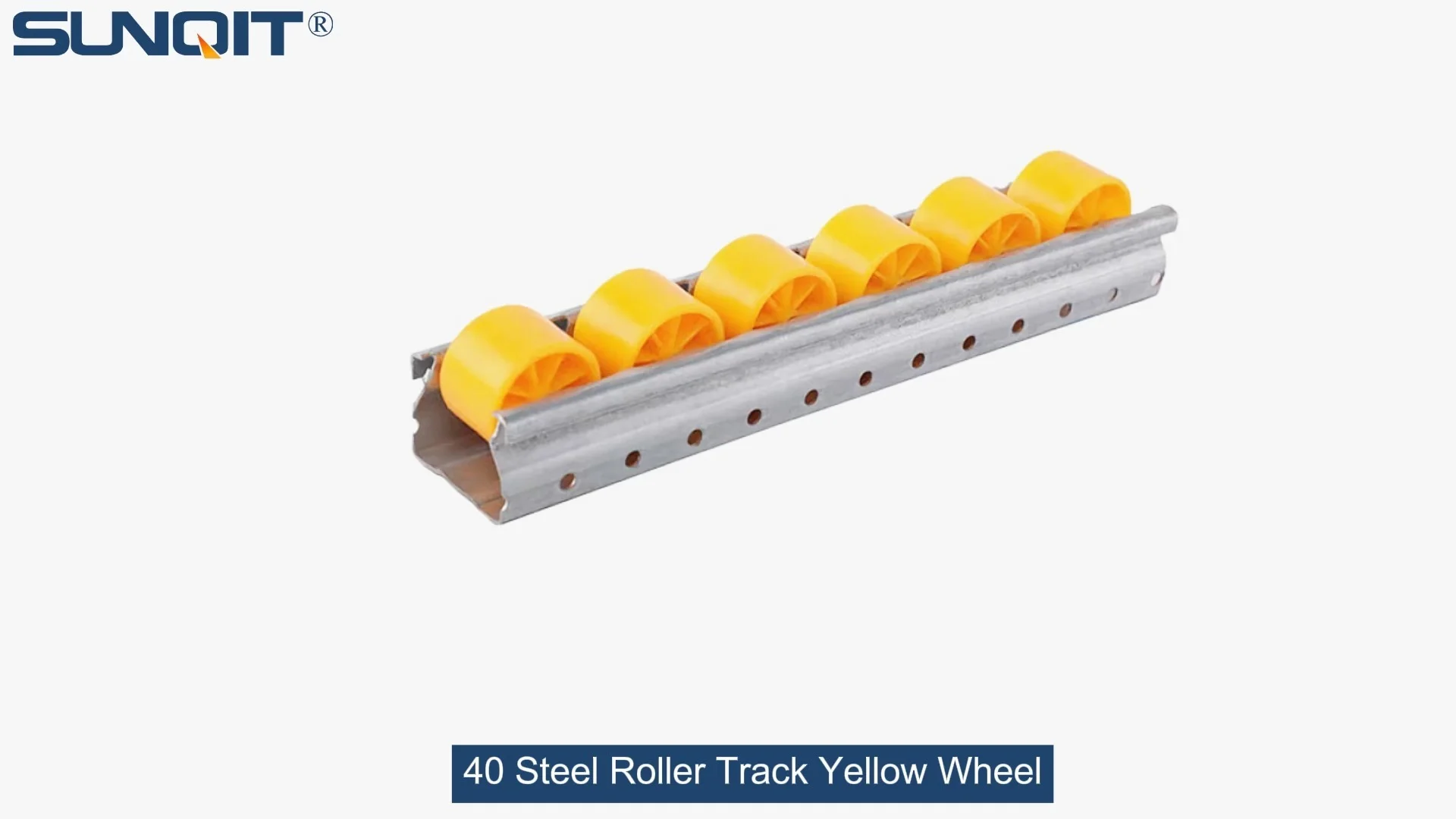
Walk into any manufacturing plant, and you'll quickly notice the unsung heroes of production: the material handling systems that keep parts moving, stations supplied, and deadlines on track. For decades, factory floors have grappled with the same headaches—heavy loads slowing down workflows, janky rollers causing bottlenecks, and workers spending more time pushing carts than adding value to products. But what if there was a solution that turned those frustrations into seamless, almost invisible support for your team? Enter the 40 Steel Roller Track Yellow Wheels—a small but mighty component that's quietly revolutionizing how materials flow through modern factories.
Whether you're running a 3C assembly line churning out smartphones, a warehouse managing hundreds of daily shipments, or a medical device plant where precision is non-negotiable, the right material handling tools can mean the difference between meeting targets and falling behind. Today, we're diving deep into what makes these yellow-wheeled roller tracks a game-changer, how they fit into broader lean systems, and why they've become a go-to choice for manufacturers aiming to do more with less.
More Than Just Rollers: The Design That Makes a Difference
Let's start with the basics: what exactly is a 40 Steel Roller Track with Yellow Wheels? At first glance, it might look like any other conveyor component—metal tracks with wheels spaced along their length. But dig a little deeper, and you'll see the thoughtfulness baked into every detail.
The "40" in its name refers to the track width, a standard size that balances versatility with stability. Made from high-grade steel, the track itself is built to withstand the daily grind of manufacturing—scratches, impacts, and the weight of heavy bins or parts. But the real star here is the yellow wheels. Why yellow? It's not just about aesthetics. In busy factories, where machinery hums and workers move quickly, high-visibility colors act as silent safety signals. The bright yellow wheels make the track instantly noticeable, reducing the risk of trips or collisions. They also stand out against darker factory floors, making it easier for maintenance teams to spot debris or wear and tear during inspections.
Each wheel is mounted on precision bearings, designed to roll with minimal friction. Think about the last time you tried to push a cart with stuck wheels—it's frustrating, slow, and takes extra effort. These wheels? They glide. Whether you're moving a bin of circuit boards for 3C assembly or a tray of medical components, the smooth rotation means less force is needed, which translates to less strain on workers' backs and arms. Over a full shift, that adds up to happier, more productive teams.
Durability is another key factor. These wheels are made from tough, wear-resistant plastic that holds up against oils, coolants, and the occasional bump from a forklift. Unlike cheaper alternatives that crack or degrade after a few months, these yellow wheels are built to last, reducing the need for frequent replacements. And when they do need maintenance? The modular design makes swapping out a wheel quick and easy—no special tools required, so downtime is kept to a minimum.
Why Factories Are Switching: The Top Benefits You'll Notice Day One
It's one thing to talk about design features, but what do these actually mean for your operation? Let's break down the real-world benefits that have manufacturers across industries—from automotive to medical devices—making the switch to 40 Steel Roller Track Yellow Wheels.
1. Faster Material Flow, Less Waiting
In assembly lines, time is money. Every minute a worker spends waiting for parts is a minute lost. Traditional static shelves or manual carts force teams to stop what they're doing, walk to a storage area, and haul materials back to their stations. With these roller tracks, materials move to the workers, not the other way around. Imagine a lean pipe workbench in a smartphone factory: bins of screws, screens, and casings glide along the yellow-wheeled track directly to the assembler. No more interruptions, no more wasted steps. The result? Smoother workflows and shorter cycle times.
2. Built to Handle the Heavy Lifting (Literally)
Manufacturing isn't just about small parts. Even in 3C assembly, there are heavier items—think laptop housings or server components. These roller tracks are engineered to handle loads up to 500 kg per meter, depending on the configuration. That means you can move multiple bins at once without worrying about the track bending or wheels failing. For warehouses using flow racks, this is a game-changer. Stacked bins of inventory can slide down the track by gravity, eliminating the need for manual lifting and reducing the risk of dropped items.
3. A Safer Workplace for Everyone
Safety isn't just a buzzword—it's the foundation of a good manufacturing culture. The 40 Steel Roller Track Yellow Wheels contribute to safer operations in three key ways: the high-visibility yellow wheels reduce tripping hazards, the smooth rolling action minimizes the chance of items tipping over, and the reduced physical effort lowers the risk of musculoskeletal injuries. In fact, many factories report a drop in workplace incidents after installing these tracks, as workers no longer need to strain to push heavy loads or reach awkwardly for materials.
4. Flexibility to Grow With Your Needs
Manufacturing needs change—product lines expand, new materials are introduced, or workflows are optimized. These roller tracks aren't set in stone. They're part of a lean system that's designed to be reconfigured as your operation evolves. Need to add a new section to your conveyor line? Just bolt on extra track segments. Want to adjust the angle of a flow rack to speed up material flow? The modular joints make it easy. This flexibility means your initial investment keeps working for you, even as your factory grows or shifts focus.

Real-World Impact: How Factories Are Using These Roller Tracks
Numbers and specs tell part of the story, but real-world examples show how these roller tracks transform operations. Let's look at a few scenarios where they've made a tangible difference.
Case 1: 3C Assembly Line for Smartphone Production
A major electronics manufacturer in Shenzhen was struggling with slow material flow on their smartphone assembly line. Workers had to walk 15-20 feet to retrieve parts from static shelves, and bins often got stuck when being pushed back. After installing 40 Steel Roller Track Yellow Wheels on their lean pipe workbenches and integrating them with flow racks, the results were striking. Material retrieval time dropped by 40%, and workers reported a noticeable reduction in fatigue. "It used to take two people to move a heavy bin of phone casings," said one line supervisor. "Now one person can push it with one hand, and it glides right to the workstation." The line's daily output increased by 12% within the first month.
Case 2: Medical Device Warehouse Logistics
A medical device company in Shanghai needed a way to manage small, high-value components—think surgical tools and diagnostic parts—without compromising on speed or accuracy. Their old system relied on manual picking, which led to occasional errors and slow order fulfillment. They installed 40 Steel Roller Track Yellow Wheels in their flow racks, organizing components by order frequency. Now, bins slide forward as the front one is removed, ensuring the next part is always within reach. Picking errors dropped by 25%, and order processing time decreased by 30%. "The yellow wheels make it easy to see where each bin should go," said a warehouse manager. "And because they roll so smoothly, we can handle delicate parts without worrying about jostling or damage."
Case 3: Automotive Parts Assembly
An automotive parts supplier in Guangzhou was dealing with heavy metal components for engine assemblies. Their traditional conveyor system was noisy, energy-intensive, and prone to breakdowns. They replaced sections of it with 40 Steel Roller Track Yellow Wheels, combined with a lean tube framework. The steel tracks handled the weight of the metal parts effortlessly, and the gravity-fed design eliminated the need for electric motors, cutting energy costs by 15%. "We used to have to shut down the line for hours when the old conveyor broke," explained the plant engineer. "Now, if a wheel needs replacing, we can do it in 10 minutes. The yellow wheels also stand out against our gray floors, so we can spot any issues during our daily safety checks."

Working Together: How These Roller Tracks Fit Into Your Lean Ecosystem
Great tools don't work in isolation. The 40 Steel Roller Track Yellow Wheels are at their best when paired with other lean solutions, creating a seamless workflow from material storage to final assembly. Let's explore how they team up with key products to supercharge your operation.
With Lean Pipe Workbenches: A Station Built for Efficiency
A lean pipe workbench is the heart of many assembly stations, but without the right material delivery, it's just a table. By integrating 40 Steel Roller Track Yellow Wheels into the workbench's design, you create a workstation where materials come to the worker, not the other way around. Imagine a workbench for laptop assembly: the track runs along the back edge, with bins of screws, keyboards, and screens rolling into place as needed. The worker stays focused on assembly, not fetching parts. The high-visibility yellow wheels also help keep the workstation organized—each bin has a designated spot, so tools and materials don't get misplaced.
With Flow Racks: Smart Storage That Moves With You
Flow racks are all about keeping inventory accessible, and 40 Steel Roller Track Yellow Wheels take that to the next level. In a typical flow rack setup, bins are loaded from the back and slide forward as the front bin is removed. With these wheels, the sliding action is smoother and more consistent, even with unevenly weighted bins. This is especially useful in 3C or medical industries, where parts come in various sizes and weights. Combine them with adjustable lean tube dividers, and you can customize the rack to fit everything from tiny circuit boards to larger tooling kits.
With Conveyors: Building a Continuous Flow System
For larger-scale operations, integrating 40 Steel Roller Track Yellow Wheels with powered conveyors creates a hybrid system that balances speed and flexibility. Use powered conveyors for long-distance transport and gravity-fed roller tracks for the final stretch to workstations. This reduces reliance on electricity, cuts costs, and adds redundancy—if the powered conveyor needs maintenance, the roller tracks can keep materials moving manually in a pinch. It's a smart way to build resilience into your production line, ensuring nothing grinds to a halt when the unexpected happens.
With Custom Lean Solutions: Tailored to Your Unique Needs
Every factory is different, and that's where custom lean solutions shine. Whether you're in 3C assembly, medical device manufacturing, or, these roller tracks can be adapted to fit your specific workflow. Need a curved track to navigate around a machine? No problem. Want to integrate them with ESD workbenches to protect sensitive electronics? The steel tracks can be grounded to prevent static buildup. The goal is to create a system that works for your team, not against them—one that grows and changes as your needs do.

The Difference in Action: Traditional vs. 40 Steel Roller Track Systems
| Metric | Traditional Material Handling | With 40 Steel Roller Track Yellow Wheels |
|---|---|---|
| Material Retrieval Time | 3-5 minutes per bin (walking + lifting) | 1-2 minutes per bin (glides to workstation) |
| Worker Physical Strain | High (frequent lifting, pushing stuck wheels) | Low (minimal force needed, smooth rolling) |
| Maintenance Frequency | Monthly (due to wheel jams, track warping) | Quarterly (modular design, durable components) |
| Safety Incidents (per 100 workers/year) | 8-10 (trips, strains, collisions) | 2-3 (high-visibility design, reduced manual effort) |
| Flexibility for Reconfiguration | Low (fixed tracks, hard to modify) | High (modular, easy to add/remove sections) |
*Based on industry averages and case studies from manufacturing plants using similar systems.
Built on Lean Principles: Reuse, Improve, Succeed
At the heart of these roller tracks is a simple but powerful idea: lean manufacturing isn't just about cutting costs—it's about creating value for your team, your customers, and your business. The "reusable," is woven into every part of their design.
Take reusability, for example. When your production line changes, you don't have to throw out the old track and buy new. The modular components can be disassembled, reconfigured, and reused elsewhere in the factory. A track that once moved phone parts can be repurposed to handle medical devices or automotive components. This not only saves money but also reduces waste, aligning with sustainable manufacturing practices.
Sustainable improvement is another core principle. These roller tracks are designed to evolve with your feedback. If workers notice that a certain section of the track could roll more smoothly, adjustments can be made. If a new type of bin requires a different wheel spacing, the track can be modified. It's a system that grows smarter over time, becoming more efficient and better suited to your needs with each iteration.
For manufacturers, this means more than just a better conveyor component. It means a partner in your journey toward operational excellence. Whether you're just starting to implement lean practices or you're a seasoned pro, these roller tracks provide the flexibility and reliability you need to keep improving—one smooth roll at a time.
Ready to Transform Your Material Handling? Start With the Wheels That Roll Smarter
Manufacturing is all about momentum—keeping parts moving, teams productive, and operations running smoothly. The 40 Steel Roller Track Yellow Wheels aren't just a tool; they're a catalyst for that momentum. They turn frustrating, slow material handling into a seamless, almost invisible part of your workflow. They reduce strain on your team, cut down on downtime, and help you deliver products faster and more reliably.
Whether you're in 3C assembly, medical device manufacturing,, or any other industry where materials matter, these roller tracks offer a simple truth: better tools lead to better results. They're built to last, designed to adapt, and focused on the people who use them every day.
So, what's next? Take a look at your current material handling setup. Where are the bottlenecks? Where do your workers struggle? Chances are, 40 Steel Roller Track Yellow Wheels can make a difference. And when paired with lean pipe workbenches, flow racks, and custom solutions, they become part of a lean ecosystem that transforms your factory from good to great.
In the end, manufacturing isn't just about making products—it's about making progress. And with the right tools, that progress is a whole lot smoother.