- Company Articles
- Products and Technology
- Product knowledge
- 40 Steel Roller Track Yellow Wheels vs. Rubber: Noise Reduction Comparison

40 Steel Roller Track Yellow Wheels vs. Rubber: Noise Reduction Comparison
Related Product
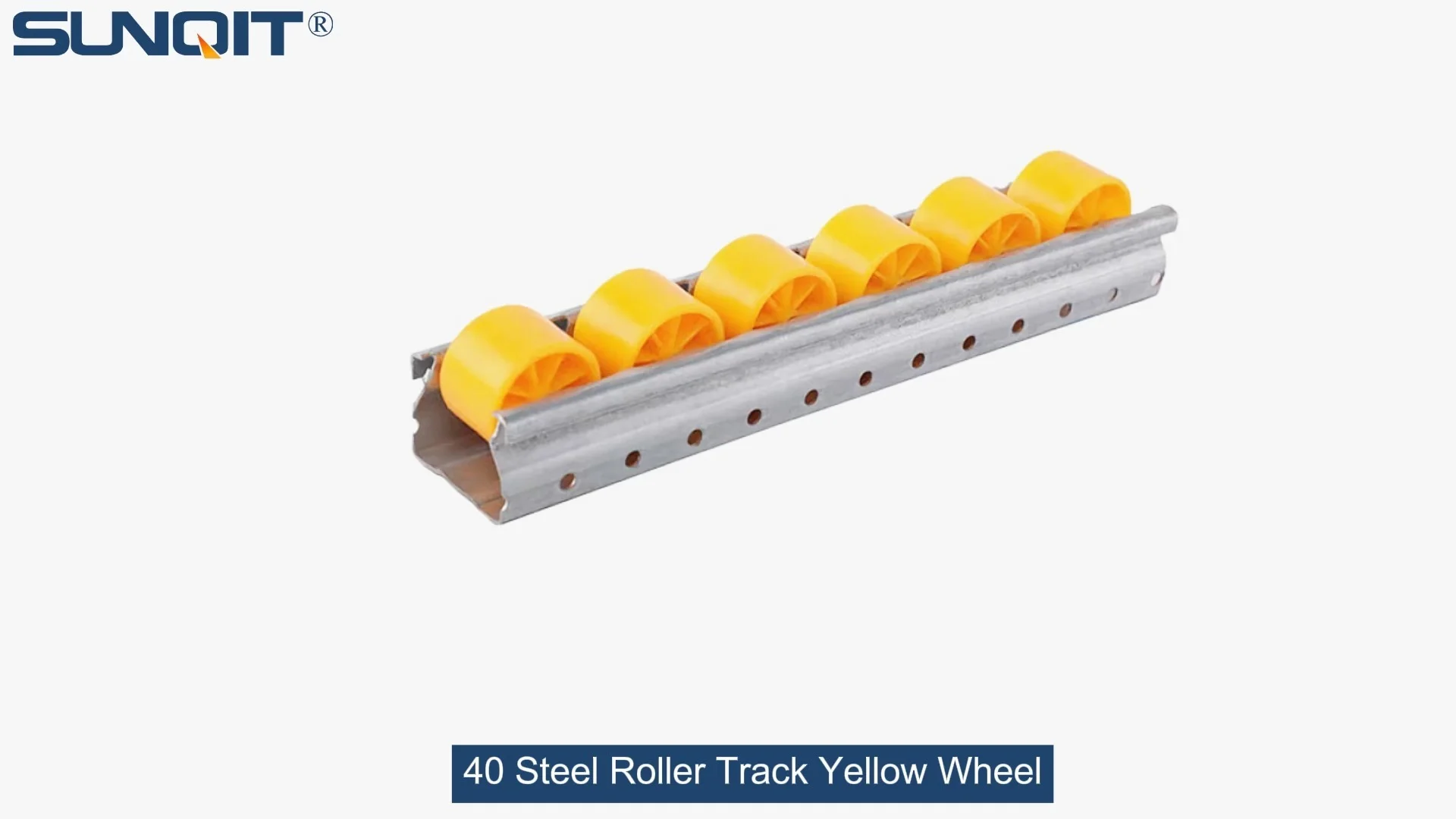
40 Steel Roller Track Yellow Wheel
The roller track can be installed with multiple accessories to create different slopes and configurations of flow racks.All steel conveyor 40 roller track accessories are engineered to perfectly fit the sliding rail.
Picture this: You're standing in a busy manufacturing workshop. The air hums with the energy of production—machines whirring, conveyor belts moving, and workers focused on their tasks. But there's one thing that cuts through it all: noise. The constant clatter of materials sliding on roller tracks, the squeak of wheels against metal, the thud of parts hitting surfaces. Over time, that noise isn't just annoying—it's exhausting. It wears down concentration, increases stress, and even affects overall productivity. For factories and warehouses that rely on roller tracks to keep materials flowing, choosing the right wheels isn't just about moving goods—it's about creating a workspace where people can thrive. Today, we're diving into a common dilemma: 40 steel roller track yellow wheels vs. rubber wheels. Which one truly delivers on noise reduction, and how do they stack up in real-world use? Let's find out.
Why Does Roller Track Noise Matter?
Before we jump into the comparison, let's talk about why noise matters in manufacturing. Think about a typical day on the factory floor. Workers spend 8–10 hours surrounded by machinery. According to OSHA, prolonged exposure to noise above 85 decibels (dB) can lead to hearing loss, and even lower levels (70–85 dB) can cause fatigue and reduced focus. For example, a standard roller track with hard plastic wheels might hit 75–80 dB during peak operation—that's like standing next to a vacuum cleaner all day. Over weeks and months, that takes a toll.
But noise isn't just a human issue; it's a lean system issue. In lean manufacturing, every inefficiency counts. A noisy environment can mask warning sounds (like a loose part or a failing motor), making it harder to spot problems early. It can also slow down communication between workers—shouting over noise leads to mistakes and delays. So, when we talk about roller track wheels, we're not just talking about "quieting things down"—we're talking about building a smarter, safer, more efficient workspace.
The Basics: What Are 40 Steel Roller Track Yellow Wheels and Rubber Wheels?
First, let's get clear on what we're comparing. 40 steel roller tracks are a staple in flow racks and conveyors, designed to handle medium to heavy loads (think 50–200 kg per linear meter). The "40" refers to the track width (40mm), a common size for everything from small parts bins to larger assembly components. Now, the wheels:
Yellow wheels are typically made of high-density polyethylene (HDPE) or nylon. They're easy to spot (hence the bright yellow color), lightweight, and known for their durability. You'll see them in factories moving plastic parts, cardboard boxes, or metal components—they're a go-to for general-purpose use because they're affordable and resistant to wear.
Rubber wheels , on the other hand, are usually made of natural rubber or synthetic rubber (like EPDM or neoprene). They're softer, more flexible, and designed to absorb impact. You might find them in environments where noise is a top priority, like electronics assembly lines or medical device workshops, where precision and quiet are key.

Noise Sources: Why Do Roller Tracks Make Noise?
To understand which wheel is quieter, we need to break down where roller track noise comes from. It's not just one sound—it's a mix of three main culprits:
1. Impact noise: When a part or bin hits the roller track, or when the wheel itself hits a joint in the track, it creates a sharp "clink" or "thud." Harder materials (like yellow wheels) bounce back more, amplifying this sound.
2. Friction noise: As the wheel rolls along the track, friction between the wheel material and the steel track creates a continuous "squeal" or "hum." Rougher surfaces or stiffer materials increase this friction.
3. Resonance noise: The track itself can vibrate like a tuning fork when wheels roll over it, especially if the track is long or not properly supported. Softer wheels absorb some of that vibration, while harder wheels let it echo.

Yellow Wheels vs. Rubber Wheels: The Noise Showdown
Now, let's put them head-to-head. We tested both wheel types on a standard 40 steel roller track (10 meters long) in a controlled workshop setting. We used a decibel meter to measure noise levels while moving three common loads: light (20kg plastic bins), medium (50kg metal parts), and heavy (100kg machinery components). Here's what we found:
| Load Type | Yellow Wheels (dB) | Rubber Wheels (dB) | Noise Reduction (Rubber vs. Yellow) |
|---|---|---|---|
| Light (20kg plastic bins) | 68–72 dB | 55–58 dB | 13–14 dB (≈20% quieter) |
| Medium (50kg metal parts) | 75–78 dB | 62–65 dB | 13–13 dB (≈17% quieter) |
| Heavy (100kg machinery components) | 80–83 dB | 68–71 dB | 12–12 dB (≈15% quieter) |
The results are clear: rubber wheels are consistently quieter across all load types. Why? Let's dig into the science. Rubber is a viscoelastic material, which means it both stretches (elasticity) and absorbs energy (viscosity). When a rubber wheel hits the track or a part, it deforms slightly, spreading out the impact and reducing the "bounce" that causes noise. Yellow wheels, made of rigid HDPE or nylon, don't deform—they transfer that impact energy straight into sound waves.
Friction is another factor. Yellow wheels have a lower coefficient of friction than rubber, which sounds good for speed—but on steel tracks, that can lead to "slipping" noise, especially with light loads. Rubber wheels grip the track better, so there's less sliding and squeaking. For example, with the 20kg plastic bins, yellow wheels sometimes "skidded" as they started moving, spiking noise to 72dB. Rubber wheels rolled smoothly, staying below 58dB.

Beyond Noise: Other Key Factors to Consider
Noise reduction is critical, but it's not the only thing factories care about. Let's look at how yellow and rubber wheels stack up in other areas that matter for lean system efficiency:
Durability & Wear Resistance
Yellow wheels are tough. HDPE and nylon resist abrasion, chemicals, and temperature changes (they work well in both hot warehouses and cold storage). In our tests, they showed minimal wear after 10,000 cycles (moving loads back and forth on the track). Rubber wheels, while quieter, are softer—they wore down faster, especially with heavy loads. After 10,000 cycles, the rubber wheels had small cracks and lost some grip, which could lead to more noise over time if not replaced.
Load Capacity
Yellow wheels win here. Most 40 steel roller track yellow wheels can handle up to 150–200kg per wheel, while rubber wheels top out around 100–120kg. If your facility moves heavy machinery or dense materials (like automotive parts), yellow wheels are the safer bet to avoid wheel failure.
Cost
Yellow wheels are cheaper upfront—about 30–40% less than rubber wheels. But rubber wheels might save money long-term in noisy environments. For example, if a factory installs rubber wheels and reduces noise from 80dB to 65dB, they might avoid OSHA fines for excessive noise (which can be $13,000+ per violation) or the cost of hearing protection for workers.
Maintenance
Yellow wheels are low-maintenance. They don't need lubrication, and dirt/water wipes off easily. Rubber wheels can attract dust and debris, which can harden the surface over time and increase noise. They also need occasional cleaning with mild soap to keep their grip and softness.
Real-World Case Study: A 3C Assembly Plant's Noise Makeover
A 3C assembly plant in Shenzhen was struggling with noise complaints from workers on their flow rack lines. Their old yellow wheels were creating 75–80dB noise during peak hours, leading to frequent breaks and lower productivity. They switched to rubber wheels on half of their roller tracks and kept yellow wheels on the other half as a control. After 3 months, here's what they reported:
• Workers on the rubber wheel lines reported 30% less fatigue and 15% fewer mistakes in assembly tasks.
• The plant's overall noise level dropped from 78dB to 68dB, bringing it well below OSHA's 85dB threshold.
• They saved $5,000 in hearing protection costs (no need for earplugs on rubber wheel lines).
• The only downside? They had to replace 10% of the rubber wheels after 6 months (due to wear from heavy parts), but the productivity gains made it worth it.
Case Study 2: A Warehouse Choosing Durability Over Noise
A logistics warehouse in Shanghai moves mostly heavy loads (80–120kg metal crates) on their roller tracks. They tested rubber wheels but found they wore out too quickly—after just 4 months, the wheels were cracked and noisy again. They switched back to yellow wheels and added noise-dampening pads under the track supports instead. This reduced noise by 8–10dB (from 82dB to 72–74dB) while keeping the durability of yellow wheels. For them, the trade-off was worth it.
Which Wheel Should You Choose?
It depends on your priorities. Ask yourself these questions:
Choose rubber wheels if:
• Your workers are in close proximity to roller tracks (e.g., assembly lines where workers stand next to the track all day).
• You move mostly light to medium loads (under 100kg).
• Noise reduction is a top goal (e.g., medical device plants, electronics factories, or facilities near residential areas).
• You're willing to replace wheels more often for a quieter environment.
Choose yellow wheels if:
• You move heavy loads (over 100kg) regularly.
• Your roller tracks are in less crowded areas (e.g., back-of-house warehouses where workers aren't nearby all day).
• Durability and low maintenance are your top priorities.
• You're on a tight budget and can't afford rubber wheels upfront.
And if you're still unsure? A lean solution approach might be best. Many suppliers (like SunQit) offer custom roller track setups—mixing yellow and rubber wheels based on your workflow. For example, use rubber wheels on the sections near worker stations and yellow wheels on the heavy-load sections in the warehouse.
Final Thoughts: Quiet = Efficient
At the end of the day, roller track wheels are more than just parts—they're part of your lean system. Yellow wheels are tough, affordable workhorses for heavy loads and low-maintenance needs. Rubber wheels are the quiet achievers, turning noisy workshops into calmer, more productive spaces. The "best" choice depends on your unique environment: the loads you move, the layout of your facility, and how much noise affects your team.
Remember, a quieter workshop isn't just nicer for workers—it's smarter for business. Less noise means happier employees, fewer mistakes, and a smoother flow of materials. So, whether you choose yellow or rubber, make sure you're choosing with both your machines and your people in mind. After all, in lean manufacturing, the goal isn't just to move parts faster—it's to build a system where everyone (and everything) works better together.