- Company Articles
- Products and Technology
- Product knowledge
- 40 Steel Wheel Roller Track: Flexible Systems for Layout Changes

40 Steel Wheel Roller Track: Flexible Systems for Layout Changes
Related Product
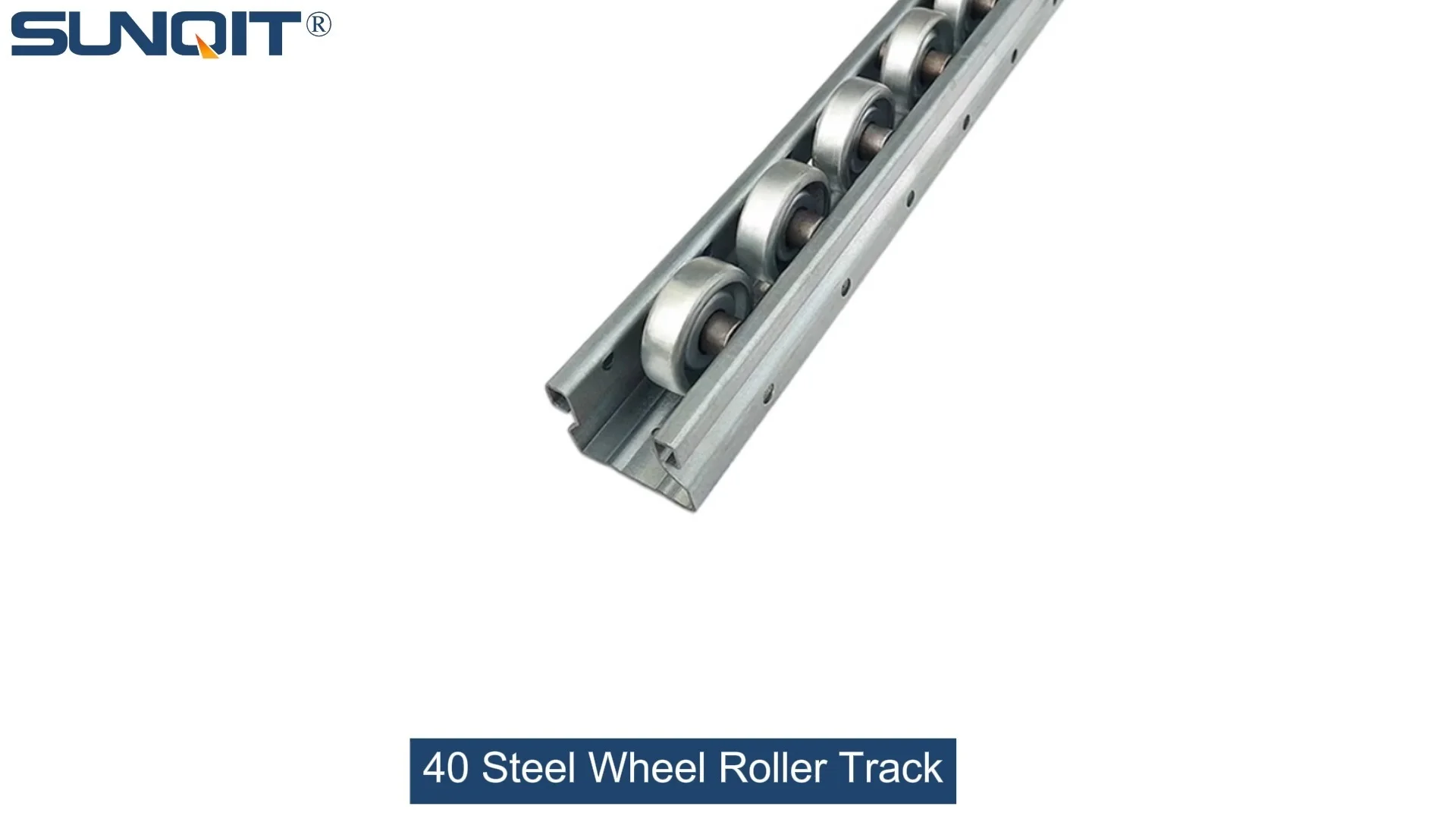
40 Steel Wheel Roller Track
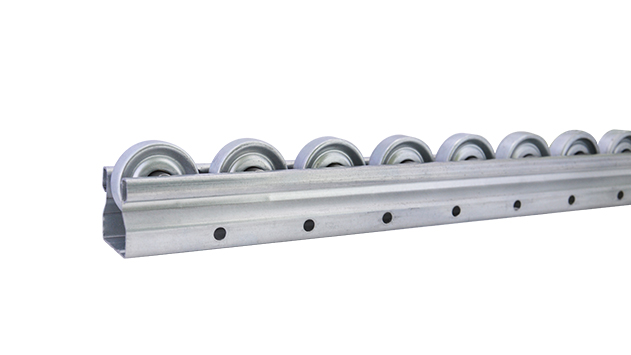
Heavy duty steel wheel roller track with cylindrical steel rollers for use in processing, logistics and materials handling operations. Ideal for transporting goods quickly and easily as well as for installing on shelving to aid in picking operations.
Adapting to Modern Manufacturing's Dynamic Needs with Lean Solutions
The Challenge of Static Production Lines in a Fast-Changing World
Walk into any manufacturing facility today, and you'll likely hear the same refrain from plant managers: "We need to change faster." Whether it's a consumer electronics brand rolling out a new smartphone model, an automotive supplier shifting to electric vehicle components, or a medical device manufacturer scaling up production for a critical new tool, the pace of change in manufacturing has never been more intense. Yet for many operations, the equipment that powers their production lines remains stuck in the past—heavy, fixed in place, and resistant to quick adjustments.
Traditional conveyor systems and material handling racks, once considered workhorses of the factory floor, now often act as bottlenecks. When a product design changes, or a new order requires reconfiguring a production cell, teams spend days (or even weeks) disassembling old setups, modifying equipment, and reinstalling components. The result? Downtime that eats into profits, missed deadlines, and frustrated teams struggling to keep up with demand.
This is where the need for flexibility becomes non-negotiable. Modern manufacturing demands systems that can adapt as quickly as the market does—systems that don't just support production, but enable it to evolve. Enter the 40 Steel Wheel Roller Track: a solution designed to turn rigidity into agility, and static layouts into dynamic, responsive workspaces.
"The future of manufacturing isn't about building faster lines—it's about building lines that can change faster. The 40 Steel Wheel Roller Track isn't just a piece of equipment; it's a foundation for adaptability."
What Makes 40 Steel Wheel Roller Track Different?
At first glance, a roller track might seem like a simple component: a series of wheels mounted on a frame, designed to move materials from point A to point B. But the 40 Steel Wheel Roller Track redefines what a "simple" component can do. Engineered with lean principles at its core, this system is built to address the specific pain points of modern manufacturers—flexibility, durability, and ease of use—without compromising on performance.
Let's break down the design elements that set it apart:
Steel Wheel Construction for Long-Term Reliability
: The "40" in its name refers to the 40mm steel wheels, chosen for their balance of strength and smooth operation. Unlike plastic wheels that wear down under heavy loads or soft rubber that degrades in harsh factory environments, these steel wheels stand up to constant use—whether they're moving lightweight electronic components or heavier automotive parts. This durability translates to less maintenance, fewer replacements, and a longer lifespan for your material handling system.
Modular Design for Tool-Free Adjustments
: One of the biggest time drains in reconfiguring production lines is disassembling and reassembling equipment. The 40 Steel Wheel Roller Track eliminates this hassle with a modular build that allows for quick, tool-free changes. Sections can be added or removed in minutes, and the track's mounting system works seamlessly with aluminum profiles and lean pipe systems—meaning you can reposition it, extend it, or repurpose it without calling in a team of engineers.
Variable Weight Capacity to Match Diverse Needs
: Manufacturing isn't one-size-fits-all, and neither is material handling. The 40 Steel Wheel Roller Track is engineered to handle a range of loads, from small electronic parts (common in 3C assembly) to heavier components like automotive batteries or medical device housings. This versatility means it can be integrated into multiple areas of your facility—from the assembly line to the warehouse—without needing separate systems for different tasks.
Smooth Material Flow for Reduced Operator Fatigue
: A roller track that jams or requires excessive force to move materials isn't just inefficient—it's a safety risk. The precision-engineered steel wheels on this track ensure materials glide smoothly, reducing the physical strain on operators. This not only speeds up production but also creates a safer, more ergonomic workspace—an often-overlooked factor in long-term productivity.
From Rigid to Responsive: How It Enables Layout Changes
The true value of the 40 Steel Wheel Roller Track lies in its ability to make layout changes not just possible, but practical . Let's walk through a scenario that many manufacturers face to see how it works in action:
Imagine a 3C electronics plant that produces smartwatches. A new model launch requires adding a quality control station mid-line to inspect a new sensor component. With a traditional fixed conveyor system, this would involve shutting down the line, cutting the conveyor, welding in a new section, and rerouting power—likely taking 2-3 days. With the 40 Steel Wheel Roller Track, the process looks very different:
1. Assess the space : The team measures the gap where the new station will go—no need for complex blueprints, as the track's modular sections fit standard aluminum profiles.
2. Add sections on-site : Using quick-connect brackets, they attach two new 1-meter track sections to the existing line, extending it to reach the new station.
3. Adjust height and angle : The track's adjustable mounts let them tilt the new section slightly to ensure smooth material flow into the QC station.
4. Test and go : Within an hour, the new setup is tested and operational. The line is back up, and production resumes with minimal downtime.
This isn't just a time-saver—it's a game-changer for responsiveness. When layout changes take hours instead of days, manufacturers can take on smaller, more frequent orders, test new production methods, and adapt to supply chain disruptions without derailing their entire operation.
| Aspect | Traditional Fixed Conveyors | 40 Steel Wheel Roller Track |
|---|---|---|
| Time to reconfigure | 3-5 days (requires disassembly/welding) | 1-2 hours (tool-free modular adjustments) |
| Flexibility in layout | Fixed path; difficult to redirect | Easily curved, extended, or shortened; compatible with lean pipe workbenches and racks |
| Weight capacity range | Often limited to specific loads (requires custom builds for heavy items) | 50-300kg per meter (adjustable with wheel spacing and bracket strength) |
| Maintenance needs | High (lubrication, motor repairs, welding fixes) | Low (replaceable wheels, no motors or complex parts) |
| Compatibility with lean systems | Limited (often requires custom adapters to work with lean pipe or flow racks) | Seamless (designed to integrate with lean pipe systems, flow racks, and ESD workstations) |

Beyond the Track: Integrating with a Complete Lean Solution
The 40 Steel Wheel Roller Track is powerful on its own, but its true potential shines when paired with a broader lean system. Modern manufacturing thrives on connectivity—where every tool, rack, and workstation works together to eliminate waste and boost efficiency. That's why this roller track is designed to integrate seamlessly with other lean components, creating a unified, adaptable ecosystem.
Lean Pipe Workbenches : Picture a production cell where the roller track feeds directly into a lean pipe workbench. Operators assemble components as materials flow smoothly toward them, with tools and parts organized on the bench's shelves. When a new product requires taller shelving, the bench's aluminum pipe frame can be adjusted in minutes—no need for a new workstation. The track and bench grow and change together, ensuring the entire cell remains efficient.
Flow Racks : In warehouses and distribution centers, the roller track pairs with flow racks to create "first-in, first-out" (FIFO) inventory systems. Boxes or bins glide down the track from the back of the rack to the picking front, reducing the need for manual lifting and ensuring stock rotation. When inventory needs change, the track's length or angle can be adjusted to fit different bin sizes, keeping the rack functional without replacement.
ESD Workstations : For industries like electronics manufacturing, where electrostatic discharge (ESD) can damage sensitive components, the roller track integrates with ESD workstations. Conductive steel wheels and grounded aluminum profiles ensure static is safely dissipated, protecting products during transport. This combination of flexibility and safety is critical for 3C and medical device production, where precision and protection go hand in hand.
Turnover Trolleys : When materials need to move between cells, the roller track works with turnover trolleys—lightweight, mobile carts that can be loaded directly from the track. Trolleys with matching roller surfaces allow for smooth transfer of goods, eliminating the need to lift heavy items manually. It's a small detail, but one that reduces operator fatigue and speeds up material flow across the facility.
"We used to avoid small-batch orders because reconfiguring our line was too costly. Now, with the 40 Steel Wheel Roller Track and lean pipe system, we can switch between products in a morning. Our profit margins on custom orders have gone up 20%." — Plant Manager, Automotive Parts Supplier

Industry-Specific Applications: Where It Thrives
While the 40 Steel Wheel Roller Track is versatile enough for almost any manufacturing setting, there are industries where its flexibility and durability make it particularly impactful. Let's explore a few key sectors:
3C Assembly (Consumer Electronics) : In factories producing smartphones, laptops, or wearables, product cycles are measured in months, not years. The 40 Steel Wheel Roller Track's ability to adapt to frequent design changes—whether it's a new case size or a different component layout—keeps production lines relevant. Its smooth material flow also reduces the risk of damaging delicate parts, a critical factor in high-value electronics manufacturing.
Automotive and Auto Parts : From engine components to interior panels, automotive manufacturing involves heavy, bulky materials. The roller track's high weight capacity (up to 300kg per meter) makes it ideal for moving these items, while its modular design allows for quick reconfiguration when shifting between vehicle models. In one auto parts plant, integrating the track with lean pipe racks reduced material retrieval time by 35%, as workers no longer had to walk to distant storage areas—parts came to them.
Medical Device Manufacturing : Cleanliness and precision are non-negotiable in medical production. The 40 Steel Wheel Roller Track's smooth, easy-to-clean steel surfaces resist dust and debris, making it suitable for controlled environments. Its compatibility with ESD workstations also ensures sensitive devices like pacemakers or diagnostic tools aren't damaged by static during assembly.
Warehousing and Logistics : In distribution centers, the track's FIFO capabilities shine. When paired with flow racks, it ensures that older inventory is picked first, reducing waste and improving stock accuracy. For e-commerce fulfillment centers handling seasonal spikes, the track can be quickly extended to add temporary picking stations, then scaled back when demand drops—no permanent construction required.
The Long-Term Value: More Than Just a Tool, a Strategic Investment
Investing in new equipment is always a decision that comes with questions: Will it last? Will it grow with us? Will it deliver a return? The 40 Steel Wheel Roller Track addresses these concerns by focusing on long-term value, not just short-term convenience.
Cost Savings Over Time : While the initial investment may be higher than a basic fixed conveyor, the savings add up quickly. Reduced downtime during reconfigurations, lower maintenance costs, and the ability to repurpose the track for new projects mean most manufacturers see ROI within 6-12 months. One case study with a consumer electronics client showed a 40% reduction in annual equipment modification costs after switching to the roller track system.
Sustainability Through Reusability : Lean manufacturing isn't just about efficiency—it's about sustainability. The 40 Steel Wheel Roller Track's modular design means components can be reused when lines are reconfigured, reducing waste. Unlike fixed systems that end up in landfills when outdated, these tracks can be repurposed for years, aligning with corporate sustainability goals and reducing environmental impact.
Future-Proofing Your Facility : No one can predict the next manufacturing trend—a new material, a shift to localized production, or a sudden change in consumer demand. But with a flexible system like the 40 Steel Wheel Roller Track, you're prepared for whatever comes next. It's not just equipment; it's a foundation that lets you pivot, experiment, and grow without being held back by your own infrastructure.
Key Takeaway: The 40 Steel Wheel Roller Track transforms layout changes from a costly, disruptive chore into a quick, routine adjustment. By integrating it with a lean pipe system, flow racks, and workbenches, manufacturers gain the agility to compete in today's fast-paced market—all while reducing costs, improving safety, and future-proofing their operations.
Why Choose a Trusted Lean Solution Partner?
Not all roller tracks are created equal. The difference between a generic, off-the-shelf product and a track designed for lean manufacturing lies in the details—material quality, engineering support, and a commitment to customization. When selecting a supplier, look for partners who understand your industry's unique challenges and can tailor the system to your needs.
A reliable lean solution provider won't just sell you a roller track; they'll work with your team to design a complete system that integrates with your existing equipment, addresses your specific pain points, and scales with your growth. From initial site assessments to on-site installation support and ongoing maintenance, they'll be there to ensure your investment delivers long-term value.
Conclusion: Flexibility as Your Competitive Edge
In manufacturing, the ability to change is no longer a luxury—it's survival. Static lines, rigid equipment, and slow reconfigurations are relics of a bygone era. Today's winners are the operations that can adapt, experiment, and respond to market shifts with speed and confidence.
The 40 Steel Wheel Roller Track embodies this new reality. It's more than a tool for moving materials; it's a symbol of a leaner, more responsive approach to manufacturing—one where waste is eliminated, efficiency is prioritized, and change is embraced. Whether you're producing smartphones, car parts, or medical devices, this roller track and its integrated lean system don't just support your current production—they empower your future.
So, the next time you look at your production line, ask: Is this system holding us back, or helping us move forward? With the right tools, the answer can be clear—and the results, transformative.