- Company Articles
- Products and Technology
- Solution
- 40 Steel Wheel Roller Track in Warehousing: Optimizing Material Flow

40 Steel Wheel Roller Track in Warehousing: Optimizing Material Flow
Related Product
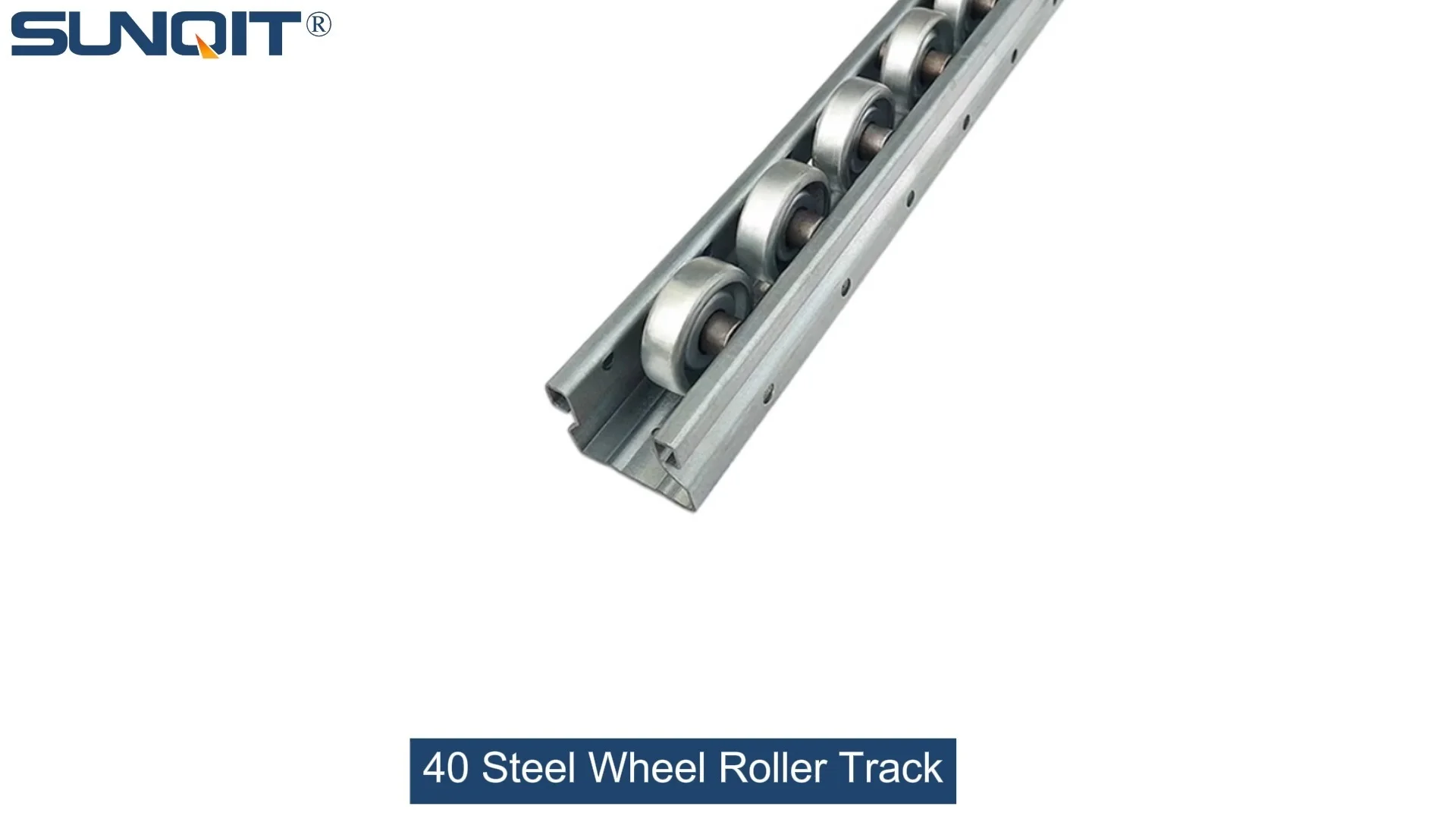
40 Steel Wheel Roller Track
Heavy duty steel wheel roller track with cylindrical steel rollers for use in processing, logistics and materials handling operations. Ideal for transporting goods quickly and easily as well as for installing on shelving to aid in picking operations.
In the fast-paced world of modern warehousing and manufacturing, the efficiency of material flow can make or break a business. Every minute wasted on cumbersome (material handling), every bottleneck in the production line, and every instance of manual error chips away at profitability and operational agility. This is where thoughtful equipment design becomes more than just a tool—it becomes the backbone of a lean, responsive workflow. Among the unsung heroes of this transformation is the 40 Steel Wheel Roller Track, a deceptively simple yet powerful solution that's redefining how materials move through warehouses, assembly lines, and distribution centers. Let's dive into how this unassuming component is optimizing material flow, reducing friction, and empowering teams to work smarter, not harder.
What Is 40 Steel Wheel Roller Track?
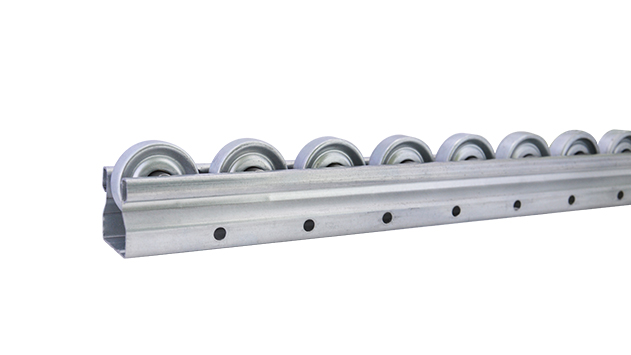
At first glance, the 40 Steel Wheel Roller Track might look like just another metal rail with wheels—but its design is rooted in decades of lean manufacturing principles. The "40" refers to its standard width (40mm), making it ideal for medium to heavy-duty loads commonly found in warehousing, from cartons of electronics components to small machinery parts. The steel wheels, often paired with durable aluminum or steel tracks, are engineered to minimize rolling resistance, ensuring materials glide smoothly even when fully loaded. What truly sets it apart, though, is its modularity: with the right roller track connectors and brackets, it can be configured in straight lines, curves, or even multi-level setups, adapting to the unique layout of any workspace.
But it's not just about moving things from point A to B. This roller track is part of a larger ecosystem of lean tools—working in harmony with turnover trolleys, conveyors, and lean pipe workbenches to create a seamless material flow system. Whether you're moving raw materials to an assembly line, transporting finished goods to shipping, or (sorting) items in an e-commerce warehouse, the 40 Steel Wheel Roller Track acts as the circulatory system, keeping operations flowing without interruptions.
Why 40 Steel Wheel Roller Track Stands Out: Key Advantages
To understand its impact, let's compare it to traditional material handling methods. Manual (manual carrying) relies on human effort, leading to fatigue and slowdowns; belt conveyors, while efficient, are often fixed and hard to reconfigure. The 40 Steel Wheel Roller Track, however, bridges the gap with a blend of flexibility, durability, and user-centric design. Here's how:
| Traditional Method | 40 Steel Wheel Roller Track Advantage |
|---|---|
| Manual cart pushing: High physical strain, slow speeds | Low rolling resistance: Materials move with minimal force, reducing worker fatigue |
| Fixed belt conveyors: Rigid layout, hard to adjust | Modular design: Easy to extend, reposition, or repurpose with roller track connectors |
| Plastic roller tracks: Limited load capacity, prone to wear | Steel wheels & robust tracks: Handles up to 50kg per linear meter, ideal for long-term use |
| Complex conveyor systems: High installation & maintenance costs | Tool-free assembly: Quick setup with basic brackets, no need for specialized technicians |
Beyond the Table: Real-World Benefits
Numbers tell part of the story, but the real magic is in the day-to-day impact. Imagine a team in a 3C manufacturing plant tasked with moving circuit boards from a storage area to an assembly workbench. With a traditional setup, a worker might spend 15 minutes per hour wheeling a heavy cart back and forth. With a 40 Steel Wheel Roller Track installed, the boards glide directly from storage to the workbench in seconds—freeing up the worker to focus on quality checks or assembly. Over a week, that's hours of recovered productivity.
Durability is another unsung benefit. In busy warehouses, equipment takes a beating—forklifts bump into tracks, heavy loads grind against wheels, and dust or debris can jam moving parts. The 40 Steel Wheel Roller Track's steel wheels resist wear, while its corrosion-resistant coating (often paired with yellow or black ESD wheels for static control in electronics environments) ensures it holds up in harsh conditions. This means less downtime for repairs and more consistent performance, even during peak seasons.
Where It Shines: Real-World Applications
The 40 Steel Wheel Roller Track isn't a one-trick pony. Its versatility makes it indispensable across industries, from automotive parts distribution to 3C assembly lines. Let's explore a few scenarios where it truly transforms operations:
E-commerce Fulfillment Centers: Speeding Up Order Processing
In e-commerce, every second counts during peak shopping seasons. Warehouses handling hundreds of orders daily need a way to sort, pack, and ship items quickly. Here, 40 Steel Wheel Roller Tracks are often installed at packing stations: as soon as an order is picked, the item slides down the track to a packing workbench, where a team member boxes it up. The track's gentle slope ensures items arrive smoothly (no more damaged goods!), and its modular design allows for easy expansion during busy periods—simply add more track sections and connectors to keep up with demand.
Manufacturing Assembly Lines: Connecting Workstations
Manufacturers, especially in sectors like 3C (computers, communications, consumer electronics), rely on lean workflows to stay competitive. Picture a smartphone assembly line: components like screens, batteries, and circuit boards need to move between workstations without delays. By integrating 40 Steel Wheel Roller Tracks between lean pipe workbenches, parts flow directly from one station to the next. For example, after a worker installs a battery at Station A, the partially assembled phone glides along the track to Station B for screen attachment. No more waiting for a turnover trolley to shuttle parts—material flow becomes continuous, cutting cycle times by 20-30% in many cases.
Medical Device Warehousing: Ensuring Precision & Cleanliness
Medical device storage demands precision and hygiene. Delicate instruments or sterile supplies can't be jostled or exposed to contaminants. The 40 Steel Wheel Roller Track, with its smooth-rolling steel wheels and easy-to-clean surfaces, is perfect here. Tracks can be paired with ESD (electrostatic discharge) workbenches to prevent static damage to sensitive equipment, while plastic roller track guide rails (often grey or yellow for visibility) keep items aligned, reducing the risk of misplacement. It's a small detail, but in an industry where errors can have life-or-death consequences, reliability matters most.

Working in Harmony: Synergy with Other Lean Tools
The true power of the 40 Steel Wheel Roller Track lies in how it complements other lean solutions, creating a cohesive ecosystem that amplifies efficiency. Let's break down a few key partnerships:
With Turnover Trolleys: From Track to Transport
Roller tracks excel at moving materials along fixed paths, but what about transporting items across the warehouse? Enter turnover trolleys—lightweight, mobile carts that pair seamlessly with the 40 Steel Wheel Roller Track. Here's how it works: a full bin of parts slides off the track and onto a trolley (thanks to the track's low-profile design), which is then wheeled to another area of the facility. When the trolley is unloaded, it can be parked at the end of the track, ready to receive the next load. This combo eliminates double-handling, turning a two-step process (unload track → load trolley) into a one-step glide.
With Conveyors: Building Semi-Automated Systems
For larger operations, roller tracks often act as the "last mile" in material flow, connecting to conveyor systems for long-distance transport. Imagine a warehouse where goods arrive via truck, are unloaded onto a powered conveyor, and then diverted to 40 Steel Wheel Roller Tracks for final sorting into zones. The conveyor handles the heavy lifting over long distances, while the roller track handles the (fine-grained) distribution to individual workstations. This hybrid approach balances automation with flexibility—no need for an expensive fully automated system when a semi-automated setup with roller tracks gets the job done.
With Lean Solutions: Supporting Continuous Improvement
At its core, the 40 Steel Wheel Roller Track embodies the "," (reusable, continuously improvable) philosophy of lean manufacturing. Unlike fixed equipment that becomes obsolete when workflows change, roller tracks can be disassembled, reconfigured, and reused. A warehouse expanding its storage area? Add more track sections. A manufacturer shifting to a new product line? Reposition tracks to match the new assembly sequence. This adaptability ensures businesses get long-term value from their investment, aligning with broader lean solutions that prioritize waste reduction and operational agility.

Tailored to Your Needs: Customization Options
No two warehouses or production lines are identical, and the 40 Steel Wheel Roller Track understands that. Suppliers offer a range of customization options to fit specific needs:
For example, a 3C manufacturer dealing with small, high-value components might opt for ESD wheels and aluminum guide rails to prevent static damage and keep parts aligned. A food distribution center, on the other hand, might choose yellow wheels for visibility and corrosion-resistant tracks to handle cold storage conditions. The goal? A roller track that doesn't just fit the space, but fits the workflow.
More Than a Track: A Catalyst for Lean Material Flow
At the end of the day, the 40 Steel Wheel Roller Track is more than just a piece of equipment—it's a catalyst for change. It transforms clunky, disjointed material handling into a smooth, efficient process that reduces stress on workers, cuts down on delays, and frees up time for teams to focus on higher-value tasks. Whether paired with turnover trolleys in a warehouse, integrated into assembly lines with conveyors, or supporting lean pipe workbenches in a manufacturing plant, it's a silent workhorse that keeps operations moving forward.
In a world where operational efficiency is the key to staying ahead, the 40 Steel Wheel Roller Track proves that sometimes the most impactful solutions are the ones that make complex processes feel effortless. It's not just about optimizing material flow—it's about empowering businesses to do more with less, adapt to change, and thrive in an ever-evolving market. So, if you're looking to reduce friction in your workflow, start with the basics: how your materials move. Chances are, the 40 Steel Wheel Roller Track will be the first step toward a leaner, more agile operation.