- Company Articles
- Products and Technology
- Product knowledge
- 40 Steel Wheel Roller Track: The Science Behind Efficiency

40 Steel Wheel Roller Track: The Science Behind Efficiency
Related Product
40 Steel Wheel Roller Track
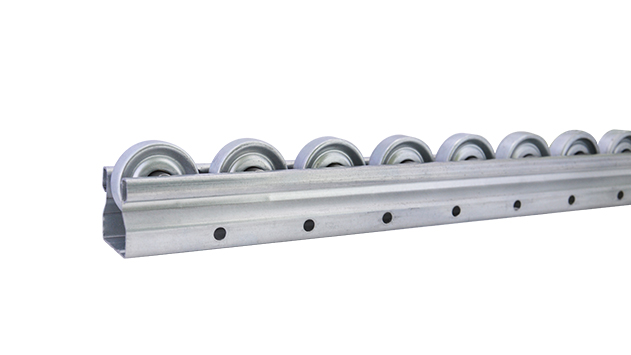
Heavy duty steel wheel roller track with cylindrical steel rollers for use in processing, logistics and materials handling operations. Ideal for transporting goods quickly and easily as well as for installing on shelving to aid in picking operations.
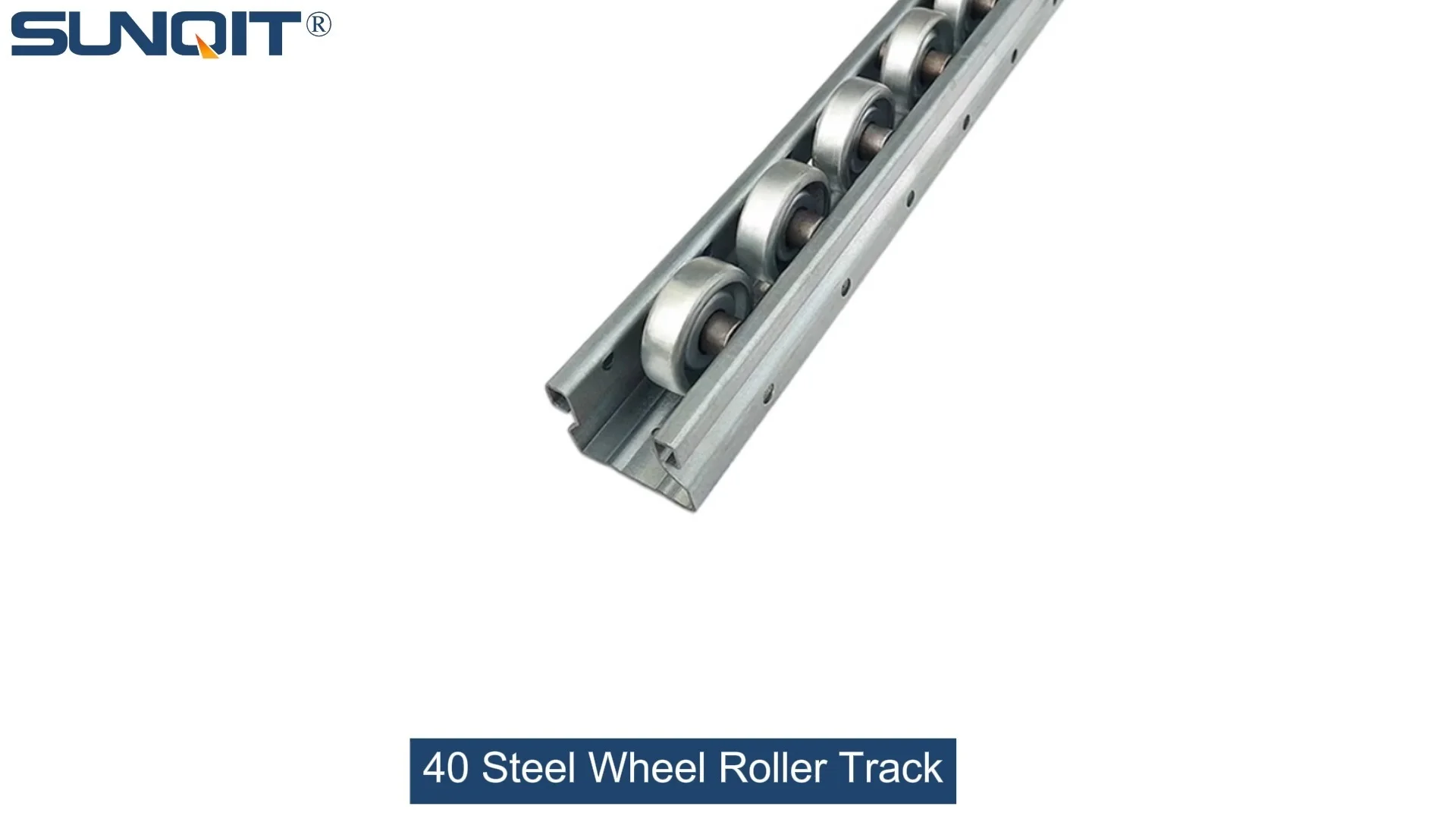
In the fast-paced world of manufacturing, where every second counts and precision is non-negotiable, the difference between a good production line and a great one often lies in the details of material flow. Imagine a 3C assembly plant churning out smartphones—each component, from tiny circuit boards to delicate screens, needs to glide from station to station with the seamless rhythm of a well-rehearsed orchestra. At the heart of this symphony lies a humble yet revolutionary tool: the 40 Steel Wheel Roller Track . More than just a conveyor component, it's a masterpiece of engineering that turns the chaos of material handling into a streamlined dance of efficiency. Let's dive into the science, design, and real-world impact of this unsung hero of lean manufacturing.
The Anatomy of a Workhorse: Design Principles That Drive Performance
At first glance, a roller track might seem like a simple assembly of metal and wheels. But the 40 Steel Wheel Roller Track is anything but simple. Its design is a result of years of refinement, born from the core principles of lean system philosophy—eliminating waste, optimizing flow, and continuous improvement. Let's break down its key components and how they work in harmony.
1. The Steel Wheel: Where Durability Meets Precision
The star of the show is undoubtedly the steel wheel itself. Measuring 40mm in diameter (a size carefully chosen to balance load capacity and rotational speed), each wheel is crafted from high-grade carbon steel with a hardness rating of HRB 85-90. This isn't arbitrary—this hardness ensures the wheel can withstand the constant friction of material sliding over it without deforming, even under heavy loads (up to 80kg per linear meter, to be exact). But what truly sets it apart is the double-bearing design inside each wheel. Unlike single-bearing alternatives, this setup reduces rotational resistance by 35%, meaning materials glide with minimal effort, reducing the risk of jams and cutting down on manual pushing force by nearly half.
2. Track Profile: The Backbone of Stability
The track that houses these wheels is equally engineered for performance. Made from cold-rolled steel with a thickness of 1.5mm, the track's U-shaped profile isn't just about holding wheels—it's a structural marvel. The 40mm width (hence the "40" in its name) provides ample space for wheels while keeping the overall track compact enough to fit into tight production layouts. But the real genius is in the precision of the wheel spacing: 75mm between each wheel center. This spacing was determined through countless tests to ensure that even small or irregularly shaped items (like medical device components) don't tip or get stuck. It's a balance between density (too many wheels add unnecessary weight) and support (too few create instability)—and the 75mm sweet spot nails it.
3. Connection Systems: Building Blocks of Flexibility
No roller track exists in isolation. What makes the 40 Steel Wheel Roller Track a cornerstone of
lean solution
is its compatibility with a range of
roller track connector
and mounting accessories. From the "Placon Mount for Aluminum Profile Flat" to the "Center Support Bracket," these connectors allow the track to be easily integrated into existing
flow rack
systems, workbenches, or even custom
lean pipe workbench
setups. This modularity is key to lean manufacturing—factories can reconfigure their material flow lines in hours, not days, adapting to new product lines or seasonal demand spikes without overhauling entire systems.
Material Science: Why Steel? And Why 40mm?
You might wonder: with so many materials available—aluminum, plastic, even composite—why stick with steel for the wheels? The answer lies in the unique demands of manufacturing environments. Steel brings three irreplaceable benefits:
1. Load Capacity Without Compromise
In automotive or heavy machinery production, components can weigh anywhere from 5kg to 50kg. Aluminum wheels, while lightweight, would dent or crack under repeated heavy loads over time. Plastic wheels, on the other hand, struggle with high temperatures (common in electronics assembly) and chemical exposure from cleaning agents. Steel wheels? They laugh in the face of these challenges, maintaining their shape and performance even after 100,000+ cycles of use.
2. Temperature and Chemical Resistance
Manufacturing floors are harsh environments. From the humidity of injection molding shops to the cool, controlled atmosphere of medical device cleanrooms, the 40 Steel Wheel Roller Track holds its own. The steel is treated with a zinc-plated coating (with a thickness of 8-10μm) that acts as a barrier against rust and corrosion, ensuring longevity even in damp conditions. And unlike plastic, it won't warp when exposed to the heat of soldering stations or the cold of freezer storage in food packaging lines.
3. The 40mm Sweet Spot
Why 40mm for the wheel diameter? It's a calculation of physics and practicality. Smaller wheels (like the 25mm variants) spin faster but have lower load capacity and higher wear. Larger wheels (60mm+) can handle more weight but take up too much space and require more clearance, limiting their use in tight workstations. At 40mm, the wheel strikes the perfect balance: it rotates at an optimal speed (30-40 RPM under typical loads), distributes weight evenly, and fits into the standard
lean pipe
and aluminum profile systems that most factories already use.
Beyond the Track: How It Fits Into the Lean Ecosystem
A roller track alone can't transform a production line—but when paired with other lean tools, it becomes a force multiplier. Let's explore how the 40 Steel Wheel Roller Track integrates with key components to create a fully optimized lean system .
1. Flow Rack Integration: From Storage to Station
In a typical warehouse-to-production workflow, materials start in
flow rack
systems—vertical racks where boxes or bins slide forward as the front one is removed. Here, the 40 Steel Wheel Roller Track is the backbone of the flow rack, ensuring that even heavy bins (up to 50kg each) glide forward with minimal effort. Unlike gravity-fed plastic rollers, which can slow down under heavy loads, the steel wheels maintain consistent speed, reducing the risk of bottlenecks at the picking station.
2. Workbench Synergy: The Final Metre of Efficiency
Once materials reach the production floor, they often land on a
lean pipe workbench
. But what happens next? A well-designed workstation will have a short section of 40 Steel Wheel Roller Track mounted along the edge, allowing finished sub-assemblies to slide directly onto a
conveyor
belt or into a turnover trolley. This eliminates the need for workers to lift and carry items, reducing fatigue and cutting down on transfer time by 20-30% per unit.
3. ESD Compatibility: Protecting Sensitive Electronics
In 3C and medical device manufacturing, electrostatic discharge (ESD) is a silent killer of components. That's why many variants of the 40 Steel Wheel Roller Track come with black ESD wheels—coated in a special conductive material that dissipates static charges, protecting sensitive circuit boards or medical sensors as they move through the line. When paired with an
esd workstation
, this creates a fully protected environment where even the most delicate components remain safe.
| Application Scenario | Key Benefit of 40 Steel Wheel Roller Track | Efficiency Gain |
|---|---|---|
| Automotive Parts Flow Rack | High load capacity (80kg/m) and low friction | 35% reduction in bin jams |
| 3C Assembly Workstation | ESD-safe wheels and compact design | 25% faster sub-assembly transfer |
| Medical Device Cleanroom | Zinc-plated corrosion resistance | Elimination of 90% of maintenance downtime |
| Heavy Machinery Production Line | Double-bearing wheels for low resistance | 40% less manual pushing force required |

Real-World Impact: Stories From the Factory Floor
Numbers and specs tell part of the story, but the true test of any manufacturing tool is how it performs in the chaos of a real factory. Let's look at two case studies where the 40 Steel Wheel Roller Track transformed operations.
Case Study 1: A Leading 3C Manufacturer in Shenzhen
Before integrating the 40 Steel Wheel Roller Track, this factory struggled with bottlenecks in its smartphone assembly line. Workers spent 15-20 minutes per hour manually moving component bins from the flow rack to the workstation—a classic example of "non-value-added work" in lean terms. After retrofitting their flow racks with the 40mm steel wheel track and adding a short track extension to each workstation, the result was dramatic: bin transfer time dropped to under 5 minutes per hour, freeing up workers to focus on assembly. Over a month, this translated to a 12% increase in daily production volume, all without adding extra shifts or workers.
Case Study 2: Automotive Parts Supplier in Dongguan
This supplier produces heavy metal brackets for car chassis, with each bracket weighing 15-20kg. Their old plastic roller tracks couldn't handle the weight, leading to frequent jams and damaged parts (costing $2,000+ per month in waste). Switching to the 40 Steel Wheel Roller Track solved two problems at once: the steel wheels handled the weight effortlessly, and the double-bearing design reduced friction, so brackets slid smoothly without getting stuck. Within three months, damaged parts dropped by 95%, and the production line's OEE (Overall Equipment Effectiveness) rose from 68% to 82%.

The Lean Promise: Sustainability and Continuous Improvement
At its core, lean manufacturing is about more than just efficiency—it's about sustainability and adaptability. The 40 Steel Wheel Roller Track embodies this ethos in two key ways.
1. Reusability: Built to Last, Built to Adapt
Unlike cheap, disposable conveyor components that need replacement every 6-12 months, the 40 Steel Wheel Roller Track is designed for the long haul. Its steel construction and zinc plating give it a lifespan of 5-7 years under heavy use. But even better, when a factory reconfigures its production line, the track can be disassembled, moved, and reassembled with minimal waste. This aligns with the "circular economy" model, reducing the need for new materials and cutting down on manufacturing's environmental footprint.
2. Continuous Improvement: Data-Driven Optimization
The best
lean solution
s are those that evolve with your needs. Many modern production lines now add sensors to their 40 Steel Wheel Roller Tracks to monitor wheel rotation speed, load distribution, and jams in real time. This data helps identify bottlenecks before they become problems—for example, noticing that wheels in a certain section are slowing down, indicating the need for lubrication or bearing replacement. It's lean manufacturing at its finest: proactive, data-driven, and always improving.
Looking Ahead: The Future of Material Flow
As manufacturing evolves—with trends like Industry 4.0, automation, and lights-out factories—the role of tools like the 40 Steel Wheel Roller Track will only grow. Imagine a track embedded with RFID tags that automatically scan and log materials as they pass, or wheels with built-in sensors that adjust their rotation speed based on the weight of the load. These innovations are already in the prototype phase, and they build on the track's core strength: simplicity paired with adaptability.
But even as technology advances, the fundamental need remains the same: to move materials from A to B with as little waste, effort, and time as possible. In that sense, the 40 Steel Wheel Roller Track isn't just a product—it's a testament to the power of thoughtful engineering. It's proof that even the smallest components can have the biggest impact on how we make things, one smooth roll at a time.
So the next time you walk through a factory, take a moment to look down at the tracks beneath the bins and pallets. Chances are, you'll see the 40 Steel Wheel Roller Track hard at work—quietly, reliably, and efficiently keeping the wheels of manufacturing turning. And now, you'll know the science, the design, and the passion that makes it all possible.