- Company Articles
- Products and Technology
- Solution
- 4040 Aluminum Profile End Caps for Custom Material Racks: Tailored Storage Solutions

4040 Aluminum Profile End Caps for Custom Material Racks: Tailored Storage Solutions
Related Product
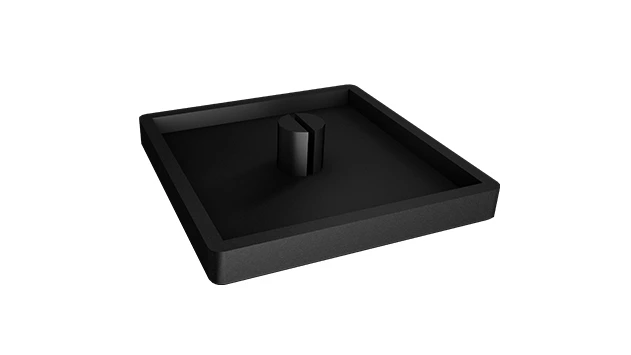
4040 Aluminum Profile End Cap
The aluminum profile end cap adds a finishing touch to your project and closes off profile ends to limit dust and debris buildup, also it can avaid some scratch for material and labor during the assemble work.
The Hidden Cost of Poor Storage: Why Your Workshop Deserves Better
Walk into any busy factory or workshop, and you'll quickly spot the difference between a space that hums with efficiency and one that struggles to keep up. More often than not, the culprit behind delays, frustrated workers, and damaged materials isn't outdated machinery or unskilled labor—it's disorganized storage. Picture this: a technician spends 15 minutes hunting for a small component buried in a jumbled shelf, or a fragile part gets scratched because it's wedged between heavier items. Multiply those minutes by dozens of workers and hundreds of parts each day, and the cost of "good enough" storage racks becomes painfully clear.
This is where tailored storage solutions step in. Not the one-size-fits-all metal shelves that bend under weight or the rickety wooden racks that splinter over time, but systems built to fit your space, your parts, and your workflow. At the heart of these solutions lies a humble yet powerful building block: the aluminum extrusion profile. And when it comes to creating custom material racks that balance strength, flexibility, and longevity, few profiles stand out like the 4040 aluminum profile. But even the sturdiest profile needs a finishing touch—something to seal the deal, protect its edges, and tie the whole system together. That's where 4040 aluminum profile end caps come in. Small as they may seem, these unassuming accessories are the unsung heroes of a truly polished, functional storage setup.
Aluminum Profiles: The Backbone of Modern Material Racks
What Even Is an Aluminum Extrusion Profile?
If you've ever assembled a modular shelf, built a workbench, or seen a conveyor system in action, you've probably encountered aluminum extrusion profiles without realizing it. These are the metal bars with precise, uniform cross-sections—often featuring T-slots, grooves, or channels—that lock together with brackets, screws, or joints to form sturdy structures. The "extrusion" part refers to how they're made: heated aluminum billets are forced through a die (a custom-shaped mold) under high pressure, resulting in long, consistent lengths of metal that can be cut to size. It's a process that marries precision with affordability, making aluminum profiles the go-to choice for everything from industrial racks to DIY projects.
What makes them so special? For starters, aluminum is naturally lightweight yet surprisingly strong—think of how airplanes, which need to withstand extreme forces, rely on aluminum alloys. Add to that its resistance to rust and corrosion (no more dealing with flaky paint or rust stains on your racks), and you've got a material that's built to last in tough workshop environments. But the real magic is in the T-slots. These grooves run along the length of the profile, allowing you to attach accessories—shelves, bins, hooks, or even other profiles—anywhere along the bar, without drilling holes or welding. It's like building with giant, industrial-grade Legos, and it's revolutionized how we design storage systems.
Why 4040 Aluminum Profile Stands Out in the Crowd
Aluminum profiles come in all shapes and sizes, from tiny 20x20mm bars for light-duty shelves to beefy 80x80mm beams for heavy machinery frames. So why does the 4040 aluminum profile keep popping up in workshops and factories? Let's break it down: 4040 refers to the profile's cross-section—40mm wide and 40mm tall, forming a square or rectangular shape (depending on the design). This size hits a sweet spot between versatility and strength. It's narrow enough to fit into tight spaces (like between production lines or against walls) but robust enough to support hundreds of pounds of weight when properly braced. Whether you're building a small parts rack for electronic components or a heavy-duty material shelf for automotive parts, 4040 profiles offer the flexibility to scale up or down without sacrificing stability.
Another reason for its popularity is compatibility. Most aluminum profile suppliers design their accessories—joints, brackets, end caps—to work seamlessly across standard sizes, and 4040 is one of the most widely used. That means if you need to expand your rack next year, or reconfigure it to hold different parts, you won't have to start from scratch. You can simply add more 4040 profiles and reuse the same accessories. It's a level of adaptability that old-fashioned wooden or welded steel racks just can't match, and it's a cornerstone of lean system principles—reducing waste by making the most of what you already have.

4040 Aluminum Profile End Caps: Small Parts, Big Impact
Let's talk about the details—the little things that turn a "functional" rack into a "professional" one. When you build a material rack with 4040 aluminum profiles, you'll end up with exposed ends on each bar. These ends might not seem like a big deal at first, but leave them uncovered, and you'll quickly notice the problems: sharp edges that catch on gloves or clothing, dust and debris clogging the T-slots, and a generally unfinished look that makes even the sturdiest rack feel cheap. Enter 4040 aluminum profile end caps: small, often plastic or aluminum covers that snap or screw onto the ends of the profile, solving all these issues and more.
Functionality First: Safety and Protection
Safety should always come first in a workshop, and end caps are a simple way to make your racks safer. Raw aluminum profile ends can be surprisingly sharp—think of the edge of a metal ruler, but sturdier. A worker rushing to grab a part could easily brush against an exposed end and get a cut, or a gloved hand might catch on a burr, causing a tool or part to slip. End caps smooth out those edges, turning potential hazards into harmless, rounded surfaces. They also protect the T-slots, which are crucial for attaching accessories. Without end caps, dust, dirt, and small debris can settle into the slots, making it harder to insert screws or brackets later. Over time, that debris can even scratch the slot walls, weakening the connection between parts. A good end cap acts like a door, keeping the inside of the profile clean and ready for use.
Aesthetics: Because Your Workshop Deserves to Look Sharp
Let's be honest: no one wants to work in a space that looks thrown together. A cluttered, messy workshop can drain morale, while a clean, organized one boosts productivity and pride in the job. End caps play a quiet role in that by giving your material rack a polished, intentional look. Instead of seeing rough-cut metal ends peeking out from every corner, you'll have uniform, color-coordinated caps that tie the whole structure together. Many suppliers offer end caps in different colors—like black, gray, or even custom shades—to match your company's branding or workshop color scheme. It's a small touch, but it sends a message: "We care about the details, and we care about this space." That message doesn't just resonate with workers; it can impress clients or auditors who visit your facility, too.
Durability: Matching the Profile's Long Lifespan
Aluminum profiles are built to last decades, so why pair them with flimsy end caps that crack or fall off after a year? Quality end caps are designed to keep up with the profiles they protect. Most are made from tough, impact-resistant plastics (like ABS or nylon) or aluminum, both of which stand up to bumps, drops, and the occasional tool being knocked against the rack. Plastic end caps are lightweight and affordable, while aluminum ones offer extra strength for heavy-duty applications—like racks that hold metal parts or get moved around frequently. Either way, the goal is the same: to ensure that your end caps don't become a maintenance headache. A good cap should snap into place securely (no wiggling or falling off) and resist fading from sunlight or discoloration from oils and chemicals commonly found in workshops.

Building Custom Material Racks: From Design to Deployment
Okay, so we've covered the "why" of 4040 aluminum profiles and end caps. Now let's get into the "how"—how do you turn these parts into a custom material rack that solves your specific storage problems? It starts with understanding your needs: What are you storing? How heavy are the items? Do you need the rack to be mobile, or fixed in place? How often will you need to reconfigure it? Once you have answers to those questions, you can start designing with 4040 profiles as your base.
Case Study: Material Rack B (3 Row and 3 Floor) – A Real-World Example
Let's take a common scenario: a electronics manufacturing plant that needs to store small to medium-sized components—resistors, capacitors, circuit boards—in a way that's easy to access from both sides. They might opt for a "Material Rack B (3 row and 3 floor)" design, which, as the name suggests, features 3 vertical rows and 3 horizontal floors (shelves), creating 9 separate storage areas. Here's how 4040 aluminum profiles and end caps would come into play:
First, the frame: Vertical 4040 profiles form the four corners of the rack, while horizontal profiles connect them at the top, bottom, and between each floor. T-slots in the horizontal profiles allow for adjustable shelves—so if some components are taller than others, you can raise or lower a shelf without rebuilding the entire rack. Brackets or angle codes (like 3060 aluminum angle yards, another handy accessory) reinforce the corners, ensuring the rack doesn't wobble under load. Now, for the finishing touches: every exposed end of those vertical and horizontal profiles gets a 4040 end cap. The vertical corners, which might get bumped by workers or trolleys, get durable plastic caps to prevent scuffs. The horizontal shelves, which are easier to reach, get color-coded caps—maybe blue for floor 1, green for floor 2, and red for floor 3—to help workers quickly locate parts.
The result? A rack that's sturdy enough to hold 50-75 pounds per shelf (depending on the profile thickness and bracing), easy to assemble (no welding required—just bolts and brackets), and adaptable. If next month the plant starts storing larger components, they can remove a shelf, add longer profiles, and reattach the end caps—no problem. Compare that to a wooden rack, which would require sawing and repainting, or a welded steel rack, which would need a grinder and new welds. It's lean system thinking in action: minimal waste, maximum flexibility.
| Feature | Traditional Wooden Rack | 4040 Aluminum Profile Rack with End Caps |
|---|---|---|
| Assembly Time | 4-6 hours (cutting, drilling, painting) | 1-2 hours (bolt-together, no special tools) |
| Weight Capacity | 50-100 lbs per shelf (varies by wood type) | 75-150 lbs per shelf (with proper bracing) |
| Reconfigurability | Low (requires cutting new wood, repainting) | High (adjust shelves via T-slots, add/remove profiles) |
| Safety | Sharp edges, splinters, risk of wood warping | Smooth end caps, rust-resistant, stable frame |
| Longevity | 3-5 years (prone to rot, pests, water damage) | 10-15+ years (aluminum resists corrosion, end caps protect T-slots) |
Integrating with Lean Systems: Less Waste, More Flow
At the end of the day, custom material racks aren't just about storage—they're about supporting lean systems, the philosophy of minimizing waste (time, materials, space) while maximizing value. A well-designed rack with 4040 profiles does exactly that. By keeping parts organized and within arm's reach, it reduces "motion waste" (workers walking back and forth to find items). By allowing for easy reconfiguration, it adapts to changing production needs, so you don't waste money on new racks every time your workflow shifts. Even the end caps play a role in lean thinking: by protecting the profiles and T-slots, they ensure the rack stays functional for years, avoiding the waste of replacing damaged parts or entire racks prematurely.
Beyond Racks: Workbenches and the Aluminum Ecosystem
While we've focused on material racks, 4040 aluminum profiles and end caps are just as useful for building workbenches—the literal and figurative workhorses of any workshop. A sturdy workbench needs a frame that can handle clamps, tools, and the occasional hammer blow, and 4040 profiles are up to the task. Imagine a Workbench E (single deck-without caster), where the legs and frame are made from 4040 profiles. The T-slots in the profiles let you attach a vice, tool hooks, or a power strip directly to the bench, keeping your workspace organized. And yes, those leg profiles get end caps too—often rubberized or with non-slip pads—to prevent the bench from scratching the floor and to keep it from sliding around during use.
The beauty of the aluminum ecosystem is how all these pieces work together. The same 4040 profiles you use for your material rack can be used to build a matching workbench, creating a cohesive, unified workspace. Need a trolley to move parts from the rack to the bench? Use 4040 profiles and casters (like caster wheel and accessories) to build one. It's a modular system that grows with your needs, and it all starts with the humble profile—and the end caps that protect it.
Choosing the Right Supplier: It's About More Than Just Parts
You could have the best design in the world, but if your aluminum profiles are warped, your end caps don't fit, or your supplier takes weeks to ship, your custom rack project will quickly turn into a nightmare. That's why choosing the right aluminum profile supplier matters. Look for a supplier that specializes in industrial-grade profiles and accessories—someone who can answer questions about weight capacity, recommend the right end caps for your environment (e.g., static-resistant caps for ESD workbenches), and offer fast, reliable shipping. A good supplier will also provide samples, so you can test how the end caps fit on the profiles before placing a large order. After all, the goal is to build a storage solution that works for years, not just days—and that starts with quality parts from a partner you can trust.
Wrapping It Up: Small Parts, Big Difference
At the end of the day, 4040 aluminum profile end caps might seem like a tiny detail in the grand scheme of building custom material racks. But as we've explored, tiny details add up. They turn a sharp, dusty profile end into a safe, clean edge. They turn a jumbled collection of metal bars into a professional, cohesive rack. And they turn a "good enough" storage solution into one that supports lean systems, boosts morale, and stands the test of time.
So the next time you're designing a material rack or workbench, don't overlook the end caps. Pair your 4040 aluminum profiles with quality caps, choose a reliable supplier, and build a storage system that's not just functional—but thoughtful. Your workers, your bottom line, and your workshop will thank you.