- Company Articles
- Products and Technology
- Product knowledge
- 4040 Aluminum Profile End Caps for Eco-Friendly Factories: Green Manufacturing Choices

4040 Aluminum Profile End Caps for Eco-Friendly Factories: Green Manufacturing Choices
Related Product
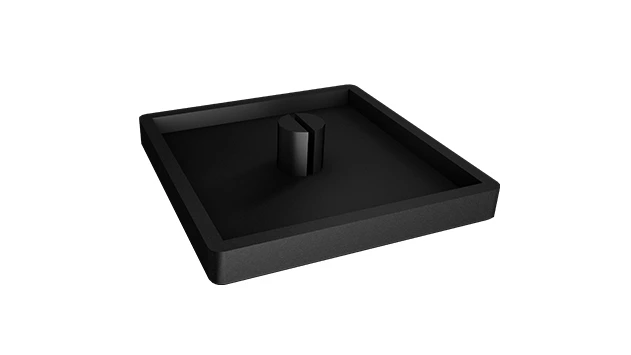
4040 Aluminum Profile End Cap
The aluminum profile end cap adds a finishing touch to your project and closes off profile ends to limit dust and debris buildup, also it can avaid some scratch for material and labor during the assemble work.
Walk through the doors of a forward-thinking manufacturing plant today, and you'll sense a shift in the air—one where the hum of machinery is balanced by a quiet commitment to the planet. Factories are no longer just about churning out products; they're about doing so responsibly, with an eye on reducing waste, cutting carbon footprints, and building systems that last. In this new era of green manufacturing, even the smallest components play a starring role. Take, for instance, the unassuming 4040 aluminum profile end cap. It's a tiny piece, sure, but when paired with aluminum extrusion profiles and integrated into lean systems, it becomes a cornerstone of sustainable factory design.
Let's start with the basics: aluminum extrusion profiles. These are the backbone of modern factory setups—sleek, lightweight, and infinitely adaptable. Unlike traditional steel or plastic frames, aluminum extrusion profiles are made by pushing molten aluminum through a die, creating uniform shapes with minimal waste. But what makes them truly green? Their recyclability. Aluminum is one of the most recycled materials on the planet, and recycling it uses just 5% of the energy required to produce new aluminum. That's a staggering reduction in carbon emissions, and it's why more and more factories are swapping out old materials for aluminum extrusion profiles.
The Quiet Power of 4040 Aluminum Profile End Caps
Now, enter the 4040 aluminum profile end cap. If aluminum extrusion profiles are the backbone, end caps are the finishing touch that turns a functional structure into a sustainable one. Think about it: an aluminum profile without an end cap leaves the raw, cut edge exposed. Over time, that edge can collect dust, scratch workers' gloves, or even damage products sliding across a workbench. To fix that, factories might resort to cheap plastic caps or tape—quick fixes that wear out fast and end up in landfills. But 4040 aluminum profile end caps? They're made from the same durable aluminum as the profiles themselves, designed to fit snugly and last the lifetime of the structure.
Safety is another hidden benefit. In a busy factory, sharp edges are a hazard. A protruding aluminum end could catch on a tool belt or tear a protective sleeve, leading to injuries. 4040 end caps smooth those edges, turning potential hazards into safe, rounded finishes. And because they're made of aluminum, they won't crack, fade, or degrade under the harsh conditions of a manufacturing floor—no more replacing plastic caps every few months. That durability translates to less waste, fewer replacements, and a lower overall environmental impact.
Lean Systems: Where Efficiency Meets Sustainability
Sustainability and efficiency go hand in hand, and nothing embodies that like a well-designed lean system. Lean manufacturing is all about eliminating waste—whether it's time, materials, or energy. When you build a lean system using aluminum extrusion profiles and 4040 end caps, you're doubling down on that waste reduction. Aluminum profiles are modular, meaning you can reconfigure workstations, flow racks, or conveyor systems in hours, not days. Need to rearrange your assembly line to accommodate a new product? Just disconnect the aluminum joints, adjust the profiles, and snap the end caps back on. No need to buy new materials or send old structures to the dumpster.
Consider a typical scenario: a factory using steel frames for their workbenches. When the production layout changes, those steel frames are too heavy to move and too rigid to reconfigure. They end up rusting in a corner or being cut up for scrap (which, while recyclable, still requires energy to process). Now compare that to a workbench built with aluminum extrusion profiles and 4040 end caps. When the layout shifts, the workbench can be disassembled, the profiles reused elsewhere, and the end caps repurposed. It's lean thinking at its best—minimizing waste while maximizing resource use.

Workbenches: The Heart of Green Manufacturing
Workbenches are the unsung heroes of any factory. They're where products are assembled, tested, and packaged—so their design directly impacts efficiency and sustainability. A workbench built with aluminum extrusion profiles and 4040 end caps isn't just a table; it's a statement of intent. Let's break it down: aluminum is lightweight, so the workbench is easy to move (no need for heavy machinery to reposition it). It's also resistant to corrosion, so it won't degrade even in humid or chemical-exposed environments. And because it's paired with 4040 end caps, it stays clean—no dust traps, no sharp edges, just a smooth surface that's easy to wipe down and maintain.
Take, for example, a workbench used in electronics manufacturing. These often require static control to protect sensitive components, which is where ESD (Electrostatic Discharge) workbenches come in. An ESD workbench framed with aluminum extrusion profiles and capped with 4040 end caps combines sustainability with functionality. The aluminum frame is grounded to dissipate static, the end caps prevent scratches on circuit boards, and the entire structure can be upgraded with new accessories (like tool rails or monitor mounts) without replacing the frame itself. It's a long-term investment that keeps on giving—both for your bottom line and the planet.

Aluminum Profile Accessories: Completing the Eco-Friendly Puzzle
End caps don't work alone—they're part of a family of aluminum profile accessories that turn basic extrusion profiles into fully functional systems. From internal rotatary aluminum joints that let you pivot sections of a flow rack to caster wheels that make workbenches mobile, every accessory is designed with the same principles: durability, reusability, and minimal environmental impact. Even the smallest parts, like roller track connectors or aluminum guide rails, are made to last, reducing the need for constant replacements.
Let's talk about roller tracks, for instance. These are essential for moving materials smoothly along a production line. A roller track built with aluminum extrusion profiles, plastic roller track guide rails (in yellow or grey, depending on your needs), and 4040 end caps is a model of sustainability. The aluminum frame resists bending, the plastic rails are made from recycled materials, and the end caps keep the track aligned and safe. When the track needs to be extended or shortened, you simply add or remove sections—no waste, no hassle. It's this level of adaptability that makes aluminum profile accessories a must-have for eco-friendly factories.
The Environmental Impact: By the Numbers
It's easy to talk about sustainability in vague terms, but let's look at the hard numbers. Aluminum extrusion profiles, when paired with 4040 end caps and other aluminum accessories, offer significant environmental benefits compared to traditional materials like steel or wood:
| Metric | Aluminum Extrusion Profiles + 4040 End Caps | Traditional Steel Frames | Wooden Workbenches |
|---|---|---|---|
| Recyclability Rate | 95% (can be recycled repeatedly without quality loss) | 85% (recyclable but requires high energy input) | 30% (recyclable as wood pulp, but often ends up in landfills) |
| Energy Use (Production) | 5% of the energy needed for new aluminum (when recycled) | Requires mining iron ore and high-temperature smelting | Requires logging, transportation, and chemical treatments |
| Lifespan | 20+ years (with minimal maintenance) | 10–15 years (prone to rust and corrosion) | 5–8 years (prone to warping and water damage) |
| Waste During Reconfiguration | 0% (profiles and end caps are reusable) | 20–30% (cutting and welding steel creates scrap) | 50%+ (wooden structures are often destroyed during moves) |
These numbers tell a clear story: choosing aluminum extrusion profiles with 4040 end caps isn't just a smart business decision—it's a responsible one. It reduces your factory's carbon footprint, cuts down on waste, and sets you up for long-term sustainability.
Beyond the Factory: A Ripple Effect of Green Choices
The impact of choosing 4040 aluminum profile end caps and aluminum extrusion profiles extends far beyond your factory walls. When you opt for sustainable materials, you're sending a message to your suppliers, customers, and community that you care about the planet. That can boost brand loyalty—consumers today are more likely to support companies with strong environmental values. It also sets a standard for your industry, encouraging other manufacturers to follow suit.
Moreover, sustainable manufacturing often leads to cost savings in the long run. Aluminum profiles might have a slightly higher upfront cost than steel or wood, but their durability, reusability, and low maintenance needs more than make up for it. Fewer replacements mean lower material costs, less downtime for repairs, and a more efficient workforce. It's a win-win: you're helping the planet while improving your bottom line.
Choosing the Right Partner: Why Suppliers Matter
Of course, none of this is possible without a reliable supplier. When you're building a green factory, you need a supplier who shares your commitment to sustainability—one who sources aluminum responsibly, minimizes waste in their own production, and offers high-quality components like 4040 aluminum profile end caps. Look for suppliers who use recycled aluminum in their extrusion profiles, who have certifications for eco-friendly manufacturing, and who stand behind their products with warranties (a sign they believe in durability).
A good supplier will also work with you to design custom solutions. Maybe you need a specific type of end cap for a unique profile, or you want to integrate aluminum honeycomb panels into your workbenches for added strength without extra weight. The right partner will listen to your needs and help you create a system that's both lean and green.
The Future of Manufacturing: Small Components, Big Change
As we look to the future, the role of small components like 4040 aluminum profile end caps will only grow. The manufacturing industry is under increasing pressure to reduce its environmental impact, and sustainable solutions are no longer optional—they're essential. Aluminum extrusion profiles, paired with end caps and other accessories, offer a path forward: a way to build efficient, adaptable, and eco-friendly factories that can keep up with changing demands without costing the Earth.
So the next time you walk through your factory, take a closer look at those aluminum structures. Notice the smooth, capped ends of the profiles, the way the workbenches glide on caster wheels, the flexibility of the flow racks. Each of those details is a choice—a choice to build better, waste less, and care more. And in the end, those choices add up to something bigger: a manufacturing industry that's not just productive, but sustainable.
In the world of green manufacturing, it's often the smallest components that make the biggest difference. And 4040 aluminum profile end caps? They're proof that sustainability can be as simple as capping off a profile—one small step toward a greener future.