- Company Articles
- Products and Technology
- Product knowledge
- 4040 Aluminum Profile End Caps: Future Innovations in Lean Production Systems

4040 Aluminum Profile End Caps: Future Innovations in Lean Production Systems
Related Product
4040 Aluminum Profile End Cap
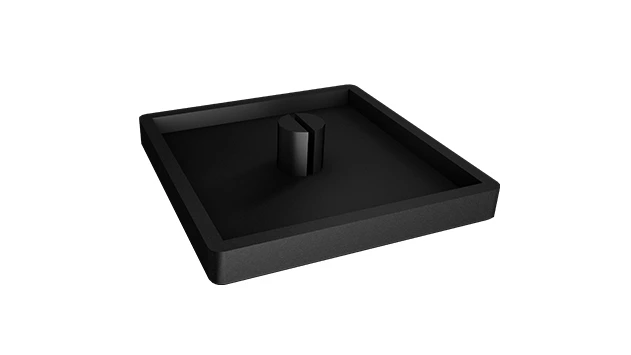
The aluminum profile end cap adds a finishing touch to your project and closes off profile ends to limit dust and debris buildup, also it can avaid some scratch for material and labor during the assemble work.
Walk into any modern manufacturing facility, and you'll likely notice a symphony of movement: products gliding along flow racks, workers assembling components at sleek workbenches, and materials being transported with precision. Behind this efficiency lies a principle that has reshaped industries worldwide: lean production. At its core, lean is about eliminating waste—whether it's time, resources, or effort—and every component, no matter how small, plays a role in this mission. Today, we're shining a spotlight on an unsung hero of the lean system: the 4040 aluminum profile end cap. It may seem like a minor detail, but in the world of lean manufacturing, details are everything.
Lean Systems: Where Every Component Tells a Story of Efficiency
Lean production isn't just a buzzword; it's a mindset that prioritizes value. Imagine a factory where loose parts slow down assembly, where rusted components require constant replacement, or where ill-fitting accessories create safety hazards. These are the "waste" scenarios lean systems aim to eradicate. From the largest conveyor to the tiniest joint, every element must contribute to a seamless, efficient workflow. This is why manufacturers are increasingly turning to aluminum profiles and their accessories—they're lightweight, durable, and designed for modularity, making them ideal for adapting to changing production needs.
But here's the thing: even the most advanced aluminum profile system is only as strong as its weakest link. That's where end caps come in. These small caps, which seal the ends of aluminum profiles, might not grab headlines, but they're critical for protecting profiles from debris, preventing worker injuries from sharp edges, and ensuring the structural integrity of the entire setup. And among all end caps, the 4040 aluminum profile end cap stands out as a game-changer for the future of lean systems.
"In our plant, we used to replace plastic end caps every few months—they'd crack, loosen, or get dislodged during heavy use. Switching to 4040 aluminum end caps was a small change that made a big difference. Our workbenches stay cleaner, our workers don't get scraped hands, and we haven't had to replace a single cap in over a year. That's the kind of 'small win' that adds up to big efficiency in a lean system." — Maria Gonzalez, Plant Manager at PrecisionWorks Manufacturing
Aluminum Profile Accessories: The Ecosystem That Powers Lean
To truly appreciate the 4040 end cap, we need to zoom out and look at the ecosystem it belongs to: aluminum profile accessories. These include everything from connectors and brackets to hinges and, yes, end caps. Together, they transform basic aluminum profiles into customized workbenches, flow racks, material carts, and more. What makes aluminum so special? Unlike traditional steel, it's lightweight yet strong, resistant to corrosion, and infinitely recyclable—aligning perfectly with the sustainability goals of modern lean systems.
Aluminum profile accessories are designed for "plug-and-play" flexibility. Need to reconfigure a workbench to accommodate a new product? Swap out a bracket. Want to extend a flow rack to handle larger items? Add a few extra profiles and connectors. This modularity reduces downtime and allows manufacturers to adapt quickly to market changes—key tenets of lean production. And at the heart of this ecosystem, the 4040 aluminum profile end cap ensures that these structures remain safe, durable, and efficient over time.
| Feature | Traditional Plastic End Caps | Steel End Caps | 4040 Aluminum Profile End Caps |
|---|---|---|---|
| Material | Low-density plastic | Carbon steel | High-grade aluminum alloy |
| Durability | Prone to cracking, warping, and discoloration under heat/UV exposure | Resistant to impact but heavy; prone to rust in humid environments | Impact-resistant, corrosion-proof, and maintains structural integrity in extreme temperatures |
| Installation | Often requires adhesives or forceful snapping; can loosen over time | Requires screws or welding; time-consuming to install/remove | Snaps into place with a secure friction fit; no tools needed for basic installation |
| Cost Over Time | Low upfront cost but frequent replacements increase long-term expenses | High upfront cost; maintenance (painting, rust removal) adds to expenses | Moderate upfront cost; minimal replacement needs reduce long-term spending |
| Safety | Sharp edges if cracked; can detach and create tripping hazards | Heavy; can cause injury if dislodged; sharp edges if not properly finished | Smooth, rounded edges; secure fit reduces risk of detachment; lightweight to minimize injury risk |

The 4040 Aluminum Profile End Cap: A Closer Look at Design and Function
Let's get technical for a moment. The "4040" in 4040 aluminum profile refers to its dimensions: 40mm by 40mm. This is one of the most widely used profile sizes in manufacturing, favored for its versatility—it's sturdy enough to support heavy loads (like those on a workbench) yet compact enough for use in tight spaces (like flow rack dividers). The end cap, designed specifically for this profile, is engineered to fit snugly into the open end of the aluminum extrusion, sealing it off completely.
What sets 4040 aluminum end caps apart is their attention to detail. Unlike generic plastic caps that often feel flimsy, these end caps are made from high-grade aluminum alloy, the same material as the profiles themselves. This ensures a uniform look and feel, but more importantly, it creates a bond that resists wear and tear. The cap's interior is often ribbed or textured to grip the profile's inner walls, preventing it from popping out during vibrations or heavy use—common issues with cheaper alternatives.
Another key feature is the cap's exterior design. Most 4040 aluminum end caps have a smooth, rounded finish that eliminates sharp edges—a critical safety upgrade. In busy work environments, where workers might brush against profiles or reach across workbenches, this small detail reduces the risk of cuts and scrapes. It also makes cleaning easier: no crevices for dust, oil, or debris to accumulate, which aligns with lean's focus on maintaining a clean, efficient workspace.
Why Aluminum? The Sustainability Angle
Sustainability is no longer an afterthought in manufacturing—it's a core requirement. Aluminum is infinitely recyclable, meaning a 4040 end cap can be melted down and repurposed without losing quality. Compare this to plastic end caps, which often end up in landfills after cracking, or steel caps that require energy-intensive rust treatments. By choosing aluminum, manufacturers reduce their environmental footprint while still meeting lean's demand for durability. It's a win-win for the planet and the bottom line.

From Workbench to Flow Rack: Real-World Impact of 4040 End Caps
To understand the value of 4040 aluminum profile end caps, let's look at two common applications in lean systems: workbenches and flow racks. These are the workhorses of manufacturing, and their performance directly impacts productivity.
Workbenches: A typical assembly workbench sees hours of daily use—tools being set down, parts being moved, and workers leaning on its surface. Over time, the ends of the aluminum profiles that form the bench's frame can become damaged or collect debris if not properly capped. Loose plastic caps might fall off, leaving sharp metal edges exposed, or crack under the weight of heavy tools. 4040 aluminum end caps, however, stay in place, protect the profile, and maintain the bench's structural integrity. This means less downtime for repairs, fewer worker injuries, and a workspace that remains functional for years.
Flow Racks: Flow racks rely on gravity to move products from loading to picking stations, and they depend on smooth, unobstructed movement. Imagine a flow rack where a plastic end cap has cracked and partially dislodged, creating a bump that slows or jams products. This disrupts the entire workflow, leading to delays and frustration. 4040 aluminum end caps, with their secure fit and durable design, eliminate this risk. They ensure the rack's edges remain smooth, allowing products to glide freely—exactly what lean systems need to keep operations running without waste.
Take, for example, a automotive parts manufacturer that switched to 4040 aluminum end caps on their flow racks. Before the switch, they were spending 10-15 minutes per day clearing jams caused by loose or broken caps. After upgrading, those jams disappeared entirely. Over a year, that's nearly 60 hours saved—time that could be redirected to more valuable tasks, like improving product quality or training staff. That's the power of a "small" component in a lean system.
Future Innovations: What's Next for 4040 Aluminum Profile End Caps?
As lean systems evolve, so too will the components that power them. The 4040 aluminum profile end cap is no exception—manufacturers and engineers are already exploring innovations that could take its functionality to the next level. Here are three trends to watch:
1. Smart End Caps with Embedded Sensors Imagine an end cap that does more than just seal a profile—it monitors it. Future 4040 end caps could include tiny sensors that track temperature, vibration, or even structural stress. For example, if a workbench leg is experiencing unusual strain, the sensor could send an alert to maintenance staff before a failure occurs. This predictive maintenance would reduce downtime and prevent costly repairs, aligning perfectly with lean's focus on proactive problem-solving.
2. Modular and Customizable Designs Lean systems thrive on flexibility, and future end caps may offer even more customization. Think snap-on accessories like cable management clips, tool holders, or label slots integrated directly into the end cap. This would allow manufacturers to adapt their workbenches and flow racks on the fly, adding functionality without redesigning the entire structure. For instance, a label slot on an end cap could help workers quickly identify which flow rack section contains a specific part, reducing picking errors.
3. Eco-Friendly Coatings and Finishes While aluminum is already sustainable, researchers are exploring coatings that enhance its performance while reducing environmental impact. Imagine a 4040 end cap with a self-healing coating that minor scratches repair themselves, or a non-toxic, antimicrobial finish that inhibits bacteria growth—ideal for industries like food processing or pharmaceuticals. These innovations would extend the cap's lifespan and open new applications in sensitive environments.
Conclusion: Small Parts, Big Dreams in Lean Production
In the world of lean production, success is measured in the details. The 4040 aluminum profile end cap may not be the most glamorous component, but it embodies the lean spirit: it's efficient, durable, safe, and designed to eliminate waste. From protecting workers to reducing downtime, from enhancing sustainability to enabling future innovations, this small cap plays a big role in keeping lean systems running at their best.
As manufacturers continue to push for greater efficiency and sustainability, components like the 4040 aluminum profile end cap will only grow in importance. They remind us that lean isn't just about grand overhauls—it's about respecting the power of every part, no matter how small. So the next time you walk through a factory, take a moment to notice those end caps. They're not just sealing profiles—they're sealing the future of lean production.