- Company Articles
- Products and Technology
- Product knowledge
- 4040 Aluminum Profile End Caps in 3C Assembly: Precision & Efficiency Boosters

4040 Aluminum Profile End Caps in 3C Assembly: Precision & Efficiency Boosters
Related Product
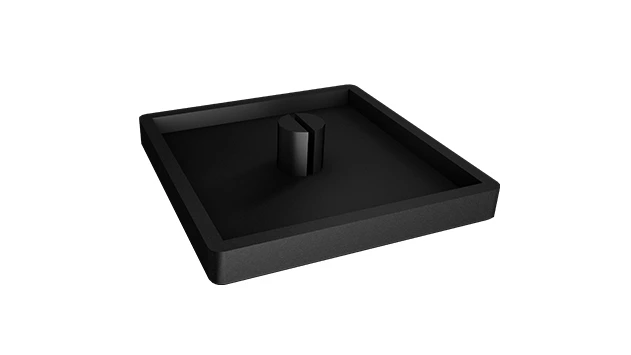
4040 Aluminum Profile End Cap
The aluminum profile end cap adds a finishing touch to your project and closes off profile ends to limit dust and debris buildup, also it can avaid some scratch for material and labor during the assemble work.
In the fast-paced world of 3C manufacturing—where computers, communication devices, and consumer electronics are born—every second counts. Assembly lines hum with the rhythm of precision, as tiny components like microchips, connectors, and circuit boards move from station to station, each step bringing a product closer to completion. Behind this orchestration of speed and accuracy lies a silent hero: the infrastructure that holds it all together. Among these, 4040 aluminum profiles stand out as the backbone of modern workbenches, material racks, and assembly frames. But even the sturdiest backbone needs protection, and that's where 4040 aluminum profile end caps come into play. These small, unassuming components punch far above their weight, ensuring that 3C assembly lines run with the precision of a Swiss watch and the efficiency of a well-oiled machine.
Understanding the Basics: 4040 Aluminum Profiles and End Caps
Before diving into the role of end caps, let's first get to know the star of the show: the 4040 aluminum profile. As the name suggests, these profiles measure 40mm by 40mm in cross-section, with a T-slot design that runs along their length. This T-slot is the secret to their versatility—allowing for easy attachment of brackets, panels, and accessories without the need for welding or drilling. In 3C factories, you'll find them forming the frames of workbenches where technicians assemble smartphones, the shelves of material racks holding delicate components, and the rails of conveyor systems transporting products between stations. Lightweight yet strong, corrosion-resistant, and infinitely customizable, 4040 profiles are the go-to choice for manufacturers who need flexibility without sacrificing durability.
Now, enter the 4040 aluminum profile end cap: a simple cover designed to fit snugly over the exposed ends of these profiles. At first glance, they might seem like an afterthought—a cosmetic addition to "finish" the profile. But in reality, their purpose is far more critical. Think of them as the final piece of a puzzle that turns a functional component into a reliable, long-lasting solution. End caps protect the raw, cut edges of aluminum profiles from chipping or bending, prevent dust, debris, and moisture from clogging the T-slots, and eliminate sharp edges that could scratch delicate 3C parts or injure workers. In short, they're the unsung guardians of both precision and safety in the assembly process.
Precision: The Foundation of 3C Assembly
In 3C manufacturing, precision isn't just a buzzword—it's a survival skill. A single misaligned component in a smartphone can render the device useless; a wobbly workbench can lead to soldering errors on a circuit board; a uneven material rack can cause delicate screens to shift and crack. 4040 aluminum profiles, when paired with well-fitted end caps, form the stable foundation that prevents these disasters.
Consider the workbench, where much of the hands-on assembly happens. A typical 3C workbench, built from 4040 profiles, must remain level and vibration-free, even when technicians apply pressure during tasks like screwing, gluing, or testing. Without end caps, the cut ends of the profiles might not sit flush with the floor or connecting brackets, creating tiny gaps that throw the entire structure off-kilter. Over time, these gaps can lead to wobbling, which in turn affects the accuracy of every task performed on that bench. End caps, by ensuring a tight, uniform fit, eliminate these gaps. They act as shims, evening out minor inconsistencies in profile length or cutting precision, and create a stable base that keeps the workbench steady—even during high-intensity assembly runs.
Then there's the matter of protecting delicate components. 3C products are filled with tiny, sensitive parts: think of the micro USB port on a tablet or the camera lens in a smartwatch. These parts are often transported between stations on material racks, many of which are constructed from 4040 profiles. Without end caps, the sharp, raw edges of the profiles could easily snag on packaging or scratch the components themselves. A single scratch on a lens or a bent pin on a connector is enough to downgrade a product from "perfect" to "defective," costing manufacturers time and money. End caps smooth these edges, turning potential hazards into harmless, rounded surfaces that glide past components without a hitch.

Efficiency: Cutting Waste, Saving Time
In 3C manufacturing, efficiency is measured in seconds saved and waste reduced. With product lifecycles shorter than ever—new smartphone models launching every few months, laptops updated annually—factories must constantly reconfigure their assembly lines to keep up. This is where the modularity of 4040 aluminum profiles shines, and end caps play a key role in keeping this modularity efficient.
One of the biggest time drains in reconfiguring a line is the disassembly and reassembly of workstations and racks. Traditional steel frames require tools, welding, or heavy lifting, but 4040 aluminum profiles, with their T-slot design, can be taken apart and rebuilt in minutes. End caps accelerate this process even further. Unlike some accessories that require bolts or clips, most end caps simply snap or press into place—no special tools, no technical expertise. A technician can remove an end cap, adjust the profile length, and reattach the cap in under 30 seconds. Multiply that by hundreds of profiles across a factory, and the time savings add up quickly. For example, a factory switching from assembling smartwatches to fitness trackers might need to shorten workbench heights or narrow material racks; with end caps, this transition can happen in hours instead of days.
End caps also boost efficiency by extending the lifespan of 4040 profiles. Aluminum is durable, but the exposed ends of profiles are vulnerable to wear and tear. When profiles are moved, stacked, or bumped (a common occurrence in busy factories), the raw edges can chip, dent, or bend. Over time, this damage weakens the profile, making it less stable and eventually requiring replacement. End caps act as a first line of defense, absorbing impacts and preventing direct damage to the profile itself. A study by a leading aluminum profile supplier found that profiles fitted with end caps had a 35% longer lifespan than those without, reducing the need for frequent replacements and cutting down on material waste.
Another efficiency win comes from reduced maintenance. Without end caps, dust, dirt, and small debris can accumulate in the T-slots of profiles. Over time, this buildup can jam accessories like brackets or sliding panels, forcing technicians to stop work and clean the slots. End caps seal off the ends of the profiles, blocking debris from entering in the first place. This means less time spent on maintenance and more time spent on actual production—a critical advantage in a industry where downtime can cost thousands of dollars per minute.

Supporting Lean Systems: Waste Reduction in Action
Lean manufacturing has become the gold standard in 3C production, with its focus on eliminating waste—whether that's wasted time, materials, or space. 4040 aluminum profiles, paired with end caps, align perfectly with lean principles, enabling factories to create more value with fewer resources.
Take "waste of space," for example. Lean systems prioritize compact, efficient layouts, and 4040 profiles are ideal for building space-saving structures. A material rack B (a common 3-row, 3-floor design used in 3C factories) built with 4040 profiles can be customized to fit exactly the dimensions needed for specific components, avoiding the "one-size-fits-all" inefficiency of traditional steel racks. End caps ensure that even these custom racks remain stable and safe, with no overhang or uneven edges that would waste vertical or horizontal space. For instance, a material rack holding small camera modules can be designed to be just 15cm deep, thanks to the precision of 4040 profiles and end caps—freeing up floor space for additional assembly stations.
Then there's "waste of materials." Lean systems aim to reuse and repurpose resources whenever possible. 4040 profiles are inherently reusable, but without end caps, their lifespan is shorter, leading to more frequent replacements (and thus more material waste). By protecting profiles from damage, end caps make it possible to reuse them across multiple production cycles. A profile that once formed part of a laptop assembly workbench might later be repurposed into a shelf for storing charging cables, then into a frame for a testing station—all while maintaining its structural integrity, thanks to the protection of end caps. This not only reduces waste but also lowers procurement costs, as factories need to buy fewer new profiles.
Choosing the Right End Cap: Material Matters
Not all end caps are created equal. The right choice depends on the specific needs of the 3C assembly line—whether it's durability, cost, or compatibility with delicate components. Let's break down the most common materials and their best uses:
| Material | Durability | Cost | Best For |
|---|---|---|---|
| Nylon (Polyamide) | High impact resistance; resistant to oils and chemicals | Low to moderate | General-purpose workbenches, material racks, and conveyor frames |
| Rubber | Good flexibility; absorbs vibration | Moderate | Workstations handling delicate components (e.g., camera lenses, OLED screens) |
| Aluminum | Excellent strength; corrosion-resistant | High | Heavy-duty applications (e.g., loading docks, high-weight material racks) |
| Polypropylene (PP) | Lightweight; resistant to moisture | Low | Cleanrooms or environments with strict hygiene standards |
Nylon end caps are the workhorses of the 3C industry. They strike a perfect balance between durability and cost, standing up to daily wear and tear without breaking the bank. Their resistance to oils and chemicals also makes them ideal for assembly lines where lubricants or cleaning agents are used. Rubber end caps, on the other hand, are the choice for delicate tasks. Their soft, flexible texture absorbs vibrations—critical when assembling components like microchips, which can be damaged by even minor shaking. Aluminum end caps are reserved for heavy-duty jobs, such as racks holding large batches of finished products or frames for industrial robots. While pricier, their strength ensures they won't crack or warp under pressure.
Real-World Impact: A Case Study from Shenzhen
To see just how much of a difference 4040 aluminum profile end caps can make, let's look at a real example from one of the world's 3C manufacturing hubs: Shenzhen. A mid-sized electronics manufacturer specializing in smart home devices (think smart speakers and security cameras) was struggling with two key issues: high defect rates and slow line reconfigurations when switching product models.
Their old setup relied on steel workbenches and wooden material racks. The steel benches were sturdy but heavy, making them hard to move or adjust. Worse, their raw, unprotected edges often left small scratches on the plastic casings of the devices, leading to a 5% defect rate—unacceptable in an industry where margins are tight. The wooden racks, meanwhile, were prone to warping, causing components to shift during transport and leading to assembly errors.
The solution? A complete overhaul using 4040 aluminum profiles with nylon end caps. The new workbenches were lighter, easier to adjust, and the end caps eliminated sharp edges, reducing casing scratches to near-zero. The material racks, now built with 4040 profiles and end caps, were perfectly level, preventing component shifting. But the biggest win came when the factory switched from producing smart speakers to security cameras. With the old steel setup, reconfiguring the line took 3 days. With the new aluminum profiles and snap-on end caps, the team completed the switch in just 8 hours. Defect rates dropped by 70%, and production output increased by 15% in the first month alone. As the factory manager put it: "We used to think of end caps as 'extras.' Now, we see them as essential. They're the small part that made a big difference."
Common Pitfalls to Avoid
While 4040 aluminum profile end caps are relatively simple, there are still mistakes that can undermine their effectiveness. Here are a few to watch out for:
Mismatched Sizing
Not all 4040 profiles are identical. Some manufacturers have slightly different tolerances, meaning a 40mm profile from one supplier might measure 39.8mm, while another's is 40.2mm. Using an end cap that's too loose will fall off; one that's too tight could crack the profile or the cap itself. Always check the profile's exact dimensions and buy end caps from a reputable supplier that matches their specs.
Ignoring Environmental Factors
3C factories can have harsh environments: high humidity, exposure to chemicals, or extreme temperatures (e.g., near soldering stations). A nylon end cap that works well in a dry, cool area might degrade quickly in a humid, chemical-rich zone. Choose materials that match the environment—rubber for vibration, PP for moisture, aluminum for heat.
Overlooking Regular Inspection
End caps can wear out over time, especially in high-traffic areas. A loose or cracked end cap loses its protective properties, putting profiles and components at risk. Make end cap inspection part of routine maintenance—check for cracks, looseness, or signs of wear, and replace them promptly.
Looking Ahead: The Future of End Caps in 3C Manufacturing
As 3C manufacturing continues to evolve—with trends like Industry 4.0, automation, and miniaturization—so too will the role of 4040 aluminum profile end caps. We're already seeing innovations that take these small components to the next level. For example, some suppliers are developing "smart" end caps embedded with tiny RFID tags, allowing factories to track the location and usage of profiles in real time (a boon for inventory management in large facilities). Others are experimenting with conductive end caps that help dissipate static electricity—a critical feature for assembly lines handling sensitive electronic components, where static can fry microchips.
There's also a push toward sustainability. Biodegradable plastic end caps, made from plant-based materials, are being tested as a greener alternative to traditional plastics. And as aluminum profiles become more lightweight (thanks to advanced extrusion techniques), end caps are following suit—with thinner, yet stronger, designs that reduce material usage without sacrificing protection.
Final Thoughts: Small Part, Big Impact
In the grand scheme of 3C manufacturing, 4040 aluminum profile end caps might seem. They don't have the flash of a robotic arm or the complexity of a circuit board. But as we've seen, their impact is anything but small. They ensure precision by stabilizing workbenches and protecting components. They boost efficiency by speeding up line reconfigurations and reducing waste. They support lean systems by extending the lifespan of profiles and maximizing space.
For 3C manufacturers looking to stay competitive in a fast-changing industry, every advantage counts. And sometimes, the biggest advantages come in the smallest packages. So the next time you walk through a 3C factory, take a moment to look at the workbenches, the material racks, the assembly frames. Chances are, you'll see 4040 aluminum profiles—and if you look closely, you'll see the end caps: quiet, unassuming, and absolutely essential.