- Company Articles
- Products and Technology
- Product knowledge
- 4040A EU Standard Aluminum Profile: Electrical Conductivity Properties

4040A EU Standard Aluminum Profile: Electrical Conductivity Properties
Related Product
4040A EU Standard Aluminum Profile
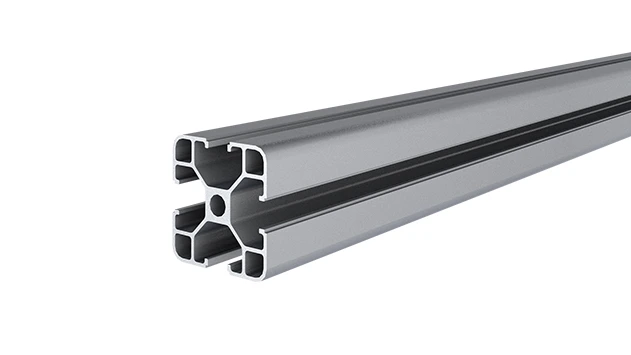
4040A is a 4.00x4.00 CM fractional 40 series square extrusion T-slot profile with four open T-slots, each side with 4.00cm face.
In the fast-paced world of modern manufacturing, where efficiency, durability, and precision are non-negotiable, the choice of materials can make or break a production line. Among the unsung heroes of this industry are aluminum profiles—versatile, lightweight, and adaptable components that form the backbone of everything from assembly workbenches to automated conveyor systems. Today, we're diving deep into one specific star of this category: the 4040A EU Standard Aluminum Profile. More specifically, we'll explore its electrical conductivity properties—a feature that makes it indispensable in industries ranging from electronics to automotive, and a key player in building lean systems that drive productivity.
Understanding Electrical Conductivity: Why It Matters for Aluminum Profiles
Before we zoom in on the 4040A profile, let's take a step back and clarify what electrical conductivity actually means. In simple terms, it's a material's ability to allow electric current to flow through it. Measured in siemens per meter (S/m) or sometimes as a percentage of the International Annealed Copper Standard (IACS)—where copper is defined as 100%—conductivity is influenced by factors like atomic structure, temperature, and the presence of alloying elements. For manufacturers, this property isn't just a technical specification; it's a practical tool. A profile with good electrical conductivity can dissipate static electricity, ground sensitive equipment, or even act as a low-resistance pathway for electrical signals in certain setups.
Aluminum, by nature, is a highly conductive metal. Pure aluminum boasts a conductivity of about 61% IACS, which is why it's used in power lines and heat sinks. But pure aluminum is also soft and prone to bending—hardly ideal for structural applications like building a workbench or a material rack. That's where alloys like the 4040A come in. By blending aluminum with small amounts of other elements (like magnesium, silicon, or manganese), manufacturers strike a balance: maintaining impressive conductivity while adding strength, rigidity, and corrosion resistance. This balance is exactly what makes the 4040A EU Standard Aluminum Profile a standout choice for engineers and plant managers alike.
The 4040A EU Standard Aluminum Profile: A Quick Overview
First, let's get familiar with the basics of the 4040A profile. As part of the EU standard series, it's designed to meet strict European manufacturing norms for dimensions, tolerances, and material quality. The "4040" in its name refers to its cross-section: 40mm by 40mm, a common size that strikes a balance between load-bearing capacity and versatility. The "A" denotes a specific alloy composition and extrusion process, which we'll unpack later. What sets this profile apart is its T-slot design—a series of longitudinal grooves along its length that allow for easy attachment of aluminum profile accessories like brackets, connectors, and panels. This design is a game-changer for modularity; with the right accessories, you can build, modify, or repurpose a 4040A structure in hours, not days.
But beyond its structural flexibility, the 4040A profile's electrical conductivity is a hidden superpower. Imagine a busy electronics assembly line: circuit boards, sensitive semiconductors, and delicate components move along conveyor belts, and static electricity is a constant threat. A single static discharge can fry a $100 chip or ruin a batch of products. Here, a workbench built with 4040A profiles acts as more than just a sturdy surface—it can be grounded to dissipate static, protecting both the equipment and the workers. Similarly, in automotive plants, where robots and automated tools rely on precise electrical signals, the 4040A's conductivity ensures that electrical interference is minimized, keeping production lines running smoothly.

What Makes 4040A's Electrical Conductivity Stand Out?
Alloy Composition: The Science Behind the Conductivity
The 4040A profile is typically made from an aluminum alloy in the 6000 series—most commonly 6063 or a variant thereof. These alloys are known for their excellent extrudability (more on that later) and balanced mechanical properties. The key here is the alloying elements: silicon (Si) and magnesium (Mg) are the primary additions, with silicon content ranging from 0.2% to 0.6% and magnesium from 0.45% to 0.9%. Unlike copper or zinc, which can significantly reduce conductivity, silicon and magnesium in these small amounts have a minimal impact. As a result, the 4040A profile maintains a conductivity of around 40–45% IACS—lower than pure aluminum, but more than enough for most industrial applications where structural strength is also required.
To put that in perspective: steel, a common alternative, has a conductivity of only about 3–5% IACS. Even some other aluminum alloys, like the high-strength 7075 (used in aerospace), hover around 33% IACS. The 4040A's 40–45% IACS strikes that sweet spot: conductive enough to handle static dissipation and grounding, yet strong enough to support heavy loads on a workbench or a material rack. It's this balance that makes it a favorite in lean systems, where every component must pull double duty—saving space, reducing waste, and performing multiple functions.
Extrusion Process: Shaping Conductivity
The 4040A profile is created using aluminum extrusion profile technology—a process where heated aluminum billets are forced through a die to create the desired cross-section. This isn't just a manufacturing step; it directly impacts the material's conductivity. During extrusion, the aluminum is subjected to high pressure and controlled cooling, which aligns the metal's grains in a uniform direction. This grain alignment reduces resistance to electron flow, slightly boosting conductivity compared to cast or machined aluminum. Think of it like a highway: when lanes are straight and unobstructed, traffic (electrons) moves faster. Extrusion "straightens the lanes" in the aluminum's microstructure, making it easier for electricity to flow.
EU standards take this a step further by mandating strict quality control during extrusion. The 4040A profile, for example, must undergo post-extrusion heat treatment (like artificial aging) to optimize its mechanical properties without sacrificing conductivity. This attention to detail ensures that every batch of 4040A profiles delivers consistent performance—a critical factor for manufacturers who can't afford variability in their production lines.
Testing the Conductivity of 4040A Profiles: Ensuring Reliability
You might be wondering: How do manufacturers verify that a 4040A profile lives up to its conductivity claims? The answer lies in rigorous testing. The most common method is the eddy current test, a non-destructive technique that uses electromagnetic induction to measure conductivity. A probe is placed against the profile's surface, generating a magnetic field. The eddy currents induced in the aluminum create their own magnetic field, and the interaction between the two fields reveals the material's conductivity. This test is quick, accurate, and can be done on-site, making it a staple in quality control labs.
Another method is the four-point probe test, which involves placing four equally spaced electrodes on the profile and passing a current through the outer two. The voltage drop between the inner two electrodes is measured, and conductivity is calculated using Ohm's Law. While more precise, this method is often reserved for lab settings or critical applications where exact values are needed. For most industrial uses, though, the eddy current test is sufficient—and it's how manufacturers ensure that every 4040A profile meets the EU standard's conductivity requirements (typically a minimum of 40% IACS for structural alloys in this category).
Real-World Applications: Where 4040A's Conductivity Shines
Now that we understand the "why" and "how" of the 4040A's conductivity, let's look at the "where." This profile isn't just a theoretical success; it's a workhorse in real manufacturing environments. Here are a few key applications where its electrical properties take center stage:
Electronics Assembly Workbenches
Walk into any electronics manufacturing plant, and you'll likely see rows of workbenches where workers assemble circuit boards, smartphones, or medical devices. These workbenches are often built with 4040A profiles, and for good reason. Sensitive electronic components are (extremely vulnerable to static damage), so the workbench itself needs to act as a grounding point. By connecting the 4040A frame to a ground wire, static charges that build up on tools, components, or even workers' hands are safely dissipated. Unlike plastic or wood, which insulate and trap static, the 4040A profile conducts that charge away, protecting expensive parts and reducing defects. And because of its T-slot design, adding anti-static mats, ionizers, or tool holders (all aluminum profile accessories) is a breeze—no drilling or welding required.
Lean System Material Racks and Conveyors
Lean systems are all about eliminating waste—whether that's time, space, or materials. In a lean setup, material racks and conveyors need to be lightweight (to save energy), durable (to handle constant use), and adaptable (to reconfigure as production needs change). The 4040A profile checks all these boxes, and its conductivity adds an extra layer of value. Take a material rack B (3 row and 3 floor) used to store PCBs: as boxes slide onto the rack, friction can generate static. A conductive rack ensures that this static is grounded, preventing damage to the boards inside. Similarly, roller track systems built with 4040A profiles can reduce static buildup as products move along the line, keeping the flow smooth and defect-free. For plant managers, this means fewer wasted parts, less downtime, and a more efficient lean system overall.
Automotive Battery Production
The rise of electric vehicles (EVs) has put new demands on manufacturing materials, especially in battery production. Battery packs require precise assembly, and static electricity is a major hazard here—even a small spark can ignite flammable electrolytes. 4040A profiles are used to build the frames of battery assembly stations, where they ground the entire workspace. Additionally, their conductivity helps in monitoring the assembly process: sensors can use the profile itself as a pathway for low-voltage signals, tracking component placement or detecting defects in real time. It's a perfect example of how one material can serve both structural and functional roles, aligning with the lean principle of "multipurpose design."
Comparing 4040A to Other Materials: Why Aluminum Extrusion Profile Wins
To truly appreciate the 4040A's value, let's compare it to other common materials used in manufacturing. Below is a table breaking down key properties, including electrical conductivity, to highlight why the 4040A EU Standard Aluminum Profile stands out:
| Material | Electrical Conductivity (% IACS) | Density (g/cm³) | Yield Strength (MPa) | Key Use Case |
|---|---|---|---|---|
| 4040A EU Aluminum Profile | 40–45 | 2.7 | 110–140 | Workbenches, material racks, lean system frames |
| Mild Steel | 3–5 | 7.85 | 250–350 | Heavy-duty structural frames (poor conductivity) |
| Stainless Steel (304) | 2–3 | 7.93 | 205 | Corrosive environments (insulating, heavy) |
| Copper (Pure) | 100 | 8.96 | 33 | Electrical wiring (soft, not structural) |
| Plastic (PVC) | ≈0 | 1.3–1.45 | 40–50 | Non-conductive enclosures (traps static) |
As the table shows, the 4040A profile offers a rare combination of high conductivity, low weight, and decent strength. Steel and stainless steel are stronger but far less conductive and much heavier—making them energy-inefficient for dynamic systems like conveyors. Copper is more conductive but too soft for structural use. Plastic is lightweight but insulates, which is dangerous in static-prone environments. The 4040A, in contrast, hits the sweet spot: conductive enough to ground static, strong enough to support loads, and light enough to keep lean systems agile.
Maintaining Conductivity: Tips for Long-Term Performance
Like any material, the 4040A profile's conductivity can be affected by wear and tear over time. Here are a few simple steps to ensure it stays in top shape:
- Keep it clean: Dirt, oil, or oxidation on the surface can act as insulators. Wipe down the profile regularly with a mild detergent and a soft cloth to remove grime. Avoid abrasive cleaners, which can scratch the surface and trap debris.
- Check connections: If the profile is used for grounding, ensure all aluminum profile accessories (like brackets or clamps) are tight and free of corrosion. A loose connection can increase resistance, reducing conductivity.
- Avoid painting or coating: Unless using a conductive coating (like anti-static paint), avoid covering the profile with non-conductive materials. Paint or powder coating will block electron flow, defeating the purpose of its conductivity.
- Inspect for damage: Dents or bends can disrupt the grain structure, slightly reducing conductivity. While minor dents are usually harmless, severe damage may require replacing the section to maintain performance.
Conclusion: The 4040A Profile—A Conductive Cornerstone of Modern Manufacturing
The 4040A EU Standard Aluminum Profile is more than just a piece of metal; it's a testament to how thoughtful material science can drive industrial innovation. Its electrical conductivity properties, balanced with strength, lightweight design, and modularity, make it an indispensable tool for building workbenches, material racks, and lean systems that are both efficient and safe. Whether you're assembling smartphones, producing EV batteries, or streamlining a warehouse, this profile ensures that static is controlled, signals are clear, and waste is minimized.
As manufacturing continues to evolve—toward smarter factories, more sustainable practices, and higher precision—the 4040A profile will undoubtedly remain a key player. Its ability to adapt to new technologies (thanks to those T-slots and aluminum profile accessories) and its reliable conductivity make it a future-proof choice for engineers and plant managers who refuse to compromise on quality. So the next time you walk through a production line, take a closer look at those silver frames holding everything together—chances are, they're 4040A profiles, quietly conducting electricity, and conducting business, better than any other material could.