- Company Articles
- Products and Technology
- Product knowledge
- 4040A EU Standard Aluminum Profile: Material Properties & Mechanical Strength Guide

4040A EU Standard Aluminum Profile: Material Properties & Mechanical Strength Guide
Related Product
4040A EU Standard Aluminum Profile
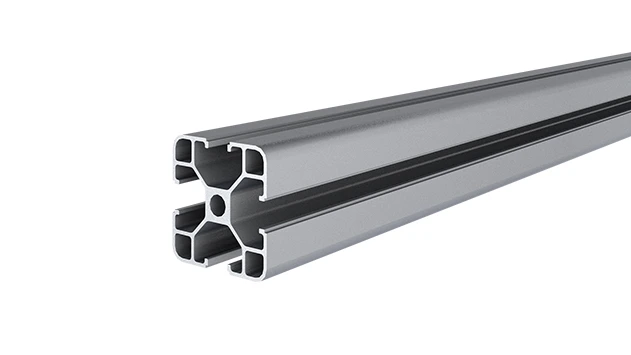
4040A is a 4.00x4.00 CM fractional 40 series square extrusion T-slot profile with four open T-slots, each side with 4.00cm face.
Walk into any modern factory, workshop, or even a tech startup's assembly room, and you'll likely spot a common workhorse silently holding everything together: aluminum profiles. These sleek, modular frames are the unsung heroes of efficient manufacturing, quietly supporting workbenches, powering conveyor systems, and organizing material racks with a flexibility that steel or wood just can't match. Among the countless profiles available, one stands out for its versatility and reliability: the 4040A EU Standard Aluminum Profile. Whether you're building a custom workstation, designing a production line, or upgrading your material handling setup, understanding what makes this profile tick—from its material makeup to its mechanical muscle—can transform how you approach your next project.
What Even Is a 4040A EU Standard Aluminum Profile?
Let's start with the basics. When we talk about "4040A EU Standard Aluminum Profile," we're referring to a specific type of extruded aluminum frame defined by two key things: its dimensions and its compliance with European union standards. The "4040" part is straightforward—it means the profile has a square cross-section, 40mm wide by 40mm tall. Think of it as the Goldilocks of profiles: not too small (like the 2020, which is 20x20mm) and not too bulky (like the 4080A, at 40x80mm), but just right for most medium-duty tasks. The "A" denotes a specific design variant within the 4040 family, often referring to details like slot size, wall thickness, or groove placement—small differences that can make a big impact on how accessories fit and how the profile performs.
Then there's the "EU Standard" label. This isn't just a marketing buzzword; it's a promise of consistency. EU standards for aluminum profiles (think DIN or EN specifications) ensure that no matter which supplier you buy from, your 4040A profile will have the same dimensions, slot positions, and quality benchmarks. That means if you order a 4040A from a supplier in Germany and another from Poland, they'll fit together seamlessly—no guesswork, no mismatched parts. For anyone building modular systems, this interoperability is a game-changer.
But how does this profile actually come to life? It all starts with extrusion. Raw aluminum alloy (usually something like 6063, a workhorse alloy known for its extrudability and strength) is heated to around 500°C until it's malleable, then forced through a steel die shaped like the 4040A cross-section. The result? A long, continuous length of aluminum with the exact 40x40mm shape and internal structure needed. After extrusion, the profile is often treated—anodized to boost corrosion resistance, powder-coated for color, or left with a natural finish—before being cut to standard lengths (typically 2m, 3m, or 6m) for sale. It's a process that balances precision with scalability, making 4040A profiles both reliable and affordable.
Material Properties: Why 4040A Aluminum Stands Apart
Aluminum itself is pretty impressive, but the 4040A profile's magic lies in the specific alloy and treatments used. Most 4040A profiles are made from 6063 aluminum alloy, a heat-treatable alloy that's been a staple in extrusion for decades. Why 6063? Because it hits that sweet spot between strength, ductility, and ease of manufacturing. Let's break down its key material properties to see why it's the go-to choice.
Lightweight Yet Sturdy
Aluminum's density is roughly 2.7 g/cm³, which is about a third of steel's 7.8 g/cm³. That means a 4040A profile weighs significantly less than a steel frame of the same size, making it easier to handle during assembly, transport, and even reconfiguration. If you've ever tried to move a steel workbench by yourself, you'll appreciate this—4040A systems can often be adjusted or relocated with just a few people, no forklift needed. But don't let the lightness fool you; we'll dig into the strength part later.
Corrosion Resistance: Built to Last
Ever left a steel pipe out in the rain? It rusts. Aluminum? Not so much. Thanks to a thin, natural oxide layer that forms on its surface when exposed to air, aluminum resists corrosion from moisture, chemicals, and even mild acids. For 4040A profiles, this layer is often enhanced through anodization—a process that thickens the oxide layer, giving it extra protection and a sleek, matte finish. This makes the profile ideal for environments like food processing plants (where cleanliness is key) or outdoor workshops (where rain and humidity are constant foes). Unlike steel, you won't spend extra on painting or coating to keep it looking and performing like new.
Thermal and Electrical Conductivity
Aluminum is a champion at conducting heat and electricity, and 6063 alloy is no exception. While this might not matter much if you're building a simple workbench, it becomes critical in applications like electronics manufacturing or automated systems where heat dissipation is key. For example, if you're mounting heat-generating components (like motors or power supplies) on a 4040A frame, the profile can help spread that heat away, preventing overheating. Similarly, in cleanrooms or static-sensitive environments, the profile's electrical conductivity can be grounded to reduce static buildup—handy for protecting sensitive components during assembly.
Finish Options: More Than Just Looks
4040A profiles don't just perform—they can look good doing it. The most common finish is anodized, which gives the aluminum a smooth, hard surface in natural silver, black, or even custom colors. Anodizing isn't just about aesthetics; it adds scratch resistance and makes the profile easier to clean (a big plus in messy workshops). For those wanting more color options, powder coating is another popular choice, offering vibrant hues that stand up to wear and tear. Some suppliers even offer brushed or polished finishes for applications where appearance matters, like retail displays or lab equipment.

Mechanical Strength: How Tough Is It, Really?
Okay, so it's lightweight, corrosion-resistant, and looks nice—but can it actually hold up under pressure? Let's talk numbers. The mechanical strength of a 4040A profile depends on two things: the alloy (remember 6063?) and the extrusion process. After heat treatment (T5 or T6 temper), 6063 alloy transforms from soft, malleable aluminum into a material that can take a beating. Here's what you need to know:
Tensile Strength: Pulling Power
Tensile strength is the maximum stress a material can handle before breaking when pulled apart. For 6063-T5 aluminum (the most common temper for 4040A profiles), this typically ranges from 160 to 200 MPa (megapascals). To put that in perspective: a MPa is roughly 145 psi, so 200 MPa is about 29,000 psi. That means a single 4040A profile (with a wall thickness of ~1.5mm) can withstand a pulling force of around 1,500 kg before snapping—way more than you'd ever need for a workbench or material rack.
Yield Strength: Bending Before Breaking
Yield strength is even more important for most applications. This is the point where the material starts to bend permanently (think: plastic deformation). For 6063-T5, yield strength is usually around 110-140 MPa. Why does this matter? If you're using the profile as a support beam (like the legs of a workbench), you want it to flex a little under load but not bend out of shape. A high yield strength means your 4040A frame will stay straight and stable, even when loaded with tools, parts, or heavy equipment.
Flexural Strength: Standing Up to Bending
Flexural strength (or bending strength) measures how well the profile resists bending under a load. For a 40x40mm 4040A profile with a 1.5mm wall thickness, this is typically around 180-220 MPa. Let's say you're building a shelf with a 1m span between supports. A 4040A profile can easily hold 50-70 kg of evenly distributed weight without noticeable sagging. Add cross-bracing (using 90° aluminum profile connectors, of course) and that capacity jumps even higher—perfect for material rack B setups with 3 rows and 3 floors, where each shelf needs to hold boxes of parts or tools.
Hardness: Scratch and Dent Resistance
Hardness is measured using the Brinell scale (HB). 6063-T5 aluminum has a Brinell hardness of around 45-55 HB, which is harder than pure aluminum (which is soft enough to scratch with a fingernail) but softer than steel (which can be 100+ HB). What does this mean in practice? The profile can handle everyday bumps and scrapes from tools or parts without getting dented, but you'll still want to avoid slamming heavy metal objects into it (no dropping anvils, please).
| Property | 4040A Aluminum Profile (6063-T5) | Mild Steel (A36) | 3030 Aluminum Profile (6063-T5) |
|---|---|---|---|
| Density (g/cm³) | 2.7 | 7.85 | 2.7 |
| Tensile Strength (MPa) | 160-200 | 400-550 | 160-200 |
| Yield Strength (MPa) | 110-140 | 250-300 | 110-140 |
| Flexural Strength (MPa) | 180-220 | 200-300 | 150-180 |
| Brinell Hardness (HB) | 45-55 | 100-130 | 45-55 |
As the table shows, mild steel is stronger in raw numbers, but it's three times heavier—meaning a steel frame with the same strength as a 4040A aluminum frame would be bulkier and harder to move. The 3030 aluminum profile, while lighter, has lower flexural strength, making it better for light-duty tasks (like small shelving) but not for heavy loads. The 4040A, in contrast, hits that sweet spot: strong enough for most workshop needs, light enough to be modular, and versatile enough to adapt.
Where Does 4040A Shine? Real-World Applications
Theory is great, but let's get practical. Where do people actually use 4040A profiles? The short answer: almost everywhere. Here are a few common applications where this profile truly shines:
Workbenches: The Heart of the Workshop
Walk into any manufacturing plant, and you'll find workbenches built from 4040A profiles. Why? Because they're customizable, sturdy, and easy to upgrade. Want a bench with a wooden top for assembly? Just bolt it to the profile. Need to add a shelf underneath for tools? Screw on some brackets. Even specialized workbenches, like ESD workstations (used in electronics to prevent static damage), rely on 4040A frames—often with grounding kits to dissipate static. Suppliers like to name these benches with codes (aluminum workbench A, J, or K, for example), but under the hood, it's usually 4040A profiles holding everything together.
Conveyor Systems: Moving Parts, Smoothly
Ever watched a product zip down a production line? Chances are, the frame supporting that roller conveyor is made of 4040A profiles. Rollers, belts, and chain drives need a stable base, and 4040A provides just that—light enough to keep the conveyor moving efficiently, strong enough to handle the weight of parts (even heavy ones like automotive components). Plus, the profile's T-slots make it easy to mount motors, guides, or sensors along the conveyor length. Whether it's a simple gravity-fed roller track or a powered belt conveyor, 4040A is the backbone.
Material Racks and Trolleys: Organizing Chaos
Factories thrive on organization, and 4040A profiles are organizational pros. Material rack B (a common 3-row, 3-floor design) is a classic example—each shelf is supported by 4040A uprights and crossbars, adjustable to fit different box sizes. Need a trolley to move parts from the warehouse to the assembly line? Build it with 4040A frames and add casters (caster wheel and accessories, of course) for mobility. These racks and trolleys are modular, too—if you need an extra shelf next month, just add more profiles and connectors. No need to buy a whole new unit.
Automation and Robotics: Precision in Motion
In the world of automation, precision is everything. Robotic arms, linear slides, and pick-and-place machines all need rigid, lightweight frames to maintain accuracy. 4040A profiles excel here because they're dimensionally stable (they don't warp easily) and can be bolted together with high precision using accessories like 90° aluminum profile connectors or gusset plates (gusset alp 4040). Even small deviations in frame alignment can throw off a robot's accuracy, so the consistency of EU-standard 4040A profiles is a huge advantage.
Accessories: The Little Parts That Make It Work
A 4040A profile on its own is just a metal stick. It's the accessories that turn it into a workbench, a conveyor, or a material rack. Think of it like building with Legos—you need the right bricks (connectors, end caps, brackets) to bring your creation to life. Here are the must-know accessories for 4040A profiles:
Connectors: Holding It All Together
Connectors are the glue of aluminum profile systems, and there are dozens to choose from. The most common is the 90° aluminum profile connector, which joins two profiles at a right angle (perfect for building frames). For corners that need to be stronger, there's the 90° angle code (like turning angle code 4040), which adds extra support. Need to join profiles at 45°? Grab a 45° aluminum profile connector. There are even 135° connectors for odd angles, or three-way connectors for building T-junctions. The best part? Most connectors are designed to fit into the T-slots of 4040A profiles, so you don't need to drill holes—just slide them in and tighten a bolt.
End Caps: Finishing the Job
Ever run your hand along an aluminum profile and gotten a cut from the sharp, open end? That's where 4040 aluminum profile end caps come in. These small, plastic or rubber caps snap onto the ends of the profile, covering sharp edges and preventing dust, debris, or even small tools from falling into the hollow center. They're cheap, easy to install, and make your setup look much more professional. Some end caps even have holes for cables, turning your profile into a hidden wire management system—handy for workbenches with power tools.
Gussets and Brackets: Adding Muscle
For frames that need extra strength (like heavy-duty workbenches or tall material racks), gussets are a must. A gusset is a small, triangular plate that reinforces the joint between two profiles, distributing weight and preventing bending. Gusset alp 4040 is designed specifically for 40x40mm profiles, fitting neatly into the T-slots. Brackets, on the other hand, are used to mount accessories like shelves, panels, or tools. There are brackets for every need: flat brackets for mounting tables, angle brackets for adding side shelves, and even specialized brackets for roller tracks or casters.
Rubber Strips and Seal Covers: The Finishing Touches
T-slots are great for mounting accessories, but they can also let in dirt or collect water. T-slot rubber seal covers (or rubber strips) slide into the slots, keeping them clean and preventing debris from jamming up connectors. They also add a bit of cushioning—useful if you're sliding parts along the profile or mounting delicate components. Some strips even come in different colors, letting you color-code your setup (yellow for "caution," red for "power," etc.).
Why 4040A Over Other Profiles? Let's Compare
With so many aluminum profiles out there, why pick 4040A? Let's stack it up against a few popular alternatives:
4040A vs. 3030 Profile
The 3030 profile (30x30mm) is smaller and lighter, making it great for light-duty tasks like small shelving or hobby projects. But it lacks the strength of 4040A—its flexural strength is lower, so it sags more under heavy loads. If you're building something that needs to hold more than 30-40 kg per shelf, 4040A is the safer bet.
4040A vs. 4080A Profile
The 4080A (40x80mm) is beefier, with a rectangular cross-section. It's stronger than 4040A, making it ideal for heavy machinery or large conveyor systems. But all that extra metal comes with a downside: weight. A 4080A frame is heavier and harder to maneuver, and it costs more. Unless you need the extra strength, 4040A gives you the best balance of performance and value.
4040A vs. Steel Tubing
Steel is stronger, but it's also heavier, prone to rust, and hard to modify. Want to add a shelf to a steel frame? You'll need to drill holes. With 4040A, you just slide in a bracket. Steel has its place (like in construction), but for modular, lightweight, and corrosion-resistant setups, aluminum wins hands down.
Buying 4040A Profiles: What to Look for in a Supplier
Okay, you're sold—now where do you buy 4040A profiles? Not all suppliers are created equal, and choosing the right one can save you time, money, and headaches down the line. Here's what to keep in mind:
Check for EU Standard Compliance
This might seem obvious, but always ask for proof of compliance with EU standards (like DIN 6060 or EN 755). A reputable supplier will have certificates or test reports showing their profiles meet dimensional and material requirements. Without this, you might end up with profiles that don't fit your accessories or fail under stress.
Accessory Availability
A profile is only as good as the accessories you can pair with it. Look for suppliers that stock a full range of 4040A-compatible parts: connectors, end caps, gussets, rubber strips, and even specialized items like casters or roller tracks. Buying everything from one supplier saves you the hassle of checking compatibility between brands.
Customization Options
Sometimes, standard lengths (3m or 6m) aren't enough. Does the supplier offer cutting to size? Can they anodize or powder coat profiles in custom colors? What about drilling holes or adding special slots? The more customizable the supplier, the easier it is to get exactly what you need.
Customer Support
Even experts need help sometimes. A good supplier should have a team that can answer technical questions: "What connector do I need for a 45° angle?" or "How much weight can this profile hold?" Avoid suppliers that treat you like just another order—look for ones that act like partners in your project.
At the end of the day, the 4040A EU Standard Aluminum Profile isn't just a piece of metal—it's a tool for building better, more efficient workspaces. Its blend of material properties (lightweight, corrosion-resistant) and mechanical strength (tough enough for heavy loads, flexible enough for modular designs) makes it the backbone of modern manufacturing. Whether you're a seasoned engineer or a hobbyist building your first workbench, understanding what makes this profile special can help you create setups that are stronger, smarter, and ready to adapt as your needs change. So the next time you walk into a workshop and see those sleek aluminum frames, take a closer look—you might just be looking at the future of how we build, create, and make things work.