- Company Articles
- Products and Technology
- Product knowledge
- 4040A EU Standard Aluminum Profile: Surface Finish Options (Anodized, Mill, Polished)

4040A EU Standard Aluminum Profile: Surface Finish Options (Anodized, Mill, Polished)
Related Product
4040A EU Standard Aluminum Profile
4040A is a 4.00x4.00 CM fractional 40 series square extrusion T-slot profile with four open T-slots, each side with 4.00cm face.
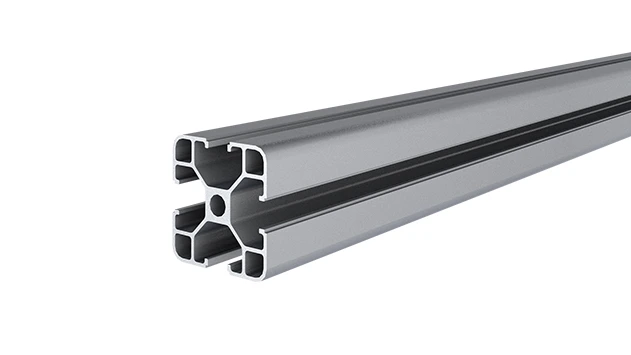
If you've ever walked through a manufacturing plant, a warehouse, or even a modern office, chances are you've seen aluminum profiles hard at work—holding up shelves, framing workbenches, or organizing tools. But not all aluminum profiles are created equal. Today, we're zeroing in on one of the most versatile and widely used profiles in the industry: the 4040A EU Standard Aluminum Profile. What makes it stand out? Beyond its robust 40x40mm dimensions and compliance with EU standards, a big part of its appeal lies in the surface finishes that transform it from a simple extrusion into a tool that fits your exact needs. Let's dive into the three most common finishes—mill, anodized, and polished—and explore how each one can elevate your projects, whether you're building workbenches, flow racks, or lean system setups.
First Things First: What Is the 4040A EU Standard Aluminum Profile?
Before we get into finishes, let's make sure we're all on the same page about the star of the show. The 4040A is a type of aluminum extrusion profile, meaning it's shaped by forcing heated aluminum through a die to create its signature 40x40mm square cross-section. Think of it as the "Swiss Army knife" of industrial profiles—sturdy enough to support heavy loads, lightweight enough to be easily maneuvered, and adaptable enough to fit into almost any project. Its EU standard compliance ensures consistency in dimensions, material quality, and performance, making it a go-to for manufacturers, engineers, and DIY enthusiasts across Europe and beyond.
Why 40x40mm, you ask? It's a sweet spot. Not too bulky to overcomplicate designs, yet substantial enough to handle daily wear and tear. You'll find it in everything from assembly line workbenches to automated machinery frames, and even in retail displays. But here's the kicker: its versatility doesn't stop at size. The surface finish you choose can turn this "blank canvas" into a profile that resists corrosion, shines like a mirror, or blends into a utilitarian workspace. Let's break down each finish, starting with the most basic (and often most budget-friendly) option: mill finish.
Mill Finish: The "No-Frills" Workhorse
Mill finish is the "as extruded" look of aluminum—it's what you get right after the extrusion process, with no additional treatment. Picture this: you've just pulled a fresh profile from the extrusion press. It has a matte, slightly textured surface, with faint lines (called "die lines") from the (die) that shaped it. It's raw, unpolished, and unapologetically industrial. And you know what? That's exactly why so many people love it.
How It's Made
The mill finish process is straightforward: after extrusion, the profile is cooled, cut to length, and (if needed) deburred to smooth out sharp edges. No extra steps—no chemical baths, no buffing wheels, no coatings. This simplicity is why mill finish is often the most cost-effective option. It's aluminum in its most natural state, (retaining) all the inherent benefits of the material: strength, lightness, and a subtle, understated look.
The Pros of Mill Finish
First and foremost, cost . Since there's no post-processing, mill finish profiles are typically 10-20% cheaper than anodized or polished versions. For small businesses or large-scale projects where budget is a top priority, this can add up to significant savings. Second, versatility . That matte texture? It hides fingerprints, smudges, and minor scratches like a pro. In high-traffic areas—think factory workbenches where tools are constantly being set down or leaned on—mill finish stays looking "presentable" longer than shinier alternatives.
Another underrated perk? Compatibility with aluminum profile accessories . Whether you're attaching brackets, hinges, or connectors, the slightly rough surface of mill finish provides better grip for screws and adhesives. We've heard from countless customers who swear by mill finish for custom builds, where they're mixing and matching accessories to create one-of-a-kind setups. It's like the blank canvas that plays well with any "paint" (or accessory) you throw at it.
Best For: Industrial Workhorses
Mill finish shines (pun intended, even if it's not shiny) in environments where function trumps form. Think: warehouse storage racks, assembly line flow racks, or temporary workbenches. A local auto parts manufacturer we work with, for example, uses mill finish 4040A profiles for their in-plant flow racks. They told us, "We don't need it to look pretty—we need it to hold 50-pound boxes without bending, and stand up to oil spills and daily bumps. Mill finish does that, and we save enough on cost to invest in better tools."

Anodized Finish: The Tough, Colorful Performer
If mill finish is the "no-frills" option, anodized finish is the "all-in" upgrade. It's not just about looks (though it does look sharp)—anodizing transforms the aluminum's surface at a molecular level, making it tougher, more corrosion-resistant, and even customizable in color. It's the finish of choice for projects where durability and a polished appearance need to go hand in hand.
How It's Made
Anodizing is an electrochemical process that grows a protective oxide layer on the aluminum's surface. Here's a simplified breakdown: first, the mill finish profile is cleaned to remove oils and impurities. Then, it's submerged in an electrolytic bath (usually sulfuric acid) and connected to an electrical current. This current causes oxygen ions to bond with the aluminum, forming a hard, porous oxide layer. Finally, the profile is sealed (often with hot water or a chemical sealant) to close those pores, locking in the protection.
The result? A finish that's part of the aluminum itself , not just a coating. That means it won't chip, peel, or flake off—even with heavy use. And if you want color? Dyes can be added during the process, resulting in vibrant hues like black, silver, blue, or gold that won't fade easily.
The Pros of Anodized Finish
Let's start with corrosion resistance . That oxide layer acts like a suit of armor, protecting the aluminum from moisture, chemicals, and even salt spray. We once worked with a seafood processing plant that needed new workbenches. They'd tried painted steel before, but the constant exposure to water and saltwater mist made it rust within months. Anodized 4040A profiles? They're still going strong after three years, with zero signs of corrosion.
Then there's durability . Anodized finishes are scratch-resistant—far more so than paint or powder coating. Run a metal tool across an anodized profile, and you might leave a mark, but you won't scrape off the finish. This makes it ideal for high-touch areas, like workbenches where tools are set down repeatedly or lean system setups where parts slide along the profile.
And let's not forget aesthetics . Anodized finishes have a smooth, consistent look—no die lines, no uneven texture. The most popular color is clear anodized, which gives the aluminum a bright, silvery sheen that's clean and professional. Black anodized is a close second, favored for labs, tech facilities, or anywhere a sleek, modern look is desired.
Best For: Harsh Environments & Polished Spaces
Anodized finish is a no-brainer for environments with moisture, chemicals, or high visibility. Think: pharmaceutical labs (where cleanliness and corrosion resistance are critical), food processing plants, or customer-facing areas like retail displays. A startup that builds custom lab equipment recently told us, "Our clients won't compromise on two things: durability and how the equipment looks in their labs. Anodized 4040A checks both boxes— it's easy to sanitize, resists acids, and looks professional enough to be in a million-dollar lab."
Polished Finish: The Showstopper
If you want your aluminum profile to turn heads, polished finish is the way to go. It's the closest aluminum gets to a mirror—shiny, reflective, and undeniably eye-catching. But don't let the glitz fool you: polishing is as much about precision as it is about looks, and it's often chosen for projects where aesthetics are just as important as function.
How It's Made
Polishing is a mechanical process that involves buffing the aluminum's surface with progressively finer abrasives. It starts with coarse grits to remove die lines and imperfections, then moves to finer grits (think sandpaper, but for metal) to smooth the surface. Finally, a buffing wheel with a polishing compound (like rouge or tripoli) is used to create that signature shine. For an extra-glossy finish, some manufacturers even add a clear coat after polishing to protect the shine and prevent tarnishing.
The process is labor-intensive—each profile is polished by hand or with specialized machinery—and that's why polished finish is typically the priciest option. But for many, the investment is worth it for that "wow" factor.
The Pros of Polished Finish
First and foremost: visual appeal . A polished 4040A profile reflects light like a mirror, making it perfect for spaces where presentation matters. We recently supplied polished profiles to a high-end furniture maker who used them to frame glass display cases in a luxury department store. "The aluminum's shine complements the glass and the products inside," they said. "It feels premium, and that's exactly what our clients want."
Another benefit? Easy to clean . That smooth, non-porous surface doesn't trap dirt or grime—just a quick wipe with a damp cloth, and it's back to sparkling. This makes it a favorite for showrooms, museums, or any space where cleanliness is part of the aesthetic.
But here's the catch: polished finish is softer than anodized. It can scratch more easily, and fingerprints show up prominently. That's why it's often reserved for low-traffic, high-visibility areas—think: decorative trim, display racks, or accent pieces, rather than heavy-duty workbenches.
Best For: Showrooms & High-End Design
Polished finish thrives where looks are the priority. Retail stores, hotels, and art installations often use it to add a touch of luxury. A boutique winery in Napa Valley, for example, used polished 4040A profiles to build custom wine racks in their tasting room. "We wanted something that felt elegant but modern," they explained. "The polished aluminum reflects the lighting and the bottles, making the whole space feel warm and inviting."
| Finish Type | Process | Appearance | Durability | Best For | Cost (Relative) |
|---|---|---|---|---|---|
| Mill | As-extruded, no post-treatment | Matte, textured, with faint die lines | Good (resists dents, hides scratches) | Industrial workbenches, flow racks, budget projects | Lowest |
| Anodized | Electrochemical process; grows oxide layer | Smooth, consistent; clear (silver) or colored (black, blue, etc.) | Excellent (scratch/corrosion-resistant, no chipping) | Labs, food processing, lean systems, high-moisture areas | Moderate |
| Polished | Mechanical buffing with abrasives and compounds | Mirror-like, reflective, ultra-smooth | Moderate (prone to scratches, shows fingerprints) | Showrooms, retail displays, high-end furniture | Highest |
Putting It All Together: Choosing the Right Finish for Your Project
Now that we've broken down each finish, how do you decide which one is right for your 4040A EU Standard Aluminum Profile? Let's walk through a few key questions to guide your choice.
1. What's Your Environment Like?
If your project will live in a damp, dusty, or chemical-heavy space (like a factory or lab), anodized finish is your safest bet. Its corrosion resistance will save you from premature wear and tear. For dry, low-traffic areas (like a back-office storage rack), mill finish works just fine. And if you're aiming for "wow factor" in a clean, high-visibility space? Polished is the way to go.
2. How Important Is Aesthetics?
Be honest: Does the profile need to look "finished," or is function all that matters? A lean system on a factory floor might get away with mill finish, but a customer-facing workbench in a tech store probably needs anodized or polished. We once had a client build a pop-up shop display with mill finish profiles, and while it was functional, they later admitted, "We should've gone with anodized—customers kept asking if it was 'unfinished.'"
3. What's Your Budget?
Mill finish is the most affordable, followed by anodized, then polished. If you're working with a tight budget but still want some protection, consider clear anodized—it's only slightly pricier than mill finish but adds significant durability. Polished, while stunning, is best reserved for projects where the visual impact justifies the cost.
4. Will It Need to Match Other Components?
If you're using aluminum profile accessories (like brackets, hinges, or connectors), check if their finishes complement your profile. Most accessories come in mill or anodized finishes, so they'll pair seamlessly with those. Polished accessories are harder to find, so you may need to stick with polished profiles alone or mix in anodized accessories for a subtle contrast.
Final Thoughts: The 4040A EU Standard Aluminum Profile—A Blank Canvas, Ready to Shine
At the end of the day, the 4040A EU Standard Aluminum Profile is more than just a piece of metal. It's a foundation for innovation—whether you're building a workbench that will withstand years of tool abuse, a flow rack that keeps your warehouse efficient, or a display that wows customers. And the surface finish? It's the final touch that turns that foundation into something truly tailored to your needs.
Mill finish for the no-nonsense, budget-savvy builder. Anodized for the problem-solver who needs durability and looks. Polished for the visionary who wants to make a statement. No matter which you choose, you're getting a profile that's lightweight, strong, and built to last—thanks to its EU standard engineering and high-quality aluminum extrusion profile roots.
So, what's next? Take a look at your project, ask yourself those key questions, and pick the finish that fits. And if you're still on the fence? Reach out to a supplier who specializes in aluminum profiles—they'll help you weigh the pros and cons, and maybe even send you samples so you can see (and feel) the difference for yourself. After all, the best finish is the one that makes your project work—today, tomorrow, and for years to come.