- Company Articles
- Products and Technology
- Product knowledge
- 4040B EU Standard Aluminum Profile Cost-Benefit Analysis vs Traditional Steel Frames

4040B EU Standard Aluminum Profile Cost-Benefit Analysis vs Traditional Steel Frames
Related Product
4040B EU Standard Aluminum Profile
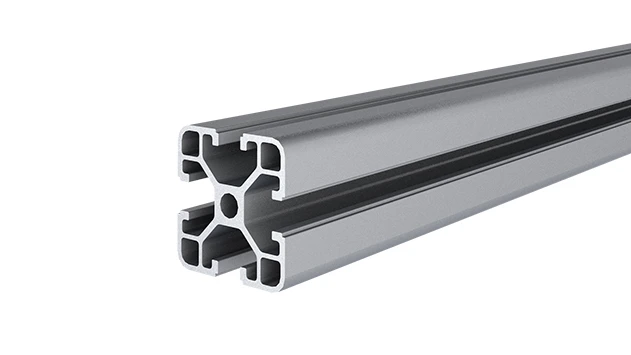
4040B is a 4.00x4.00 CM fractional 40 series square extrusion T-slot profile with four open T-slots, each side with 4.00cm face. The profile has align-a-grooves to assist in aligning connecting profiles.
Introduction: The Backbone of Modern Manufacturing
If you've ever walked through a busy manufacturing plant, you've probably noticed the unsung heroes keeping operations running smoothly: the workbenches where assemblers piece together products, the flow racks that ensure materials glide to where they're needed, and the lean systems that turn chaos into efficiency. These structures aren't just metal and bolts—they're the backbone of productivity. But here's the question that keeps plant managers up at night:
What material should these backbones be made of?
For decades, traditional steel frames have been the default, but a new contender has emerged: the
4040B EU standard aluminum profile
. In this article, we'll dive into why more and more factories are swapping steel for aluminum, breaking down the costs, benefits, and real-world impact of this shift. Whether you're setting up a new facility or upgrading an old one, this isn't just about metal—it's about building a workspace that grows with you.
Material Showdown: What Makes 4040B Aluminum Profiles Stand Out?
Let's start with the basics: what
is
a 4040B EU standard aluminum profile, and how does it stack up against traditional steel? At first glance, both are structural materials, but their DNA couldn't be more different. Steel is heavy, rigid, and relies on brute strength. Aluminum, on the other hand, is lightweight, corrosion-resistant, and designed for flexibility—especially the 4040B variant. Its claim to fame? A
T-slot design
—a continuous groove running along its length that acts like a built-in track for accessories. Think of it as a modular playground: with the right
aluminum profile accessories
(like connectors, end caps, or brackets), you can snap on shelves, workbench tops, or even roller tracks without drilling a single hole.
Traditional steel frames, by contrast, are often one-and-done. Welded together at fixed angles, they're sturdy but stubborn. Want to adjust a shelf height? You'll need a welder. Need to add a new component? Prepare for hours of cutting and re-welding. The 4040B aluminum profile, though, is like a Lego set for adults—its modularity means you can reconfigure it on the fly, which is a game-changer for anyone trying to keep up with shifting production needs.
Traditional steel frames, by contrast, are often one-and-done. Welded together at fixed angles, they're sturdy but stubborn. Want to adjust a shelf height? You'll need a welder. Need to add a new component? Prepare for hours of cutting and re-welding. The 4040B aluminum profile, though, is like a Lego set for adults—its modularity means you can reconfigure it on the fly, which is a game-changer for anyone trying to keep up with shifting production needs.

The Upfront Cost Myth: Steel vs. Aluminum
Let's address the elephant in the room: cost. It's no secret that steel often has a lower upfront price tag. A 1-meter length of steel square tubing might cost 30-50% less than a 4040B aluminum profile. But here's the catch:
upfront cost is just the first chapter of the story
. To truly compare, we need to look at the full lifecycle—installation, maintenance, and adaptability over time.
Let's break it down with a hypothetical scenario. Imagine you're building a simple workbench: 2 meters long, 1 meter deep, with a wooden top. Here's how the numbers might shake out:
Let's break it down with a hypothetical scenario. Imagine you're building a simple workbench: 2 meters long, 1 meter deep, with a wooden top. Here's how the numbers might shake out:
| Cost Factor | Traditional Steel Frame | 4040B Aluminum Profile |
|---|---|---|
| Material Cost (Frame Only) | $80 (steel tubing + welding rods) | $120 (4040B profiles + basic connectors) |
| Installation Labor | $200 (2 hours of welding + finishing) | $60 (30 minutes with hex keys + aluminum profile accessories) |
| Maintenance (5-Year Estimate) | $150 (rust treatment, repainting, weld repairs) | $30 (occasional cleaning + replacing worn end caps) |
| Reconfiguration Cost (If Needed) | $250 (cutting new steel, re-welding, repainting) | $40 (new aluminum profile accessories + 1 hour of assembly) |
| Total 5-Year Cost | $680 | $250 |
Suddenly, that "cheaper" steel frame doesn't look so affordable. Over five years, the aluminum workbench costs less than half as much. Why? Because aluminum skips the expensive welding, avoids rust-related maintenance, and lets you adapt without starting from scratch. For manufacturers running lean systems—where flexibility is key—this isn't just savings; it's a competitive advantage.
Installation: From Welding Torches to Hex Keys
Let's talk about installation day—the day your vision becomes reality. With steel, that day often involves sparks, fumes, and a skilled welder tied up for hours. Welding isn't just time-consuming; it's unforgiving. A single mistake means cutting out the bad weld and starting over. And once it's welded, it's
permanent
. If you later realize the workbench is 6 inches too short? Too bad—you're building a new one.
Aluminum profiles? They're a different beast. Thanks to their T-slot design and aluminum profile accessories like 90° connectors, end caps, and brackets, assembly feels more like building with giant Erector sets than heavy construction. No special skills needed—just a hex key and a basic understanding of how pieces fit together. A team of two could assemble a 10-meter flow rack in an afternoon, whereas steel might take a full day with a welder.
Take the 4040 aluminum profile end cap , for example. These small, plastic caps snap onto the ends of profiles, covering sharp edges and giving a clean finish. With steel, you'd need to grind down rough edges or paint over them—adding even more time. For factories aiming to reduce downtime during setup, aluminum's speed is a game-changer.
Aluminum profiles? They're a different beast. Thanks to their T-slot design and aluminum profile accessories like 90° connectors, end caps, and brackets, assembly feels more like building with giant Erector sets than heavy construction. No special skills needed—just a hex key and a basic understanding of how pieces fit together. A team of two could assemble a 10-meter flow rack in an afternoon, whereas steel might take a full day with a welder.
Take the 4040 aluminum profile end cap , for example. These small, plastic caps snap onto the ends of profiles, covering sharp edges and giving a clean finish. With steel, you'd need to grind down rough edges or paint over them—adding even more time. For factories aiming to reduce downtime during setup, aluminum's speed is a game-changer.
Real-World Example: A Small Electronics Plant's Upgrade
A 50-person electronics assembly plant in Texas recently swapped 10 steel workbenches for aluminum ones. Their old steel benches took 2 days to install (with a welder on-site) and required repainting every 2 years. The new 4040B aluminum benches? Installed in 4 hours by two maintenance workers using only hex keys and aluminum profile accessories. A year later, they've already reconfigured three benches to accommodate new product lines—something they never could have done with steel without halting production for a day. "We used to dread facility changes," said the plant manager. "Now, we just grab a few new connectors and adjust on the fly."
Lean Systems Love Aluminum: Adaptability in Action
Lean manufacturing isn't just a buzzword—it's about eliminating waste, whether that's time, materials, or space. And nothing kills lean goals faster than rigid infrastructure. Steel frames are like concrete: great for stability, terrible for change. If your production line needs to shift from assembling smartphones to tablets (which are larger), a steel workbench can't just "grow" with you. You'd need to build a new one.
Aluminum profiles, though, are lean systems' best friend. Their modular design lets you tweak, expand, or repurpose structures in minutes. Need to add a shelf to a flow rack? Slide in a T-slot bracket. Want to raise a workbench by 6 inches? Swap out the leg connectors. Even better, aluminum plays nice with other lean tools, like roller tracks or conveyor systems. For example, you could attach a plastic roller track to a 4040B profile flow rack using simple placon mounts—no drilling, no welding, just instant material flow.
This adaptability is especially critical in today's fast-paced markets. A furniture manufacturer in Italy, for instance, uses 4040B profiles to build seasonal flow racks. In summer, they configure racks to hold lightweight cushions; in winter, they add sturdier brackets to support heavy wooden frames. With steel, they'd need to store two sets of racks year-round—wasting space and money. With aluminum, they just reconfigure the same frames.
Aluminum profiles, though, are lean systems' best friend. Their modular design lets you tweak, expand, or repurpose structures in minutes. Need to add a shelf to a flow rack? Slide in a T-slot bracket. Want to raise a workbench by 6 inches? Swap out the leg connectors. Even better, aluminum plays nice with other lean tools, like roller tracks or conveyor systems. For example, you could attach a plastic roller track to a 4040B profile flow rack using simple placon mounts—no drilling, no welding, just instant material flow.
This adaptability is especially critical in today's fast-paced markets. A furniture manufacturer in Italy, for instance, uses 4040B profiles to build seasonal flow racks. In summer, they configure racks to hold lightweight cushions; in winter, they add sturdier brackets to support heavy wooden frames. With steel, they'd need to store two sets of racks year-round—wasting space and money. With aluminum, they just reconfigure the same frames.
Durability and Maintenance: When "Sturdy" Isn't Enough
Steel is often praised for being "sturdy," but sturdy doesn't always mean durable. In humid environments (like food processing plants) or areas with frequent cleaning (think automotive factories), steel's Achilles' heel is rust. Even with paint, moisture seeps into welds, causing corrosion that weakens the frame over time. A steel flow rack might look tough on day one, but after 3 years of exposure to cleaning chemicals, you'll start noticing flaking paint and rust spots—leading to costly repairs or replacements.
Aluminum, by contrast, is naturally corrosion-resistant. Its surface forms a thin oxide layer that protects against rust, even in damp or chemical-heavy environments. That means a 4040B aluminum workbench in a coastal factory will still look new after 10 years, while a steel one might need replacing in half that time. Maintenance is minimal, too: a quick wipe with a damp cloth is usually enough. And when parts do wear out—like a worn caster or a cracked end cap—aluminum profile accessories are cheap and easy to replace. No need for a welder or a paint crew; just pop off the old part and snap on a new one.
Aluminum, by contrast, is naturally corrosion-resistant. Its surface forms a thin oxide layer that protects against rust, even in damp or chemical-heavy environments. That means a 4040B aluminum workbench in a coastal factory will still look new after 10 years, while a steel one might need replacing in half that time. Maintenance is minimal, too: a quick wipe with a damp cloth is usually enough. And when parts do wear out—like a worn caster or a cracked end cap—aluminum profile accessories are cheap and easy to replace. No need for a welder or a paint crew; just pop off the old part and snap on a new one.
Sustainability: Green Manufacturing's Secret Weapon
These days, sustainability isn't just good for the planet—it's good for business. Customers, investors, and regulators are increasingly demanding eco-friendly practices, and your choice of materials plays a big role in that. Aluminum shines here, too. Unlike steel (which requires high temperatures for production), aluminum is highly recyclable—up to 95% of the energy used to make new aluminum can be saved by recycling old profiles. What does that mean for you? If you ever need to scrap an aluminum frame, you can sell it back to recyclers for a small return, offsetting costs. Steel is recyclable too, but its recycling process is more energy-intensive, and scrap steel prices are often lower.
Beyond recycling, aluminum's lightweight nature reduces transportation emissions. A truckload of 4040B profiles can carry 3x more material than a truckload of steel, cutting down on fuel use. For companies aiming for LEED certification or green manufacturing badges, aluminum's sustainability credentials are hard to beat.
Beyond recycling, aluminum's lightweight nature reduces transportation emissions. A truckload of 4040B profiles can carry 3x more material than a truckload of steel, cutting down on fuel use. For companies aiming for LEED certification or green manufacturing badges, aluminum's sustainability credentials are hard to beat.
Conclusion: Investing in the Future of Your Factory
At the end of the day, choosing between steel and 4040B aluminum profiles isn't just about materials—it's about investing in your factory's future. Steel might save you a few dollars today, but aluminum saves you time, hassle, and money tomorrow. Its modularity, durability, and compatibility with
aluminum profile accessories
make it the backbone of flexible, lean systems that can adapt to whatever the market throws at you.
So, if you're building a new workbench, upgrading your flow racks, or redesigning your entire production line, ask yourself: Do I want a structure that fights change, or one that embraces it? For the manufacturers already using 4040B aluminum profiles, the answer is clear. As one plant manager put it: "We used to build around our steel frames. Now, our aluminum frames build around us."
The future of manufacturing isn't rigid—it's adaptable. And with 4040B EU standard aluminum profiles, that future is within reach.
So, if you're building a new workbench, upgrading your flow racks, or redesigning your entire production line, ask yourself: Do I want a structure that fights change, or one that embraces it? For the manufacturers already using 4040B aluminum profiles, the answer is clear. As one plant manager put it: "We used to build around our steel frames. Now, our aluminum frames build around us."
The future of manufacturing isn't rigid—it's adaptable. And with 4040B EU standard aluminum profiles, that future is within reach.