- Company Articles
- Products and Technology
- Product knowledge
- 4040B EU Standard Aluminum Profile for Material Handling Carts: Reducing Workplace Injuries

4040B EU Standard Aluminum Profile for Material Handling Carts: Reducing Workplace Injuries
Related Product
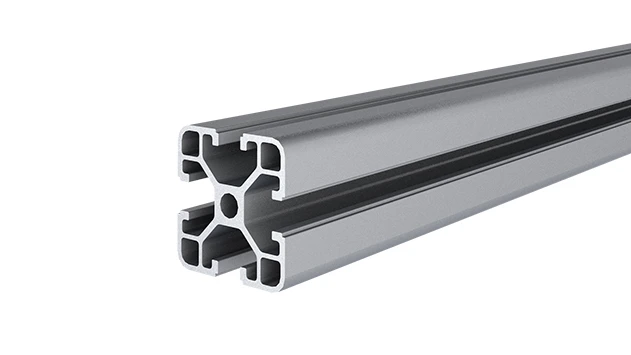
4040B EU Standard Aluminum Profile
4040B is a 4.00x4.00 CM fractional 40 series square extrusion T-slot profile with four open T-slots, each side with 4.00cm face. The profile has align-a-grooves to assist in aligning connecting profiles.
It was a Tuesday morning in the warehouse when Maria felt the sharp twinge in her lower back. She'd been pushing a loaded material cart across the factory floor for the third time that hour, its rusted casters squealing and sticking with every turn. By lunch, the pain had worsened—enough that her supervisor sent her home. By Thursday, she was in a doctor's office, diagnosed with a muscle strain that would keep her off work for six weeks. For Maria, it was a painful setback. For her employer, it was a $12,000 hit to the budget: workers' comp, lost productivity, and the cost of training a temp. And Maria's story isn't unique.
Each year, over 250,000 workplace injuries in the U.S. alone are caused by manual material handling—pushing, pulling, lifting, and carrying heavy loads. These injuries cost businesses billions in medical bills and lost time, but more importantly, they disrupt lives, erode trust, and create a culture of fear. The good news? Many of these injuries are preventable. And it starts with rethinking the tools we use every day—especially the humble material handling cart. Enter the 4040B EU Standard Aluminum Profile : a lightweight, durable solution that's quietly transforming how warehouses and factories protect their most valuable asset—their people.
The Hidden Toll of "Good Enough" Carts
For decades, warehouses have relied on steel carts, wooden dollies, and makeshift transport tools that prioritize cost over care. These "good enough" solutions come with hidden costs: rigid frames that don't adjust to workers' heights, heavy steel bodies that strain muscles, and clunky casters that turn simple pushes into full-body workouts. Let's break down why they're a recipe for injury:
1. Weight that Works Against You : A typical steel cart weighs 80–100 lbs empty. Load it with parts or products, and you're pushing 200+ lbs. OSHA estimates that pushing a cart weighing over 100 lbs increases injury risk by 3x—especially when casters are poorly maintained. Over time, this repetitive strain tears at muscles, ligaments, and spinal discs.
2. Ergonomics as an Afterthought : Traditional carts often have fixed heights, forcing workers to hunch, bend, or overreach to load/unload items. Imagine stooping 50 times a day to grab parts from a low shelf on a cart—your lower back would scream, too. These awkward positions are a leading cause of strains and chronic pain.
3. Durability That Fades Fast : Steel rusts. Wood warps. Even "sturdy" carts degrade over time, with loose wheels, bent frames, or wobbly shelves. A wobbly cart doesn't just slow you down—it's a trip hazard. One misstep, and a worker could be facing a sprained ankle or worse.
The 4040B Aluminum Profile wasn't designed to be "good enough." It was built to solve these problems—starting with the material itself.
Why Aluminum? The 4040B Difference
Aluminum has long been prized in industries where strength and lightness matter—aviation, automotive, construction. But in material handling, it's often overlooked for cheaper steel. That's a mistake. The 4040B EU Standard Aluminum Profile is a game-changer, and here's why:
Lightweight, but Mighty : At just 2.2 lbs per meter (for 40x40mm dimensions), the 4040B profile cuts cart weight by 40–50% compared to steel. A cart built with 4040B might weigh 35 lbs empty instead of 80—meaning even fully loaded, it's easier to push, pull, and maneuver. For workers like Maria, that's the difference between dreading cart duty and barely noticing the effort.
Engineered for Ergonomics : The 4040B's T-slot design is a genius of flexibility. Those grooves along the profile let you attach shelves, handles, and accessories at any height—so a 5'2" worker and a 6'1" worker can adjust the cart to fit their posture. No more hunching. No more overreaching. Just a cart that adapts to them .
Built to Last (and Look Good Doing It) : Aluminum resists rust and corrosion, even in damp warehouses or factories with chemical exposure. Unlike steel, it won't chip, flake, or require repainting. And because it's modular, you can replace a bent joint or worn caster instead of buying a whole new cart—saving money and reducing waste.
| Feature | Traditional Steel Cart | 4040B Aluminum Profile Cart |
|---|---|---|
| Empty Weight | 80–100 lbs | 35–50 lbs |
| Ergonomic Adjustability | Fixed height; limited customization | Height-adjustable shelves/handles via T-slot |
| Durability | Rusts; prone to bending; short lifespan (3–5 years)Corrosion-resistant; modular design; 10+ year lifespan | |
| Injury Risk (Pushing/Pulling) | High (strain, fatigue) | Low (lightweight, smooth movement) |
| Long-Term Cost | Low upfront, high replacement/maintenance | Higher upfront, low maintenance, replaceable parts |

Beyond the Profile: How 4040B Works with Other Critical Components
A great cart is more than just a frame—and the 4040B profile plays well with others. Let's look at the key components that turn it into a safety powerhouse:
Caster Wheels: The Unsung Heroes of Smooth Movement
You could have the lightest frame in the world, but if the casters stick, you're back to straining. That's why 4040B carts pair perfectly with high-quality caster wheels —swivel, lockable, and designed for minimal friction. Many 4040B setups use dual-wheel casters with ball bearings, reducing rolling resistance by 60% compared to standard steel wheels. Maria would have noticed the difference immediately: a cart that glides with a light push, even when loaded, instead of fighting her every step.
Lockable casters add another layer of safety. When loading or unloading, a quick tap locks the wheels in place, preventing the cart from rolling away. No more chasing runaway carts or struggling to stabilize them on uneven floors.
Workbenches: From Cart to Workstation, Seamlessly
Many material handling carts double as mobile workstations—and the 4040B profile shines here, too. Attach a workbench top (like a plywood or aluminum honeycomb panel) to the frame, and suddenly you've got a cart that transports parts and serves as a temporary assembly station. The T-slot design lets you add tool hooks, bins, or even a monitor arm—keeping everything workers need within arm's reach. No more walking back and forth to grab tools; no more balancing parts on unstable surfaces. It's efficiency and safety in one.
Lean System: More Than a Buzzword—A Safety Mindset
The 4040B Aluminum Profile isn't just a product—it's a cornerstone of the lean system philosophy. Lean manufacturing is all about eliminating waste: wasted time, wasted effort, wasted resources. And what's more wasteful than a cart that causes injuries, slows down work, or needs constant repairs? A 4040B cart aligns with lean principles in three key ways:
Waste Reduction: Modular design means you replace parts, not whole carts.
Efficiency: Lightweight carts speed up transport, cutting down on "wait time."
Continuous Improvement: Easy to reconfigure as workflows change—no need for new equipment.
Take a factory that switches from rigid steel carts to 4040B-based carts. Suddenly, they can retool a cart for a new product line in 30 minutes (by swapping shelves or adding a new handle) instead of buying a custom cart that takes weeks to arrive. Workers spend less time fighting with equipment and more time adding value. And when workers are efficient and safe, morale soars. It's a virtuous cycle—all started by a better cart frame.
Real Results: How One Factory Cut Injuries by 40%
Let's talk about a real example (names changed for privacy). Precision Parts Co., a mid-sized electronics manufacturer, was struggling with a 28% injury rate related to material handling. Their old steel carts were heavy, and workers often skipped using them entirely—opting to carry boxes instead, which led to more strains. In 2023, they invested in 4040B Aluminum Profile carts, paired with high-quality casters and adjustable shelves.
The results? Within six months:
- Manual handling injuries dropped by 40%.
- Workers reported a 35% reduction in "end-of-day fatigue."
- Cart usage increased by 70%—because workers actually wanted to use the new carts.
- Productivity rose by 12% as transport time decreased.
The plant manager, Raj, summed it up: "We thought we were saving money with cheap steel carts. Turns out, we were paying for it in injuries and slowdowns. The 4040B carts paid for themselves in 10 months—just from workers' comp savings alone."
Choosing the Right Partner: Why Quality Matters
Not all aluminum profiles are created equal. The 4040B EU Standard is critical here—it ensures the profile meets strict European standards for strength, dimensional accuracy, and finish. When shopping for a supplier, look for:
Certifications : ISO 9001 for quality management, and compliance with EU standards (CE marking).
Accessory Availability : A good supplier should offer casters, joints, shelves, and workbench tops that integrate seamlessly with the 4040B profile. No one wants to mix and match parts that don't fit.
Customer Support : Can they help you design a custom cart for your needs? Do they offer samples or trials? A supplier who understands your workflow is worth their weight in aluminum.
Investing in Your Team: The Bottom Line
At the end of the day, a material handling cart is more than metal and wheels. It's a tool that shapes how your team works, feels, and stays safe. When you choose the 4040B EU Standard Aluminum Profile, you're not just buying a cart—you're sending a message: "We value you. We want you to go home healthy tonight."
Maria, the worker from the beginning of our story? Six months after her company switched to 4040B carts, she returned to work. She tested a new cart on her first day back—light, easy to push, with a handle at her perfect height. "I didn't even think about my back," she said later. "It just… worked." That's the power of good design. That's the impact of choosing safety over "good enough."
So, let's stop accepting injuries as a cost of doing business. Let's build workplaces where tools protect people, not harm them. The 4040B Aluminum Profile is more than a solution—it's a start. Your team deserves it. Your bottom line deserves it. And you'll never look back.