- Company Articles
- Products and Technology
- Solution
- 4040B EU Standard Aluminum Profile in Machinery Manufacturing: Equipment Guarding Solutions

4040B EU Standard Aluminum Profile in Machinery Manufacturing: Equipment Guarding Solutions
Related Product
4040B EU Standard Aluminum Profile
4040B is a 4.00x4.00 CM fractional 40 series square extrusion T-slot profile with four open T-slots, each side with 4.00cm face. The profile has align-a-grooves to assist in aligning connecting profiles.
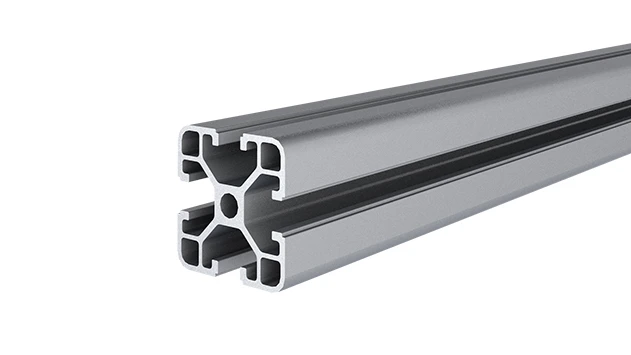
4040B EU Standard Aluminum Profile in Machinery Manufacturing: Equipment Guarding Solutions
Walk into any modern machinery manufacturing plant, and you'll notice a common priority: keeping workers safe while keeping production moving. Equipment guarding isn't just a box to check on a compliance list—it's the silent backbone that ensures every operator can focus on their task without worrying about moving parts, flying debris, or accidental contact with machinery. But here's the thing: not all guarding solutions are created equal. Many facilities still rely on rigid, one-size-fits-all barriers that are hard to modify, heavy to install, and quick to show wear. That's where the 4040B EU Standard Aluminum Profile comes in—a game-changer that's redefining how manufacturers approach equipment safety. In this article, we'll dive into why this specific aluminum extrusion profile has become a go-to choice for equipment guarding, how it integrates with essential components like aluminum profile accessories, and how it transforms workbenches and machine enclosures into safer, more efficient spaces.
Understanding 4040B EU Standard Aluminum Profile: What Makes It Unique?
Before we jump into its applications, let's get clear on what the 4040B EU Standard Aluminum Profile actually is. Part of the broader family of aluminum extrusion profiles, this particular model is defined by its dimensions: 40mm in width and 40mm in height, with a "B" designation that refers to specific groove dimensions and wall thickness—details that might sound technical, but matter a lot in real-world use. Unlike generic aluminum tubes, extrusion profiles like the 4040B are precision-engineered with T-slots running along their length. These slots are the secret sauce: they allow for easy attachment of aluminum profile accessories like brackets, panels, and fasteners without the need for welding or drilling. This design isn't just about convenience; it's about adaptability—something every manufacturer needs in an industry where production lines and machinery layouts evolve constantly.
What sets the 4040B apart from other profiles (even other 4040 variants like the 4040A) is its balance of strength and versatility. EU standards ensure it meets strict safety and quality benchmarks, meaning it's tested for load capacity, corrosion resistance, and durability in industrial environments. Whether you're building a lightweight guard for a small conveyor or a heavy-duty barrier around a stamping machine, the 4040B provides a reliable foundation that doesn't compromise on safety or flexibility.

Key Advantages of 4040B in Equipment Guarding Applications
Durability and Strength: Built to Last in Tough Environments
Machinery manufacturing floors are unforgiving places. From constant vibrations to occasional impacts, equipment guards need to stand up to daily wear and tear. The 4040B, made from high-grade aluminum alloy, delivers here. Aluminum's natural resistance to corrosion means it won't rust like steel, even in humid or chemical-exposed areas. Its extruded construction—where molten aluminum is forced through a die to create a uniform shape—ensures consistent strength across the entire profile. This isn't just about longevity; it's about reliability. A guard that bends or cracks under stress isn't just useless—it's dangerous. The 4040B's wall thickness (typically 2.0mm, though variations exist) and structural design mean it can handle the bumps and knocks of a busy factory without compromising its integrity.
Flexibility and Modularity: Grows with Your Needs
One of the biggest frustrations with traditional steel guarding is how hard it is to adapt. If you reconfigure a production line or upgrade a machine, you often have to rebuild the guards from scratch. Not so with the 4040B. Thanks to its T-slot design, it works seamlessly with aluminum profile accessories like corner brackets, T-slot nuts, and panel mounts. Need to add a viewing window to a machine enclosure? Slide a bracket into the T-slot and secure the panel—no welding required. Want to adjust the height of a guard rail to accommodate a new operator platform? Loosen a few bolts, reposition the profile, and tighten. This modularity isn't just about saving time; it's about future-proofing your facility. As your needs change, your guarding can change with you, without the cost of replacing entire systems.
Safety Compliance: Meeting EU Standards Head-On
In the EU, machinery safety is governed by strict regulations (think EN ISO 14120, which outlines requirements for guards and protective devices). The 4040B isn't just "compliant"—it's designed with these standards in mind. Its smooth, rounded edges reduce the risk of cuts or snagged clothing, while its structural stability ensures guards can withstand the force of accidental impact without collapsing. For manufacturers exporting to EU markets, this compliance is non-negotiable. But even for domestic operations, meeting these standards means peace of mind: you're not just avoiding fines—you're investing in a system that's proven to protect your team.
Aesthetic and Functional Design: Safety Doesn't Have to Be Ugly
Let's be honest: traditional steel guards are often eyesores—rusted, bulky, and industrial-looking. The 4040B, with its sleek aluminum finish, adds a professional touch to any workspace. But it's not just about looks. Its clean lines and customizable finishes (anodized, powder-coated, or raw) mean it can blend into existing workflows without sticking out like a sore thumb. This might seem trivial, but a well-designed workspace has been shown to boost morale and reduce errors. When guards look intentional and fit seamlessly with the machinery, operators are more likely to respect them—and less likely to bypass them for convenience.
Practical Applications: How 4040B Transforms Machinery Guarding
Workbench Integration: Safe, Sturdy, and Adaptable
Workbenches are the heart of many manufacturing operations—where assembly, inspection, and testing happen. But without proper guarding, they can also be hotspots for accidents: moving tools, sharp edges, or electrical components. The 4040B excels here, serving as the frame for workbench structures that are both sturdy and safe. Imagine a workbench where the 4040B profile forms the legs and frame, with aluminum profile accessories like cross-braces for stability and panel mounts for attaching tool organizers. Add a clear acrylic panel along the back to shield operators from flying debris, and you've got a workspace that's as safe as it is functional. What's more, if you need to add a vice or a power strip later, you can do it in minutes by sliding accessories into the T-slots—no drilling into the bench top.
Take, for example, a electronics assembly workbench. The 4040B frame supports a static-dissipative surface (critical for ESD protection), while aluminum guide rail A runs along the front edge to keep small parts from rolling off. The rail, which slots easily into the T-slot of the 4040B, can also hold bins for screws and components, keeping the surface clutter-free. This integration of 4040B, aluminum guide rail A, and workbench components creates a space where safety and efficiency go hand in hand.
Machine Enclosures and Barriers: Protecting What Matters Most
Heavy machinery—lathes, mills, robotic arms—requires robust guarding to separate operators from dangerous moving parts. The 4040B is ideal for building these enclosures, thanks to its strength and adaptability. For example, a robotic welding cell might use 4040B profiles to create a perimeter barrier with clear polycarbonate panels. The T-slots make it easy to mount hinges for access doors, and aluminum profile accessories like magnetic door latches ensure the doors stay closed during operation. If the robot's workspace needs to expand later, you can simply extend the frame with additional 4040B sections and reattach the panels—no need to buy a whole new enclosure.
Another common application is conveyor system guarding. Conveyors move materials at high speeds, and exposed rollers or belts pose a risk of entanglement. 4040B profiles can be mounted along the sides of the conveyor, with aluminum guide rail A used to create a smooth, low-friction edge that prevents items from getting stuck. The guide rail, which is lightweight but durable, ensures materials flow evenly while keeping hands and tools out of harm's way.
Comparing 4040B with Other Aluminum Extrusion Profiles
To truly appreciate the 4040B, it helps to see how it stacks up against other popular aluminum extrusion profiles. Let's break it down in a comparison table:
| Profile Type | Dimensions (mm) | Load Capacity (kg/m) | Key Features | Best For |
|---|---|---|---|---|
| 4040B EU Standard | 40x40 | Up to 250 | Thicker walls, wider T-slots, EU safety compliant | Heavy-duty guards, machine enclosures, workbench frames |
| 4040A EU Standard | 40x40 | Up to 180 | Thinner walls, narrower slots | Lightweight partitions, shelf units |
| 3030 EU Standard | 30x30 | Up to 120 | Compact size, lower weight | Small machine guards, desktop organizers |
| 2020 EU Standard | 20x20 | Up to 60 | Ultra-light, minimal design | Prototype builds, small-scale guarding |
As the table shows, the 4040B stands out for heavy-duty applications where strength and compliance are non-negotiable. Its higher load capacity and wider T-slots make it better suited for attaching larger panels or heavier accessories—critical for equipment guarding. While 3030 or 2020 profiles might work for smaller guards, the 4040B is the workhorse for industrial-scale machinery.
Matching Accessories for Optimal Performance
Of course, even the best aluminum extrusion profile is only as good as the accessories it's paired with. For 4040B equipment guarding, a few key aluminum profile accessories make all the difference:
- Corner Brackets: These right-angle connectors join 4040B profiles securely, forming the frame of guards and enclosures. Look for reinforced designs for added stability.
- T-Slot Nuts and Bolts: Essential for attaching panels, rails, or tools to the profile. Choose stainless steel variants for corrosion resistance.
- Panel Mounts: Used to secure polycarbonate or acrylic panels to the frame, creating see-through barriers that don't block visibility.
- Aluminum Guide Rail A: As mentioned earlier, this rail slides into the T-slot to create edges for guiding materials or preventing spills—perfect for workbenches and conveyor guards.
Installation Tips and Best Practices for 4040B Equipment Guards
Installing 4040B-based guarding is relatively straightforward, but a few best practices will ensure your system is safe, sturdy, and long-lasting.
Tools You'll Need
You don't need a fully equipped machine shop, but having the right tools will make the job easier: a hex key set (for T-slot bolts), a rubber mallet (to gently tap profiles into place), a level (to ensure frames are straight), and a measuring tape (precision matters for compliance). For cutting profiles to length, a miter saw with a non-ferrous metal blade works best—just wear safety glasses to protect against aluminum chips.
Assembly Steps: From Frame to Finished Guard
1. Plan Your Design: Sketch out the guard dimensions and mark where accessories like brackets and panels will go. This helps avoid mistakes during assembly.
2. Cut Profiles to Length: Measure twice, cut once! Use a square to ensure cuts are straight—crooked profiles will throw off the entire frame.
3. Assemble the Frame: Start with the base (e.g., a rectangular frame for a machine enclosure). Use corner brackets and T-slot bolts to join the 4040B profiles. Tighten bolts snugly, but don't overdo it—aluminum can strip if overtightened.
4. Add Cross-Bracing: For taller guards, add diagonal cross-braces using aluminum profile accessories to prevent wobbling. This is critical for stability in high-traffic areas.
5. Attach Panels and Rails: Slide panel mounts into the T-slots, then secure polycarbonate panels with bolts. For workbenches, install aluminum guide rail A along the edges to create a finished look and added safety.
6. Test for Stability: Give the guard a gentle shake to check for loose connections. If it wobbles, tighten bolts or add extra bracing.
Maintenance: Keeping Your Guards in Top Shape
Aluminum is low-maintenance, but a little care goes a long way. Wipe down profiles with a damp cloth to remove dust and debris—this prevents buildup in T-slots that can make adjustments hard. Check bolts quarterly and tighten any that have loosened due to vibration. If panels get scratched, a mild plastic polish can restore clarity. Unlike steel, you won't have to worry about rust, but if you notice dents or bent profiles, replace them immediately—damaged guards can't be trusted to protect.
Case Study: Success Story in Automotive Manufacturing
Let's put this all into context with a real-world example. A mid-sized automotive parts manufacturer in Germany was struggling with outdated steel guards around their stamping machines. The guards were heavy, hard to remove for maintenance, and often had to be cut apart and rewelded when the production line changed. This wasn't just inefficient—it was costly, with each reconfiguration taking 8-10 hours of downtime.
The solution? They switched to 4040B EU Standard Aluminum Profile guards with aluminum profile accessories. Here's what happened:
- Reduced Downtime: Reconfiguring guards now takes 2-3 hours instead of 8-10, thanks to modular assembly. The team can loosen bolts, adjust profiles, and reattach panels without cutting or welding.
- Improved Safety: The new guards, with aluminum guide rail A along the edges, reduced material spills by 60%—operators no longer had to reach over moving parts to retrieve dropped components.
- Cost Savings: Over two years, the company saved €15,000 in labor costs alone, not counting the reduced risk of accidents and compliance fines.
Future Trends: Why 4040B Remains a Top Choice
As manufacturing evolves—with more automation, smaller batch sizes, and faster production cycles—the need for flexible guarding will only grow. The 4040B is well-positioned to meet these trends. Its modularity aligns with the shift toward "factory of the future" concepts, where production lines are reconfigured on the fly. Its compatibility with smart factory tools (e.g., sensors mounted via T-slot accessories to monitor guard integrity) makes it a forward-thinking choice. And as sustainability becomes a bigger priority, aluminum's recyclability gives it an edge over steel, which often ends up in landfills when guards are replaced.
Conclusion: Investing in Safety That Grows with You
At the end of the day, equipment guarding is about more than compliance—it's about protecting the people who keep your facility running. The 4040B EU Standard Aluminum Profile isn't just a material; it's a solution that balances strength, flexibility, and safety in a way that traditional steel guards never could. By integrating this aluminum extrusion profile with the right aluminum profile accessories, you're not just building guards—you're building a workspace that adapts to your needs, keeps your team safe, and grows with your business. Whether you're upgrading a single workbench or overhauling an entire production line, the 4040B proves that when it comes to equipment guarding, smart design and quality materials make all the difference. So why settle for guards that hold you back? Choose a solution that moves forward with you.