- Company Articles
- Products and Technology
- Product knowledge
- 4040B EU Standard Aluminum Profile vs 3030B: When to Choose Larger Profiles

4040B EU Standard Aluminum Profile vs 3030B: When to Choose Larger Profiles
Related Product
4040B EU Standard Aluminum Profile
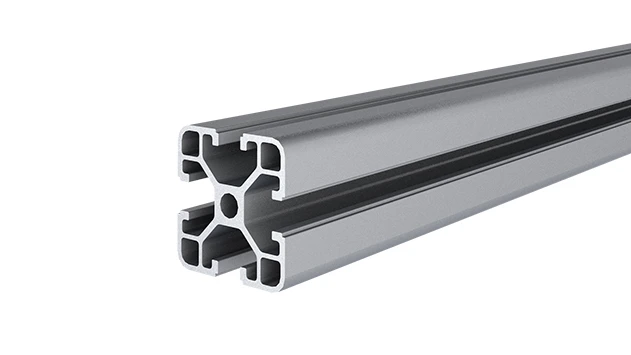
4040B is a 4.00x4.00 CM fractional 40 series square extrusion T-slot profile with four open T-slots, each side with 4.00cm face. The profile has align-a-grooves to assist in aligning connecting profiles.
Walk into any modern manufacturing facility, warehouse, or workshop, and you'll likely spot a common backbone: aluminum profiles. These unassuming yet versatile structures form the skeleton of workbenches, flow racks, assembly lines, and lean systems, quietly the rhythm of production. But not all aluminum profiles are created equal. Among the most widely used are the 4040B and 3030B EU standard aluminum extrusion profiles—two workhorses that often leave facility managers and engineers asking: When does size matter, and when is smaller better?
If you've ever stood in front of a catalog of aluminum profile options, scratching your head at the mix of numbers and letters, you're not alone. The "4040" and "3030" in these names aren't random—they refer to the profile's cross-sectional dimensions (in millimeters), giving you a quick clue about their size. But size is just the start. Choosing between them isn't about picking the "bigger is better" option; it's about matching the profile to your workflow, load requirements, and long-term efficiency. After all, in lean system design, every component should serve a purpose—no more, no less. Let's dive into what makes these two profiles unique, when to reach for the larger 4040B, and when the 3030B might be the smarter choice.
Understanding Aluminum Extrusion Profiles: The Basics
Before we compare the 4040B and 3030B, let's ground ourselves in what aluminum extrusion profiles are and why they matter. Aluminum extrusion is a manufacturing process where raw aluminum is heated and pushed through a die to create long, uniform shapes with specific cross-sections. This process allows for intricate designs—like the T-slots that run along the length of most industrial profiles—which make it easy to attach accessories, panels, and other components without welding or drilling. It's this flexibility that has made aluminum extrusion profiles a cornerstone of modular manufacturing setups.
EU standard profiles, like the 4040B and 3030B, adhere to strict dimensional and quality standards, ensuring compatibility across brands and regions. This standardization is a lifesaver for anyone building or expanding a system; you can mix and match components from different suppliers without worrying about fit issues. Now, let's zoom in on the stars of the show.
Breaking Down 4040B and 3030B: Specs That Matter
At first glance, the difference between 4040B and 3030B might seem as simple as 40mm vs. 30mm. But those 10mm make a world of difference in performance. Let's break down their key specifications side by side to see where they diverge—and where they overlap.
| Feature | 4040B EU Standard Aluminum Profile | 3030B EU Standard Aluminum Profile |
|---|---|---|
| Cross-Section Dimensions | 40mm (width) x 40mm (height) | 30mm (width) x 30mm (height) |
| Wall Thickness (Typical) | 2.0mm–3.0mm (varies by supplier) | 1.5mm–2.0mm (varies by supplier) |
| Material | 6063-T5 aluminum alloy (common for structural use) | 6063-T5 aluminum alloy (same base material) |
| Static Load Capacity (Per Meter) | 400kg–600kg (depending on mounting and support) | 200kg–350kg (depending on mounting and support) |
| Weight (Per Meter) | 2.2kg–2.8kg | 1.3kg–1.8kg |
| T-Slot Configuration | Typically 4 T-slots (one on each side), 8mm slot width | Typically 4 T-slots (one on each side), 6mm–8mm slot width |
| Common Applications | Heavy-duty workbenches, material racks, flow racks for bulky items, machine guards | Light to medium-duty workbenches, small flow racks, shelving, prototype assemblies |
The table above highlights the basics, but numbers only tell part of the story. Let's dig deeper into the specs that will actually impact your day-to-day operations.
Load Capacity: When Size Translates to Strength
If there's one spec that should top your list, it's load capacity. After all, a profile that bends or fails under weight isn't just inefficient—it's dangerous. The 4040B's larger cross-section and thicker walls mean it can handle significantly more weight than the 3030B. For example, a 4040B workbench with proper bracing can easily support 500kg of tools, parts, and assemblies, while a 3030B workbench of the same design might max out at 300kg. That extra 200kg might not seem like much until you're loading heavy power tools or stacking large components.
But load capacity isn't just about static weight (items sitting still). Dynamic loads—like parts sliding down a flow rack or workers leaning on a bench—also matter. The 4040B's rigidity reduces flexing under dynamic stress, which means less wear and tear over time. If your operation involves frequent movement of heavy items (think automotive parts or industrial machinery components), the 4040B's sturdiness will pay off in longevity.
On the flip side, if your needs are lighter—say, assembling small electronics or storing lightweight packaging materials—the 3030B's load capacity is more than enough. Overbuilding with a 4040B in these cases would be a waste of material and space, not to mention adding unnecessary weight to mobile setups like carts or temporary workstations.
Space and Weight: The Trade-Offs of Going Large
Bigger profiles mean more strength, but they also mean more space and weight. A 4040B profile takes up 40mm of space in each direction, which can add up quickly in tight work areas. If you're designing a compact assembly line where every inch counts—like in a small electronics workshop—the 3030B's slimmer 30mm profile might be the difference between fitting an extra workstation or not.
Weight is another consideration, especially for mobile systems. A cart built with 4040B will be heavier than one built with 3030B, making it harder to push around the shop floor. This might not matter for stationary setups, but for turnover trolleys or mobile workbenches, the 3030B's lighter weight (around 1.5kg per meter vs. 2.5kg for 4040B) can reduce operator fatigue and improve maneuverability.
Cost is also a factor. Aluminum isn't cheap, and larger profiles use more material. A 4040B profile can cost 30%–50% more per meter than a 3030B, depending on the supplier. Multiply that by the number of meters in your project, and the difference adds up. Of course, this is a false economy if the 3030B can't handle your load requirements, but if it can, the savings are worth considering.

Real-World Applications: Where Each Profile Shines
To make this tangible, let's look at common scenarios where you'd choose one profile over the other. Remember, the goal is to align the profile with your specific needs—no more, no less.
Workbenches: The Heart of the Workshop
Workbenches are where the magic happens, and they come in all shapes and sizes. A light-duty workbench for small-parts assembly (like phone or laptop components) might only need to support a few tools, a keyboard, and a monitor. Here, the 3030B is ideal: it's lightweight, affordable, and takes up minimal space. You can even add a pegboard or small shelf using T-slot accessories without overloading the frame.
But step into a heavy machinery shop, and the story changes. A workbench used for assembling engine blocks or welding metal components needs to withstand clamping forces, impacts, and the weight of large tools (think angle grinders, vices, and hydraulic presses). Here, the 4040B is non-negotiable. Its rigidity prevents the bench from wobbling during precision work, and its higher load capacity ensures it won't sag over time. Some suppliers even offer reinforced 4040B variants with thicker walls for extreme loads—though these come with a higher price tag.
Flow Racks: Moving Materials Efficiently
Flow racks are the unsung heroes of lean manufacturing, using gravity to move materials from the loading end to the picking end. The choice between 4040B and 3030B here depends on what's flowing. If you're moving small boxes of screws, washers, or electronic components, a 3030B flow rack with plastic roller tracks will work perfectly. The lightweight profile keeps the rack easy to reposition, and the T-slots make it simple to adjust roller spacing for different box sizes.
But if your flow rack is handling large, heavy containers—like automotive bumpers, engine parts, or industrial batteries—you'll need the 4040B. The larger profile provides a stable base for heavier roller tracks and can support the weight of stacked containers without bowing. Imagine a 3030B flow rack loaded with 20kg boxes: over time, the horizontal beams might start to bend, causing jams or uneven flow. The 4040B's stiffer structure prevents this, keeping your material flow smooth and reliable.
Lean Systems: Balancing Flexibility and Strength
Lean manufacturing is all about eliminating waste and optimizing flow, and aluminum profiles are a lean system's best friend. Modular profiles allow you to reconfigure workstations, racks, and assembly lines as needs change—no welding, no heavy machinery, just a few tools and some T-slot bolts. But lean doesn't mean skimping on strength.
A lean system for a small bakery (think racks for mixing bowls or ingredient storage) might thrive with 3030B profiles. They're easy to adjust, lightweight, and cost-effective. But a lean system in a automotive plant, where workstations need to support robots, conveyors, and heavy tooling, demands the 4040B. The larger profile provides a stable platform for automation, reducing vibration and ensuring precision in repetitive tasks.
Case Studies: Lessons from the Field
Sometimes, real-world examples say more than specs. Let's look at two hypothetical (but realistic) case studies to see how these profiles perform in action.
Case Study 1: Small Electronics Assembly Line
The Setup: A startup electronics company building smart home sensors. They have a small workshop (500 sq ft) and need 4 workbenches, 2 small flow racks, and a mobile cart for parts delivery.
The Challenge: Limited space and budget; most assemblies weigh less than 5kg.
The Solution: 3030B profiles. The workbenches, built with 3030B frames and plywood tops, easily support tools, laptops, and small circuit boards. The flow racks, fitted with 0.5-inch swivel roller balls, glide small plastic bins of components smoothly. The mobile cart, lightweight and maneuverable, zips between workstations without straining operators. Total cost: ~$2,000 for materials.
Why It Worked: The 3030B was more than strong enough for the load, saved space in the tight workshop, and kept costs low—critical for a startup.
Case Study 2: Heavy Machinery Component Manufacturing
The Setup: A mid-sized manufacturer producing hydraulic cylinders for construction equipment. They need heavy-duty workbenches for assembly, material racks for steel components (weighing 20–50kg each), and flow racks for finished parts.
The Challenge: High load requirements; components are bulky and heavy; workbenches need to withstand clamping forces during assembly.
The Solution: 4040B profiles. The workbenches, reinforced with 4040B cross-bracing and steel tops, support vices, hydraulic presses, and 50kg cylinder assemblies without flexing. Material racks, built with 4040B uprights and steel shelves, hold stacks of heavy steel parts safely. Flow racks, fitted with 1-inch steel roller tracks, move finished cylinders (30kg each) with minimal effort. Total cost: ~$8,000 for materials.
Why It Worked: The 4040B's strength and rigidity ensured safety and durability, even under heavy loads and repeated use. While more expensive, it prevented costly downtime from equipment failure.
Choosing the Right Profile: A Step-by-Step Guide
Still on the fence? Here's a simple checklist to help you decide between 4040B and 3030B:
- Calculate your maximum load: Estimate the heaviest item that will sit on or pass through the structure. If it's over 300kg, lean toward 4040B. If under, 3030B may suffice.
- Measure your space: Will a 40mm profile fit in your available area? If space is tight, 3030B's slimmer profile might be necessary.
- Consider mobility: If the structure needs to move (carts, mobile workbenches), 3030B's lighter weight is a plus.
- Think long-term: Will your needs grow? If you anticipate heavier loads or larger components in the future, investing in 4040B now can save you from rebuilding later.
- Check your budget: If 3030B meets your load and space needs, the cost savings are worth it. If not, the 4040B is an investment in durability.
Conclusion: Investing in the Profile That Grows With You
At the end of the day, choosing between 4040B and 3030B EU standard aluminum profiles is about balance. The 4040B is the heavyweight champion, offering strength and rigidity for high-load, heavy-duty applications. The 3030B is the agile lightweight, perfect for tight spaces, light loads, and budget-conscious projects. Neither is "better"—they're just better for different jobs.
As you plan your next project, remember that the best aluminum profile is the one that matches your specific needs. A lean system built with the right profile will run smoother, last longer, and adapt better to change. And when in doubt, consult with a reputable aluminum profile supplier—they can help you run load calculations, share case studies, and ensure you're not over- or under-engineering your setup.
In the world of manufacturing, success lies in the details—and the right aluminum profile is one detail that shouldn't be overlooked. Whether you're building a workbench, a flow rack, or an entire lean system, let your load, space, and budget guide you. After all, the strongest systems aren't just built with metal—they're built with intention.