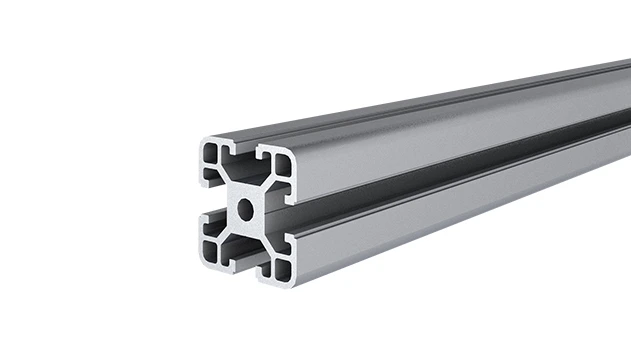
Before diving into accessories, let's take a quick look at the star of the show: the 4040C EU Standard Aluminum Profile. As the name suggests, it measures 40mm x 40mm in cross-section, with a "C" shape that refers to its specific groove design—perfect for accommodating T-slot nuts and fasteners. Made from high-grade aluminum alloy, it balances lightweight properties with impressive load-bearing capacity, typically supporting up to 200kg per linear meter (depending on the setup). What makes the 4040C so popular? Its compatibility with a wide range of aluminum profile accessories, which allows for endless customization. Whether you're building a fixed workstation or a mobile trolley, this profile adapts to your needs. But remember: the magic happens when you pair it with the right brackets, connectors, and fasteners. Let's start with brackets—the silent stabilizers of any aluminum frame.
Brackets: The Backbone of Stability
Brackets are the unsung workhorses that keep your aluminum frame from wobbling, bending, or collapsing under stress. Think of them as the "reinforcements" that add rigidity to joints and corners, especially in structures that bear weight or face frequent movement. For 4040C profiles, two types of brackets stand out: gusset plates and angle brackets. Let's break them down.
If you've ever built a bookshelf that sagged in the middle, you know the importance of extra support. That's where the gusset alp 4040 comes in. Designed specifically for 40mm x 40mm profiles, this triangular or square metal plate bolts onto the inside or outside of a joint, distributing weight evenly and preventing flexing. Imagine building a heavy-duty material rack for storing tools or raw materials—without gussets, the vertical posts might bow under the load over time. But with a gusset alp 4040 at each corner, the rack stays square and stable, even with repeated use.
What to look for in a gusset alp 4040? Material matters—aluminum or steel (for heavier loads) are standard. Thickness is another factor: 2mm to 3mm is typical for most projects, but if you're building something that needs to support hundreds of kilos, opt for a thicker plate. Also, check that the pre-drilled holes align with the T-slots of your 4040C profile—mismatched holes mean extra work (and frustration) during installation.
Angle Brackets: Simple, Strong, and Versatile
Angle brackets are the "all-purpose" brackets of the aluminum world. Shaped like a right angle (90 degrees), they're used to connect two profiles perpendicularly—think attaching a shelf to a vertical post or a side panel to a frame. Unlike gussets, which are often hidden, angle brackets are sometimes visible, so many come with a sleek, anodized finish that matches the 4040C profile's look. They're easy to install too: just slide a T-slot nut into the profile's groove, align the bracket, and tighten the bolt. No welding, no drilling—just quick, secure connections.
One common mistake? Underestimating load capacity. A small, thin angle bracket might work for a light-duty shelf holding office supplies, but for a workbench top that will see power tools and heavy parts, you'll need a heavy-duty bracket with thicker walls and larger mounting holes. Always check the manufacturer's specs for weight limits—better safe than sorry!

Connectors: Bringing Profiles Together, Seamlessly
If brackets are the stabilizers, connectors are the "glue" that joins profiles at different angles. Without the right connector, you're stuck with basic straight lines—but with the right ones, you can create complex shapes, corners, and junctions. For 4040C profiles, the 90° aluminum profile connector is a staple, but there are plenty of other options to explore.
The 90° aluminum profile connector is exactly what it sounds like: a component designed to join two 4040C profiles at a perfect right angle. It's the most commonly used connector, found in everything from workbench frames to machine guards. What makes it so popular? Ease of use. Most 90° connectors slide into the end of one profile and bolt into the side of another, creating a strong, rigid joint without protruding too far. Some are "internal" (hidden inside the profile) for a clean look, while others are "external" (mounted on the outside) for extra strength.
Let's say you're building a workbench with a frame that's 120cm wide and 80cm deep. The front and back rails need to connect to the left and right legs at 90° angles—that's where the 90° connector shines. Just insert the connector into the end of the rail, align it with the leg's T-slot, tighten the bolts, and you've got a joint that can handle the weight of a vice, tools, and whatever else you throw on the bench.
Beyond 90 Degrees: 45°, 135°, and Multi-Way Connectors
Not every project is a simple rectangle. Maybe you need a sloped roof for a machine enclosure, or a diagonal brace for extra stability. That's where 45° and 135° connectors come in. A 45° connector joins profiles at a sharp angle, ideal for ramps or inclined surfaces, while a 135° connector (like a "blunt" corner) is great for creating octagonal frames or avoiding sharp edges in high-traffic areas.
Then there are multi-way connectors: three-way, four-way, even five-way. These allow you to connect multiple profiles at a single point. For example, a three-way connector could join a vertical post to a front rail, a back rail, and a shelf support—all in one spot. Multi-way connectors save space and reduce the number of joints needed, but they do add complexity. Make sure your project's design accounts for the extra bulk of these connectors, especially in tight spaces.
Key Considerations When Choosing Connectors
First, compatibility: not all connectors work with all 4040C profiles. Some are designed for "slotless" profiles, while others rely on T-slots. Check the profile's groove width and depth to ensure a snug fit. Second, adjustability: some connectors allow for minor angle tweaks (±5 degrees) to compensate for small measurement errors, which can be a lifesaver during assembly. Third, material: aluminum connectors are lightweight and corrosion-resistant, while steel connectors offer higher strength for heavy loads. Finally, aesthetics: if your project will be visible (like a retail display), opt for connectors with a clean, anodized finish that matches the profile.
Fasteners: The Final Piece of the Puzzle
Brackets and connectors hold the structure together, but fasteners—nuts, bolts, washers, and more—keep those brackets and connectors in place. It's easy to overlook fasteners, but using the wrong one can turn a solid frame into a wobbly mess. Let's break down the essentials, including a few you might not have considered, like the aluminum profile rubber strip.
T-Slot Nuts and Bolts: The Dynamic Duo
T-slot nuts are the backbone of aluminum profile fasteners. Shaped like a "T," they slide into the T-slot of the 4040C profile and rotate 90 degrees to lock in place, creating a secure anchor point for bolts. Pair them with hex bolts or socket cap screws, and you've got a connection that's both strong and adjustable. Need to move a shelf up a few centimeters? Just loosen the bolt, slide the nut to the new position, and retighten—no drilling new holes.
Pro tip: Always use a washer between the bolt head and the bracket/connector. Washers distribute pressure, preventing the bolt from digging into the aluminum and damaging the profile. For outdoor or high-moisture environments, stainless steel T-slot nuts and bolts are a must to avoid rust.
Here's an accessory you might not think about until you need it: the aluminum profile rubber strip. These flexible, often black or gray strips press into the T-slots of the 4040C profile, serving two key purposes. First, they seal the slot, preventing dust, debris, or liquids from getting inside—important for profiles used in cleanrooms or food processing facilities. Second, they reduce noise: without a rubber strip, metal brackets or tools sliding in the T-slot can create a loud, annoying "clinking" sound. The rubber dampens vibrations, making the structure quieter and more pleasant to work around.
Rubber strips come in different widths to fit 4040C's T-slot size (typically 8mm or 10mm). Some are even conductive (ESD-safe) for electronics manufacturing, where static electricity can damage sensitive components. Installation is a breeze: just peel off the adhesive backing (if included) and press the strip into the slot. It's a small addition that makes a big difference in longevity and usability.
Other Essential Fasteners
Don't forget these unsung fasteners:
-
Cap Nuts:
These cover the end of a bolt, giving a smooth, finished look and preventing snags on clothing or equipment.
-
Spring Nuts:
Similar to T-slot nuts but with a spring that keeps them in place during installation—great for one-handed assembly.
-
Threaded Inserts:
For attaching non-profile components (like a wooden worktop) to the aluminum frame, threaded inserts screw into the profile, creating a strong anchor for wood screws.
Comparing Key Accessories: A Quick Reference Table
|
Accessory Type
|
Example Product
|
Primary Function
|
Best For
|
Material
|
|
Bracket
|
Gusset Alp 4040
|
Reinforces joints, prevents flexing
|
Heavy-duty racks, workbench corners
|
Aluminum (2-3mm thick)
|
|
Connector
|
90° Aluminum Profile Connector
|
Joins profiles at right angles
|
Workbench frames, shelf supports
|
Anodized aluminum
|
|
Fastener
|
T-Slot Nut & Bolt
|
Secures brackets/connectors to profiles
|
All modular assemblies
|
Steel or stainless steel
|
|
Sealing/Noise Reduction
|
Aluminum Profile Rubber Strip
|
Seals T-slots, reduces noise/vibration
|
Cleanrooms, electronics workstations
|
EPDM rubber (some ESD-safe)
|
|
Bracket
|
Heavy-Duty Angle Bracket
|
Connects perpendicular profiles
|
Shelves, side panels
|
Steel (painted or zinc-plated)
|
Installation Tips for Success
Even with the best accessories, a poorly installed structure will underperform. Here are some pro tips to ensure your 4040C project goes smoothly:
-
Measure Twice, Cut Once (or Don't Cut at All):
4040C profiles are often sold in standard lengths (1m, 2m, 3m). Before cutting, double-check your design to see if you can use full lengths—cutting aluminum requires a fine-tooth saw and can leave burrs that need filing.
-
Use a Spirit Level:
Nothing ruins a project faster than a crooked frame. Check that all vertical posts are plumb and horizontal rails are level before tightening all fasteners. A small bubble level is cheap insurance against wobbly workbenches or racks.
-
Don't Over-Tighten Bolts:
Aluminum is strong, but it's also malleable. Over-tightening T-slot bolts can strip the threads or warp the profile. Tighten until snug, then give a quarter-turn more—you'll feel resistance, but the bolt shouldn't bend.
-
Test Load Capacity Gradually:
Once your structure is built, test it with increasing weight to ensure brackets and connectors hold. For example, if you're building a material rack rated for 500kg, start with 100kg, then 250kg, and so on. This helps catch weak points before they fail.
-
Label Your Parts:
If you're building something complex, label brackets, connectors, and profiles with tape or markers during assembly. Taking apart a partially built frame to swap parts is frustrating—labels save time and sanity.
Common Applications: Putting It All Together
Still not sure how these accessories work in real life? Let's look at two common projects and the accessories that make them possible:
Project 1: Heavy-Duty Workbench
A workbench needs to be sturdy, flat, and able to handle tools, parts, and occasional hammering. For the frame, 4040C vertical posts (1.2m tall) connect to horizontal rails (1.5m long) using 90° aluminum profile connectors. Gusset alp 4040 brackets reinforce each corner, preventing the frame from twisting. The worktop—a 25mm thick plywood or aluminum sheet—is attached with angle brackets and T-slot bolts, allowing for easy removal if it gets damaged. Finally, aluminum profile rubber strips in the T-slots keep the surface clean and reduce noise when tools are set down.
Project 2: Mobile Material Rack
A mobile rack for transporting parts around a warehouse needs to be strong and easy to move. The base uses 4040C profiles with caster wheels (another essential accessory!) bolted on with heavy-duty angle brackets. Vertical posts connect to horizontal shelf rails via three-way connectors, and each shelf is supported by angle brackets with gusset alp 4040 reinforcements for extra strength. T-slot nuts let you adjust shelf heights as needed, and rubber strips in the T-slots keep small parts from sliding into the grooves during transport.
Troubleshooting Common Issues
Even with careful planning, problems can pop up. Here's how to fix the most common accessory-related issues:
-
Loose Joints:
If a connector or bracket feels wobbly, check the T-slot nut—it might have rotated out of position. Loosen the bolt, rotate the nut 90 degrees to lock it in the T-slot, then retighten.
-
Misaligned Holes:
If a bracket's holes don't line up with the profile's T-slots, use an adjustable connector (if possible) or slightly enlarge the bracket holes with a drill (go slow to avoid cracking the bracket).
-
Profile Bowing:
If a horizontal rail sags under load, add a center support bracket or install gusset alp 4040 brackets at the midpoint to reinforce the rail.
-
Rubber Strip Peeling:
If the aluminum profile rubber strip comes loose, clean the T-slot with rubbing alcohol, apply a small amount of adhesive (like super glue), and press the strip back into place.
Final Thoughts: Accessories Make the Difference
At the end of the day, the 4040C EU Standard Aluminum Profile is a blank canvas—but it's the accessories that turn it into a masterpiece. Brackets add strength, connectors add flexibility, and fasteners add reliability. Whether you're building a simple shelf or a complex automated system, choosing the right accessories will save you time, money, and headaches down the line. Remember: it's not just about buying parts—it's about understanding how they work together to create something functional and durable.
So, the next time you start a project with 4040C profiles, take a moment to think about the brackets, connectors, and fasteners. They might be small, but they're the heart of your structure. Happy building!
