- Company Articles
- Products and Technology
- Product knowledge
- 4040C EU Standard Aluminum Profile: Compatibility with Lean Tube Systems & Accessories

4040C EU Standard Aluminum Profile: Compatibility with Lean Tube Systems & Accessories
Related Product
4040C EU Standard Aluminum Profile
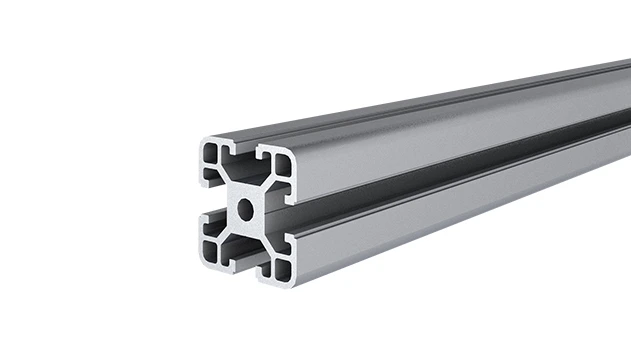
4040C is a 4.00x4.00 CM fractional 40 series square extrusion T-slot profile with four open T-slots, each side with 4.00cm face. The profile has align-a-grooves to assist in aligning connecting profiles.
Walk into any modern manufacturing facility, and you'll notice a quiet revolution happening on the factory floor. Gone are the days of rigid, one-size-fits-all workstations bolted to the ground. Instead, teams are reconfiguring workbenches in hours, rearranging material racks to match new production lines, and rolling trolleys loaded with parts exactly where they're needed—all while keeping downtime to a minimum. At the heart of this flexibility? Aluminum profiles. Specifically, the 4040C EU Standard Aluminum Profile, a workhorse that's redefining how lean tube systems adapt, evolve, and scale in fast-paced environments. Let's dive into what makes this profile a game-changer, how it plays nice with existing lean tube setups, and the accessories that make it truly indispensable.
What Even Is the 4040C EU Standard Aluminum Profile?
Before we get into compatibility, let's make sure we're all on the same page. Aluminum profiles are like the building blocks of modern industrial setups—long, extruded pieces of aluminum with T-shaped slots running along their length. These slots let you attach brackets, panels, wheels, and just about any accessory you can think of, without drilling or welding. The "4040C" in the name? That tells you the profile's cross-section: 40mm by 40mm, a sweet spot for balance between strength and versatility. The "EU Standard" part means it's designed to meet strict European manufacturing specs for quality, durability, and consistency—so you know it's built to last.
But why aluminum? Let's keep it real: Steel is tough, but it's heavy. Wood is cheap, but it warps. Plastic? Not exactly built for heavy tools. Aluminum hits that sweet spot: lightweight enough to move around (no crane needed!), strong enough to hold 500+ kg on a properly assembled rack, and resistant to rust—perfect for factories where spills or humidity are part of the daily grind. And the 4040C? It's not just any 40x40 profile. Its T-slot design is optimized for tight, secure connections, and its wall thickness (typically 2mm) gives it that extra rigidity without adding unnecessary weight. Think of it as the Goldilocks of profiles: not too flimsy, not too bulky—just right for most lean manufacturing needs.
Playing Well with Others: Compatibility with Lean Tube Systems
Here's the thing about lean manufacturing: It's all about adaptability. You don't want to tear down your entire setup every time a new product line launches or a process changes. That's where the 4040C's compatibility with lean tube systems shines. Traditional lean tubes (like PE-coated steel pipes or basic aluminum tubes) have been around for decades, and many factories already have them in place. The 4040C doesn't replace these systems—it enhances them.
Let's say you have an old workbench made with 28mm PE-coated lean pipes. It's sturdy, but you need to add a shelf for heavier tools, and the plastic coating is starting to chip. Instead of scrapping the whole bench, you can bolt a 4040C aluminum profile to the existing frame using a 90° aluminum profile connector (more on that later). The 4040C's T-slots let you attach a metal shelf directly, no drilling required, and suddenly your "old" bench is now a hybrid system—lightweight where it needs to be, strong where it counts. It's like giving your setup a performance upgrade without the price tag of starting from scratch.
Or maybe you're building a new material rack from scratch. Mixing 4040C profiles with standard lean tubes lets you customize strength: Use 4040C for the vertical supports (they'll hold more weight) and lighter aluminum lean pipes for horizontal rails (easier to adjust). The key is that the 4040C speaks the same "language" as most lean tube accessories—joints, clamps, and brackets designed for T-slots or round pipes work seamlessly with it. No special tools, no custom parts—just plug-and-play flexibility.
| Feature | 4040C Aluminum Profile | Traditional PE-Coated Lean Tube (28mm) | Basic Aluminum Lean Tube (30mm) |
|---|---|---|---|
| Weight Capacity (Vertical) | Up to 800kg per profile | Up to 300kg per tube | Up to 500kg per tube |
| Compatibility with Accessories | Works with T-slot and round-tube accessories | Limited to round-tube joints/clamps | Works with some T-slot accessories |
| Reconfigurability | Tool-free adjustments; infinite positioning | Requires loosening/tightening joints | Moderate; T-slots help but fewer options |
| Durability | Anodized finish resists scratches/rust | Plastic coating can chip; steel prone to rust | Lightweight but less rigid |

The Perfect Partners: Key Accessories for 4040C Aluminum Profile
A profile is only as good as the accessories that bring it to life. The 4040C's T-slot design is a playground for customization, and there are dozens of accessories designed specifically to make your setup more functional. Let's break down the must-haves:
1. Connectors: The Glue That Holds It All Together
You can't build a rack or workbench without connecting profiles, and the 90° aluminum profile connector is the MVP here. It's a small, L-shaped bracket that slides into the T-slots of two 4040C profiles, locking them at a perfect right angle with a hex bolt. No wobbly joints, no guesswork—just a rock-solid connection. And if you need a different angle? There's a 45° aluminum profile connector for slopes or diagonal supports, and even a 135° aluminum profile connector for corner racks or angled workstations.
2. End Caps: Safety First, Style Second
Ever brushed against the end of an aluminum profile and gotten a metal splinter? Not fun. 4040 aluminum profile end caps solve that. These plastic or rubber caps snap onto the ends of the 4040C, covering sharp edges and preventing dust, debris, or even small tools from falling into the T-slots. They come in colors too—black, gray, or yellow—so you can color-code workstations by department (yellow for assembly, gray for packaging) for extra organization.
3. Casters: Mobility Matters
What good is a flexible workstation if you can't move it? Adding casters to a 4040C frame turns a static workbench into a mobile cart. Look for caster wheels with brake locks—they let you roll the cart to the assembly line, lock it in place, and then unlock it to move it out of the way when the job's done. Pro tip: Use heavy-duty casters (rated for 150kg+ each) if you're building a trolley for tools or materials—you don't want a wheel giving out mid-roll.
4. Panels and Shelves: Making Space for Everything
The T-slots in 4040C profiles aren't just for connectors—they're for adding surfaces. Aluminum honeycomb panels (lightweight, strong) or plywood shelves can be attached using T-slot nuts and bolts, letting you create custom work surfaces. Need a pegboard for tools? There's a bracket for that. A whiteboard for process notes? Yep, that too. The possibilities are endless, and since the panels are attached via T-slots, you can reposition them in minutes if you need more desk space or a taller shelf.
From Blueprints to Reality: Real-World Applications
Enough theory—let's talk about how the 4040C actually gets used on the factory floor. Here are three common setups where it shines:
1. Workbenches: The Heart of the Operation
A workbench is where the magic happens—assembly, testing, packaging. A 4040C-based workbench is like a Swiss Army knife: You can configure it to fit any task. For example, a single-deck workbench (without casters) might have a 4040C frame with a wooden top for assembly, a metal shelf below for tools, and a pegboard on the back for hanging wrenches or tape dispensers. Add a roller track along the edge, and parts slide right to the worker—no bending or reaching. And if the team needs more space? Swap out the single deck for a double-deck using extra 4040C profiles and connectors. Done in an hour, not a week.
2. Material Racks: Organized, Accessible, and Strong
Ever walked into a warehouse and seen boxes stacked haphazardly, or workers climbing ladders to reach parts on high shelves? A 4040C material rack fixes that. Take Material Rack B (3 row and 3 floor) —it uses 4040C vertical posts and horizontal rails, with swivel roller balls 1 inch on each shelf. Parts glide forward as the front box is taken, so the next one is always within reach. The 4040C's strength means each shelf can hold 200+ kg, so you can stack heavy components without worrying about collapse. And if you need to adjust shelf heights? Loosen the connectors, slide the rails up or down, retighten—done. No more "making do" with fixed shelves that don't fit your boxes.
3. Turnover Trolleys: Moving Materials Without the Strain
Heavy loads, tight spaces, frequent moves—turnover trolleys are the unsung heroes of the factory floor. A 4040C trolley frame is lightweight (so workers can push it easily) but tough enough to carry 500kg+ of parts. Add caster accessories like swivel wheels with brakes, and it maneuvers around corners or stops on a dime. Some trolleys even have fold-down sides for easy loading, thanks to aluminum hinges that attach to the 4040C profiles. It's not just a trolley—it's a mobile storage unit that keeps materials flowing to where they're needed, when they're needed.
Why 4040C Stands Out: Advantages Over Traditional Materials
Let's be honest: There are a lot of profile options out there. So why choose 4040C? Here's the short list:
- Durability That Lasts: Anodized aluminum resists corrosion, scratches, and dents. Unlike steel, it won't rust if it gets wet, and unlike wood, it won't warp in humidity. We've seen 4040C setups last 10+ years with minimal maintenance—just a quick wipe-down now and then.
- Lightweight, But Strong: Aluminum is 30% lighter than steel, so workers can move modular components without heavy lifting. But don't let the weight fool you—4040C profiles can support hundreds of kilograms per linear meter. It's the best of both worlds.
- Cost-Effective in the Long Run: Yes, aluminum profiles cost more upfront than basic steel pipes. But factor in how often you'll reconfigure, repair, or replace traditional setups, and the 4040C pays for itself. No more replacing rusted steel pipes or warped wooden shelves every few years.
- Sustainability: Aluminum is 100% recyclable, and most 4040C profiles are made from recycled materials. If you ever do need to scrap a setup, the aluminum can be melted down and reused—no waste, no guilt.
Wrapping It Up: The 4040C as Your Lean Manufacturing Sidekick
At the end of the day, lean manufacturing is about people—making their jobs easier, safer, and more efficient. The 4040C EU Standard Aluminum Profile isn't just a piece of metal; it's a tool that empowers teams to adapt, innovate, and thrive. Whether you're upgrading an old workbench, building a new material rack, or mixing it with existing lean tube systems, it's the flexibility, strength, and compatibility that make it indispensable.
So the next time you're staring at a rigid, outdated setup on the factory floor, remember: You don't have to start over. With the 4040C and the right accessories— aluminum profile accessories , connectors, casters, and more—you can transform "good enough" into "great." And isn't that what lean manufacturing is all about?