- Company Articles
- Products and Technology
- Product knowledge
- 4040C EU Standard Aluminum Profile Cost per Meter: Factors Affecting Price

4040C EU Standard Aluminum Profile Cost per Meter: Factors Affecting Price
Related Product
4040C EU Standard Aluminum Profile
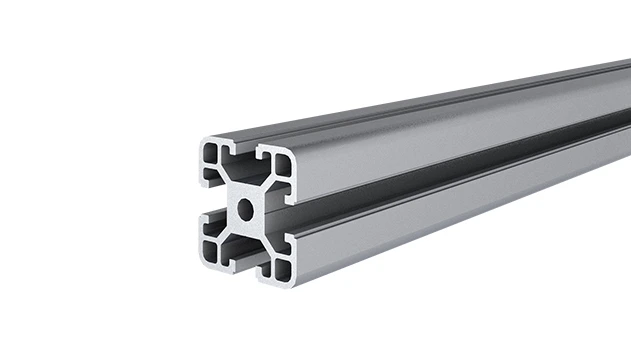
4040C is a 4.00x4.00 CM fractional 40 series square extrusion T-slot profile with four open T-slots, each side with 4.00cm face. The profile has align-a-grooves to assist in aligning connecting profiles.
Walk into any modern factory, warehouse, or workshop, and you'll likely spot aluminum profiles holding things together—from workbenches and material racks to conveyor systems and assembly lines. These unassuming metal structures are the backbone of efficient, flexible manufacturing, and among the most widely used is the 4040C EU standard aluminum profile. Its versatility, strength, and compatibility with a range of aluminum profile accessories make it a go-to choice for lean systems, production setups, and custom workspaces. But if you've ever shopped for 4040C profiles, you've probably noticed a wide range in prices: some suppliers quote $15 per meter, others $30 or more. What causes these differences? Let's break down the key factors that shape the cost of 4040C EU standard aluminum profiles, so you can make smarter sourcing decisions for your next project.
What Exactly Is 4040C EU Standard Aluminum Profile?
Before diving into costs, let's get clear on what 4040C profiles are. The "4040" refers to their cross-sectional dimensions: 40mm by 40mm, a common size that strikes a balance between strength and versatility. The "C" denotes a specific groove design—typically, EU standard profiles have T-slots (those long, narrow grooves along the sides) that allow for easy attachment of accessories like brackets, connectors, and panels. Unlike some non-standard profiles, 4040C is engineered to meet strict European union standards for tolerances, material quality, and finish, making it compatible with a global ecosystem of aluminum profile accessories. This standardization is a big part of its appeal: whether you're in Germany, China, or the U.S., a 4040C profile from a reputable supplier will fit with 4040C-compatible connectors and brackets, reducing the hassle of custom modifications.
Most 4040C profiles are made from 6063 aluminum alloy, a heat-treatable alloy known for its excellent extrudability (meaning it flows smoothly through extrusion dies) and good corrosion resistance. This alloy is softer than, say, 6061 (used in structural applications), but it's perfect for profiles where formability and surface finish matter more than extreme strength. Now, let's explore why two meters of this seemingly "standard" profile might cost twice as much from one supplier to the next.
Factor 1: Raw Material Costs—The Foundation of Price
At the heart of any aluminum profile's cost is the aluminum itself. Aluminum is a globally traded commodity, and its price fluctuates daily based on supply, demand, and geopolitical factors. The London Metal Exchange (LME) sets benchmark prices for primary aluminum, and these prices trickle down to manufacturers. For example, if LME aluminum prices rise by 10% in a month, you can bet that profile suppliers will adjust their quotes accordingly—they can't absorb those increases indefinitely.
Alloy Purity and Composition
Not all aluminum is created equal. 4040C profiles use high-purity aluminum (typically 99.5% pure or higher) mixed with small amounts of silicon and magnesium to form the 6063 alloy. Higher purity aluminum costs more than lower-grade alternatives, but it's necessary for achieving the alloy's desired properties—like the ability to be anodized (we'll get to that later) and maintain tight tolerances. Cheaper profiles might cut corners by using recycled aluminum with inconsistent purity, which can lead to weak spots, poor extrusion quality, or difficulty in surface treatment. While recycled aluminum is eco-friendly and cost-effective for some applications, 4040C's EU standard requirements often demand primary aluminum to ensure reliability.
Global Market Trends and Tariffs
Aluminum prices are also influenced by global events. For instance, trade tensions between major aluminum-producing countries (like China and the U.S.) can lead to tariffs on imported aluminum, increasing costs for suppliers who rely on foreign raw materials. Similarly, energy prices play a role: aluminum production is energy-intensive, so spikes in electricity costs (e.g., due to natural gas shortages in Europe) can drive up the price of primary aluminum. In 2022, for example, European aluminum smelters reduced output due to skyrocketing energy prices, leading to a shortage of high-quality aluminum and pushing up profile costs across the continent.

Factor 2: Extrusion Process—Where Precision Meets Cost
Once the raw aluminum is ready, it's time to shape it into a 4040C profile through extrusion. This process involves heating aluminum billets (cylindrical blocks) to around 500°C, then forcing them through a steel die with the 4040C cross-section. The complexity of this process has a huge impact on cost—and it's where many price differences start to emerge.
Die Design: Standard vs. Custom
Most 4040C suppliers use standard dies, which are mass-produced and shared across many customers. These dies are a one-time investment for the supplier, so their cost is spread out over thousands of meters of profile, keeping per-meter prices low. But if you need a modified 4040C—say, with extra T-slots, thicker walls, or a custom groove design—you'll need a custom die. Designing and machining a custom die can cost $2,000 to $5,000 or more, and that cost gets passed on to you, either as a one-time die fee or rolled into the per-meter price. For small orders (e.g., 100 meters or less), custom dies can double or triple the per-meter cost. Unless your project truly requires a unique profile, sticking with standard 4040C dies is almost always cheaper.
Production Volume: The Power of Scale
Extrusion is a high-setup-cost process. Each production run requires cleaning the die, heating the press, and calibrating equipment—tasks that take time and labor, regardless of how many meters you produce. If you order 10 meters of 4040C, the supplier has to absorb all those setup costs into a small batch, driving up the per-meter price. Order 1,000 meters, and those setup costs are spread thin, bringing the per-meter price down. This is why bulk orders often come with discounts: suppliers are happy to cut prices for larger volumes because they're more efficient to produce.
Wall Thickness and Tolerances
Not all 4040C profiles are the same "thickness." The wall thickness—the distance between the outer edge and the inner cavity of the profile—can range from 1.5mm to 3mm or more. Thicker walls mean more aluminum per meter, which directly increases material costs. They also require more pressure to extrude and longer cooling times, adding to production labor costs. For example, a 4040C with 2mm walls might cost $18 per meter, while a 3mm wall version could be $25 per meter. Why choose thicker walls? If your profile needs to support heavy loads (like a workbench holding 500kg of equipment), the extra thickness prevents bending or warping. For lighter applications, though, thinner walls can save you money without sacrificing performance.
Tolerances—how closely the profile's actual dimensions match the 4040mm specification—also affect cost. EU standards require tight tolerances (e.g., ±0.2mm for width/height), but some suppliers offer "economy" grades with looser tolerances (±0.5mm or more). These cheaper profiles might save you a few dollars per meter, but they can cause headaches during assembly: if a profile is 0.5mm wider than expected, it might not fit into a standard bracket, forcing you to file down edges or buy custom accessories. For most industrial applications, sticking with EU-standard tolerances is worth the extra cost to avoid delays and rework.
Factor 3: Surface Treatment—More Than Just Looks
A raw aluminum profile straight from the extrusion press is dull and prone to corrosion. Surface treatments solve these issues, but they also add to the cost. The type of treatment you choose depends on your needs: Do you need a shiny finish for a customer-facing workspace? Corrosion resistance for a humid factory? Or just a basic protective layer for indoor use? Let's compare the most common options and how they impact price.
Mill Finish: The Budget Option
Mill finish is the "as extruded" surface—no additional treatment beyond cutting and deburring. It has a matte, silver-gray appearance with visible extrusion lines (those faint striations along the length). Mill finish is the cheapest option, typically adding $1–$3 per meter to the base material cost. It's fine for indoor, dry environments where appearance isn't critical, like storage racks in a warehouse. But mill finish aluminum oxidizes over time, developing a dull, powdery layer (aluminum oxide) that can rub off on hands or products. For applications where cleanliness or aesthetics matter, you'll want a better finish.
Anodizing: Durable and Attractive
Anodizing is the most popular surface treatment for aluminum profiles. It involves submerging the profile in an electrolytic solution and passing an electric current through it, which forms a thick, hard layer of aluminum oxide on the surface. This layer is porous, so it can be dyed (common colors include silver, black, and gold) or left natural (clear anodize). Anodized finishes are scratch-resistant, corrosion-resistant, and easy to clean—ideal for workbenches, medical equipment, or food-processing areas.
But anodizing isn't cheap. Clear anodize adds $3–$7 per meter, while colored anodize can add $5–$10 per meter, depending on the color and quality. The process is labor-intensive: profiles must be thoroughly cleaned before anodizing (any oil or dirt ruins the finish), and the anodizing tanks require precise temperature and chemical control. For high-volume orders, some suppliers offer discounts, but for small batches, anodizing can significantly bump up costs.
Powder Coating: Colorful and Tough
Powder coating involves electrostatically applying dry powder (usually polyester) to the profile, then baking it in an oven to melt and cure the powder into a hard, glossy finish. It's available in almost any color (think bright yellows for safety zones or custom corporate colors) and offers excellent durability—resistant to scratches, chips, and UV rays. Powder coating is popular for outdoor applications (like warehouse racking exposed to rain) or workspaces where appearance matters (e.g., retail displays or tech company assembly lines).
Cost-wise, powder coating falls between mill finish and anodizing: expect to add $4–$8 per meter. The price varies by color (specialty colors like metallic or textured finishes cost more than standard colors) and batch size (small batches require cleaning the spray booth between colors, adding time and cost). One downside: powder coating is thicker than anodizing (typically 50–150 microns vs. 10–20 microns for anodize), which can affect T-slot dimensions. If you're using tight-fitting accessories, you may need to specify "T-slot masking" during powder coating to keep the grooves clean—a small extra cost that prevents frustration later.
Factor 4: Aluminum Profile Accessories—The Hidden Costs
A 4040C profile alone is just a metal stick—it needs accessories to become useful. Brackets, connectors, end caps, hinges, and feet might seem like small items, but they can add 20%–50% to your total project cost if you're not careful. Let's look at common accessories and how they impact your budget.
Connectors and Brackets: The Glue of Your System
To join two 4040C profiles at a 90° angle, you'll need a corner bracket or a 90° aluminum profile connector. These come in two main types: standard (for basic strength) and heavy-duty (for high-load applications). A standard 90° bracket might cost $2–$5 each, while a heavy-duty version with reinforced bolts could be $8–$15. Multiply that by the dozens of brackets in a typical workbench or rack, and the costs add up. Some suppliers bundle profiles and accessories into "kits" (e.g., a workbench kit with profiles, brackets, and a tabletop), which can save 10%–15% compared to buying items separately. If you're sourcing accessories from the same supplier as your profiles, ask about bundle discounts.
End Caps and Covers: Small Parts, Big Impact
End caps are those plastic or metal plugs that fit into the ends of profiles, hiding sharp edges and preventing dust from collecting inside. They're cheap—$0.50–$2 each—but skipping them can lead to cuts, product damage (if small parts fall into the profile), or a messy, unprofessional look. Similarly, T-slot covers (rubber or plastic strips that fill the T-slots when not in use) cost $1–$3 per meter but keep out debris and improve safety. These small investments are worth it for a polished, functional setup.
Feet and Casters: Mobility vs. Stability
If your profile-based structure needs to stand still (like a fixed workbench), you'll need adjustable feet to level it on uneven floors. Basic plastic feet cost $3–$5 each, while heavy-duty metal feet with anti-slip pads are $8–$12. For mobile setups (like a turnover trolley), casters are a must. A standard swivel caster with a brake costs $10–$20 each, and heavy-duty casters (for loads over 200kg) can be $30–$50. Again, buying these from your profile supplier often saves on shipping and ensures compatibility—nothing's worse than ordering casters that don't fit the profile's mounting holes.
Factor 5: Supplier and Sourcing—Not All Suppliers Are Equal
Even with identical specifications, two suppliers might quote very different prices for 4040C profiles. Why? It comes down to their production capabilities, quality control, location, and business model. Let's unpack what to look for (and what to watch out for) when comparing suppliers.
Manufacturers vs. Distributors
Some suppliers are aluminum extrusion manufacturers—they own the extrusion presses, dies, and finishing lines. Others are distributors who buy bulk profiles from manufacturers and resell them with markup. Manufacturers often offer lower prices for large orders (1,000+ meters) because they cut out the middleman. Distributors, on the other hand, may have lower minimum order quantities (MOQs) and faster shipping for small orders, but their per-meter prices are typically 10%–20% higher. If you need 50 meters quickly, a distributor might be your best bet; for 500 meters, go straight to a manufacturer.
Location: Local vs. International Suppliers
A local supplier (within your country or region) might quote $25 per meter, while an international supplier (e.g., from China) quotes $15 per meter. That $10 difference is tempting, but don't forget shipping and import costs. International shipping for aluminum profiles (heavy, bulky) can add $3–$8 per meter, and import duties (e.g., 10%–25% in some countries) can push the total cost to $20–$25 per meter—on par with local suppliers. Add in longer lead times (4–6 weeks vs. 1–2 weeks locally) and the risk of damaged goods or customs delays, and international sourcing may not be worth the hassle for small to medium orders. For large projects, though, the savings from international suppliers can still make sense—just be sure to factor in all hidden costs.
Quality Control: Pay Now or Pay Later
A supplier with strict quality control (QC) processes will charge more, but they'll also deliver profiles that meet specifications consistently. Look for suppliers who test profiles for straightness (no more than 1mm bow per meter), hardness (to ensure the aluminum alloy is properly heat-treated), and finish (no scratches, dents, or uneven coloring). Cheaper suppliers may skip QC steps to cut costs, leading to profiles that warp under load, crack at the T-slots, or corrode prematurely. Fixing these issues later—replacing bent profiles, reworking assemblies—will cost far more than paying a little extra upfront for quality.
Comparing Costs: A Practical Breakdown
To put all these factors into perspective, let's look at a sample cost breakdown for 4040C EU standard aluminum profiles under different scenarios. The table below estimates the per-meter price for common combinations of specifications, based on data from leading suppliers in Europe and Asia (as of 2024).
| Profile Specifications | Estimated Cost per Meter (USD) | Key Cost Drivers |
|---|---|---|
| Standard 4040C, 1.5mm wall, mill finish, standard tolerance, local supplier, 100m order | $18–$22 | Low wall thickness, basic finish, small order volume |
| Standard 4040C, 2mm wall, clear anodized, EU tolerance, international supplier, 1000m order | $20–$25 | Anodizing adds cost, but bulk order and international sourcing offset it |
| Custom 4040C (extra T-slot), 3mm wall, powder-coated (blue), tight tolerance, local supplier, 50m order | $35–$45 | Custom die, thick walls, specialty color, small batch |
| Standard EU 4040C, 2mm wall, mill finish, economy tolerance, international supplier, 5000m order | $12–$15 | Massive volume, economy tolerance, no surface treatment |
As you can see, the same basic 4040C profile can vary from $12 to $45 per meter depending on choices like finish, wall thickness, and order size. The key takeaway? There's no "one size fits all" price—your project's unique needs will determine where you fall on this spectrum.
Tips for Cost-Effective Sourcing of 4040C Aluminum Profile
Now that you know what drives costs, here are practical tips to get the best value for your money when buying 4040C profiles:
- Order in bulk. If you know you'll need profiles over the next 6–12 months, place a single large order to lock in lower per-meter prices. Many suppliers offer storage options if you don't have space to stockpile.
- Choose the right finish. Skip anodizing or powder coating for indoor, low-humidity applications—mill finish is plenty durable. For outdoor use, anodizing is more cost-effective than powder coating over time (it resists fading better).
- Stick to standard dies. Unless your project requires a custom profile, use standard 4040C dies to avoid die fees.
- Bundle accessories. Buy profiles and accessories from the same supplier to qualify for bundle discounts and reduce shipping costs.
- Compare total costs, not just per-meter prices. A supplier quoting $15 per meter might charge $50 for shipping, while a $20 per meter supplier offers free shipping. Always calculate the total landed cost.
Conclusion: Balancing Cost and Quality
The cost of 4040C EU standard aluminum profiles isn't just about the metal itself—it's a mix of raw materials, extrusion complexity, surface treatment, accessories, and supplier choices. By understanding these factors, you can avoid overpaying for features you don't need (like thick walls for light loads) and invest in upgrades that matter (like anodizing for corrosion resistance). Remember, the cheapest profile isn't always the best deal: poor quality or missing accessories can lead to delays, rework, and higher long-term costs. Whether you're building a single workbench or outfitting an entire factory, take the time to define your requirements, compare suppliers, and balance upfront costs with the durability and functionality you need. With the right approach, 4040C profiles will continue to be a cost-effective, flexible solution for your manufacturing and workspace needs.