- Company Articles
- Products and Technology
- Product knowledge
- 4040C EU Standard Aluminum Profile for 3C Product Testing Benches: Stability & Adjustability

4040C EU Standard Aluminum Profile for 3C Product Testing Benches: Stability & Adjustability
Related Product
4040C EU Standard Aluminum Profile
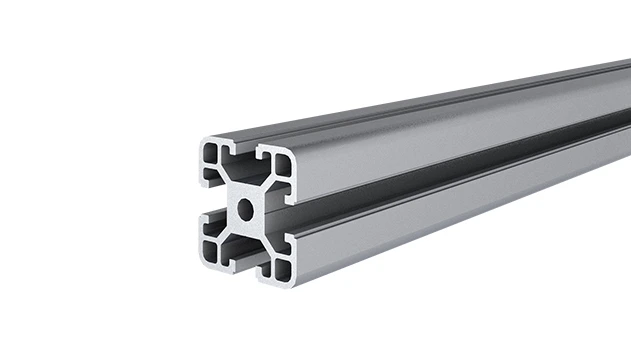
4040C is a 4.00x4.00 CM fractional 40 series square extrusion T-slot profile with four open T-slots, each side with 4.00cm face. The profile has align-a-grooves to assist in aligning connecting profiles.
In the fast-paced world of 3C product manufacturing—where smartphones, laptops, smartwatches, and other consumer electronics are churned out by the millions—precision is everything. Every device must undergo rigorous testing before hitting the market: drop tests to check durability, pressure tests to assess structural integrity, and precision alignment checks to ensure components fit seamlessly. At the heart of these critical processes lies a often-overlooked hero: the testing bench. A flimsy or ill-fitting bench can compromise test accuracy, delay production, or worse, lead to faulty products reaching customers. This is where the 4040C EU Standard Aluminum Profile steps in, offering a unique blend of stability and adjustability that makes it the backbone of modern 3C testing facilities.
Imagine a testing scenario where a technician is conducting a micro-vibration test on a smartphone's camera module. The slightest wobble in the bench could throw off the results, leading engineers to misdiagnose a component as faulty when it's actually the bench causing interference. Or consider a facility that tests everything from tiny smartwatch sensors to large laptop screens—each requiring a different setup. A rigid, one-size-fits-all bench would mean constant retooling, wasting precious time. The 4040C profile addresses both these challenges, providing a stable foundation that minimizes vibration and a flexible framework that adapts to evolving testing needs. Let's dive into why this unassuming aluminum extrusion has become indispensable in 3C manufacturing.
Understanding the 4040C EU Standard Aluminum Profile
First, let's break down what "4040C EU Standard" actually means. The "4040" refers to the profile's cross-sectional dimensions: 40mm in width and 40mm in height, creating a square tube that's compact enough for bench frames but robust enough to bear significant weight. The "C" denotes its position in a series of EU-standardized 40x40 profiles (A, B, C, etc.), each with slight variations in wall thickness, slot design, and load capacity—we'll explore these differences later. The "EU Standard" label is key here: it ensures the profile meets strict European norms for material quality, dimensional accuracy, and safety, making it compatible with a global ecosystem of accessories and components.
At its core, the 4040C is made from 6063-T5 aluminum alloy, a material prized in manufacturing for its perfect balance of strength, weight, and corrosion resistance. The "T5" designation indicates it's been heat-treated to enhance hardness, while the extrusion process—where molten aluminum is forced through a die—creates a uniform structure with no weak points. This isn't just any aluminum tube; it's a precision-engineered component designed to withstand the demands of industrial environments. Unlike steel, which is heavy and prone to rust, aluminum is lightweight (about 1/3 the weight of steel) and naturally resistant to corrosion, making it ideal for cleanrooms and controlled manufacturing spaces where dust and moisture control are critical.
But what truly sets the 4040C apart is its T-slot design. Running along all four sides of the profile are longitudinal slots (typically 8mm wide) that act as connection points for accessories. These slots allow bolts, nuts, brackets, and panels to be attached anywhere along the profile's length without drilling or welding. For 3C testing benches, this means technicians can mount clamps to secure devices, attach tool holders for testing equipment, or even add LED lighting for better visibility—all with minimal effort. It's this modularity that transforms the 4040C from a simple tube into a versatile building block.
Stability: The Foundation of Accurate Testing
In testing, stability isn't just a nice-to-have—it's non-negotiable. A 3C product like a high-end smartphone might undergo a "drop test" where it's released from a height onto a steel plate; the bench holding the release mechanism must stay rock-solid to ensure the drop angle and velocity are consistent. Similarly, in a "button durability test," where a machine presses a device's power button 100,000 times, any bench movement could alter the pressure applied, leading to inaccurate data on how long the button will last.
The 4040C profile excels here thanks to its structural design. With a wall thickness of approximately 2.0mm (thicker than the "A" and "B" variants in the 40x40 series), it offers exceptional rigidity. Independent lab tests show that a 1-meter length of 4040C can support up to 200kg of evenly distributed weight without permanent deformation—more than enough for most 3C testing setups, which rarely exceed 100kg per bench section. When assembled into a frame (using 90° aluminum profile connectors and gusset plates, key aluminum profile accessories), the profile's square shape resists torsion (twisting forces), ensuring the bench remains level even during dynamic tests like rapid clamping or vibration simulations.
Another factor contributing to stability is the material itself. Aluminum's low thermal expansion coefficient means the 4040C profile doesn't warp or contract significantly in response to temperature changes—critical in facilities where testing chambers might cycle between extreme cold and heat. Unlike wooden benches, which can swell in humidity, or plastic composites, which soften under heat, aluminum maintains its shape, ensuring test fixtures remain aligned over time. Even in cleanroom environments, where frequent cleaning with alcohol or disinfectants is common, aluminum resists chemical damage, preserving its structural integrity for years.

Adjustability: Adapting to the Diversity of 3C Products
If stability is the foundation, adjustability is the 4040C's superpower. 3C products come in all shapes and sizes: a foldable smartphone has different testing needs than a tablet, and a gaming laptop requires a sturdier clamp than a fitness tracker. A testing facility might need to reconfigure its benches multiple times a day to accommodate these variations, and the 4040C's T-slot system makes this process almost effortless.
Take, for example, a workbench designed to test smartwatch screens for scratch resistance. The technician needs to mount the watch at a 45° angle and position a scratch-testing probe directly above it. Using T-slot nuts and bolts (common aluminum profile accessories), they can attach an adjustable arm to the 4040C frame, sliding it along the slot to set the perfect height. If the next test is for a tablet, they simply loosen the bolts, reposition the arm, and tighten—no drilling, no cutting, no waiting for a custom bracket. This flexibility reduces retooling time from hours to minutes, keeping production lines moving.
But adjustability isn't just about moving components; it's also about scaling up or down. A facility testing large laptop batteries might need a longer bench, so they can easily add more 4040C sections using internal straight aluminum joints, extending the frame without compromising stability. Conversely, for small-batch testing of prototype components, they can disassemble sections and repurpose the profiles into a smaller bench. This modularity is a cornerstone of lean system principles, where waste is minimized by reusing resources and adapting to demand.
Accessories play a huge role here. Aluminum profile end caps, for instance, not only protect the profile's edges from damage but also allow for clean cable management—critical in testing setups with sensors and data loggers. Nylon hinges can be mounted to the T-slots to create fold-down work surfaces, saving space when not in use. Even casters (caster and accessories) can be attached to the base of the bench, turning a stationary setup into a mobile one that can be wheeled to different testing stations. The possibilities are nearly endless, limited only by the technician's needs.
How 4040C Stacks Up Against Other Profiles: A Comparative Look
To truly appreciate the 4040C's value, it helps to compare it to other profiles in the 40x40 EU standard series. Below is a breakdown of key specs for the A, B, and C variants, highlighting why the C model is the top choice for testing benches:
| Profile Type | Wall Thickness (mm) | Max Load Capacity (kg/m, evenly distributed) | T-Slot Configuration | Best For |
|---|---|---|---|---|
| 4040A | 1.5 | 120 | 2 slots (opposite sides) | Light-duty shelving, display racks |
| 4040B | 1.8 | 160 | 4 slots (all sides), narrow slots (6mm) | Medium-duty workstations, small machine frames |
| 4040C | 2.0 | 200 | 4 slots (all sides), wide slots (8mm) | Heavy-duty testing benches, precision fixtures, load-bearing frames |
The 4040C's thicker walls and higher load capacity make it the clear winner for testing applications, where stability under stress is non-negotiable. Its 8mm T-slots are also a game-changer: they accommodate larger, more secure bolts and accessories, reducing the risk of fixtures slipping during tests. The 4040B, while capable, falls short in heavy load scenarios, and its narrower slots limit the range of compatible accessories. The 4040A, with only two slots and lower capacity, is better suited for lightweight tasks like mounting small displays, not rigorous testing.
Beyond the 40x40 series, the 4040C also outperforms non-standard aluminum profiles or materials like steel. Steel is stronger, but its weight makes benches harder to move (even with casters) and increases shipping costs. Non-standard aluminum profiles, often cheaper, lack the EU standard's dimensional consistency—meaning accessories from different suppliers might not fit, leading to frustrating compatibility issues. For 3C manufacturers, where downtime is costly, the reliability of EU-standard components is worth the investment.
Real-World Applications: A Day in the Life of a 4040C Testing Bench
To put this in perspective, let's walk through a typical day at a 3C testing facility using 4040C-based benches. The day starts with testing the latest smartphone model: the bench is configured with a custom clamp (attached via T-slot bolts) to hold the phone steady, and a robotic arm (mounted on an aluminum profile extension) performs drop tests from 1.2 meters. The bench's 4040C frame absorbs the impact, preventing vibrations from spreading to nearby equipment. By mid-morning, the setup switches to laptop hinge durability tests. The technician removes the phone clamp, slides a larger fixture into place using the T-slots, and tightens the bolts—done in under 10 minutes. The bench's stability ensures the hinge is tested at exactly the right angle, with no play in the setup.
In the afternoon, the facility receives a rush order for smartwatch pressure testing. The watch is tiny, so the technician adds a secondary shelf to the bench using aluminum profile connectors, creating a lower, more precise testing surface. They also attach a small material rack B (3 row and 3 floor) to the side of the bench, holding various pressure-testing nozzles within arm's reach—another example of how the 4040C's modularity supports lean system principles by keeping tools organized and accessible. By the end of the day, the same bench has tested three different products, with zero downtime for retooling. This level of flexibility would be impossible with a welded steel bench or a wooden worktable.
One manufacturer we spoke to reported a 30% reduction in setup time after switching to 4040C benches, along with a 15% decrease in test errors due to improved stability. "Before, we were constantly fighting with our old steel benches," said their production manager. "They were heavy, hard to adjust, and would rust if we cleaned them too much. The aluminum profiles are light enough that two people can move a bench, and the T-slots mean we can attach anything—clamps, sensors, even small monitors—exactly where we need them. It's like building with Lego blocks, but for industrial testing."
The Role of Aluminum Profile Accessories in Enhancing Performance
While the 4040C profile is impressive on its own, it's the ecosystem of aluminum profile accessories that truly unlocks its potential. These accessories turn a simple frame into a fully functional testing station, addressing specific needs like cable management, height adjustment, and tool storage. Let's highlight a few that are particularly valuable in 3C testing:
Internal Straight Aluminum Joints: These compact connectors join two 4040C profiles end-to-end, creating longer frames without protruding bolts. They're perfect for extending bench lengths to accommodate large products like monitors or laptops.
90° Aluminum Profile Connectors: Essential for building the bench's frame, these connectors secure profiles at right angles, ensuring corners are square and stable. Unlike welded joints, they're removable, allowing for disassembly and reconfiguration.
T-Slot Nuts and Bolts: The workhorses of the T-slot system, these fasteners slide into the profile's slots and lock in place, attaching everything from clamps to work surfaces. Available in various lengths, they ensure a tight fit even under vibration.
Aluminum Honeycomb Panels: When mounted on top of a 4040C frame, these lightweight, rigid panels create a flat work surface ideal for precision testing. Their honeycomb structure dampens vibrations, further enhancing stability.
Caster and Accessories: For benches that need to be mobile (e.g., moving between testing stations), lockable casters attach easily to the 4040C base. Once in position, the casters lock, preventing movement during tests.
These accessories aren't just add-ons; they're integral to the 4040C's versatility. A testing bench without the right connectors is just a pile of aluminum tubes. With the right accessories, it becomes a customized tool that adapts to whatever the day's tests demand.
Why EU Standards Matter in Global Manufacturing
In an industry where supply chains span continents, standardization is critical. A manufacturer in China might source 4040C profiles from Germany, accessories from Italy, and assemble benches in Mexico—all without worrying about compatibility. EU standards ensure that a T-slot nut from one supplier will fit a 4040C profile from another, reducing the risk of delays due to mismatched parts. This global interoperability also drives innovation, as accessory manufacturers can design products knowing they'll work with a wide range of EU-standard profiles.
Compliance with EU standards also signals quality to customers and regulators. For 3C products sold in Europe, manufacturers must adhere to strict safety and performance regulations (e.g., CE marking). Using EU-standard components like the 4040C demonstrates a commitment to quality, making it easier to pass audits and certifications. In contrast, non-standard profiles might not meet these norms, putting products at risk of being rejected by customs or failing safety tests.
Conclusion: The 4040C Profile—A Foundation for Future-Proof Testing
As 3C products continue to evolve—becoming smaller, more complex, and more feature-rich—testing requirements will only grow stricter. The 4040C EU Standard Aluminum Profile is more than just a component; it's a foundation that allows manufacturers to adapt to these changes without overhauling their entire testing infrastructure. Its stability ensures test accuracy, its adjustability supports diverse product lines, and its compatibility with global standards makes it a safe, long-term investment.
Whether you're testing the latest smartphone's water resistance or ensuring a laptop's keyboard can withstand 10 million keystrokes, the 4040C profile provides the reliability and flexibility needed to get the job done right. It's a testament to how thoughtful engineering—even in something as seemingly simple as an aluminum extrusion—can transform an industry. For 3C manufacturers looking to stay competitive in a rapidly changing market, the choice is clear: build your testing benches on a foundation you can trust. Build them on 4040C.