- Company Articles
- Products and Technology
- Product knowledge
- 4040C EU Standard Aluminum Profile for Custom Workbench E: Building Lean Workstations

4040C EU Standard Aluminum Profile for Custom Workbench E: Building Lean Workstations
Related Product
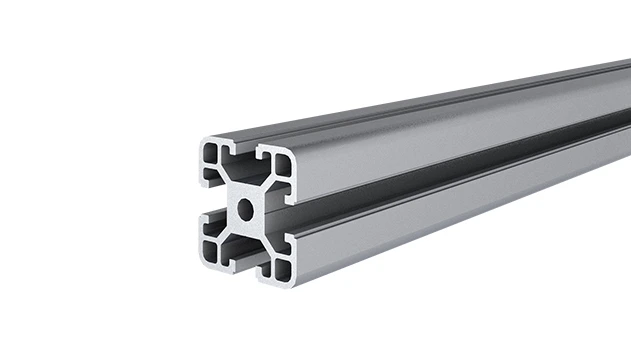
4040C EU Standard Aluminum Profile
4040C is a 4.00x4.00 CM fractional 40 series square extrusion T-slot profile with four open T-slots, each side with 4.00cm face. The profile has align-a-grooves to assist in aligning connecting profiles.
The Heartbeat of Manufacturing: Lean Workstations
Walk into any thriving manufacturing facility, and you'll quickly notice the unsung heroes of daily operations: workstations. These aren't just tables or benches—they're the command centers where ideas turn into products, where workers spend hours assembling, testing, and refining. A disorganized workstation, cluttered with tools and materials, can slow down even the most skilled employee. A well-designed one, though? It feels like an extension of the worker's hands—intuitive, efficient, and ready to adapt. In today's fast-paced industrial landscape, where every second counts, the shift toward lean manufacturing has made these workstations more critical than ever. Lean systems aren't just about cutting costs; they're about (respecting) the people on the floor, streamlining their workflows, and eliminating the frustration of wasted motion or misplaced tools. And at the core of building these lean workstations lies a material that's quietly revolutionizing factory floors: the 4040C EU Standard Aluminum Profile.
Understanding Lean Systems: More Than Just a Buzzword
Before diving into the specifics of aluminum profiles and workbenches, let's ground ourselves in what "lean" really means. At its heart, a lean system is about creating more value for customers with fewer resources. It's a mindset that asks: What can we remove that doesn't add value? This could be excess inventory taking up space, unnecessary steps in an assembly process, or even a workstation that forces workers to reach across a cluttered surface to grab a tool. Lean systems thrive on continuous improvement—small, daily adjustments that add up to big gains in efficiency. And none of this happens without the right foundation: workstations designed to support, not hinder, the flow of work.
Imagine a traditional workstation: heavy, fixed in place, with shelves bolted to the walls and tools scattered across a wooden top. When a new product line is introduced, reconfiguring this setup means calling in a carpenter or welder, wasting days of production time. Now contrast that with a lean workstation: built from modular components that can be adjusted in minutes, with tools within arm's reach and materials flowing smoothly from one step to the next. The difference isn't just in productivity—it's in the morale of the team. When workers see that their workspace is designed with their needs in mind, they feel valued, and that translates directly to better performance. This is where the 4040C aluminum profile shines: it's the backbone of these adaptable, worker-centric workstations.

The 4040C EU Standard Aluminum Profile: Why It's a Game-Changer
Not all aluminum profiles are created equal. The 4040C EU Standard Aluminum Profile stands out for a reason, and it starts with its design. Let's break down the basics: "4040" refers to its cross-section—40mm by 40mm—making it sturdy enough to support heavy loads while remaining lightweight. The "C" denotes its specific groove design, optimized for compatibility with a wide range of accessories. As an EU standard profile, it adheres to strict quality and dimensional guidelines, ensuring consistency whether you're ordering 1 meter or 100 meters. But numbers and standards only tell part of the story; the real magic is in how these features translate to real-world use on the factory floor.
First, consider weight. Traditional steel profiles are strong, but they're also heavy—making them difficult to reconfigure and expensive to ship. The 4040C profile, made from high-grade aluminum extrusion, offers comparable strength at a fraction of the weight. A 2-meter length of 4040C weighs around 2.5kg, versus 8kg for a similar steel profile. This lightness means workers can assemble and adjust workstations without heavy machinery, saving time and reducing the risk of injury. Yet, don't let the weight fool you: with a typical load capacity of 200-300kg per linear meter (depending on wall thickness), it's more than capable of supporting tools, materials, and even small equipment.
Corrosion resistance is another key advantage. Factories are harsh environments—oils, coolants, and humidity can take a toll on metal over time. Aluminum's natural oxide layer acts as a barrier, preventing rust and ensuring the profile maintains its integrity for years. This is especially important in industries like automotive or food processing, where cleanliness and durability are non-negotiable. Unlike steel, which often requires painting or coating, 4040C profiles can be left unfinished or anodized for a sleek, professional look that lasts.
To truly appreciate the 4040C, let's compare it to other common materials used in workbench construction:
| Feature | 4040C Aluminum Profile | Steel Profile | Wooden Workbench | Hollow Plastic Profile |
|---|---|---|---|---|
| Weight (2m length) | ~2.5kg | ~8kg | ~15kg | ~1.8kg |
| Load Capacity | 200-300kg/m | 300-400kg/m | 100-150kg/m | 50-80kg/m |
| Corrosion Resistance | Excellent | Poor (needs coating) | Poor (prone to warping) | Good |
| Customization | High (modular accessories) | Low (welding required) | Medium (screws/nails) | Low (limited) |
| Longevity | 10-15 years | 5-10 years (with coating) | 3-5 years | 2-4 years |
The table speaks for itself: 4040C strikes the perfect balance between strength, weight, and adaptability. It's not the absolute strongest (steel wins there), but its combination of features makes it ideal for lean workstations where flexibility and durability are equally important.
Custom Workbench E: Designed for the Way You Work
Now that we understand the benefits of the 4040C profile, let's zoom in on a specific application: Custom Workbench E (Single Deck—Without Caster). This isn't just a generic workbench; it's a prime example of how the 4040C profile can be tailored to meet the unique needs of a lean workspace. Let's start with the basics: as the name suggests, Workbench E features a single deck (the working surface) and comes without casters, making it a stable, stationary option for tasks that require a fixed base—think precision assembly, quality inspection, or laboratory work.
The frame of Workbench E is constructed using 4040C profiles, typically arranged in a rectangular base with vertical supports and cross-bracing for stability. The single deck is often made from aluminum honeycomb panel or a solid aluminum sheet, chosen for its lightweight rigidity and resistance to scratches. The height of the workbench is usually customizable—standard options range from 750mm to 900mm, but with the modular nature of 4040C, adjusting it to match the height of your workers is as simple as cutting the vertical profiles to size and reattaching the deck. This ergonomic flexibility is key: a workbench that's too low leads to back strain, while one that's too high causes shoulder fatigue. Workbench E avoids both by putting control in your hands.
But what really sets Workbench E apart is its potential for customization. The T-slots along the 4040C profiles are like a blank canvas, allowing you to add accessories exactly where you need them. Need a shelf for tools? Attach aluminum profile brackets to the vertical supports. Want a monitor arm for digital work instructions? Slide a T-nut into the slot and secure it in place. Even the edges of the deck can be fitted with aluminum side guards to prevent small parts from rolling off. This level of personalization ensures that Workbench E doesn't just take up space—it becomes an extension of the task at hand.
Let's consider a real-world example: a small electronics assembly line. Workers here need to access tiny components, precision tools, and a magnifying lamp. With Workbench E, the 4040C frame can be fitted with a hanging rail above the deck, holding frequently used tools on hooks. A small shelf below the deck stores component trays, while a monitor arm attached to the side displays assembly diagrams. The single deck, free from clutter, provides ample space for the circuit boards being assembled. Because the frame is made from 4040C aluminum, the entire setup is lightweight enough to be moved (with help) if the production line is reorganized, but stable enough to ensure precision work isn't compromised. This is lean design in action: every feature serves a purpose, and nothing is wasted.
Aluminum Profile Accessories: The Details That Make the Difference
A profile is only as good as the accessories that bring it to life. Aluminum profile accessories are the unsung heroes of modular workbench design, turning a simple frame into a fully functional workstation. For the 4040C profile, the range of compatible accessories is vast, but let's focus on the ones that truly enhance the lean capabilities of Workbench E and other setups.
First up: connectors. Without the right joints, even the strongest profile is just a pile of metal. The 4040C profile works seamlessly with a variety of aluminum profile connectors, including 90° aluminum profile connectors, 45° aluminum profile connectors, and 135° aluminum profile connectors. These connectors are designed to fit snugly into the T-slots, providing a secure, rigid joint without the need for welding. For example, the 90° connector is perfect for joining vertical and horizontal profiles at the corners of Workbench E, while the 45° connector can be used to add angled supports for extra stability. Many connectors feature built-in grub screws, allowing for tool-free adjustments—ideal for quick reconfigurations.
Next, end caps. The 4040 aluminum profile end cap might seem like a small detail, but it's a critical one. These plastic or aluminum caps fit over the exposed ends of the profiles, preventing dust and debris from entering the T-slots and protecting workers from sharp edges. In busy factories, where hands are constantly moving around the workbench, this simple accessory reduces the risk of cuts and scrapes. They also give the workbench a clean, finished look—no more unsightly exposed metal ends.
Then there are the T-slot rubber seal covers. These flexible strips slide into the T-slots, filling the grooves when they're not in use. Why does this matter? It prevents small parts, dirt, or liquids from getting trapped in the slots, which can jam accessories when you try to add them later. They also provide a smoother surface along the edges of the profile, reducing the chance of snags on clothing or gloves. Available in a range of colors (grey, yellow, black), they can even be used to color-code workstations by department or task—another lean touch to improve organization.
Here's a quick list of must-have aluminum profile accessories for Workbench E:
- 90° Aluminum Profile Connector: For rigid corner joints in the frame.
- 4040 Aluminum Profile End Cap: Protects ends and keeps slots clean.
- T-Slot Rubber Seal Cover: Prevents debris buildup and adds safety.
- Aluminum Profile Bracket: For adding shelves, hooks, or tool holders.
- Gusset Alp 4040: Triangular braces that reinforce joints under heavy loads.
- Internal Straight Aluminum Joint: Connects two profiles end-to-end for longer lengths.
The beauty of these accessories is that they're not just add-ons—they're integral to the lean philosophy. By allowing you to adapt the workstation as needs change, they eliminate the waste of having to replace entire workbenches when a new task comes along. With 4040C and its accessories, you're not buying a workbench; you're investing in a system that grows with your business.
Integrating Flow Racks and Roller Tracks: Keeping Materials Moving
A lean workstation isn't an island—it's part of a larger ecosystem where materials flow from storage to production to shipping with minimal delay. This is where flow racks and roller tracks come into play, and the 4040C profile is the perfect partner for integrating these systems with Workbench E. Let's start with flow racks: these are storage systems designed to allow materials to "flow" from the back to the front, using gravity, so the next item is always ready when you need it. Material Rack B (3 Row and 3 Floor) is a common example, featuring multiple levels of storage with roller tracks on each shelf.
The frame of Material Rack B is often built using 4040C profiles, chosen for their strength-to-weight ratio and compatibility with roller track accessories. Each shelf is fitted with roller tracks—typically aluminum guide rail A or B, or plastic roller track guide rail (yellow or grey for visibility). These tracks consist of a series of small wheels or balls that reduce friction, allowing boxes or totes to slide forward with minimal effort. When integrated with Workbench E, a flow rack can be positioned adjacent to the workbench, so materials are literally within arm's reach. No more walking to a distant storage area or searching through piles of inventory—everything you need is right there, flowing smoothly to where it's needed.
Roller tracks aren't just for flow racks, though; they can also be incorporated directly into Workbench E itself. For example, adding a section of roller track to the edge of the deck allows finished parts to slide onto a conveyor or into a bin without manual lifting. Or, if the workbench is part of an assembly line, a roller track can be mounted along the length of the deck, enabling parts to move from one worker to the next with a gentle push. The key here is the roller track placon mounts—accessories that secure the tracks to the 4040C profile. Options like roller track placon mount for aluminum profile flat or roller track placon mount center support bracket ensure the tracks are stable and aligned, preventing jams and ensuring smooth flow.
Let's take a closer look at roller track options. The 38 aluminum roller track is a popular choice for Workbench E, available in various colors (yellow, black ESD, white) to suit different environments. ESD (Electrostatic Discharge) versions are critical for electronics manufacturing, where static electricity can damage sensitive components. The black ESD wheels conduct static away from the parts, protecting them during transport. For heavier loads, the 40 steel roller track with yellow wheels offers added durability, while mini aluminum roller tracks are perfect for small, lightweight items like circuit boards or medical devices.
Installation is surprisingly straightforward. Most roller tracks come with pre-drilled holes or slots that align with the T-slots on the 4040C profile. Using T-nuts and bolts, you can secure the placon mounts to the profile, then attach the track to the mounts. Adjusting the angle of the track (to control the speed of flow) is as simple as adding shims under the placon mounts. This level of flexibility means you can fine-tune the material flow to match the pace of your workers, preventing bottlenecks and ensuring a steady, efficient rhythm.
Adding Mobility: Caster Wheels for On-the-Go Workstations
While Workbench E is designed as a stationary unit (without caster), there are plenty of scenarios where mobility is key. Maybe you need to move the workbench to a different part of the factory for a special project, or perhaps you want to clean around it without disconnecting tools. This is where caster wheels and caster accessories come in, transforming Workbench E from a fixed fixture into a mobile workstation—all while retaining the stability of the 4040C frame.
Caster wheels for aluminum profiles are specifically designed to attach to the 4040C frame, typically via caster installation bases or castor fixed plates. These bases slide into the T-slots of the profile's base frame and are secured with bolts, creating a strong connection that can support the weight of the workbench and its contents. When choosing casters, there are a few key considerations: load capacity (each caster should support at least 1/4 of the total weight), wheel material (rubber for floor protection, polyurethane for durability), and locking mechanisms. Swivel stem caster wheels with brake are a popular choice—they allow the workbench to rotate 360°, making it easy to maneuver in tight spaces, and the brake locks both the wheel and the swivel, ensuring stability when in use.
Let's crunch the numbers: a typical Workbench E with a single deck weighs around 40kg, and with tools and materials, the total weight might reach 150kg. Four casters, each with a 50kg load capacity, would provide more than enough support. Adding casters is a simple upgrade: remove the existing feet (if any), attach the caster installation bases to the bottom of the 4040C base frame, and screw on the casters. In less than an hour, you've turned a stationary workbench into one that can be rolled to where it's needed most. This flexibility is a cornerstone of lean manufacturing—why build multiple fixed workstations when one mobile one can do the job?
Of course, mobility isn't just about moving the workbench itself. Caster wheels can also be added to turnover trolleys, which work in tandem with Workbench E to transport materials. A hand trolley loaded with parts can roll right up to the workbench, and with a section of roller track on the trolley, materials can slide directly onto the deck. This seamless transfer eliminates manual lifting, reducing the risk of injury and speeding up the workflow. It's these small, interconnected systems—Workbench E, flow racks, roller tracks, and mobile trolleys—that make a lean factory truly efficient.
Real-World Impact: How 4040C Workstations Transform Operations
To truly appreciate the value of 4040C aluminum profile workstations, let's hear from a manufacturer who made the switch. Precision Parts Co., a mid-sized automotive component supplier, was struggling with inefficiencies in their assembly line. Workers were spending up to 20% of their time searching for tools or walking to retrieve materials, and the old steel workbenches were difficult to reconfigure when production needs changed. After consulting with a lean system supplier, they decided to invest in 4040C-based workstations, including Custom Workbench E, flow racks, and roller tracks.
The results were immediate. By mounting tools directly to the 4040C profiles using aluminum accessories, search time dropped by 75%. Flow racks positioned next to each workstation reduced material retrieval time to seconds, and roller tracks on the workbenches allowed finished parts to move to the next station without manual handling. The lightweight nature of the 4040C profiles also made it easy to reconfigure the assembly line when a new product was introduced—what used to take a day now took an hour. Within six months, Precision Parts Co. reported a 15% increase in productivity and a 30% reduction in workplace injuries, all while improving worker satisfaction.
Another example comes from a medical device manufacturer. Their cleanroom required workstations that were corrosion-resistant, easy to clean, and static-free. Workbench E with 4040C aluminum profile, ESD roller tracks, and aluminum honeycomb deck checked all the boxes. The anodized aluminum frame resisted chemicals, while the ESD accessories prevented static damage to sensitive components. The modular design allowed them to add specialized holders for microscopes and test equipment, creating a workspace tailored to their exact needs.
Conclusion: Building the Future of Lean Workstations
The 4040C EU Standard Aluminum Profile isn't just a material—it's a catalyst for change in the world of lean manufacturing. When paired with Custom Workbench E, aluminum profile accessories, flow racks, roller tracks, and caster wheels, it creates workstations that are adaptable, efficient, and worker-centric. These aren't just pieces of equipment; they're investments in the people who power your production line, in the flexibility to adapt to new challenges, and in the future of your business.
Whether you're setting up a new factory or upgrading an existing one, the message is clear: lean systems thrive on the right foundation, and that foundation starts with the 4040C profile. It's strong enough to support your goals, flexible enough to grow with your needs, and designed to put efficiency and ergonomics at the forefront. So, the next time you walk onto your factory floor, take a look at your workstations. Are they holding you back, or are they propelling you forward? With the 4040C aluminum profile, the answer can be the latter—one lean workstation at a time.