- Company Articles
- Products and Technology
- Solution
- 4040C EU Standard Aluminum Profile for Home Appliance Manufacturing: Frame Solutions

4040C EU Standard Aluminum Profile for Home Appliance Manufacturing: Frame Solutions
Related Product
4040C EU Standard Aluminum Profile
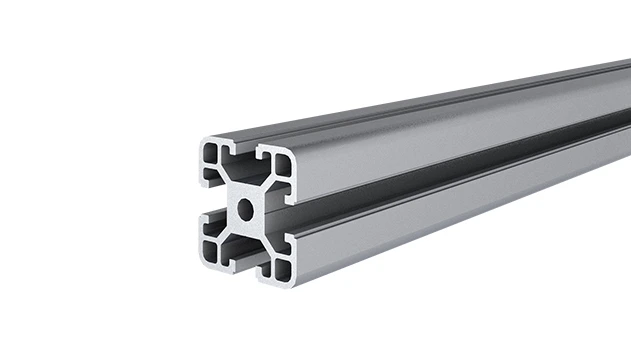
4040C is a 4.00x4.00 CM fractional 40 series square extrusion T-slot profile with four open T-slots, each side with 4.00cm face. The profile has align-a-grooves to assist in aligning connecting profiles.
Walk into any modern home, and you'll find a symphony of appliances working behind the scenes—refrigerators keeping food fresh, washing machines tackling laundry, ovens turning ingredients into meals. What many don't see is the intricate engineering that goes into making these appliances reliable, efficient, and built to last. At the heart of this engineering lies a critical component: the frame. Frames are the unsung heroes of appliance manufacturing, providing structural support, organizing internal components, and ensuring stability during operation. But not all frames are created equal. In an industry where precision, adaptability, and cost-efficiency are non-negotiable, manufacturers need a frame solution that can keep up with evolving designs and production demands. Enter the 4040C EU standard aluminum profile—a game-changer in the world of home appliance frame manufacturing.
What Makes the 4040C EU Standard Aluminum Profile Unique?
Before diving into its applications, let's unpack what the 4040C actually is. Part of the broader family of aluminum extrusion profiles, the 4040C is a European standard (EU standard) profile with a cross-sectional dimension of 40mm x 40mm. Its design is the result of decades of innovation in aluminum extrusion—a process where aluminum alloy is forced through a die to create consistent, complex shapes. The "C" in its name denotes a specific groove and wall thickness configuration, optimized for balance between strength and weight.
Made from 6063-T5 aluminum alloy, the 4040C brings together two key traits: lightweight durability. Aluminum is naturally resistant to corrosion, and the T5 heat treatment enhances its strength, making it capable of supporting heavy loads without adding unnecessary bulk. This is crucial for home appliances, where every gram counts—think of a refrigerator door that needs to stay aligned for years, or a washing machine drum that spins at high speeds without wobbling. The 4040C's strength-to-weight ratio ensures appliances are sturdy yet energy-efficient to transport and operate.
But what truly sets the 4040C apart is its T-slot design. Running along its length are precision-engineered slots that act as connection points for aluminum profile accessories—joints, brackets, panels, and more. This modularity means manufacturers aren't locked into one-size-fits-all frames. Instead, they can mix and match components to create custom structures tailored to specific appliances, whether it's a compact mini-fridge or a large-capacity oven.
Solving Home Appliance Manufacturing Challenges with 4040C
Home appliance manufacturing is a dynamic field. Consumer preferences shift, energy efficiency standards tighten, and new technologies (like smart home integration) demand design overhauls. These changes put pressure on manufacturers to adapt quickly, without sacrificing quality or inflating costs. The 4040C addresses three critical challenges in this space:
1. Design Flexibility: Traditional frame materials like steel or wood are rigid—once you cut them, modifying the structure is time-consuming and costly. The 4040C, however, thrives on adaptability. Need to adjust the height of a washing machine's internal frame to fit a new motor? Swap out a few aluminum profile accessories, and you're done. Want to add a shelf in a refrigerator to accommodate taller bottles? Attach a bracket to the T-slot, no welding or drilling required. This flexibility reduces lead times for new appliance models, allowing manufacturers to stay ahead of market trends.
2. Assembly Efficiency: In high-volume production lines, every second counts. The 4040C's modular design streamlines assembly. Instead of hiring skilled welders to join steel parts, workers can use simple tools to connect profiles with joints—think of it like building with advanced Lego blocks. For example, assembling a workbench for appliance testing becomes a breeze: connect 4040C profiles with 90° aluminum profile connectors, add a plywood or aluminum honeycomb panel top, and attach casters for mobility. This not only speeds up production but also reduces labor costs and human error.
3. Sustainability: Today's consumers care about the environmental impact of the products they buy, and manufacturers are under pressure to reduce their carbon footprint. Aluminum is 100% recyclable, and the 4040C's long lifespan means frames can be repurposed or recycled at the end of an appliance's life. Additionally, its lightweight nature reduces fuel consumption during transportation, and the modular design minimizes material waste—no more cutting excess steel or wood that ends up in landfills.

Real-World Applications: How 4040C Powers Home Appliances
Let's get concrete. How exactly is the 4040C used in making the appliances we rely on daily? Here are three key applications:
1. Internal Frames for Large Appliances: Refrigerators, freezers, and ovens depend on internal frames to support shelves, doors, and mechanical components. The 4040C's rigidity ensures these frames maintain their shape even under heavy loads—imagine a refrigerator shelf stacked with gallons of milk, or an oven door that's opened and closed hundreds of times a year. Its corrosion resistance is also a boon for refrigerators, where condensation is common; unlike steel, aluminum won't rust, extending the appliance's lifespan.
2. Workbenches and Assembly Stations: Behind the scenes of appliance production are workbenches where technicians assemble, test, and repair components. A well-designed workbench can boost productivity by keeping tools and parts organized. The 4040C is ideal for building these workbenches, thanks to its compatibility with accessories like drawer units, tool hooks, and lighting brackets. For example, a "Workbench E (single deck-without caster)" configuration—using 4040C profiles as legs and a solid top—provides a stable surface for assembling small parts like control panels, while T-slots allow workers to attach custom tool holders for quick access.
3. Material Racks and Flow Systems: In manufacturing facilities, efficiency starts with how materials are stored and transported. The 4040C isn't just for appliance frames; it's also used to build material racks, like "Material Rack B (3 row and 3 floor)" setups, which organize components (e.g., wires, motors, gaskets) near assembly lines. When paired with roller tracks and swivel roller balls (like the 1-inch stainless steel swivel roller balls), these racks become part of a lean system, allowing parts to glide smoothly from storage to the production line—reducing the need for manual lifting and cutting down on delays.
Comparing 4040C with Other EU Standard Profiles
The 4040C isn't the only EU standard aluminum profile on the market. So why choose it over alternatives like the 4040A or 4040B? Let's break down the differences in a quick comparison:
| Profile Type | Dimensions (mm) | Wall Thickness (mm) | Weight Capacity (approx. kg/m) | Key Features | Best For |
|---|---|---|---|---|---|
| 4040A | 40x40 | 1.5 | 150-200 | Thinner walls, lighter weight | Light-duty frames (e.g., small appliances like blenders) |
| 4040B | 40x40 | 2.0 | 250-300 | Medium strength, balanced design | General-purpose frames (e.g., microwave ovens) |
| 4040C | 40x40 | 2.5 | 350-400 | Reinforced walls, optimized T-slots | Heavy-duty home appliances (e.g., refrigerators, washing machines) |
The 4040C's thicker walls (2.5mm) and higher weight capacity make it the go-to choice for large, heavy appliances. Its T-slots are also deeper and wider than the 4040A/B, allowing for more secure connections with larger accessories—critical when supporting a 50kg refrigerator compressor or a washing machine drum filled with water and clothes.
The Role of Aluminum Profile Accessories in Maximizing 4040C's Potential
A profile is only as good as the accessories that bring it to life. The 4040C's versatility shines when paired with the right aluminum profile accessories, turning basic extrusions into fully functional frames. Let's look at a few key accessories and how they enhance the 4040C's utility:
90° Aluminum Profile Connectors: These small but mighty components join two 4040C profiles at a right angle, forming the corners of frames, workbenches, or racks. Made from die-cast aluminum, they lock into the T-slots with bolts, creating a tight, rattle-free connection—essential for appliances that vibrate during use (like washing machines).
Aluminum Guide Rails: When building material racks or conveyor systems, guide rails (like Aluminum Guide Rail A or B) keep parts moving in a straight line. For example, attaching Aluminum Guide Rail B to a 4040C-based flow rack ensures that circuit boards or gaskets glide smoothly to the assembly line without slipping off.
Casters and Caster Accessories: Adding casters to a 4040C workbench or material rack transforms it from a stationary structure into a mobile unit. This is a game-changer for factory floors, where production lines often need to be reconfigured. Swivel casters with brakes allow workers to move heavy racks with ease, then lock them in place for stability.
Workbench Tops: The 4040C provides the frame, but the top surface is where the work happens. Options like aluminum honeycomb panels (lightweight and impact-resistant) or plywood (cost-effective) can be attached using brackets, creating a surface tailored to the task—whether it's assembling delicate electronics or testing heavy appliance doors.
Why Lean Systems Love the 4040C
Lean manufacturing—a philosophy focused on minimizing waste while maximizing value—has become a cornerstone of modern appliance production. The 4040C aligns perfectly with lean principles, making it a favorite among manufacturers striving for efficiency. Here's how:
Reduced Waste: Traditional frame materials often result in leftover scraps from cutting or welding. The 4040C's modular design means manufacturers can order profiles in standard lengths and cut them to size with minimal waste. Plus, since accessories are reusable, old frames can be disassembled and repurposed for new projects—no need to scrap entire structures.
Quick Changeovers: When a new appliance model is introduced, production lines need to adapt fast. With the 4040C, reconfiguring workbenches, racks, or assembly jigs takes hours instead of days. For example, switching from assembling a 6kg washing machine to an 8kg model might require adjusting the frame's height or adding extra support—tasks that involve loosening a few bolts, swapping accessories, and tightening them back up.
Improved Ergonomics: Lean systems prioritize worker well-being, and the 4040C supports this by enabling customizable workstations. A technician assembling oven doors can adjust the height of their 4040C workbench to reduce back strain, while adding tool holders along the T-slots keeps frequently used items within arm's reach—cutting down on unnecessary movement and fatigue.
The Future of Home Appliance Frames: Why 4040C is Here to Stay
As home appliances become smarter, more energy-efficient, and more compact, their frames will need to evolve. The 4040C is well-positioned to meet these future demands. Its compatibility with new aluminum extrusion profile innovations—like integrated cable management slots or thermal insulation layers—means it can adapt to emerging trends. For example, as appliances incorporate more sensors and wiring, the 4040C's T-slots can hide cables, keeping internal components organized and reducing the risk of damage.
Moreover, the global push for sustainability plays to aluminum's strengths. Unlike plastic frames, which degrade over time, or steel, which requires energy-intensive coating to prevent rust, aluminum is infinitely recyclable. Using the 4040C allows manufacturers to market their appliances as eco-friendly—a selling point that resonates with today's environmentally conscious consumers.
In the end, the 4040C EU standard aluminum profile isn't just a material—it's a solution. It addresses the unique challenges of home appliance manufacturing with a blend of strength, flexibility, and efficiency that's hard to match. Whether you're building the frame of a next-gen refrigerator or a workbench for assembling smart oven controls, the 4040C delivers the reliability and adaptability manufacturers need to stay competitive in a fast-paced industry. So the next time you open your refrigerator or start a load of laundry, take a moment to appreciate the quiet strength of the 4040C—working behind the scenes to make modern living possible.