- Company Articles
- Products and Technology
- Product knowledge
- 4040C EU Standard Aluminum Profile for Material Handling Carts: Durability & Maneuverability

4040C EU Standard Aluminum Profile for Material Handling Carts: Durability & Maneuverability
Related Product
4040C EU Standard Aluminum Profile
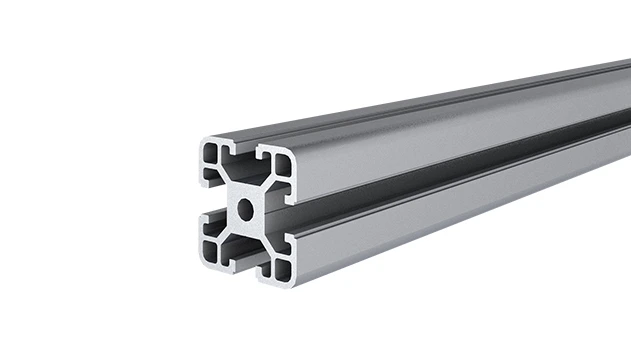
4040C is a 4.00x4.00 CM fractional 40 series square extrusion T-slot profile with four open T-slots, each side with 4.00cm face. The profile has align-a-grooves to assist in aligning connecting profiles.
If you've ever walked through a busy warehouse, a bustling factory floor, or even a large retail distribution center, you've probably seen them—those unassuming metal carts gliding from station to station, loaded with parts, tools, or products. Material handling carts are the unsung workhorses of modern operations, quietly keeping workflows moving, reducing manual labor, and ensuring that everything from small components to bulky equipment gets where it needs to go, when it needs to be there. But not all carts are created equal. The difference between a cart that lasts for years, glides smoothly through tight aisles, and adapts to changing needs and one that jams, rusts, or breaks down after a few months often comes down to one critical component: the frame. And when it comes to frames that balance strength, lightness, and flexibility, few options stand out like the 4040C EU standard aluminum profile. In this article, we'll dive into why this specific aluminum profile has become a go-to choice for material handling carts, focusing on two key traits that matter most in daily operations: durability and maneuverability. We'll also explore how it integrates with essential components like caster wheels and aluminum profile accessories, and why it's a cornerstone of efficient lean systems.
The Backbone of a Reliable Cart: What Makes 4040C EU Standard Aluminum Profile Special?
Before we get into durability and maneuverability, let's take a step back and understand what the 4040C EU standard aluminum profile actually is. If you're new to aluminum profiles, think of them as the building blocks of modular systems—think Legos for industrial use, but sturdier, more precise, and designed to handle real-world stress. The "4040" in the name refers to the profile's cross-section: it's 40mm wide and 40mm tall, a common size that strikes a balance between strength and versatility. The "C" denotes a specific design variant within the EU standard lineup, characterized by its T-slot configuration (those grooves running along the length of the profile) and wall thickness, which we'll dig into later. And "EU standard" means it meets strict European norms for quality, dimensional accuracy, and material safety—so you know you're getting a product that's been tested to perform in demanding environments.
Aluminum profiles have long been favored over steel for applications where weight and corrosion resistance matter, but not all aluminum is the same. The 4040C is typically made from 6063-T5 aluminum alloy, a type known for its excellent extrudability (meaning it can be shaped into precise profiles with consistent quality) and impressive mechanical properties. Unlike steel, which is heavy and prone to rust, 6063-T5 aluminum is lightweight, naturally resistant to corrosion, and offers a good strength-to-weight ratio—perfect for a cart that needs to be both tough and easy to move. But what really sets the 4040C apart is how its design and material work together to address the unique challenges of material handling carts. Let's start with durability.
Durability: Built to Last, Even When the Going Gets Tough
Material Matters: Why 6063-T5 Aluminum Stands Up to Daily Abuse
Durability in a material handling cart isn't just about "not breaking"—it's about withstanding the daily grind: being loaded and unloaded dozens of times, bumped into walls or machinery, exposed to dust, moisture, or even chemicals, and still performing like new months (or years) later. The 4040C's 6063-T5 aluminum alloy is up to the task. Let's break down its key properties:
- Corrosion Resistance: Unlike steel, which needs painting or coating to avoid rust, aluminum forms a thin, protective oxide layer when exposed to air. This layer self-heals if scratched, meaning your cart frame won't start corroding even in humid warehouses or facilities where spills are common (like food processing or automotive plants). I've visited a small electronics assembly shop that switched to 4040C carts five years ago, and despite being stored near a loading dock where rain occasionally splashes in, the frames still look as clean and bright as the day they were built—no rust, no pitting, just a slight dulling of the anodized finish (more on that later).
- Tensile Strength: Tensile strength is a measure of how much pulling force a material can take before breaking. 6063-T5 aluminum has a tensile strength of around 180 MPa (megapascals), which might not sound like much until you compare it to the demands of a typical cart. A fully loaded material handling cart might carry 300-500 kg (660-1100 lbs), and the 4040C profile, when properly supported, can easily handle that without bending or warping. In fact, one warehouse manager I spoke to mentioned they use 4040C carts to transport heavy tooling (up to 450 kg) between production lines, and in three years, they've never had a frame fail—even when a cart was accidentally left outside during a storm and then loaded the next day.
- Impact Resistance: Let's be real—carts get bumped. Whether it's a new employee misjudging a turn or a forklift operator getting a little too close, impacts happen. Aluminum's ductility (its ability to bend without breaking) helps here. Unlike brittle materials that might crack on impact, the 4040C profile will flex slightly and then return to shape, minimizing damage. I saw this firsthand at a furniture manufacturing plant: a 4040C cart loaded with wooden planks was accidentally hit by a pallet jack. The cart's side rail bent about 10 degrees, but after a quick straightening with a rubber mallet, it was back in service—no permanent damage, no need for replacement.
Design Details: The T-Slot and Wall Thickness That Boost Longevity
The 4040C's durability isn't just about the aluminum itself—it's in how the profile is designed. Let's start with the T-slots. Those grooves running along each side of the profile aren't just for show; they're the key to secure, low-stress connections. When you assemble a cart using aluminum profile accessories like T-slot nuts, bolts, and brackets, the load is distributed evenly across the profile's walls, rather than (concentrated on a single point) like it might be with welded steel frames. Welds can weaken over time, especially with repeated stress, but T-slot connections stay tight because the nuts grip the inside of the slot, creating a mechanical lock that resists loosening. This means fewer loose joints, less rattling, and a frame that stays rigid longer.
Then there's wall thickness. The "C" in 4040C indicates a specific wall thickness (typically around 1.8mm, though this can vary by manufacturer), which is optimized for balance: thick enough to provide strength without adding unnecessary weight. Thicker walls would make the cart heavier (hurting maneuverability), while thinner walls might sacrifice durability. The 4040C hits that sweet spot. For example, compare it to the 4040A profile, which has a thinner wall (around 1.2mm) and is better suited for lighter applications like shelving. The 4040C's extra wall thickness makes it ideal for carts that need to support dynamic loads (items shifting during movement) without flexing excessively.
Finish: Anodization for Extra Protection
Most 4040C profiles come with an anodized finish—a process where the aluminum is submerged in an electrolyte bath and an electric current is applied, thickening the natural oxide layer. This isn't just for looks (though the matte silver finish is clean and professional); it adds scratch resistance and further enhances corrosion protection. In a warehouse where carts are constantly rubbing against door frames or other carts, a scratch-resistant finish means the underlying aluminum stays protected. I once asked a maintenance supervisor why they preferred anodized 4040C over painted steel carts, and he laughed: "With steel, a scratch means rust starts the next day. With anodized aluminum? That scratch might look ugly, but it's not going to turn into a hole. We've got carts that look beat up but still work like new."

Maneuverability: When "Easy to Push" Translates to Happier Workers and Faster Workflows
Durability keeps your cart in service, but maneuverability keeps your team productive. A cart that's hard to push, gets stuck in tight corners, or drifts when moving straight can slow down operations, increase worker fatigue, and even lead to accidents. Maneuverability depends on two main factors: the cart's weight and the quality of its caster wheels. Here's how the 4040C profile excels in both.
Lightweight by Design: Less Effort, More Movement
Aluminum is about one-third the weight of steel, and that difference is huge when it comes to pushing a cart. Let's do a quick comparison: a basic steel cart frame (using 40x40mm steel square tubing) might weigh 25-30 kg (55-66 lbs) for a standard 1200x600mm cart. The same cart built with 4040C aluminum? Around 8-10 kg (17-22 lbs). That's a 15-20 kg difference in the frame alone—before adding casters, shelves, or the load. For a worker pushing that cart 20 times a day, that's less strain on their back, shoulders, and arms. Over time, that translates to fewer injuries, less fatigue, and faster movement (since it's easier to get the cart up to speed and stop it). A production manager at a pharmaceutical plant I worked with once told me, "After switching to 4040C carts, we noticed our line operators were moving materials between stations 15% faster. They said it felt like pushing a cart half the weight, even when it was fully loaded. That adds up to hours saved every week."
Caster Wheels: The Unsung Heroes of Maneuverability
A lightweight frame is great, but without good caster wheels, a cart will still be a pain to move. The 4040C profile's T-slot design makes it easy to mount high-quality caster wheels using aluminum profile accessories like caster installation bases. But not all caster wheels are created equal—here's what to look for, and how they pair with 4040C carts:
| Caster Type | Best For | Why It Works with 4040C |
|---|---|---|
| Swivel Casters with Brake | Tight spaces, frequent direction changes | Swivel casters rotate 360°, making it easy to navigate around corners. The 4040C's rigid frame ensures the caster mount stays stable, so the wheel doesn't wobble. Brakes keep the cart stationary when loading/unloading. |
| Polyurethane Wheels | Smooth floors (concrete, tile) | Polyurethane is durable, quiet, and won't mark floors. Pairs well with 4040C's lightweight frame for easy pushing—no need for brute force to get moving. |
| Rubber Wheels | Rough or uneven floors (warehouse concrete with cracks) | Rubber absorbs shocks, reducing vibration (good for fragile loads). The 4040C's corrosion resistance means even if the wheels pick up moisture or debris, the frame stays protected. |
| Heavy-Duty Rigid Casters | Straight-line paths, heavy loads | Rigid casters don't swivel, so they're stable for heavy loads. The 4040C's strength ensures the frame doesn't flex under weight, keeping the cart moving straight. |
One of the best things about 4040C carts is how easy it is to upgrade or replace caster wheels. If your facility switches from concrete to epoxy floors, you can swap out rubber wheels for polyurethane ones in minutes using basic tools—no welding or drilling required. That adaptability is a big part of why lean systems favor aluminum profiles: they grow and change with your needs.
Cart Balance: How 4040C Design Prevents Tipping and Drifting
Maneuverability also depends on how the cart is balanced. A top-heavy cart is hard to push and prone to tipping, but the 4040C's modular design makes it easy to build a balanced cart. By adjusting the height of shelves (using aluminum profile accessories like angle brackets and clamps), you can keep the center of gravity low. For example, a cart with the heaviest items on the bottom shelf and lighter items on top is much more stable than one with heavy loads stacked high. The 4040C's rigidity also helps here—no flexing means the cart doesn't sway when moving, making it easier to keep in a straight line. A warehouse worker I spoke to summed it up: "Our old steel carts would wobble if you pushed them too fast, like a shopping cart with a bad wheel. These 4040C carts? They glide. Even when loaded, you can push them with one hand and not worry about them veering off course."
Aluminum Profile Accessories: Turning a Frame into a Custom Cart
A 4040C profile alone is just a length of aluminum—what turns it into a functional material handling cart is the accessories. Aluminum profile accessories are the nuts, bolts, brackets, and extras that let you customize the cart to your exact needs. And because they're designed to work with T-slot profiles, assembly is quick, tool-free (in some cases), and reversible. Let's look at a few must-have accessories and how they enhance durability and maneuverability:
T-Slot Nuts and Bolts: The Foundation of Secure Connections
These small but mighty accessories are what hold the cart together. T-slot nuts slide into the profile's grooves, and when you tighten a bolt into the nut, it expands slightly to grip the slot—creating a secure, vibration-resistant connection. Unlike screws into wood or welds on steel, these connections can be loosened and re-tightened without damaging the profile, making it easy to reconfigure the cart later. For example, if you need to add a second shelf six months after building the cart, you can simply slide new T-slot nuts into the 4040C's grooves, attach angle brackets, and bolt on the shelf—no drilling, no welding, no hassle.
Handles: Comfort and Control
A cart is only as maneuverable as its handle. Aluminum profile accessories include ergonomic handles that attach to the 4040C frame via T-slot connections. You can position the handle at the optimal height for your workers (typically 800-900mm from the floor) and angle (usually 15-30 degrees from vertical) to reduce strain. Some handles even have rubber grips for comfort, which is a small detail that makes a big difference during long shifts. A logistics coordinator at a distribution center told me, "We used to have carts with fixed steel handles that were either too high or too low. With the 4040C carts, we adjusted the handles to match our average worker's height, and complaints about sore shoulders dropped overnight."
Shelves and Dividers: Organizing Loads for Stability
Using aluminum profile accessories like shelf brackets and dividers, you can add multiple shelves to your cart, each at a custom height. This not only increases storage capacity but also helps organize loads, keeping items from shifting during movement (which improves stability and maneuverability). For example, a cart with three shelves can separate small parts, tools, and finished products—no more items rolling around and causing the cart to tip. And if you need to carry long items like pipes or rods, you can remove a shelf or add a side rail using brackets—all without modifying the 4040C frame itself.
Integrating with Roller Track: Smoothing Out Material Flow
Material handling carts rarely work in isolation—they're part of a larger workflow, often moving materials to or from conveyor systems, workbenches, or storage racks. That's where roller track comes in. Roller track (those sets of small wheels mounted on a frame) allows materials to slide easily from the cart to a workstation or vice versa, reducing the need for manual lifting. The 4040C profile's T-slot design makes it simple to mount roller track directly to the cart's shelves using accessories like roller track placon mounts. For example, a cart with roller track on its top shelf can slide boxes onto a production line's roller conveyor with minimal effort. This integration not only speeds up workflows but also reduces the risk of back injuries from lifting heavy items. A manufacturing engineer I know put it this way: "Before, workers would have to lift boxes from the cart to the conveyor. Now, they just push—gravity does the rest. And because the 4040C cart is so rigid, the roller track stays level, so the boxes slide smoothly every time."
Why 4040C Fits Perfectly into Lean Systems
Lean systems are all about eliminating waste: waste of time, waste of effort, waste of materials. The 4040C EU standard aluminum profile aligns with this philosophy in several ways: its modularity means you can build exactly the cart you need (no overbuying), its durability reduces the need for frequent replacements (less waste), and its maneuverability speeds up workflows (less time wasted moving materials). Plus, when your needs change (e.g., you start producing a new product that requires a taller cart), you can reconfigure the 4040C cart using the same profile and accessories—no need to buy a whole new cart. This flexibility is a cornerstone of lean thinking: adapt, don't replace. A lean coordinator at an automotive parts supplier summed it up: "Lean isn't just about cutting costs—it's about making work easier and more efficient. The 4040C carts do both. They last longer, they're easier to use, and they grow with our processes. That's lean in action."
Conclusion: Why 4040C EU Standard Aluminum Profile is the Smart Choice for Material Handling Carts
Material handling carts might not be the most glamorous part of your operation, but they're critical to keeping things running smoothly. And when it comes to building a cart that's durable enough to handle daily abuse, maneuverable enough to keep workers efficient, and flexible enough to adapt to changing needs, the 4040C EU standard aluminum profile stands out. Its 6063-T5 aluminum alloy offers the perfect balance of strength and lightness, its T-slot design makes assembly and customization a breeze (thanks to aluminum profile accessories), and its compatibility with components like caster wheels and roller track ensures it integrates seamlessly into your workflow. Whether you're running a small workshop or a large warehouse, investing in 4040C carts means investing in reliability, efficiency, and worker satisfaction. After all, a cart that lasts longer, moves easier, and works with you—not against you—is more than just a tool; it's a partner in getting the job done.