- Company Articles
- Products and Technology
- Product knowledge
- 4040C EU Standard Aluminum Profile for Mechanical Manufacturing: Machine Frames & Guards

4040C EU Standard Aluminum Profile for Mechanical Manufacturing: Machine Frames & Guards
Related Product
4040C EU Standard Aluminum Profile
4040C is a 4.00x4.00 CM fractional 40 series square extrusion T-slot profile with four open T-slots, each side with 4.00cm face. The profile has align-a-grooves to assist in aligning connecting profiles.
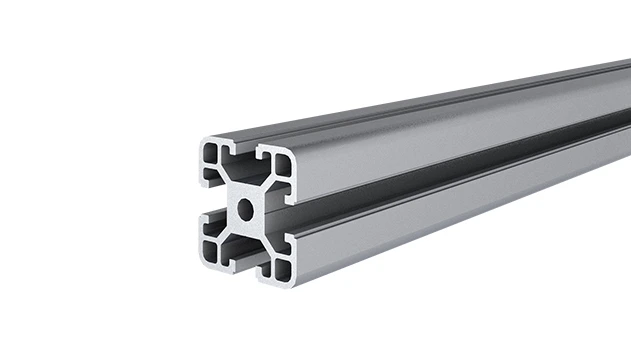
In the world of mechanical manufacturing, where every component must work in harmony to deliver precision, efficiency, and safety, the choice of materials can make or break a production line. Among the unsung heroes of this industry is the 4040C EU standard aluminum extrusion profile—a versatile, robust, and surprisingly adaptable solution that has quietly become the backbone of countless machine frames and safety guards. It's not just a piece of metal; it's a foundation that supports innovation, streamlines workflows, and ensures that factories run smoothly, even when the pressure is on.
What Makes the 4040C EU Standard Aluminum Profile Stand Out?
At first glance, aluminum profiles might all seem similar—long, sleek, and metallic. But the 4040C is in a league of its own, designed with the unique demands of mechanical manufacturing in mind. Let's start with the basics: the "4040" in its name refers to its cross-sectional dimensions, measuring 40mm by 40mm. The "C" denotes its specific groove design, a detail that might sound minor until you realize how it impacts compatibility with accessories and assembly. This profile isn't just about size, though; it's about the way it balances strength, weight, and precision—three factors that are non-negotiable when building machine frames or safety guards.
Unlike bulky steel or flimsy plastic, aluminum extrusion profiles like the 4040C offer a rare combination of lightness and durability. Aluminum itself is naturally resistant to corrosion, which means it holds up well in the often harsh environments of factories, where dust, oils, and occasional moisture are part of the daily grind. But what truly sets the 4040C apart is its adherence to EU standards. These standards aren't just boxes to check; they're a promise of consistency. When you order a 4040C profile, you know it will fit with other EU-standard components, eliminating the guesswork and frustration of mismatched parts that can derail a project.
Why Machine Frames Depend on the 4040C
Machine frames are the silent workhorses of manufacturing. They hold motors, gears, conveyors, and tools in place, ensuring that every movement is precise and every operation is stable. A weak frame can lead to vibrations that throw off measurements, misalign components, or even shorten the lifespan of expensive machinery. That's where the 4040C shines.
Imagine a CNC machine tasked with cutting intricate parts for aerospace components. The frame beneath it must absorb vibrations from the spinning cutter, maintain rigidity during long production runs, and stay level even as temperatures fluctuate in the shop. The 4040C, with its high strength-to-weight ratio, delivers exactly that. Its internal structure, reinforced by evenly spaced ribs, distributes weight and stress evenly, preventing warping or bending over time. And because it's lightweight compared to steel, it reduces the overall load on factory floors without sacrificing stability—a win-win for both machinery and facility managers.
But it's not just about strength. Manufacturing lines are rarely static; they evolve as products change, production demands shift, or new technologies are integrated. The 4040C's modular design makes it easy to reconfigure frames without starting from scratch. Need to extend a frame to accommodate a new tool? Add a few extra profiles. Want to adjust the height of a workbench? Swap out a section. This flexibility is a game-changer for small and large factories alike, allowing them to adapt quickly without investing in entirely new equipment.
A Closer Look: Load Capacity and Stability
For machine frames, load capacity is a critical metric. The 4040C doesn't just meet expectations—it exceeds them. Depending on the wall thickness (typically ranging from 1.5mm to 3mm), a single 4040C profile can support hundreds of kilograms when properly installed. This means it's more than capable of holding heavy motors, hydraulic systems, or even entire assembly line modules. And because aluminum has natural damping properties, it reduces the transfer of vibrations between components, keeping sensitive equipment like sensors or laser cutters operating at peak accuracy.
| Profile Type | Dimensions (mm) | Typical Wall Thickness (mm) | Max Load Capacity (kg/m, horizontal) | Common Applications |
|---|---|---|---|---|
| 4040C EU Standard | 40x40 | 1.5-3.0 | 200-400 | Machine frames, workbenches, medium-duty guards |
| 3030 EU Standard | 30x30 | 1.2-2.0 | 80-150 | Light-duty frames, small equipment enclosures |
| 4080 EU Standard | 40x80 | 2.0-3.5 | 350-600 | Heavy machinery frames, industrial conveyors |

Safety Guards: Protecting What Matters Most
In any factory, the safety of workers is paramount. Guards are the first line of defense, shielding operators from moving parts, flying debris, and accidental contact with machinery. But a guard is only effective if it's strong enough to withstand impact, easy to see through, and simple to remove when maintenance is needed. The 4040C checks all these boxes—and more.
Think about the last time you walked through a factory. The best guards are the ones you barely notice—they blend into the environment, don't obstruct visibility, and never feel like an afterthought. The 4040C makes this possible. Its slim 40x40mm profile creates a sturdy frame that can support mesh, polycarbonate panels, or even metal sheets, depending on the level of protection needed. Unlike steel guards, which can be bulky and opaque, aluminum frames are lightweight enough to allow for larger viewing windows, so operators can monitor machines without compromising safety.
Another advantage? Aluminum's natural resistance to corrosion means these guards last longer, even in environments where oils, coolants, or chemicals are present. Anyone who's worked with steel guards knows the frustration of dealing with rust spots or flaking paint—issues that not only look unprofessional but can weaken the guard over time. With the 4040C, maintenance becomes a breeze: a quick wipe down with a cloth is often all it takes to keep it looking and performing like new.
Customization Without Compromise
Safety guards aren't one-size-fits-all. A guard for a robotic arm needs to be flexible to accommodate movement, while a guard for a stamping press must be rigid enough to absorb sudden impacts. The 4040C's modular design excels here. By combining it with the right aluminum profile accessories—like hinges, latches, and adjustable brackets—manufacturers can create guards that fit the unique contours of any machine. Need a guard that swings open for tool changes? Add a pivot hinge. Want to lock a guard during operation? Install a simple latch. These small details turn a generic guard into a tailored solution that works with the machine, not against it.
Aluminum Profile Accessories: The Unsung Partners of the 4040C
A profile is only as good as the accessories that bring it to life. The 4040C, being part of the EU standard system, is compatible with a vast array of aluminum profile accessories that extend its functionality and simplify assembly. These aren't just nuts and bolts; they're the building blocks of creativity, allowing engineers and technicians to design frames and guards that are as unique as the machines they protect.
Take end caps, for example. These small, often overlooked pieces snap into the ends of the 4040C profile, covering sharp edges and preventing dust or debris from collecting in the T-slots. They're a small touch, but they make a big difference in safety and maintenance. Then there are the connectors—90° angle brackets, 45° joints, and T-connectors—that allow profiles to be joined without welding. Welding is time-consuming, messy, and permanent; with these accessories, assembly becomes a matter of tightening a few screws, and disassembly is just as easy if changes are needed later.
T-slot nuts and bolts are another essential accessory. The 4040C's T-slots—those grooves running along its length—are designed to accept these nuts, which slide into place and lock securely when tightened. This means you can attach panels, brackets, or tools anywhere along the profile, not just at fixed holes. It's a level of flexibility that's hard to match with other materials, and it's why the 4040C is a favorite among designers who need to iterate quickly or adapt to last-minute changes.
Let's not forget gussets and reinforcement plates. For machine frames that need extra strength—like those supporting heavy motors or high-speed conveyors—these accessories add rigidity at critical joints, preventing flexing or twisting under load. They're the silent reinforcements that ensure the frame stays stable, even when the machine is running at full tilt.
Why Choose Aluminum Over Steel or Plastic?
It's fair to ask: Why not use steel for frames and guards? It's strong, after all. Or plastic, which is lightweight and cheap? The answer lies in the 4040C's ability to balance competing needs. Steel is undeniably strong, but it's heavy—so heavy that it can increase shipping costs, strain factory floors, and make installation a two-person job. It's also prone to rust, which means extra costs for painting or coating. Plastic, on the other hand, lacks the structural integrity needed for heavy-duty applications; it bends under load and can degrade over time when exposed to oils or UV light.
Aluminum, and specifically the 4040C profile, hits the sweet spot. It's about 1/3 the weight of steel, making it easier to handle and install, but it still offers impressive strength. Its natural corrosion resistance means no extra treatments are needed, and its smooth, clean finish gives factory floors a professional look that boosts morale. Plus, aluminum is recyclable, which aligns with the growing focus on sustainability in manufacturing. Choosing the 4040C isn't just a practical decision; it's a choice to invest in a material that's kind to both your bottom line and the planet.
Installing the 4040C: Tips for a Smooth Process
Even the best materials can underperform if installed incorrectly. The good news is that working with the 4040C is straightforward, even for those who aren't seasoned metalworkers. Here are a few tips to ensure your project goes off without a hitch:
Measure twice, cut once. Aluminum is easy to cut with a miter saw or hacksaw, but precision matters. A 1mm error in length can throw off an entire frame, so take the time to measure carefully before making any cuts.
Use the right tools. For cutting, a fine-tooth blade will leave a clean edge. When tightening accessories, avoid over-tightening screws—aluminum is strong, but it can strip if forced. A torque wrench can help ensure you apply just the right amount of pressure.
Level as you go. Machine frames need to be level to prevent vibrations and ensure accuracy. Use a spirit level during assembly, checking both horizontally and vertically at each step. It's easier to adjust a single joint than to realign an entire frame later.
Don't skimp on accessories. It might be tempting to use generic bolts or makeshift brackets, but EU-standard aluminum profile accessories are designed to work with the 4040C's T-slots and dimensions. They ensure a snug, secure fit that generic parts can't match.
Real-World Impact: How the 4040C Transforms Factories
To truly understand the value of the 4040C, let's step into a hypothetical (but all too common) scenario. Imagine a small manufacturing shop that produces custom automotive parts. Their old machine frames, made from welded steel, are heavy, rusting, and impossible to reconfigure. When they need to add a new conveyor to their line, they have to hire a welder, wait days for the job to be done, and hope the new section aligns with the old. Safety guards are an afterthought—bulky steel sheets that block visibility and take two people to move when maintenance is needed. Downtime is frequent, and morale is low as workers struggle with inefficient setups.
Then, they switch to the 4040C. Overnight, everything changes. The new machine frame, assembled with aluminum profiles and accessories, is up in a day—no welding required. When they need to extend the conveyor a month later, a technician adds a few profiles and tightens a few screws, and they're back up and running in hours. The safety guards, made with 4040C frames and polycarbonate panels, are lightweight enough for one person to lift, and their clear panels let operators monitor the machines without leaning in dangerously. Downtime drops, productivity rises, and the shop starts taking on more orders because they can adapt quickly. It's not just a material change; it's a culture shift—one that turns frustration into pride and stagnation into growth.
The Future of Manufacturing: Lean Systems and the 4040C
In an industry that's constantly pushing for leaner systems—fewer waste, faster workflows, and more flexibility—the 4040C is more than a material; it's a tool for lean manufacturing. Lean systems thrive on adaptability, and the 4040C's modular design fits this philosophy perfectly. Instead of investing in custom, one-off frames that become obsolete when production needs change, manufacturers can build with the 4040C, knowing they can reconfigure, expand, or repurpose components as needed. This reduces waste, cuts costs, and keeps production lines agile in a market where customer demands can shift overnight.
Moreover, the 4040C supports the "5S" principles of lean manufacturing—sort, set in order, shine, standardize, sustain. Its clean, modular design makes it easy to keep workspaces organized (set in order), its corrosion resistance reduces maintenance (shine), and its standardized dimensions ensure consistency across the factory (standardize). It's a material that doesn't just support lean systems; it embodies them.
Conclusion: More Than a Profile—A Partner in Manufacturing Success
The 4040C EU standard aluminum extrusion profile might not have the flash of a high-tech robot or the prestige of a precision CNC machine, but it's the quiet foundation that makes those technologies possible. It's the frame that holds the machine steady, the guard that protects the worker, and the canvas on which manufacturers paint their innovations. It's a reminder that in manufacturing, the best solutions are often the ones that work behind the scenes, making complex processes feel simple and ensuring that every day, factories can do what they do best: create, produce, and move forward.
So the next time you walk through a factory, take a closer look at the frames and guards around you. Chances are, you'll spot the 4040C—sleek, strong, and silently supporting the future of manufacturing, one profile at a time.