- Company Articles
- Products and Technology
- Product knowledge
- 4040C EU Standard Aluminum Profile for Medical Equipment Frames: Hygiene & Durability

4040C EU Standard Aluminum Profile for Medical Equipment Frames: Hygiene & Durability
Related Product
4040C EU Standard Aluminum Profile
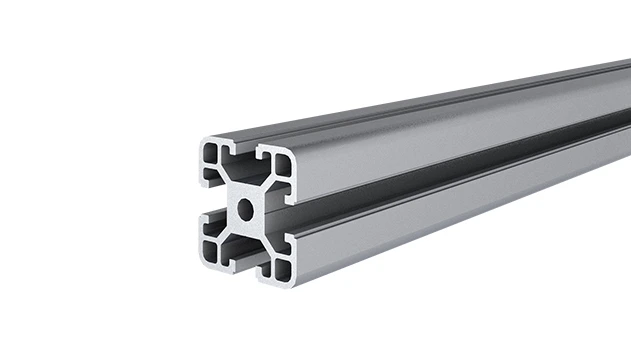
4040C is a 4.00x4.00 CM fractional 40 series square extrusion T-slot profile with four open T-slots, each side with 4.00cm face. The profile has align-a-grooves to assist in aligning connecting profiles.
In the fast-paced world of healthcare, every piece of equipment plays a silent but critical role in patient care, from the ultrasound machines that monitor fetal health to the mobile carts that deliver medications. Behind these tools, often overlooked but essential, are the frames that hold them together. These frames aren't just structural—they're guardians of two non-negotiable priorities: hygiene and durability. In environments where a single germ can compromise a patient's recovery, and where equipment is moved, cleaned, and relied on around the clock, the materials used to build these frames matter more than we might think. Enter the 4040C EU Standard Aluminum Profile: a quiet workhorse that's redefining what medical equipment frames can be. Let's dive into why this unassuming aluminum extrusion has become a go-to choice for healthcare facilities worldwide.
Why Aluminum Profiles? A Foundation Built on Common Sense
Before we zoom in on the 4040C specifically, let's talk about why aluminum has become a staple in medical design. Think about the demands of a hospital: equipment needs to be lightweight enough for nurses to maneuver, strong enough to support sensitive instruments, and resistant to the daily onslaught of disinfectants and moisture. Aluminum checks all these boxes. It's naturally corrosion-resistant, thanks to a thin oxide layer that forms on its surface, protecting it from rust and degradation. It's also surprisingly strong for its weight—stronger than plastic, yet lighter than steel—making it ideal for mobile equipment like IV stands or surgical carts that need to be moved without straining staff.
But what really sets aluminum apart in medical settings is its versatility, especially when it comes to extrusion profiles. Aluminum extrusion is a process where heated aluminum is pushed through a die to create custom cross-sectional shapes—think of it like squeezing toothpaste through a tube, but with precision engineering. This means manufacturers can design profiles with specific features: channels for wiring, slots for attaching accessories, or smooth surfaces that leave no room for bacteria to hide. And that's where the 4040C EU Standard Aluminum Profile comes into play. It's not just any extrusion; it's a profile built to meet the strictest European standards for safety, quality, and performance—exactly what healthcare demands.
The 4040C EU Standard: What Makes It Special?
Let's start with the basics: the "4040C" in its name refers to its dimensions—40mm by 40mm, a square cross-section that strikes a perfect balance between strength and versatility. The "EU Standard" part is crucial too. In healthcare, compliance isn't optional; it's a lifeline. The 4040C meets rigorous European norms for material safety, ensuring it's free from harmful substances that could leach into the environment or react with cleaning agents. But numbers and certifications only tell part of the story. What makes the 4040C stand out is how it's engineered to address the unique challenges of medical equipment frames.
First, its composition: most 4040C profiles are made from 6063-T5 aluminum alloy, a type known for its excellent extrudability and mechanical properties. This alloy offers a smooth, uniform surface finish—no rough edges or porous areas—and it's heat-treatable, which means it can be strengthened after extrusion to handle heavier loads. For medical frames, this translates to a structure that can support everything from a lightweight monitor to a heavy-duty surgical instrument tray without bending or warping.
Another key feature is its T-slot design. If you've ever looked closely at an aluminum extrusion, you might notice long, narrow slots running along its length. These T-slots are like the profile's "universal connectors"—they allow for easy attachment of aluminum profile accessories, from brackets and shelves to wheels and handles, without the need for welding or drilling. In a medical setting, where equipment needs to be customized (e.g., adding a extra shelf to a medication cart) or reconfigured (e.g., adjusting the height of a workbench), this flexibility is a game-changer. It means facilities can adapt their equipment to evolving needs without replacing entire frames, saving time and resources.

Hygiene: The First Line of Defense in Healthcare
In hospitals and clinics, hygiene isn't just a buzzword—it's a matter of life and death. Healthcare-associated infections (HAIs) affect millions of patients worldwide each year, and contaminated surfaces are a major culprit. That's why medical equipment frames can't just be "cleanable"—they need to be actively resistant to bacterial growth. Here's where the 4040C truly shines.
Let's start with its surface. Unlike porous materials like wood or some plastics, aluminum is non-porous, meaning it doesn't absorb moisture or liquids. When a nurse wipes down a 4040C frame with disinfectant, the solution doesn't seep into tiny cracks; it sits on the surface, killing germs before they have a chance to multiply. The extrusion process ensures the profile's surface is uniformly smooth, with no nicks, gaps, or crevices where bacteria or mold could hide. Even the T-slots, which might seem like potential traps, are designed with rounded edges that make them easy to clean with a cloth or brush—no need for special tools or harsh abrasives that could damage the frame.
Then there's aluminum's natural resistance to corrosion and chemicals. Medical facilities use a range of cleaning agents, from alcohol-based wipes to strong disinfectants like hydrogen peroxide. Many materials would degrade over time with repeated exposure—plastic might become brittle, steel could rust—but aluminum holds up. Its oxide layer acts as a barrier, preventing the metal from reacting with these chemicals. This means the 4040C frame will stay looking and performing like new, even after years of daily cleaning. For patients and staff, this isn't just about longevity; it's about trust. When you see a clean, well-maintained piece of equipment, you know the care that goes into it extends to every detail—including the frame holding it together.
Durability: Built to Keep Up with Healthcare's Pace
Healthcare settings are tough on equipment. Carts get bumped into walls, frames support heavy loads for hours on end, and equipment is often moved from sterile operating rooms to busy ERs and back again. A frame that bends, cracks, or fails isn't just an inconvenience—it could disrupt patient care or even lead to accidents. The 4040C is engineered to withstand this chaos, and its durability starts with its core strength.
Thanks to its 6063-T5 alloy composition and heat treatment, the 4040C has impressive mechanical properties: a tensile strength of around 180 MPa (that's about 26,000 psi) and a yield strength of 150 MPa. In plain terms, that means it can handle significant stress without permanent deformation. For example, a 4040C frame supporting a 50kg surgical monitor won't bow under the weight, even when the monitor is adjusted or moved. And because it's aluminum, it's lightweight enough that staff can maneuver the equipment without straining their backs—a win for both durability and workplace safety.
Corrosion resistance is another durability booster. In environments like laboratories, where humidity levels are high, or in areas near sinks and sterilization equipment, metal frames are at risk of rust. But aluminum's oxide layer protects against this, even in damp conditions. Unlike steel, which requires regular painting or coating to prevent corrosion, the 4040C needs no such maintenance. This not only reduces long-term costs but also ensures the frame remains structurally sound over time. Imagine a mobile medication cart that's used daily for five years—with a 4040C frame, you won't have to worry about rust weakening the joints or the structure becoming unstable. It's built to last, so healthcare staff can focus on patients, not on repairing equipment.
Design Flexibility: From Blueprints to Patient Care
Healthcare equipment isn't one-size-fits-all. A workbench in a lab needs to hold microscopes and test tubes; a cart in a pediatric ward might need rounded edges to prevent injuries; a surgical frame needs to integrate with specialized tools. The 4040C's design flexibility makes it adaptable to all these scenarios, thanks in large part to aluminum profile accessories.
Let's take workbenches, for example—a common sight in labs, pharmacies, and treatment rooms. A 4040C frame can be configured into a sturdy workbench with shelves, drawers, and even integrated power strips (using the T-slots to hide wiring). Need to adjust the height? Swap out the legs for longer ones. Want to add a non-slip surface? Attach a wooden or plastic top using brackets that slide into the T-slots. And if the lab upgrades to larger equipment later, the frame can be disassembled and reconfigured—no need to buy a whole new workbench. This modularity is a cornerstone of lean system principles, which focus on reducing waste and maximizing efficiency. In healthcare, where budgets are tight and needs are always changing, being able to repurpose equipment frames isn't just smart—it's essential.
Accessories like end caps, corner brackets, and hinges take this flexibility even further. End caps snap into the ends of the 4040C profile, covering sharp edges and creating a seamless look that's easier to clean. Corner brackets allow for 90-degree joints without welding, making assembly quick and tool-free. Hinges let frames fold or adjust, like a surgical tray that can be tilted for better access. These small details add up to a frame that's not just strong and hygienic, but also usable —designed around the people who rely on it every day.
How 4040C Stacks Up: A Comparison with Other Materials
To truly appreciate the 4040C, it helps to see how it compares to other common materials used in medical frames. Let's break it down:
| Material | Hygiene | Durability | Weight | Customization | Long-Term Cost |
|---|---|---|---|---|---|
| 4040C Aluminum Profile | Non-porous, easy to clean, chemical-resistant | High tensile strength, corrosion-resistant, no maintenance needed | Lightweight (2.7g/cm³) | Excellent (T-slots, aluminum profile accessories) | Moderate upfront, low over time (no replacement/repairs) |
| Steel | Prone to rust if uncoated; rough surfaces trap bacteria | Strong but heavy; requires painting/coating to prevent corrosion | Heavy (7.8g/cm³) | Limited (welding required for modifications) | Low upfront, high over time (maintenance, replacement) |
| Plastic | Can be porous; may degrade with harsh disinfectants | Weak under heavy loads; prone to cracking/ warping | Lightweight (1.0-1.5g/cm³) | Limited (molded shapes can't be modified) | Low upfront, very high over time (frequent replacement) |
| Wood | Highly porous; absorbs liquids, harbors bacteria | Poor (warps with moisture, scratches easily) | Moderate to heavy (0.4-0.9g/cm³) | Limited (requires cutting/sanding for modifications) | Low upfront, high over time (replacement, sanitization costs) |
As the table shows, the 4040C outperforms alternatives in hygiene, durability, and customization—three areas that matter most in healthcare. Steel might be strong, but its weight and maintenance needs make it impractical for mobile equipment. Plastic is lightweight but too fragile for heavy use. Wood, while cheap, is a hygiene nightmare. The 4040C, on the other hand, hits the sweet spot: it's strong enough to last, lightweight enough to move, and cleanable enough to keep patients safe.
Real-World Impact: 4040C in Action
Let's step out of the lab and into real healthcare settings to see how the 4040C makes a difference. Take a busy oncology ward, for example, where nurses rely on medication carts to deliver chemo drugs to patients. These carts need to be sterile (to prevent contamination of sensitive medications), sturdy (to hold vials and syringes), and mobile (to navigate narrow hallways). A 4040C frame forms the cart's backbone: its smooth surface is wiped down with alcohol wipes between patients, its T-slots hold adjustable shelves for different drug vials, and its lightweight design means nurses can push it with one hand, even when fully loaded.
Or consider a neonatal intensive care unit (NICU), where every piece of equipment must be gentle and reliable. Incubators, which keep premature babies warm, often have frames made from 4040C aluminum. The profile's corrosion resistance ensures it can withstand the high humidity inside the incubator, while its smooth edges prevent accidental scratches to delicate equipment. Even the smallest details, like the T-slots used to attach monitoring sensors, show how the 4040C is designed to support the precision healthcare demands.
Perhaps the most compelling example is during public health crises, like the COVID-19 pandemic. When hospitals needed to rapidly expand their capacity, they turned to modular equipment that could be assembled quickly. 4040C frames were used to build temporary workbenches for testing labs, mobile triage stations, and even isolation room dividers. Because the profiles are lightweight and easy to assemble with aluminum profile accessories, facilities could set up these structures in days, not weeks—proving that the 4040C isn't just durable and hygienic; it's also adaptable, a critical trait in times of uncertainty.
Lean System Integration: Efficiency That Saves Lives
Healthcare is all about efficiency—streamlining processes to free up time for patient care. That's where lean system principles come in: eliminating waste, optimizing workflows, and focusing on value. The 4040C plays a quiet but vital role in supporting these goals. Its modular design means equipment can be customized to fit specific workflows, reducing unnecessary steps. For example, a lab workbench built with 4040C can have shelves positioned at the exact height needed for technicians to reach supplies without bending, cutting down on fatigue and time wasted searching for tools.
Repairability is another lean win. If a wheel on a medication cart breaks, there's no need to replace the entire cart—just swap out the caster using the T-slots. This reduces waste (fewer discarded frames) and keeps equipment in use longer, which is better for both the environment and the budget. And because aluminum is 100% recyclable, even at the end of its life, a 4040C frame can be melted down and repurposed, aligning with sustainability goals that are increasingly important in healthcare.
Conclusion: More Than a Frame—A Commitment to Care
At the end of the day, the 4040C EU Standard Aluminum Profile is more than just a piece of metal. It's a commitment to the values healthcare stands for: safety, reliability, and compassion. Its hygienic design protects patients from infections. Its durability ensures equipment works when it's needed most. Its flexibility allows healthcare teams to adapt to changing needs, whether that's a busy flu season or a global pandemic.
For manufacturers, it's a material that simplifies design, allowing them to create equipment that's both functional and compliant. For facility managers, it's a cost-effective investment that reduces maintenance and replacement costs. For nurses, doctors, and technicians, it's one less thing to worry about—so they can focus on what truly matters: the patients in their care.
In a world where healthcare technology is constantly evolving, the 4040C remains a constant: a frame built to support progress, protect lives, and stand the test of time. It's not glamorous, but then again, the best tools in healthcare rarely are. They're just… reliable. And in healthcare, reliability is everything.