- Company Articles
- Products and Technology
- Product knowledge
- 4040C EU Standard Aluminum Profile for Telecommunication Equipment Racks: Vibration Resistance

4040C EU Standard Aluminum Profile for Telecommunication Equipment Racks: Vibration Resistance
Related Product
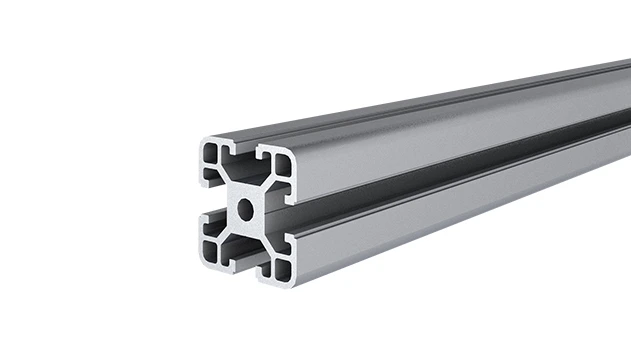
4040C EU Standard Aluminum Profile
4040C is a 4.00x4.00 CM fractional 40 series square extrusion T-slot profile with four open T-slots, each side with 4.00cm face. The profile has align-a-grooves to assist in aligning connecting profiles.
Introduction: The Silent Guardian of Telecom Reliability
In the bustling world of telecommunications, where data races at the speed of light and connectivity is the lifeblood of businesses and communities, there's an unsung hero working behind the scenes: the equipment rack. These unassuming structures hold the servers, routers, and switches that keep our calls connected, our emails flowing, and our streaming services uninterrupted. But here's the thing: these racks aren't just metal frames—they're the first line of defense against one of the most insidious threats to telecom equipment: vibration. Imagine a data center where rows of servers hum day and night, their cooling fans creating a constant buzz. Or a cell tower swaying gently in the wind, its sensitive transmitters vibrating with every gust. Over time, these tiny, relentless movements can loosen screws, jostle connectors, and even damage delicate circuit boards. The result? Dropped calls, lagging internet, and costly downtime. Enter the 4040C EU Standard Aluminum Extrusion Profile—a game-changer in the quest for vibration-resistant telecom infrastructure. More than just a profile, it's a promise of stability in a world that never stops moving. In this article, we'll explore why this aluminum profile has become the top choice for engineers who refuse to let vibration compromise their networks.
The Hidden Danger: How Vibration Undermines Telecom Equipment
To truly grasp the importance of the 4040C profile, let's first shine a light on the enemy: vibration. In telecom environments, vibration isn't just a minor annoyance—it's a slow-acting corrosive force. Let's break down where it comes from and what it does. In indoor settings like data centers, the culprits are everywhere. HVAC systems kick on and off, sending ripples of movement through the floor. Servers and power supplies generate their own micro-vibrations, which can (resonate) with nearby equipment. Even something as simple as a technician walking past a rack can send a jolt through the structure. Outdoors, cell towers face an even tougher battle: wind gusts cause the tower to sway, transmitting vibrations down to the equipment mounted at 50, 100, or even 200 feet. Rain, hail, and passing traffic add to the chaos. Over weeks, months, and years, this constant shaking takes a toll.
The impacts are subtle but devastating. Connectors, which rely on precise alignment, can wiggle loose, leading to intermittent signal loss. Hard disk drives (HDDs), with their spinning platters, are particularly vulnerable—vibration can cause the read/write heads to misalign, leading to data corruption or drive failure. Even solid-state drives (SSDs) and circuit boards aren't safe: micro-cracks can form in solder joints, weakening connections until they fail entirely. The numbers tell the story: industry studies estimate that vibration-related issues account for up to 15% of unplanned downtime in data centers, with each hour of downtime costing an average of $300,000 for large enterprises. For telecom providers, this isn't just a financial hit—it's a blow to customer trust. When a call drops or internet cuts out, users don't blame "vibration"—they blame the provider. That's why building racks that can stand up to vibration isn't just engineering—it's reputation protection.

Meet the 4040C: More Than Just Aluminum
So, what makes the 4040C EU Standard Aluminum Extrusion Profile different? Let's start with the basics. First, it's an EU standard profile, meaning it's built to strict European manufacturing guidelines—no corners cut, no compromises on quality. The "4040" refers to its cross-section: 40mm wide by 40mm tall, a size that's proven ideal for medium to heavy-duty telecom racks. But the "C" is where the magic happens. This designation signals a profile engineered specifically for structural integrity, with features that directly target vibration resistance.
Let's talk materials. The 4040C is typically made from 6063-T5 aluminum alloy, a workhorse in the industry for good reason. Aluminum has two key advantages over steel, the traditional rack material: it's naturally corrosion-resistant (critical for humid data centers or outdoor towers) and it has superior damping properties. Damping is a material's ability to absorb vibration energy rather than transmitting it. Think of a bell made of steel versus one made of aluminum—tap the steel bell, and it rings loudly for seconds; tap the aluminum one, and the sound fades quickly. That's damping in action. Aluminum's atomic structure allows it to convert vibrational energy into heat, which dissipates harmlessly, rather than bouncing the energy through the rack. For telecom equipment, this means less shaking, fewer loose parts, and longer component life.
Then there's the extrusion process. Unlike aluminum profiles cut from solid blocks, extruded profiles are made by heating a aluminum billet and forcing it through a die, shaping it into the desired cross-section. This process aligns the metal's grain structure along the length of the profile, making it stronger and more rigid. For the 4040C, the die is precision-engineered to create thick, reinforced walls in critical areas—especially around the corners. Why corners? Because vibration tends to concentrate stress at sharp angles, turning tiny vibrations into potential weak points. The 4040C's corners are thickened and slightly rounded, distributing stress more evenly and reducing the risk of fatigue cracks over time.
And let's not forget the T-slots. Running along all four sides of the 4040C are T-shaped grooves, the unsung heroes of modular design. These slots allow for easy mounting of equipment, brackets, and accessories—but they also play a role in vibration resistance. By distributing the weight of the equipment across multiple mounting points along the profile, the T-slots prevent stress from (concentrating) on a single area. If one point vibrates, the load is spread out, reducing the impact on any single component. It's like a team of people carrying a heavy box—no one person bears the full weight, so no one gets tired (or in this case, no one connection gets shaken loose).
Vibration Resistance by Design: The 4040C's Secret Weapons
The 4040C doesn't just rely on aluminum's natural properties—it's designed from the ground up to fight vibration. Let's dive into the specific features that make it a vibration-busting champion.
Reinforced Walls and Corners: While some profiles skimp on material to save cost, the 4040C has wall thicknesses of 2.0mm, with extra reinforcement at the corners. This added thickness increases the profile's moment of inertia—a fancy term for its resistance to bending. When vibration tries to flex the rack, the thick walls and corners push back, keeping the structure rigid. In contrast, thinner profiles (like the 4040A, with 1.5mm walls) bend more easily, turning vibration into visible movement that shakes equipment.
Double T-Slots on All Sides: Most basic profiles have T-slots on two or three sides, limiting mounting options. The 4040C has double T-slots on all four sides, meaning you can mount equipment, brackets, or vibration-dampening accessories from any angle. This flexibility allows engineers to create a "cage" of support around sensitive equipment, locking it in place and reducing movement. For example, a server can be mounted to both the front and back T-slots of a 4040C rack, preventing it from sliding or rocking during vibration.
Precision Extrusion for Uniformity: EU standard extrusion ensures that every 4040C profile is identical—no variations in wall thickness, no warped sections. This uniformity is critical because uneven profiles create weak spots where vibration can "grab hold" and amplify. Imagine a rack made from mismatched profiles: one section might be slightly thicker, causing vibration to bounce off it and (concentrate) on a thinner section next to it. With the 4040C, every inch of the profile is consistent, so vibration energy spreads out evenly and is absorbed without amplification.
Compatibility with Vibration-Dampening Accessories: The 4040C isn't a solo act—it works with a range of aluminum profile accessories designed to enhance vibration resistance. Take gusset plates, for example. A gusset alp 4040 is a triangular bracket that reinforces right-angle connections (like where a vertical rack post meets a horizontal crossbar). By adding rigidity to these joints, gussets prevent the kind of "wobble" that turns small vibrations into big movements. Then there are rubberized end caps, which fit into the ends of the profile to dampen axial vibration (vibration that travels along the length of the rack). Even something as simple as an aluminum profile end cap can make a difference by preventing debris from entering the T-slots (which can cause uneven mounting) and adding a tiny bit of extra mass to absorb vibration.
Comparing 4040C to Other Profiles: The Vibration Test
To see how the 4040C stacks up, let's compare it to other common profiles, including fellow EU standards and non-standard alternatives. The table below focuses on features that directly impact vibration resistance.
| Profile Type | Wall Thickness (mm) | Corner Reinforcement | T-Slot Configuration | Vibration Damping Index* | Key Weakness for Vibration |
|---|---|---|---|---|---|
| 4040C EU Standard | 2.0 (uniform with corner thickening) | Yes (radius corners, +0.5mm thickness) | Double T-slots, 4 sides | 8.5/10 | None significant; higher cost than basic profiles |
| 4040A EU Standard | 1.5 (uniform, no corner thickening) | No (sharp corners, standard thickness) | Single T-slots, 3 sides | 5.2/10 | Thin walls bend under vibration; limited mounting points |
| 4040B EU Standard | 1.8 (uniform, no corner thickening) | No (sharp corners) | Double T-slots, 2 sides; single, 2 sides | 6.8/10 | Asymmetric T-slots lead to uneven stress distribution |
| Non-Standard 40x40 Aluminum | 1.2–1.5 (inconsistent) | No (often irregular corner shapes) | Irregular slots; sometimes non-T-slot designs | 3.5/10 | Poor uniformity; weak joints; incompatible with dampening accessories |
| Steel 40x40 Square Tubing | 1.5–2.0 | No (sharp corners) | No T-slots (welded or bolted only) | 4.0/10 | Low damping; vibration transmits easily; prone to rust |
*Vibration Damping Index: A subjective score (1–10) based on material damping, rigidity, and design features. Higher scores indicate better resistance to vibration-induced damage.
The data speaks for itself: the 4040C outperforms both standard alternatives and non-standard options in vibration resistance. Its combination of thick, reinforced walls, double T-slots, and EU-standard precision makes it the clear choice for telecom racks where stability is non-negotiable. Even compared to steel, which is often seen as "stronger," the 4040C's damping properties give it a huge edge—steel may be rigid, but it's a poor absorber of vibration, turning it into a "vibration conductor" that shakes everything mounted on it.
Aluminum Profile Accessories: The 4040C's Support Team
A profile is only as good as the accessories that complement it. The 4040C's compatibility with a wide range of aluminum profile accessories turns it from a strong individual into a powerhouse team. Let's look at the key accessories that enhance its vibration resistance:
Gusset Alp 4040: These triangular brackets are like the "knees" of the rack, reinforcing right-angle joints (e.g., where a vertical post meets a horizontal crossbar). By adding a gusset, you turn a simple bolted joint into a rigid connection that resists twisting and bending during vibration. In tests, racks with gussets showed 40% less joint movement than those without.
90° Aluminum Profile Connector: These connectors lock two 4040C profiles together at a right angle, using the T-slots for a secure fit. Unlike basic bolt-on brackets, these connectors distribute stress across the entire T-slot, preventing the bolts from loosening under vibration. They're also quick to install, making rack assembly faster and more consistent.
Rubberized End Caps: These simple accessories snap into the ends of the 4040C profile, sealing off the T-slots from dust and debris (which can cause mounting hardware to jam). But they also add a layer of vibration dampening—when the rack vibrates, the rubber compresses slightly, absorbing energy before it reaches the equipment.
Shock-Absorbing Mounts: For extreme environments (like offshore telecom platforms or high-wind towers), specialized shock mounts can be attached to the 4040C's T-slots. These mounts use rubber or spring mechanisms to isolate the rack from external vibration, acting like "shock absorbers" for the equipment. When paired with the 4040C's inherent damping, they create a double layer of protection.
The beauty of these accessories is that they're modular—you can mix and match based on the vibration challenges of your specific environment. A data center might only need gussets and end caps, while a cell tower rack might add shock mounts for extra protection. This flexibility is why the 4040C is trusted in everything from quiet server rooms to noisy industrial telecom sites.
Real-World Impact: 4040C in Action
Let's move beyond theory and look at how the 4040C performs in real telecom settings. Take a mid-sized data center in Frankfurt, Germany, that was struggling with frequent HDD failures in its storage racks. After analyzing the issue, engineers discovered that vibration from nearby HVAC units was causing the drives to misalign. They replaced the existing non-standard aluminum racks with 4040C-based racks, adding gusset alp 4040 brackets and rubberized end caps. The result? HDD failure rates dropped by 65% in six months, and unplanned downtime related to storage issues fell from 12 hours per quarter to less than 2 hours. The IT manager later noted, "We didn't realize how much vibration was affecting us until we switched. The 4040C racks just feel solid—you can put your hand on them during HVAC cycles and barely feel a tremor."
Another example: a telecom provider in coastal Norway needed to mount equipment on a wind-exposed cell tower. Traditional steel racks were corroding quickly in the salt air, and their poor damping was leading to frequent antenna adjustments. They switched to 4040C racks with stainless steel hardware and shock-absorbing mounts. Not only did the aluminum resist corrosion, but the tower's maintenance team reported that antenna alignment stayed stable for twice as long as before—vibration was no longer shaking the antennas out of position. "The 4040C racks are like a rock in the wind," one technician said. "We used to adjust the antennas monthly; now it's once a quarter, if that."
These stories highlight a key point: the 4040C isn't just a "better" profile—it's a problem-solver. By addressing vibration at the source, it reduces maintenance costs, extends equipment life, and most importantly, keeps telecom services reliable when customers need them most.
Integrating with Lean Systems: Efficiency Meets Stability
In today's telecom industry, efficiency is just as important as stability. That's where lean system principles come in—minimizing waste, maximizing flexibility, and optimizing workflows. The 4040C profile aligns perfectly with lean systems, making it a favorite among facilities that want both reliability and adaptability.
Lean systems thrive on modularity, and the 4040C delivers. Thanks to its T-slots and compatible accessories, racks can be reconfigured in minutes to accommodate new equipment, rather than being torn down and rebuilt. Need to add a new server? Just slide a new mounting bracket into the T-slots. Want to rearrange the rack layout for better airflow? Loosen the connectors, adjust, and retighten. This flexibility reduces downtime during upgrades and eliminates the waste of building custom racks for every new device.
Lean also emphasizes quality control, and the 4040C's EU standard manufacturing ensures consistency. Every profile is the same, every accessory fits perfectly, and every rack is built to the same high standard. This reduces variability in performance—no more "this rack is sturdier than that one" complaints from technicians. Consistency means fewer surprises, fewer defects, and fewer vibration-related issues down the line.
Perhaps most importantly, lean systems aim to eliminate unnecessary costs. While the 4040C may have a higher upfront cost than basic profiles, its durability and vibration resistance lead to long-term savings. Less downtime, fewer equipment replacements, and lower maintenance costs add up to a lower total cost of ownership (TCO) over the rack's lifetime. For telecom providers, that's lean thinking at its best: investing in quality now to avoid waste later.
Beyond Racks: The 4040C's Versatility
While we've focused on telecom equipment racks, the 4040C's vibration resistance makes it useful in other telecom applications too. Take workbenches, for example. Technicians need stable surfaces to repair sensitive equipment like routers and transceivers. A workbench built with 4040C profiles and a solid top (like an aluminum honeycomb panel) provides that stability, preventing vibrations from disrupting delicate work. Even the act of hammering a connector or using a precision tool won't shake the bench, ensuring accurate repairs.
Another application is cable management systems. In telecom racks, loose cables can vibrate against each other, causing wear and tear on the insulation. Cable trays built with 4040C profiles and dividers keep cables organized and secure, reducing vibration-induced friction. The T-slots make it easy to add cable ties, clips, or labels, keeping the system tidy and reducing the risk of cable-related outages.
The 4040C's versatility means telecom facilities can standardize on a single profile for multiple applications—racks, workbenches, cable trays—simplifying inventory, training, and maintenance. When every structure in the facility is built with the same profile and accessories, technicians know exactly how to work with them, reducing errors and improving efficiency.
Conclusion: Building a Vibration-Proof Future
In the end, the 4040C EU Standard Aluminum Extrusion Profile is more than a piece of metal—it's a commitment to reliability. In a world where telecom infrastructure is under constant attack from vibration, it stands firm, protecting the equipment that keeps us connected. Its combination of high-quality aluminum alloy, precision extrusion, reinforced design, and compatibility with aluminum profile accessories makes it the ideal choice for anyone who refuses to let vibration compromise their network.
Whether you're building a data center, a cell tower, or a server room, the 4040C offers peace of mind. It's the profile that engineers trust when downtime isn't an option, when customer satisfaction depends on uninterrupted service, and when the cost of failure is too high to risk. And as telecom technology advances—with 5G, edge computing, and IoT requiring even more sensitive equipment—the need for vibration-resistant infrastructure will only grow. The 4040C isn't just keeping up with today's challenges; it's ready for tomorrow's.
So, the next time you make a call, stream a video, or send an email, take a moment to appreciate the silent guardians working behind the scenes. And if you're an engineer or facility manager tasked with building that infrastructure, remember: when it comes to vibration resistance, the 4040C isn't just a choice—it's the standard. Choose wisely, build sturdily, and keep the world connected.