- Company Articles
- Products and Technology
- Product knowledge
- 4040C EU Standard Aluminum Profile: How It Supports Reconfigurable Manufacturing Systems

4040C EU Standard Aluminum Profile: How It Supports Reconfigurable Manufacturing Systems
Related Product
4040C EU Standard Aluminum Profile
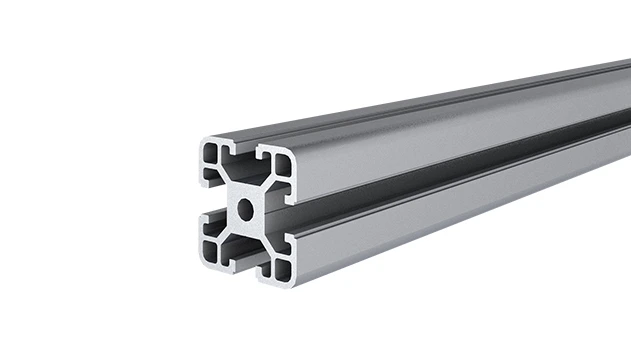
4040C is a 4.00x4.00 CM fractional 40 series square extrusion T-slot profile with four open T-slots, each side with 4.00cm face. The profile has align-a-grooves to assist in aligning connecting profiles.
In today's fast-paced manufacturing landscape, the rules of the game are constantly shifting. Customers demand more customization, product life cycles shrink by the quarter, and global competition pushes brands to do more with less. In this environment, the ability to adapt isn't just a nice-to-have—it's survival. Enter reconfigurable manufacturing systems (RMS): dynamic setups designed to quickly adjust to changes in production needs, whether that means scaling up, switching product lines, or even overhauling workflows. But what makes these systems tick? At the heart of many RMS solutions lies a surprisingly simple yet powerful component: the 4040C EU standard aluminum extrusion profile. Let's dive into how this unassuming piece of metal is quietly revolutionizing how factories stay flexible, efficient, and ready for whatever the future throws their way.
The Rise of Reconfigurable Manufacturing: Why Flexibility Matters More Than Ever
Gone are the days of mass-producing the same widget for decades. Today's manufacturers face a trifecta of challenges: rising consumer expectations for personalized products, shorter time-to-market pressures, and the need to pivot quickly when trends (or supply chains) shift. Traditional manufacturing systems—rigid, purpose-built, and expensive to modify—simply can't keep up. A production line designed for one product might take weeks or months to retool for another, costing valuable time and resources.
Reconfigurable manufacturing systems (RMS) emerged as a solution to this problem. Coined in the late 1990s by MIT's Engineering Systems Division, RMS is defined by four key characteristics: modularity (components that can be added or removed), scalability (easily adjusting production volume), convertibility (adapting to new products), and diagnosability (quickly identifying and fixing issues). In short, RMS is manufacturing's answer to the "Swiss Army knife"—versatile, adaptable, and ready for any task. But to build such a system, you need a backbone that can keep up with these demands. That's where the 4040C aluminum profile comes in.
Meet the 4040C EU Standard Aluminum Profile: A Workhorse Built for Adaptability
First things first: What exactly is the 4040C EU standard aluminum extrusion profile? Let's break it down. The "4040" refers to its cross-sectional dimensions—40mm by 40mm—making it a medium-sized profile, neither too bulky nor too delicate. The "C" denotes its specific design within EU standards, which ensures consistency in dimensions, tolerances, and performance across manufacturers. And "aluminum extrusion profile" means it's created by forcing heated aluminum alloy through a die, resulting in a uniform, strong, and precisely shaped product.
But numbers and specs only tell part of the story. What makes the 4040C special is its blend of strength, lightness, and adaptability. Made from high-grade aluminum alloys (typically 6063-T5, a common choice for structural applications), it strikes an impressive balance: strong enough to support heavy loads (think machinery, workbenches, or material racks) but lightweight enough to be moved and reconfigured by a small team. Unlike steel, it resists corrosion, making it suitable for both indoor and controlled outdoor environments. And because it's aluminum, it's inherently recyclable—a bonus for manufacturers aiming to reduce their environmental footprint.
Perhaps its most critical feature, though, is its T-slot design. Run your hand along the length of a 4040C profile, and you'll notice long, narrow slots running parallel to its edges. These slots are the secret sauce. They allow for easy attachment of aluminum profile accessories—connectors, brackets, end caps, casters, and more—without the need for welding or drilling. Need to add a shelf to a workbench? Slide a bracket into the T-slot and secure it with a bolt. Want to reposition a conveyor track? Loosen a few fasteners, adjust, and tighten. It's this "click-and-play" functionality that makes the 4040C a favorite for reconfigurable systems.

Why 4040C Stands Out as the Backbone of Reconfigurable Systems
So, why choose the 4040C over other profiles or materials? Let's break down its advantages for RMS:
Modularity at Its Core: RMS thrives on modularity, and the 4040C is modular by design. Its T-slot system and compatibility with a wide range of aluminum profile accessories mean components can be mixed, matched, and rearranged in endless configurations. A workbench today can become a material rack tomorrow, or part of a conveyor system next month—all without cutting or altering the profile itself. This modularity drastically reduces downtime during reconfigurations; what once took days can now take hours.
Strength Without the Bulk: Manufacturing equipment and materials aren't light. A typical workbench might need to support hundreds of pounds of tools, parts, or assemblies. The 4040C's aluminum alloy construction offers impressive load-bearing capacity (often up to several hundred kilograms per linear meter, depending on support spacing) while remaining lightweight. This makes it easy to move components when reconfiguring, without sacrificing structural integrity. Compare that to steel, which is strong but heavy—requiring forklifts or cranes to reposition, adding time and cost.
Cost-Efficiency Over the Long Haul: At first glance, aluminum might seem pricier than steel or plastic. But look closer, and the 4040C often proves more cost-effective in the long run. Because it's reusable—you can disassemble and repurpose profiles and accessories—you're not throwing away expensive materials every time you reconfigure. Its corrosion resistance also reduces maintenance costs, and its lightweight nature cuts down on shipping and installation expenses. For small to medium manufacturers, this can translate to significant savings over time.
Precision and Consistency: EU standards ensure that 4040C profiles from different suppliers are interchangeable. That means you can source components from multiple vendors without worrying about fit issues—a huge plus for global supply chains. Precise tolerances also mean assemblies go together smoothly, reducing frustration during setup and ensuring that reconfigured systems perform reliably.
Real-World Applications: How 4040C Powers Reconfigurable Workflows
Talk is cheap—let's look at how the 4040C is actually used in reconfigurable manufacturing systems. Here are a few common applications:
Modular Workbenches: The workbench is the heart of any production line, and with 4040C, it's a chameleon. Need a basic assembly station? Build a simple frame with 4040C profiles, add a plywood or aluminum top, and you're good to go. Want to upgrade to an ESD workstation (critical for electronics manufacturing)? Swap out the top for an anti-static surface and add grounding accessories via the T-slots. Need to make room for a new machine? Remove a section of the bench or reposition it on casters (easily attached to the profile's base). The 4040C's flexibility means workbenches grow and change with your needs, not the other way around.
Material Racks and Flow Racks: Efficient material handling is key to lean system principles, and 4040C excels here too. Flow racks—used to store and dispense parts for assembly lines—rely on gravity to feed components to workers, reducing reach and wait times. With 4040C, these racks can be customized to fit specific part sizes: adjust shelf heights, add dividers, or integrate roller track (another keyword from our list!) for smooth part flow. When production shifts to a new product with different part dimensions, simply reposition the shelves or swap out the roller track—no need to buy a whole new rack.
Conveyor and Roller Track Systems: Moving parts between workstations? 4040C profiles form the frame for lightweight yet sturdy conveyor systems. Attach roller track to the profiles, and you've got a setup that can transport parts horizontally, vertically, or even around corners. Need to reroute the conveyor to accommodate a new assembly line? Disassemble sections, adjust the profile frame, and reconnect—often in a fraction of the time it would take with welded steel conveyors.
Lean System Integration: Lean manufacturing is all about eliminating waste and streamlining processes. The 4040C aligns perfectly with this philosophy. Its modularity reduces waste from overbuilding fixed systems, and its adaptability means workflows can be continuously optimized. For example, a factory using 4040C-based workstations and material racks can quickly rearrange its layout to shorten travel distances between stations, or add in-process storage as bottlenecks emerge. It's lean in action—literally building efficiency into the physical structure of the factory.
The Role of Aluminum Profile Accessories: Making Reconfiguration Seamless
A profile is only as good as the accessories that bring it to life. The 4040C's T-slot design works hand-in-hand with a vast ecosystem of aluminum profile accessories, each designed to simplify assembly and reconfiguration. Let's take a closer look at some essential accessories and how they enable RMS:
| Accessory Type | Function | How It Supports Reconfiguration |
|---|---|---|
| 90° Aluminum Profile Connectors | Join two profiles at a right angle | Quickly build frames for workbenches, racks, or conveyor supports; easy to disconnect and reposition. |
| End Caps | Cover exposed ends of profiles | Protect workers from sharp edges; can be swapped out if profiles are cut to new lengths during reconfiguration. |
| Adjustable Casters | Add mobility to frames and workbenches | Turn static workstations into mobile units, making it easy to rearrange layouts or move equipment for maintenance. |
| Roller Track Brackets | Mount roller track to profiles | Enable quick integration of material flow systems; adjust track height or angle by repositioning brackets in T-slots. |
| T-Slot Nuts and Bolts | Secure accessories to profiles | Allow for tool-free adjustments (with a hex key); loosen to reposition components, then retighten—no drilling required. |
These accessories aren't just add-ons; they're enablers. Together with the 4040C profile, they turn abstract reconfiguration plans into tangible, actionable setups. A team can go from a blueprint to a fully functional workstation in hours, not days, because the components are designed to work together seamlessly.
Case Study: How a Small Electronics Manufacturer Leveraged 4040C to Cut Downtime by 60%
Let's put this into context with a real-world example (names changed for privacy). Acme Electronics, a mid-sized manufacturer of consumer gadgets, was struggling with its old production setup. Their lines were built with welded steel frames, and switching between product models (smartphones, tablets, wearables) took 3–4 days of downtime—time they couldn't afford in a market where competitors were launching new models monthly.
Their solution? A complete overhaul using 4040C EU standard aluminum extrusion profiles. They replaced fixed steel workbenches with modular 4040C frames, added adjustable flow racks with roller track for parts, and installed lightweight conveyor systems built on 4040C rails. The results were dramatic:
- Faster Changeovers: What once took 3–4 days now took 8–10 hours. By pre-building modular sections (e.g., a "tablet station" or "wearable station"), Acme could swap out entire workbench modules instead of rebuilding from scratch.
- Reduced Costs: The initial investment in 4040C profiles and accessories paid for itself within six months, thanks to lower downtime and reduced need for new equipment.
- Improved Ergonomics: Adjustable height workbenches (made possible by 4040C's modular legs) reduced worker fatigue, cutting down on errors and absenteeism.
Acme's story isn't unique. From automotive parts suppliers to medical device manufacturers, companies of all sizes are turning to 4040C-based systems to stay agile in a volatile market.
The Future of Manufacturing: 4040C and Beyond
As manufacturing continues to evolve—with trends like Industry 4.0, IoT integration, and AI-driven automation—reconfigurable systems will only grow in importance. And the 4040C profile is poised to grow with them. Imagine a factory where 4040C-based workstations are equipped with sensors (mounted via T-slots) that monitor production in real time, or where AI algorithms suggest layout changes, and workers adjust the 4040C frames accordingly. The profile's adaptability makes it a natural fit for these smart, connected environments.
Innovation in aluminum extrusion is also ongoing. New alloys are making profiles even stronger and lighter, while advanced T-slot designs are improving accessory compatibility. For example, some manufacturers now offer 4040C variants with reinforced slots for heavier loads, or profiles with integrated cable management channels—perfect for routing wires in automated systems. As these advancements continue, the 4040C will only become more versatile.
Conclusion: Building the Factory of the Future, One Profile at a Time
Reconfigurable manufacturing systems are no longer a futuristic concept—they're the present. And at the heart of these systems is the 4040C EU standard aluminum extrusion profile: a simple, affordable, and infinitely adaptable component that empowers manufacturers to build, rebuild, and evolve their operations on their terms. Its strength, modularity, and compatibility with aluminum profile accessories make it more than just a building material; it's a strategic asset in the fight for flexibility.
Whether you're a small workshop looking to grow or a large enterprise aiming to stay ahead of the curve, the 4040C offers a path forward. It's proof that sometimes, the most powerful innovations aren't flashy or high-tech—they're the ones that quietly enable progress, one T-slot, one accessory, and one reconfiguration at a time. So, the next time you walk through a factory floor, take a closer look at those aluminum frames. Chances are, they're 4040C—and they're hard at work, building the future of manufacturing.