- Company Articles
- Products and Technology
- Product knowledge
- 4040C EU Standard Aluminum Profile in Consumer Electronics Production: Lightweight Solutions

4040C EU Standard Aluminum Profile in Consumer Electronics Production: Lightweight Solutions
Related Product
4040C EU Standard Aluminum Profile
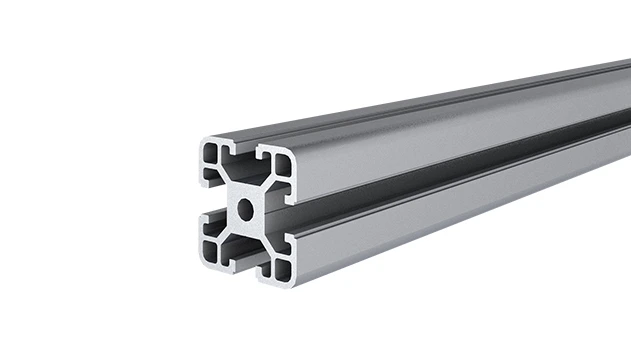
4040C is a 4.00x4.00 CM fractional 40 series square extrusion T-slot profile with four open T-slots, each side with 4.00cm face. The profile has align-a-grooves to assist in aligning connecting profiles.
Walk into any modern consumer electronics factory, and you'll feel the hum of precision. Assembly lines zip with circuit boards, workers handle delicate smartphone screens with steady hands, and robots glide past racks stacked with tiny components. In this world, where a single production line might switch from assembling smartwatches to tablets overnight, flexibility isn't just a nice-to-have—it's survival. And at the heart of this flexibility? Lightweight, adaptable tools that keep pace with change. Enter the 4040C EU Standard Aluminum Extrusion Profile: a quiet workhorse that's redefining how consumer electronics get made.
What Exactly Is 4040C EU Standard Aluminum Extrusion Profile?
Let's start with the basics. The 4040C is part of a family of aluminum extrusion profiles designed to meet strict EU standards—think of it as the reliable cousin in a lineup of high-performance materials. At its core, it's a rectangular tube, 40 millimeters wide and 40 millimeters tall, crafted through a process called extrusion. Picture pushing a soft clay through a mold; aluminum extrusion works similarly, forcing heated aluminum alloy through a die to create consistent, precise shapes. The "C" in 4040C refers to its specific design—usually featuring T-slots along its length, those handy grooves that let you slide in accessories like brackets, connectors, or shelves without drilling holes.
But what really makes the 4040C stand out is its material: typically made from 6063-T5 aluminum alloy, a blend prized for its balance of strength, lightness, and malleability. This isn't just any aluminum—it's engineered to be tough enough to support assembly tools yet light enough that a single worker can lift a section of it. And unlike steel, it resists corrosion, so even in factories where humidity fluctuates (common in electronics production, where static control matters), it won't rust or degrade. Plus, it's 100% recyclable, aligning with the industry's push toward sustainability—a win for both your production line and the planet.
Why Lightweight Matters in Consumer Electronics Production
You might be thinking: "So it's light—so what?" In consumer electronics, where products themselves are getting smaller and lighter (hello, 1kg laptops and foldable phones), the tools that make them need to follow suit. Let's break down why weight matters:
- Ergonomics = Happier, Faster Workers: Imagine spending 8 hours a day hunched over a steel workbench that weighs 50kg. Now imagine that same bench made with 4040C, weighing half as much. Lighter workbenches mean less strain on backs and shoulders, reducing fatigue and cutting down on injuries. And when workers are comfortable, they're more focused—translating to fewer mistakes and faster assembly times.
- Quick Line Reconfigurations: Consumer electronics move fast. A factory might produce 50,000 units of a smartphone model, then pivot to a new version with a different camera module next month. With heavy steel or wooden structures, rearranging the assembly line could take days. But 4040C's lightweight design lets teams disassemble, move, and rebuild workstations or flow racks in hours. As Maria, a production engineer at a major electronics brand, puts it: "We used to schedule line changes over weekends. Now we do them between shifts—all because the aluminum frames are so easy to handle."
- Safer Material Handling: From turnover trolleys carrying circuit boards to flow racks feeding components to assembly stations, moving materials around the factory is constant. Heavy equipment increases the risk of accidents—dropped loads, strained muscles, or even damaged components. 4040C-based trolleys and racks are light enough to push with one hand, even when loaded, making material transport safer and more efficient.
- Lower Energy Costs: Even automated systems benefit from lightweight materials. Conveyors or robotic arms carrying lighter loads use less energy, trimming utility bills. Over a year, those savings add up—especially in large factories running round-the-clock.

How 4040C Works with Aluminum Profile Accessories to Boost Flexibility
The 4040C profile itself is strong, but its real magic lies in how it plays well with others—specifically, aluminum profile accessories. These tiny but mighty parts turn basic aluminum tubes into custom production tools. Let's take a closer look at how they work together:
Connectors: The Glue That Holds It All Together – Without connectors, 4040C is just a piece of metal. But with 90° aluminum profile connectors, 45° connectors, or even 135° connectors, you can build frames at any angle. These connectors slide into the T-slots of the 4040C profile and lock in place with bolts, no welding required. Need a workbench with a sloped top for better visibility? Use 45° connectors. Building a corner flow rack? 90° connectors have you covered. And if you need to adjust later? Just loosen the bolts, reposition, and tighten—no cutting or rewelding.
End Caps and Covers: Finishing Touches That Matter – 4040C's T-slots are great for accessories, but they can also catch on wires or scratch components. That's where 4040 aluminum profile end caps come in. These plastic or rubber caps snap onto the ends of the profiles, smoothing edges and protecting both workers and products. T-slot rubber seal covers do the same for the slots themselves, keeping out dust and debris that could jam accessories.
Shelves, Brackets, and Panels: Customizing for the Task – Aluminum honeycomb panels are a perfect match for 4040C frames. Lightweight but rigid, they make ideal workbench tops or shelf surfaces for storing components. Add shelf brackets (another aluminum profile accessory) and you've got a place to hold bins of screws, microchips, or cables. Need to mount a monitor or a static-dissipative mat? There's an accessory for that too—clamps and brackets that attach securely to the T-slots without damaging the profile.
The result? A modular system where you can mix and match parts to build exactly what you need. No more overpaying for custom steel structures that can't change. With 4040C and its accessories, you're limited only by your imagination (and maybe the factory ceiling height).
Real-World Impact: 4040C in Action
Let's step into a hypothetical (but realistic) consumer electronics factory to see how 4040C transforms daily operations. Meet TechFlow, a mid-sized manufacturer producing smart home devices—think smart speakers, thermostats, and security cameras. A year ago, their production line was a hodgepodge of steel workbenches, wooden shelves, and heavy plastic bins. Today, they've replaced most of it with 4040C-based setups. Here's how it changed things:
1. The Assembly Workbench: A Worker's Best Friend
TechFlow's smart speaker assembly workbench used to be a 6-foot steel table weighing 80kg. Workers complained about back pain, and repositioning it required two people and a dolly. Now, their 4040C workbench stands 1.2 meters wide, with a frame made from 40x40mm aluminum profiles connected by 90° and 45° aluminum profile connectors. The top is a lightweight aluminum honeycomb panel, and underneath, adjustable shelves hold labeled bins for speakers, circuit boards, and batteries. The whole setup weighs 35kg—light enough for two workers to carry, but sturdy enough to support the assembly tools and a small monitor displaying instructions.
"I used to dread Mondays because my shoulders would ache just thinking about the bench," says Raj, an assembler at TechFlow. "Now? The bench feels like it's 'floating'—I can adjust the height with a wrench (thanks to adjustable feet accessories) and even tilt the top slightly if my neck gets tired. And when we switched to the new security camera model, we added a side shelf for the larger lens modules in 10 minutes. It's night and day."
2. Flow Racks: Keeping Components Moving
Before 4040C, TechFlow stored components in wooden shelves that were hard to restock and even harder to access. Now, they use flow racks built with 4040C vertical supports and horizontal beams, fitted with roller tracks (another key accessory) to let gravity feed components forward. Each flow rack has 3 levels, each holding 5 bins of parts—resistors, capacitors, or wiring harnesses. When a bin is empty, workers simply slide a new one in from the back, and the roller tracks ensure it glides smoothly to the front.
"The flow racks cut our 'hunt time' for parts by 40%," says Lisa, TechFlow's inventory manager. "Before, workers would wander to the back shelves looking for a specific resistor. Now, everything rolls right to them. And since the racks are lightweight, we can move them closer to the assembly line during peak production—no more wasted steps."
3. Turnover Trolleys: From Clunky to Nimble
Transporting finished circuit boards from the soldering station to the testing area used to be a chore. TechFlow's old plastic trolleys were heavy and prone to tipping. Now, they use 4040C-framed trolleys with caster wheels (casters and accessories, another keyword!) that glide across the factory floor. The trolley frames are light but strong enough to hold 20kg of circuit boards, and the casters lock in place when loading or unloading. "We used to have a few boards get damaged every week because the old trolleys would jostle," Lisa adds. "Now? Zero damage—they're so smooth, it's like pushing a shopping cart."
4040C vs. The Competition: Why It Stands Out
You might be wondering: Why not use steel profiles, or traditional lean pipes (like PE-coated steel pipes)? Let's compare. The table below breaks down 4040C against two common alternatives: standard steel profiles and 2.0mm PE-coated lean pipes (a popular choice in older lean manufacturing setups).
| Feature | 4040C EU Standard Aluminum Extrusion Profile | Steel Profile (40x40mm) | 2.0mm PE-Coated Lean Pipe |
|---|---|---|---|
| Weight (per meter) | ~0.8-1.2kg | ~4.5-5kg | ~1.5-2kg |
| Strength-to-Weight Ratio | High (strong for its weight) | High (but heavy) | Moderate (can bend under heavy loads) |
| Assembly Time | Fast (modular with T-slot accessories) | Slow (requires welding or drilling) | Moderate (uses clamps, but less rigid) |
| Corrosion Resistance | Excellent (aluminum oxide layer) | Poor (rusts without coating) | Good (PE coating protects steel core) |
| Recyclability | 100% recyclable | Recyclable, but high energy cost to melt | Difficult (PE coating + steel core) |
| Long-Term Cost | Higher upfront, but lower over time (reusable, low maintenance) | Low upfront, high over time (maintenance, replacement) | Low upfront, moderate over time (clamps wear out, pipes bend) |
The takeaway? While steel is strong, it's too heavy for modern, flexible lines. PE-coated lean pipes are lighter but lack the rigidity and modularity of 4040C. For consumer electronics factories that need to balance strength, weight, and adaptability, 4040C is the sweet spot.
Debunking Myths: "Lightweight Aluminum Isn't Strong Enough"
It's a common concern: If 4040C is so light, can it really handle the demands of a busy factory? Let's put that myth to rest. While it's true that aluminum is less dense than steel, 4040C's design—thick walls, internal ribs (in some variants), and high-quality alloy—gives it impressive strength. For example, a 4040C profile with a 2mm wall thickness can support up to 150kg per linear meter when properly mounted. That's more than enough for most consumer electronics applications: workbenches holding tools and components, flow racks with bins of parts, or turnover trolleys carrying finished products.
Mark, a structural engineer who consults with electronics manufacturers, explains: "People forget that strength isn't just about weight. It's about how the material distributes force. 4040C's T-slots and extrusion design create a rigid structure that resists bending and twisting. I've seen 4040C workbenches in factories that have been in use for 5+ years, still as sturdy as the day they were built—even with daily use."
The Future of 4040C in Consumer Electronics
As consumer electronics get smaller, smarter, and more connected, the demand for flexible production tools will only grow. 4040C is poised to play a bigger role, thanks to trends like:
- Industry 4.0 Integration: Smart factories are using sensors and IoT to track production in real time. 4040C's T-slots make it easy to mount sensors, cameras, or barcode scanners directly onto workbenches or flow racks, turning passive structures into data-collecting hubs.
- Sustainability Pressures: With consumers and regulators demanding greener manufacturing, 4040C's recyclability and low energy footprint will make it even more attractive. Unlike steel or plastic, aluminum can be recycled repeatedly without losing quality—aligning with circular economy goals.
- Customization at Scale: Mass customization is the next frontier. Factories will need to produce small batches of highly personalized devices (e.g., smart home systems tailored to a family's needs). 4040C's modularity makes it perfect for building tiny, specialized assembly stations that can switch between products quickly.
Conclusion: Lightweight, Strong, and Ready for What's Next
In the fast-moving world of consumer electronics, every second counts. 4040C EU Standard Aluminum Extrusion Profile isn't just a material—it's a tool that lets factories adapt, innovate, and thrive. Its lightweight design makes workers happier and lines more flexible, while its strength and modularity ensure it can handle the demands of precision manufacturing. Paired with aluminum profile accessories, it transforms from simple tubes into workbenches, flow racks, and trolleys that grow with your business.
So whether you're building a new production line or upgrading an old one, don't overlook the power of lightweight aluminum. As TechFlow's production manager, James, puts it: "We thought we were just replacing workbenches. What we got was a whole new way of working—faster, safer, and ready for whatever the next big thing in consumer electronics is." And in this industry, that's the ultimate competitive edge.