- Company Articles
- Products and Technology
- Product knowledge
- 4040C EU Standard Aluminum Profile in Mechanical Engineering: Custom Frame Solutions

4040C EU Standard Aluminum Profile in Mechanical Engineering: Custom Frame Solutions
Related Product
4040C EU Standard Aluminum Profile
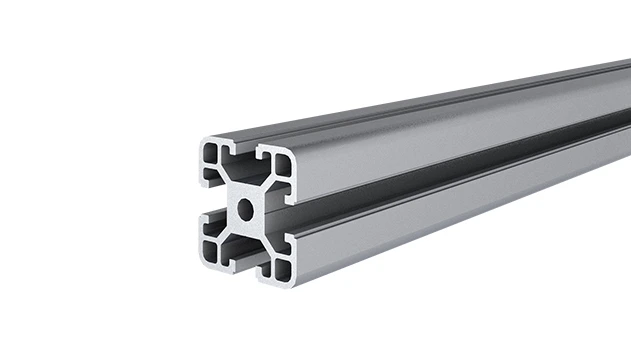
4040C is a 4.00x4.00 CM fractional 40 series square extrusion T-slot profile with four open T-slots, each side with 4.00cm face. The profile has align-a-grooves to assist in aligning connecting profiles.
Introduction: The Backbone of Modern Mechanical Design
Mechanical engineering is a field where precision meets adaptability. Every component, every frame, and every system must balance strength, functionality, and the ability to evolve with changing needs. In this dynamic landscape, aluminum profiles have emerged as unsung heroes—lightweight, durable, and infinitely customizable. Among the many profiles available, the 4040C EU Standard Aluminum Profile stands out as a workhorse, trusted by engineers, manufacturers, and lean system suppliers worldwide to build everything from simple workbenches to complex automated systems. Let's dive into why this profile has become a cornerstone of custom frame solutions and how it's reshaping the way we design mechanical structures.
Understanding the 4040C EU Standard Aluminum Profile
What Does "EU Standard" Mean?
Before we explore the 4040C specifically, it's important to grasp what "EU Standard" signifies. EU (European union) standards for aluminum profiles are (strictly regulated) to ensure consistency in dimensions, material quality, and performance. These standards are developed by organizations like CEN (European Committee for Standardization) to promote safety, interoperability, and reliability across industries. For engineers, this means a 4040C profile sourced from any reputable supplier will meet the same strict criteria, eliminating guesswork and ensuring compatibility with accessories and systems across borders.
The Basics: Dimensions and Design
At its core, the 4040C is defined by its cross-section: 40mm x 40mm. This square shape offers symmetry and balance, making it ideal for load-bearing structures where stability is key. But what truly sets it apart is its aluminum extrusion profile design. Extrusion is a manufacturing process where heated aluminum alloy is pushed through a die to create complex cross-sectional shapes. For the 4040C, this process results in precise T-slots running along all four sides—longitudinal grooves that act as built-in connection points. These T-slots are the profile's "secret sauce," allowing for easy attachment of accessories without welding or drilling, which is a game-changer for custom frame solutions.
Material Matters: The Aluminum Alloy Behind the Strength
The 4040C is typically crafted from 6063-T5 aluminum alloy, a popular choice in extrusion for its excellent combination of strength, formability, and corrosion resistance. The "T5" designation refers to the tempering process—artificial aging that enhances the alloy's mechanical properties. This means the 4040C can handle significant loads (often up to 500kg per linear meter, depending on support) while remaining lightweight, a critical advantage in applications where portability or reduced structural weight is important, such as mobile workbenches or overhead conveyor systems.

Key Features That Make 4040C a Go-To Choice
What makes the 4040C stand out in a crowded market of aluminum profiles? Let's break down its most compelling features:
- Modular T-Slot Design: The T-slots on all four sides are spaced at standardized intervals, allowing for endless configuration possibilities. Whether you need to attach a bracket, a panel, or a wheel, you can slide a bolt or connector into the slot and tighten it—no need for pre-drilled holes. This modularity means frames can be adjusted, extended, or repurposed as needs change, reducing waste and long-term costs.
- Compatibility with Aluminum Profile Accessories: The 4040C isn't just a standalone profile; it's part of an ecosystem. From 90° aluminum profile connectors and end caps to hinges and casters, there's a vast range of accessories designed specifically for EU standard T-slots. This compatibility ensures that engineers can source everything they need from a single lean system supplier, streamlining procurement and assembly.
- Lightweight Yet Strong: Aluminum is about one-third the weight of steel, making the 4040C easy to handle during assembly and reducing the load on supporting structures. Yet, thanks to its alloy composition and extrusion design, it offers impressive rigidity—perfect for workbenches that need to withstand vibration, material handling, or heavy tool use.
- Corrosion Resistance: Aluminum naturally forms a protective oxide layer, and many 4040C profiles are further treated with anodization (an electrolytic process that thickens this layer). This makes them resistant to rust, chemicals, and environmental wear, ideal for use in factories, labs, or even outdoor settings where exposure to moisture or fumes is common.
- Cost-Effective in the Long Run: While the initial cost of aluminum profiles may be higher than steel or plastic, their durability, low maintenance, and reusability make them more economical over time. A 4040C frame can be disassembled and reconfigured multiple times, adapting to new projects without the need for full replacement.
Custom Frame Solutions: From Concept to Reality
Designing with the 4040C: A Collaborative Process
The true power of the 4040C lies in its ability to turn abstract ideas into tangible structures. Let's walk through how a lean system supplier might use this profile to create a custom workbench for a manufacturing client:
Step 1: Understanding the Client's Needs The client, a small electronics manufacturer, needs a workbench that can hold assembly tools, has storage for components, and is mobile enough to be repositioned on the factory floor. They also require ESD (electrostatic discharge) protection to safeguard sensitive electronics—a common requirement in such settings.
Step 2: Engineering the Solution The lean system supplier recommends a frame built with 4040C profiles. Why? The 40mm x 40mm cross-section provides ample stability for the workbench top (likely an aluminum honeycomb panel for lightness and flatness). The T-slots allow for easy attachment of ESD-safe shelves, tool hooks, and a power strip. For mobility, they'll add casters (from the caster and accessories line) that bolt directly into the T-slots, ensuring secure attachment without compromising the frame's integrity.
Step 3: Selecting Accessories To bring the design to life, the supplier selects aluminum profile accessories like 90° aluminum profile connectors to join the vertical and horizontal 4040C rails, end caps to cover sharp edges, and adjustable feet (another accessory) to level the workbench on uneven floors. For the ESD protection, they integrate a conductive mat that attaches to the frame via T-slot clips.
Step 4: Assembly and Testing With all components in hand, assembly is straightforward. The 4040C profiles are cut to length, connected with the accessories, and the workbench top is secured. Since no welding is needed, the entire process takes a fraction of the time required for a steel frame. The client tests the workbench for stability, load capacity, and mobility—all of which meet or exceed their expectations.
Beyond Workbenches: Diverse Applications
While workbenches are a common use case, the 4040C's versatility shines across industries. Here are just a few examples:
- Material Racks and Storage Systems: Warehouses and factories use 4040C to build custom material racks (like "material rack b (3 row and 3 floor)" from supplier catalogs). The T-slots allow for adjustable shelving heights, accommodating different-sized parts or boxes.
- Conveyor Frames: Automated conveyor systems rely on sturdy, lightweight frames to support belts or roller tracks. The 4040C provides a stable base for mounting motors, guides, and roller track connectors, ensuring smooth material flow.
- Machine Guards: Safety is paramount in manufacturing, and 4040C frames with polycarbonate panels create durable, see-through machine guards that protect workers while allowing visibility of operations.
- Robotics Platforms: Robotic arms and automated guided vehicles (AGVs) often use 4040C for their frames, thanks to its balance of weight and rigidity, which is crucial for precision movement.
Comparing 4040C with Other Aluminum Profiles
To truly appreciate the value of the 4040C, it helps to compare it with other common EU standard profiles. Below is a comparison table highlighting key differences:
| Profile Type | Dimensions (mm) | Typical Load Capacity (kg/m) | Best For | Key Accessories |
|---|---|---|---|---|
| 4040C EU Standard | 40x40 | 300-500 | Workbenches, material racks, medium-duty frames | 90° connectors, end caps, casters, panel mounts |
| 3030 EU Standard | 30x30 | 150-300 | Light-duty frames, small shelving, display units | Corner brackets, small end caps, light-duty casters |
| 2020 EU Standard | 20x20 | 50-150 | Prototyping, small enclosures, hobby projects | Micro-connectors, adhesive mounts, tiny end caps |
| 4080 EU Standard | 40x80 | 600-1000 | Heavy-duty machinery, large conveyor systems | Reinforced connectors, heavy-duty wheels, structural brackets |
As the table shows, the 4040C strikes a sweet spot between size, strength, and versatility. It's not the smallest (which would limit load capacity) or the largest (which would add unnecessary weight), making it ideal for most medium-duty applications—a big reason it's a favorite among lean system suppliers.
Why Engineers and Lean System Suppliers Prefer 4040C
Sustainability and Cost Efficiency
In today's world, sustainability is more than a buzzword—it's a business imperative. Aluminum is 100% recyclable, and the 4040C's modular design means frames can be disassembled and repurposed rather than discarded. This reduces waste and lowers long-term costs, a selling point for both manufacturers and their clients. Additionally, aluminum's corrosion resistance minimizes maintenance needs; unlike steel, it won't rust, so frames stay functional for decades with minimal upkeep.
Speed of Implementation
Time is money in manufacturing, and the 4040C excels at saving both. Traditional frame-building methods (welding steel, cutting wood) are labor-intensive and time-consuming. With 4040C and its compatible aluminum profile accessories, assembly is a matter of cutting profiles to length and connecting them with bolts or clips. A team can build a custom workbench or material rack in hours, not days, allowing projects to move from design to deployment faster.
Future-Proofing Designs
Industries evolve, and so do operational needs. A factory might expand production, requiring a longer conveyor system, or a lab might need to reconfigure workstations for a new project. The 4040C's modularity makes it easy to adapt. Need to add a shelf? Slide a connector into the T-slot. Need to extend a frame? Add another section of profile. This flexibility ensures that investments in 4040C frames remain valuable even as requirements change.
Choosing the Right Lean System Supplier for 4040C Solutions
While the 4040C itself is a standardized product, the quality of accessories, customer support, and expertise of your supplier can make or break your project. Here's what to look for when selecting a lean system supplier:
- Comprehensive Inventory: The best suppliers offer not just 4040C profiles but a full range of aluminum profile accessories, from connectors to casters. This one-stop shopping simplifies procurement and ensures compatibility.
- Technical Expertise: A good supplier doesn't just sell parts—they partner with you to solve problems. Look for teams with mechanical engineering backgrounds who can help optimize your design for cost, strength, and functionality.
- Quality Assurance: Ensure the supplier adheres to EU standards and can provide material certificates for the 4040C profiles. This guarantees the profile meets strength and durability specifications.
- Customization Services: While the 4040C is standardized, you may need custom-cut lengths, anodization colors, or specialized accessories. Suppliers with in-house fabrication capabilities can meet these unique needs.
- Reliable Delivery: Manufacturing schedules wait for no one. Choose a supplier with a track record of on-time deliveries to avoid project delays.
By prioritizing these factors, you'll not only get high-quality 4040C profiles but a partner invested in your project's success.
Conclusion: The 4040C—More Than a Profile, a Design Philosophy
The 4040C EU Standard Aluminum Profile is more than just a piece of metal; it's a symbol of how mechanical engineering is evolving. Its modularity, strength, and compatibility with aluminum profile accessories embody the principles of lean manufacturing—eliminating waste, maximizing efficiency, and adapting to change. Whether you're building a simple workbench or a complex automated system, the 4040C provides a foundation that's both reliable and flexible, empowering engineers to turn ideas into reality faster than ever before.
As industries continue to demand more from their mechanical systems, the 4040C will undoubtedly remain at the forefront of innovation. Its ability to balance performance, cost, and sustainability makes it not just a solution for today, but a investment in the future of mechanical design. So the next time you walk into a factory, a lab, or a workshop, take a closer look at the frames around you—chances are, you'll be looking at the work of the 4040C.