- Company Articles
- Products and Technology
- Product knowledge
- 4040C EU Standard Aluminum Profile Manufacturing Process: From Extrusion to Finishing

4040C EU Standard Aluminum Profile Manufacturing Process: From Extrusion to Finishing
Related Product
4040C EU Standard Aluminum Profile
4040C is a 4.00x4.00 CM fractional 40 series square extrusion T-slot profile with four open T-slots, each side with 4.00cm face. The profile has align-a-grooves to assist in aligning connecting profiles.
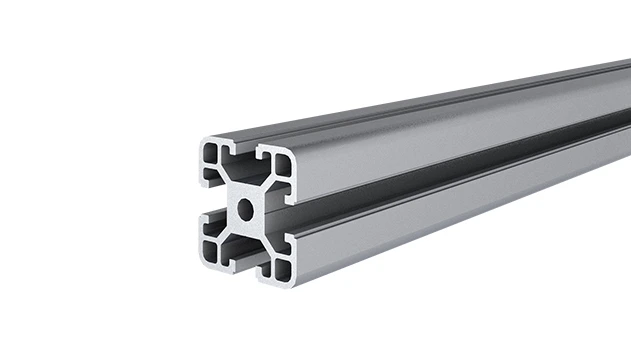
Introduction: The Backbone of Modern Industrial Efficiency
Walk into any manufacturing plant, warehouse, or workshop today, and you'll likely spot a familiar sight: sturdy, versatile structures built from aluminum profiles. These unassuming pieces of metal are the unsung heroes of lean systems, workbenches, material racks, and conveyor setups, quietly enabling the smooth flow of operations that keeps industries running. Among these, the 4040C EU Standard Aluminum Profile stands out as a workhorse—renowned for its precision, durability, and adaptability. But have you ever wondered how this essential component goes from raw ore to the finished product that assembles into everything from assembly lines to storage solutions?
In this article, we'll take a deep dive into the journey of the 4040C aluminum profile, exploring each step of its manufacturing process with the care and detail it deserves. From the extraction of bauxite to the final touches of surface treatment, we'll uncover the craftsmanship, technology, and attention to detail that make this profile a cornerstone of modern industrial design. Along the way, we'll also touch on how its design integrates seamlessly with aluminum profile accessories, ensuring that when you need to build a workbench, a rack, or a custom workstation, the 4040C is ready to perform.
Step 1: Raw Material Preparation – The Foundation of Quality
Every great product starts with great materials, and the 4040C aluminum profile is no exception. The journey begins with bauxite, a reddish-brown ore rich in aluminum oxide. Mined primarily in countries like Australia, Guinea, and China, bauxite undergoes a refining process called the Bayer process to extract pure aluminum oxide, or alumina. This white powder is then smelted in a Hall-Héroult cell, where electrolysis separates the aluminum from oxygen, resulting in molten aluminum metal. But pure aluminum is too soft for industrial use, so it's time to create an alloy.
For the 4040C profile, which needs to balance strength, lightweight, and machinability, specific alloying elements are added. Typically, this includes silicon (to improve fluidity during casting) and magnesium (to enhance strength through heat treatment). The exact proportions are tightly controlled to meet EU standards, ensuring consistency batch after batch. Once the alloy is formulated, it's cast into cylindrical billets—typically 6 to 12 meters long and 150 to 200 mm in diameter. These billets are the "starting blocks" for extrusion, and their quality is non-negotiable: even tiny impurities can lead to defects in the final profile.
Before extrusion, the billets undergo a homogenization process, where they're heated to around 500°C for several hours. This step ensures the alloying elements are evenly distributed throughout the metal, preventing weak spots and ensuring uniform properties in the finished product. Think of it like stirring a cake batter thoroughly—you wouldn't want a clump of flour ruining the texture, and neither do aluminum manufacturers want uneven alloy distribution ruining their profiles.

Step 2: Extrusion – Shaping the Profile
If raw material preparation is the foundation, extrusion is the heart of the 4040C manufacturing process. Extrusion is like squeezing toothpaste from a tube—except on an industrial scale, with tons of pressure and precision engineering. Here's how it works: a heated billet is loaded into a hydraulic extrusion press, where a ram pushes it through a custom die. The die, made from high-strength steel, has a cross-sectional opening that matches the desired shape of the 4040C profile—specifically, a 40mm x 40mm square with T-slots along its length, designed to accept aluminum profile accessories like bolts, brackets, and end caps.
The billet is preheated to around 480°C (for 6063 alloy, commonly used in profiles like 4040C) to make it malleable but not molten. As the ram applies pressure—often exceeding 10,000 tons—the billet (deforms) and flows through the die, emerging as a long, continuous profile with the exact cross-section of the die. The speed of extrusion is carefully controlled: too fast, and the profile may develop surface cracks; too slow, and production efficiency drops. Skilled operators monitor the process, adjusting temperature and pressure in real time to ensure a smooth, consistent flow.
The die itself is a masterpiece of engineering. For the 4040C, the die must not only shape the 40x40mm square but also precisely form the T-slots—those grooves along the profile's edges that make it so versatile. These slots allow for quick, tool-free assembly with aluminum profile accessories, a key feature for lean system setups where flexibility and speed are critical. A poorly designed die can result in slots that are too shallow, too narrow, or misaligned, making it impossible to attach accessories securely. That's why die-making is a specialized craft, with experienced toolmakers spending weeks designing and machining each die to EU standards.
Step 3: Cooling and Stretching – Straightening Out the Kinks
As the extruded profile exits the die, it's still hot—around 500°C—and soft. If left to cool naturally, it would warp or bend, ruining its straightness and dimensional accuracy. To prevent this, the profile is immediately guided into a cooling table, where fans or water sprays rapidly lower its temperature. This quenching process locks in the alloy's microstructure, preparing it for the next step: stretching.
Even with careful cooling, extruded profiles often have slight bends or twists. Stretching corrects these imperfections and relieves internal stresses. The profile is clamped at both ends in a stretcher machine, which pulls it with a controlled force—typically 1-3% of its length. This not only straightens the profile but also aligns the metal's grain structure, improving its mechanical properties like tensile strength and fatigue resistance. For the 4040C, which is often used in load-bearing applications (think workbenches supporting heavy equipment or racks holding inventory), this step is critical to ensuring it can handle the demands of daily use.
After stretching, the profile is cut to standard lengths—usually 6 meters, though custom lengths are available. At this point, it's starting to look like the familiar 4040C we know, but it's not quite ready for prime time. The next step will take its strength to the next level.
Step 4: Aging (Heat Treatment) – Unlocking Strength
Aluminum alloys like 6063 (used in 4040C) derive their strength from a process called precipitation hardening, or aging. After extrusion and quenching, the alloy is in a "supersaturated" state—alloying elements like magnesium and silicon are dissolved in the aluminum but not yet formed into strengthening particles. Aging allows these particles to precipitate out, creating a microstructure that resists deformation.
The 4040C profiles are loaded into an aging oven, where they're heated to around 175°C for 6-8 hours. This controlled heat triggers the formation of fine Mg2Si (magnesium silicide) particles, which act as "pinning points" in the aluminum matrix, preventing dislocations (atomic-level defects) from moving. The result? A significant increase in strength and hardness. For example, untreated 6063 alloy has a tensile strength of around 80 MPa, but after aging (T6 temper), it jumps to 215 MPa—more than double! This transformation is what makes the 4040C strong enough to support heavy loads without bending, even in demanding industrial environments.
Aging is a delicate balance, though. Too little time in the oven, and the particles don't form properly; too much, and they grow too large, reducing strength. Quality control technicians regularly test samples to ensure the aging process meets EU standards, verifying hardness with a Brinell or Rockwell tester. Only profiles that pass these tests move on to the next stage.
Step 5: Surface Treatment – Protection and Aesthetics
Now that the 4040C has the right shape and strength, it's time to give it a protective—and often decorative—finish. Aluminum naturally forms a thin oxide layer when exposed to air, which offers some corrosion resistance, but for industrial use, additional treatment is needed. The most common methods are anodizing, powder coating, and electrophoresis, each with its own benefits.
Anodizing: The Gold Standard for Durability
Anodizing is a popular choice for 4040C profiles, especially in applications where corrosion resistance and wear resistance are important. The process involves immersing the profile in an electrolytic bath (usually sulfuric acid) and passing an electric current through it. This causes the aluminum surface to oxidize, forming a thick, porous layer of aluminum oxide (Al2O3). The thickness of this layer can be controlled—typically 5-20 microns for industrial profiles. After anodizing, the profile is often sealed (with hot water or nickel acetate) to close the pores, enhancing corrosion resistance.
Anodized surfaces have a matte, metallic finish that's both attractive and functional. They're resistant to scratches, fingerprints, and chemical exposure, making them ideal for workbenches and material racks in factories where spills or abrasion are common. Plus, anodizing can be dyed in various colors (though clear and silver are most common for industrial use), allowing manufacturers to match corporate branding or color-code work zones.
Powder Coating: Color and Customization
For profiles where color is a priority, powder coating is the go-to option. Powder coating involves electrostatically applying a dry powder (usually polyester) to the profile, then curing it in an oven at 180-200°C. The heat melts the powder, forming a hard, durable film. Unlike paint, powder coating has no solvents, making it environmentally friendly, and it provides excellent coverage, even on complex shapes like the T-slots of the 4040C.
Powder-coated 4040C profiles are available in a wide range of colors, from standard blacks and grays to vibrant reds and blues. This is particularly useful for lean systems, where color-coding can help organize workflows (e.g., red for hazardous materials, blue for tools). The finish is also resistant to chipping and fading, ensuring the profile looks good for years, even in high-traffic areas.
Step 6: Cutting and Machining – Precision for Assembly
After surface treatment, the 4040C profiles are cut to their final lengths. While some customers order standard 6-meter lengths, many require custom sizes for specific projects—say, a 1.2-meter section for a workbench or a 2.5-meter piece for a material rack. To achieve this, manufacturers use high-precision saws, such as circular saws with carbide blades or friction saws, which cut through aluminum quickly and cleanly.
But cutting is just the start. For the profile to truly integrate with aluminum profile accessories, additional machining may be needed. This includes drilling holes for bolts, tapping threads in T-slots, or milling notches for brackets. CNC (Computer Numerical Control) machines are often used here, ensuring accuracy within ±0.1mm—critical for applications where components must align perfectly, like conveyor systems or modular workstations.
One of the key advantages of the 4040C's T-slot design is that it minimizes the need for complex machining. Many aluminum profile accessories, such as 4040 aluminum profile end caps or brackets, can slide into the T-slots and be secured with a simple knob or bolt, eliminating the need for drilling. This "tool-less" assembly is a boon for lean systems, where quick reconfiguration is essential to adapting to changing production needs.
Step 7: Quality Control – Ensuring EU Standards
At every stage of manufacturing, quality control is paramount—especially for a product like the 4040C, which must meet strict EU standards for dimensions, strength, and safety. Let's break down the key checks that ensure each profile is up to the mark:
- Dimensional Accuracy: Using calipers, micrometers, and coordinate measuring machines (CMMs), inspectors verify that the profile's width, height, and T-slot dimensions are within EU tolerances (typically ±0.2mm for 40x40mm). Even a slight deviation could make it impossible to fit aluminum profile accessories.
- Mechanical Testing: Samples from each batch are tested for tensile strength, yield strength, and elongation. For T6-tempered 4040C, the tensile strength should be at least 215 MPa, with a yield strength of 180 MPa—numbers that ensure it can support heavy loads without deforming.
- Surface Inspection: Anodized or powder-coated surfaces are checked for defects like pinholes, scratches, or uneven color. A simple "tape test" may be used to ensure the coating adheres properly—if the tape pulls off coating, the profile is rejected.
- Straightness and Flatness: Profiles are placed on a precision straight edge to check for bowing or twisting. The maximum allowable deviation is usually 1mm per meter, ensuring they'll assemble into straight, stable structures.
Only profiles that pass all these tests move on to the final step: finishing and packaging. Any profile that fails is either recycled (aluminum is 100% recyclable) or reworked, ensuring minimal waste and maximum quality.
Step 8: Finishing Touches – Accessories and Packaging
The final step in the 4040C's journey is adding the little details that make it ready for use. This includes attaching aluminum profile accessories like end caps, which cover the exposed ends of the profile to prevent injury (no more sharp edges!) and keep out dust and debris. The 4040 aluminum profile end cap, for example, is a simple plastic or metal cap that snaps or screws into the end of the profile, providing a clean, professional look.
Another common accessory is the aluminum profile rubber strip, which fits into the T-slots to seal out moisture or reduce noise. These strips are especially useful in workbenches or racks where small parts might fall into the slots, or in conveyor systems where vibration could cause rattling. Like the end caps, rubber strips are designed to be easily installed, requiring no tools—just a quick push into the slot.
Once the profiles are inspected and accessorized (if needed), they're packaged for shipping. To prevent scratches during transport, profiles are often wrapped in protective film or separated by cardboard dividers. They're then bundled into packs of 10-20 pieces and loaded onto pallets, ready to be shipped to manufacturers, distributors, or end-users around the world. For many customers, these pallets of 4040C profiles are the building blocks of their own products—workbenches, lean system workstations, material racks, and more—completing the circle from raw material to industrial solution.
The Role of 4040C in Lean Systems: More Than Just a Profile
As we've traced the 4040C's manufacturing journey, it's clear that this profile is more than just a piece of aluminum—it's a testament to precision engineering and industrial ingenuity. But its true value shines when it's integrated into lean systems, where efficiency, flexibility, and waste reduction are paramount. Lean systems rely on tools and structures that can adapt quickly to changing needs, and the 4040C delivers on all fronts.
Thanks to its T-slot design and compatibility with aluminum profile accessories, the 4040C allows manufacturers to build and reconfigure workstations, material racks, and conveyor lines in hours, not days. Need to add a shelf to a workbench? Slide a bracket into the T-slot and secure it with a knob. Want to extend a conveyor? Connect two profiles with a joint and add a roller track. This flexibility reduces downtime and allows teams to continuously improve their processes—core principles of lean management.
Moreover, the 4040C's lightweight yet strong construction reduces the need for heavy, fixed structures, making it easier to rearrange workflows or move equipment as production demands change. Its durability ensures that these structures last for years, providing a solid return on investment. In short, the 4040C isn't just a component of lean systems—it's a enabler of lean thinking.
Conclusion: Craftsmanship in Every Profile
From the bauxite mine to the factory floor, the journey of the 4040C EU Standard Aluminum Profile is a story of precision, expertise, and commitment to quality. Each step—from alloy formulation to extrusion, aging to surface treatment—is carefully executed to ensure the profile meets the rigorous demands of modern industry. And when you consider how it integrates with aluminum profile accessories like end caps and rubber strips, it's easy to see why the 4040C has become a staple in workshops, factories, and warehouses worldwide.
The next time you walk past a workbench, a material rack, or a conveyor line, take a closer look at the aluminum profiles holding it all together. Chances are, it's a 4040C—and now you'll know the journey it took to get there: a journey of science, skill, and a dedication to building the tools that build our world.
Key Steps in 4040C Manufacturing: A Summary Table
| Step | Objective | Key Detail |
|---|---|---|
| Raw Material Preparation | Create high-quality alloy billets | Alloying with silicon and magnesium; homogenization to ensure uniform structure |
| Extrusion | Shape the profile using a die | Hydraulic press with 10,000+ tons of pressure; T-slot die design for accessory compatibility |
| Cooling & Stretching | Straighten and relieve stress | Quenching to lock microstructure; stretching by 1-3% to correct bends |
| Aging | Enhance strength via heat treatment | T6 tempering (175°C for 6-8 hours) to form Mg2Si strengthening particles |
| Surface Treatment | Protect and decorate the profile | Anodizing (corrosion resistance) or powder coating (color options) |
| Cutting & Machining | Prepare for assembly | Precision cutting to length; CNC machining for holes/slots to fit accessories |
| Quality Control | Ensure EU standards compliance | Dimensional checks, mechanical testing, surface inspection |
| Finishing & Packaging | Ready for use | Add end caps, rubber strips; protective packaging for shipping |