- Company Articles
- Products and Technology
- Product knowledge
- 4040C EU Standard Aluminum Profile Thermal Conductivity: Benefits in Heat-Dissipating Applications

4040C EU Standard Aluminum Profile Thermal Conductivity: Benefits in Heat-Dissipating Applications
Related Product
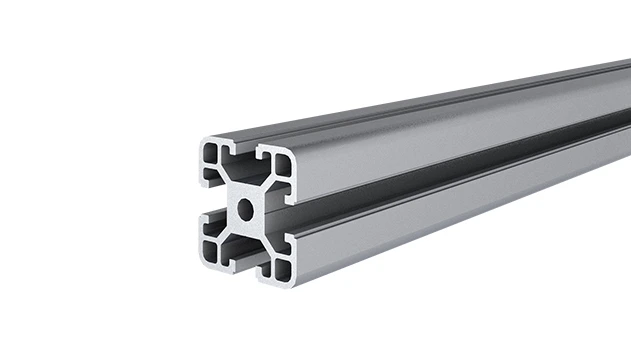
4040C EU Standard Aluminum Profile
4040C is a 4.00x4.00 CM fractional 40 series square extrusion T-slot profile with four open T-slots, each side with 4.00cm face. The profile has align-a-grooves to assist in aligning connecting profiles.
The Hidden Cost of Heat in Industrial Settings
Walk into any manufacturing plant, electronics workshop, or automotive facility, and you'll likely hear the hum of machinery, the clink of tools, and the steady rhythm of production. What you might not notice—at first—is the silent enemy lurking in the air: heat. It's a byproduct of nearly every industrial process, from the friction of moving parts to the energy released by soldering irons, LED arrays, and electric motors. Over time, unchecked heat doesn't just make workspaces uncomfortable; it erodes efficiency, shortens equipment lifespans, and even compromises product quality.
Consider this: A small electronics assembly line where workers solder components onto circuit boards. The soldering iron generates intense localized heat, and if the workbench surface isn't designed to dissipate that heat, it can transfer to the circuit board below, damaging sensitive components or warping the board itself. Multiply that by dozens of workstations, and suddenly, what seems like a minor issue becomes a major source of wasted materials and rework. Or think about an LED manufacturing facility, where high-power LEDs emit significant heat during testing. Without proper thermal management, those LEDs might fail prematurely, turning a promising batch into a costly loss.
For years, industries have relied on band-aid solutions: fans that push hot air around instead of removing it, bulky heat sinks that add weight and complexity, or plastic work surfaces that insulate heat rather than disperse it. But what if there was a better way? What if the very structure supporting your equipment could actively work to keep temperatures in check? That's where the 4040C EU Standard Aluminum Extrusion Profile comes in—a material designed not just for strength and versatility, but for something equally critical: thermal conductivity.
What is 4040C EU Standard Aluminum Extrusion Profile?
Before diving into its thermal superpowers, let's get to know the 4040C itself. At its core, it's an aluminum extrusion profile—a product of the extrusion process, where heated aluminum alloy is forced through a die to create a specific cross-sectional shape. This method allows for precise, consistent dimensions and complex designs, making aluminum extrusion profiles a staple in industries ranging from aerospace to furniture manufacturing.
The "4040C" designation tells us two key things: its size and its compliance with EU standards. The numbers "4040" refer to the profile's cross-section, typically 40mm by 40mm—a versatile size that balances strength with adaptability. The "C" indicates it meets strict European union standards for material quality, dimensional accuracy, and performance. For manufacturers, this compliance isn't just a stamp of approval; it's a guarantee of reliability. When you specify 4040C, you know you're getting a profile that's been tested for uniformity, corrosion resistance, and structural integrity—no surprises, no inconsistencies.
But what truly sets the 4040C apart is its composition. Made from high-grade aluminum alloys (often 6063 or similar), it's engineered to offer an ideal blend of strength, lightweight design, and—crucially—thermal conductivity. Unlike plastic profiles, which trap heat, or steel, which conducts heat slowly and adds unnecessary weight, 4040C aluminum is a natural heat conductor. Its extrusion design, often featuring T-slots along its length, adds another layer of utility: those slots allow for easy attachment of accessories, from brackets and shelves to cooling fans and heat sinks, turning the profile into a customizable thermal management system.
Think of it as more than just a "beam" or a "frame." The 4040C is a foundation—a material that works with your process, not against it. Whether you're building a workbench, a machine guard, or a component rack, it brings thermal efficiency to the table (literally, in the case of workbenches) without sacrificing the structural support you need.

The Science Behind Thermal Conductivity in 4040C Aluminum
Thermal conductivity is the measure of a material's ability to transfer heat. It's measured in watts per meter-kelvin (W/m·K), and the higher the number, the better the material is at moving heat from one point to another. For industrial applications, this isn't just a technical specification—it's the difference between a workstation that stays cool and one that becomes a heat trap.
Aluminum has long been prized for its thermal conductivity, and for good reason. Pure aluminum boasts a conductivity of around 237 W/m·K, which is significantly higher than steel (approximately 45 W/m·K) or plastic (as low as 0.2 W/m·K). But the 4040C isn't pure aluminum—it's an alloy, and that's where the magic happens. Alloys like 6063, commonly used in extrusion profiles, are formulated to enhance specific properties: strength, weldability, and yes, thermal conductivity. The 4040C typically has a thermal conductivity of around 201 W/m·K—a slight reduction from pure aluminum, but more than enough to outperform most other structural materials while maintaining the alloy's mechanical benefits.
To put that in perspective, let's compare 4040C to other common materials used in industrial settings:
| Material | Thermal Conductivity (W/m·K) | Weight (kg/m for 40x40mm profile) | Key Limitation for Heat Dissipation |
|---|---|---|---|
| 4040C EU Standard Aluminum Extrusion Profile | ~201 | 2.2-2.5 | None (optimal balance of conductivity, weight, and strength) |
| Mild Steel | ~45 | 10.0-12.0 | Low conductivity; heavy, making it hard to integrate into dynamic systems |
| Plastic (PVC) | ~0.2 | 1.0-1.5 | Insulates heat; traps rather than dissipates |
| Copper | ~401 | 15.0-18.0 | Extremely high conductivity but very heavy and expensive |
As the table shows, 4040C aluminum strikes a rare balance: it conducts heat nearly five times better than steel, weighs a fraction of both steel and copper, and avoids the heat-trapping pitfalls of plastic. Copper, while more conductive, is prohibitively heavy and costly for large-scale structural use—imagine building a workbench out of copper; it would be sturdy, but you'd need a forklift to move it! Steel, on the other hand, is strong but acts like a thermal bottleneck, slowing heat transfer to the point where it's ineffective for active cooling.
Another factor working in 4040C's favor is its extrusion design. The process of extrusion creates a uniform, dense structure with few voids or impurities, which are enemies of thermal conductivity. Impurities act like roadblocks, slowing the flow of heat through the material. By contrast, the 4040C's consistent, high-quality alloy and extrusion process ensure heat moves freely from hot spots to cooler areas, where it can be dissipated into the surrounding air or transferred to additional cooling elements like fans or heat sinks.
Key Benefits of 4040C in Heat-Dissipating Applications
So, what does all this science mean for your operations? Let's break down the real-world benefits of 4040C's thermal conductivity, starting with the most obvious: efficient heat transfer.
1. Efficient Heat Transfer: From Hot Spots to Cool Solutions
At its simplest, 4040C acts like a thermal highway. When heat is generated—whether from a soldering iron on a workbench, a motor in an automation system, or a battery in an electric vehicle—it travels along the aluminum profile away from the source. This prevents heat buildup in critical areas, protecting sensitive components and maintaining stable operating temperatures.
Take the example of a workbench in an electronics manufacturing facility. If the workbench frame is built with 4040C aluminum, the heat from the soldering iron doesn't just sit on the surface; it's drawn into the aluminum structure, which then dissipates it across a larger area. The result? Cooler work surfaces, fewer heat-related component failures, and happier workers who aren't struggling with hot surfaces.
2. Structural Integrity at High Temperatures
Heat isn't just a problem for the equipment it touches—it can also weaken the structures supporting that equipment. Plastic profiles, for instance, can warp or melt when exposed to sustained heat, while some low-grade metals may lose tensile strength. 4040C aluminum, however, maintains its structural integrity even at elevated temperatures. Its alloy composition and EU-standard manufacturing ensure it can withstand the heat without deforming, cracking, or losing load-bearing capacity.
Consider a battery testing rig in an automotive plant, where lithium-ion batteries are cycled to test performance. These batteries generate significant heat during discharge, and the rig's frame must not only support the weight of the batteries but also endure the heat they emit. A 4040C frame would stand up to both, ensuring the rig remains stable and safe over thousands of test cycles.
3. Compatibility with Aluminum Profile Accessories: A System, Not Just a Material
One of the 4040C's greatest strengths is its versatility, thanks in large part to its T-slot design. Those slots aren't just for attaching shelves or brackets—they're for building a complete thermal management system. Aluminum profile accessories like heat sinks, cooling fan mounts, and thermal pads can be easily secured into the T-slots, turning the profile into a customized heat-dissipation tool.
Imagine a server rack in a data center, where heat is the arch-nemesis of performance. By using 4040C for the rack frame, you can attach heat sinks directly to the aluminum uprights, which then draw heat away from the servers and into the frame. Add a few fans mounted via T-slot brackets, and suddenly, the rack itself becomes an active cooling system, reducing the need for energy-hungry room-wide air conditioning.
4. Lightweight Design: Less Stress, More Flexibility
Thermal conductivity is important, but so is practicality. A material that conducts heat well but weighs a ton isn't useful if it's too heavy to install or reconfigure. 4040C aluminum solves this by being significantly lighter than steel—about one-third the weight for the same strength. This makes it easy to transport, assemble, and modify, whether you're building a workbench that needs to be moved periodically or an automation system that requires frequent retooling.
For example, a food packaging plant that reconfigures its production line seasonally to accommodate different product sizes. A 4040C-based conveyor system can be disassembled, moved, and reassembled with minimal effort, whereas a steel system would require heavy machinery and extra labor. And because the aluminum doesn't add unnecessary weight, the conveyor motors don't have to work as hard, reducing energy consumption and wear and tear.
5. Corrosion Resistance: Longevity in Harsh Environments
Many heat-dissipating applications involve exposure to moisture, chemicals, or humidity—think of a pharmaceutical manufacturing cleanroom, where equipment is regularly sanitized, or a marine electronics workshop near the coast. Aluminum naturally forms a protective oxide layer that resists corrosion, and 4040C, with its EU-standard alloy, takes this a step further. Unlike steel, which rusts and degrades over time, 4040C maintains its thermal and structural properties even in harsh environments, ensuring your investment lasts for years.
Real-World Applications: Where 4040C Shines
To truly appreciate the 4040C's impact, let's look at how it's transforming specific industries. These aren't hypothetical scenarios—they're real-world use cases where thermal conductivity isn't just a nice-to-have, but a critical requirement.
Electronics Manufacturing Workbenches
Electronics assembly is a precision job, and heat is one of the biggest threats to precision. Whether workers are soldering components, testing circuit boards, or handling sensitive semiconductors, maintaining stable temperatures is key. A workbench built with 4040C aluminum profiles addresses this in two ways: first, by dissipating heat from soldering tools and hot components, and second, by providing a stable, cool surface for assembly.
Consider a smartphone repair shop, where technicians often work on delicate motherboards. The repair process involves using heat guns to remove and replace chips, and if the workbench surface conducts that heat away, it reduces the risk of damaging nearby components. With 4040C, the bench frame acts as a heat sink, keeping the work area cool and the technician's hands comfortable. Plus, the T-slots allow for easy attachment of tools, magnifying lamps, or anti-static mats—all without compromising thermal performance.
LED Lighting Fixture Testing Rigs
LEDs are energy-efficient, but they generate a surprising amount of heat—especially high-power LEDs used in industrial lighting, automotive headlights, or stadium floodlights. Excess heat can reduce an LED's lifespan by up to 50%, which is why manufacturers test their products under thermal stress before shipping. A testing rig built with 4040C aluminum ensures that heat from the LEDs is quickly drawn away, allowing for accurate, repeatable testing without skewed results due to heat buildup.
For example, a company producing LED streetlights might use 4040C profiles to build test racks where dozens of LEDs are lit simultaneously. The aluminum frame dissipates the heat from each LED, preventing the rack itself from becoming a heat source that affects neighboring tests. This not only improves the accuracy of the testing process but also extends the life of the test equipment itself.
Electric Vehicle Battery Cooling Systems
The rise of electric vehicles (EVs) has brought thermal management to the forefront of automotive engineering. EV batteries generate heat during charging and discharging, and if that heat isn't managed, it can lead to reduced range, battery degradation, or even safety risks. 4040C aluminum profiles are increasingly being used in battery cooling systems, where they act as both structural supports and thermal bridges.
Some EV manufacturers use 4040C to build the battery tray frame, integrating cooling channels directly into the aluminum structure. As the battery heats up, the aluminum draws the heat away and distributes it to cooling plates or liquid channels, maintaining the battery at its optimal operating temperature. This not only improves battery performance but also enhances safety—a critical factor in an industry where consumer trust is paramount.
Industrial Automation Enclosures
Industrial robots, CNC machines, and automated conveyor systems rely on motors, controllers, and sensors that generate heat during operation. If these components are housed in enclosures made of plastic or low-conductivity materials, the heat can build up, causing the components to overheat and fail. 4040C aluminum enclosures solve this by acting as passive heat sinks, drawing heat away from the components and releasing it into the surrounding air.
A good example is a robotic arm controller enclosure in a car manufacturing plant. The controller processes thousands of signals per second, generating significant heat. An enclosure built with 4040C profiles would dissipate that heat, keeping the controller cool and reliable. And because aluminum is lightweight, the enclosure can be mounted directly on the robot arm without adding excessive weight, ensuring the arm moves freely and accurately.
Maximizing Performance with Aluminum Profile Accessories
The 4040C is a star on its own, but its thermal performance can be supercharged with the right aluminum profile accessories. These accessories aren't just add-ons—they're designed to work with the profile's T-slots and thermal properties, creating a seamless thermal management system. Let's explore a few key accessories that can take your heat-dissipating setup to the next level.
Heat Sinks and Cooling Fins
Heat sinks are designed to increase the surface area of a material, allowing it to dissipate more heat into the air. When mounted to a 4040C profile via T-slot brackets, they act as extensions of the aluminum, drawing heat from the profile and releasing it through their fins. For high-heat applications—like a server rack or a motor controller—adding heat sinks can significantly boost cooling efficiency without adding much weight.
Thermal Pads and Interface Materials
Even the best thermal conductor can't transfer heat efficiently if there are gaps between the heat source and the profile. Thermal pads—soft, conductive materials that conform to irregular surfaces—fill those gaps, ensuring maximum contact between the heat source (like a battery or motor) and the 4040C profile. These pads are easy to cut to size and attach via adhesive, making them a simple but effective upgrade for any thermal management setup.
Cooling Fan Mounts
For applications where passive cooling (via the profile alone) isn't enough, active cooling can help. Cooling fan mounts attach directly to the 4040C's T-slots, directing airflow over the profile and heat sinks to heat dissipation. This is especially useful in enclosed spaces, like electronic enclosures, where natural air flow is limited. The best part? Because the fans are mounted to the aluminum profile, they can be positioned exactly where the heat is most concentrated.
Thermally Conductive Workbench Tops
For workbench applications, pairing a 4040C frame with a thermally conductive worktop (like aluminum or copper-clad surface) creates a complete cooling solution. The worktop transfers heat to the frame, which then dissipates it, keeping the entire workspace cool. Some manufacturers even offer workbench tops with built-in channels that align with the 4040C's T-slots, allowing for integrated cooling accessories like heat sinks or fans.
The beauty of these accessories is their flexibility. Whether you need a simple heat sink for a small workbench or a complex system of fans and thermal pads for a battery testing rig, 4040C's T-slot design makes it easy to mix and match accessories to meet your specific needs. And because these accessories are designed to work with EU-standard profiles like 4040C, you can be confident they'll fit perfectly and perform reliably.
Why 4040C Stands Out Among Aluminum Profiles
Aluminum extrusion profiles come in all shapes and sizes, so what makes the 4040C special? It's not just about thermal conductivity—though that's a big part of it. It's about the complete package: compliance, consistency, and versatility that set it apart from other profiles, even other 4040-series options like 4040A or 4040B.
EU Standard Compliance: Quality You Can Trust
The "EU Standard" label isn't just a marketing buzzword—it's a rigorous certification process that ensures the profile meets strict criteria for material purity, dimensional accuracy, and mechanical properties. For manufacturers, this means every 4040C profile you receive will be consistent in quality, whether you order 10 pieces or 10,000. This consistency is critical for thermal applications, where even small variations in material composition can affect conductivity. With 4040C, you don't have to worry about "dud" profiles that underperform—each one is built to the same high standard.
Optimized Alloy for Thermal and Structural Performance
Not all aluminum alloys are created equal. The 4040C uses a specific alloy (often 6063 or 6082) that's optimized for both thermal conductivity and structural strength. Some profiles prioritize strength over conductivity, using alloys with higher copper content that are stronger but less conductive. Others prioritize cost, using lower-grade alloys that may corrode or warp over time. 4040C strikes the perfect balance, ensuring you get both the heat-dissipating power and the structural support you need.
Design Flexibility: T-Slots for Customization
While many aluminum profiles feature T-slots, the 4040C's slot design is often more refined, with precise dimensions that ensure compatibility with a wide range of accessories. This means you're not limited to a single brand or type of accessory—you can mix and match from different suppliers, creating a custom solution that fits your budget and needs. Whether you need to attach a heat sink today and a fan tomorrow, the T-slots make it easy, no drilling or welding required.
Sustainability: Recyclable and Energy-Efficient
In an era where sustainability matters more than ever, 4040C offers an eco-friendly advantage. Aluminum is 100% recyclable, and recycling it requires just 5% of the energy needed to produce new aluminum. This makes 4040C a sustainable choice for companies looking to reduce their carbon footprint. Additionally, its thermal conductivity can help lower energy costs by reducing the need for active cooling systems like fans or air conditioners—another win for both your budget and the planet.
Conclusion: Investing in Thermal Efficiency with 4040C
Heat is more than just an inconvenience in industrial settings—it's a silent drain on productivity, equipment life, and profitability. For too long, industries have accepted this as a fact of life, relying on temporary fixes that mask the problem rather than solve it. The 4040C EU Standard Aluminum Extrusion Profile changes that narrative by turning your structural components into active thermal management tools.
With its high thermal conductivity, lightweight design, EU-standard quality, and compatibility with aluminum profile accessories, 4040C offers a holistic solution to heat-related challenges. Whether you're building a workbench in an electronics shop, a battery testing rig in an automotive plant, or an enclosure for industrial automation equipment, 4040C doesn't just support your process—it enhances it, keeping temperatures in check and efficiency high.
Investing in 4040C isn't just about buying a better profile; it's about investing in reliability, sustainability, and peace of mind. It's about knowing that the structures supporting your equipment are working as hard as your team to keep operations running smoothly. It's about reducing waste, minimizing downtime, and building a foundation for growth.
So, the next time you're designing a workspace, a manufacturing line, or a piece of equipment, ask yourself: Is my current material part of the problem, or part of the solution? If heat is holding you back, it might be time to make the switch to 4040C. Your equipment, your team, and your bottom line will thank you.