- Company Articles
- Products and Technology
- Product knowledge
- 4040C EU Standard Aluminum Profile vs. Plastic Extrusions: Strength & Durability Showdown

4040C EU Standard Aluminum Profile vs. Plastic Extrusions: Strength & Durability Showdown
Related Product
4040C EU Standard Aluminum Profile
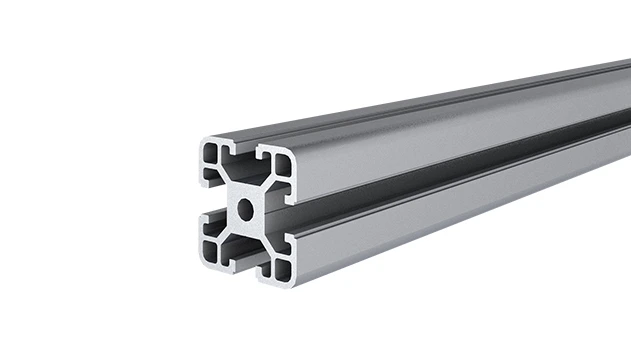
4040C is a 4.00x4.00 CM fractional 40 series square extrusion T-slot profile with four open T-slots, each side with 4.00cm face. The profile has align-a-grooves to assist in aligning connecting profiles.
Which material truly delivers when your operations can't afford compromise?
Walk into any manufacturing plant, warehouse, or workshop, and you'll notice something critical but often overlooked: the structures holding everything together. From the workbench where assemblers piece together electronics to the flow racks ferrying components across the floor, the materials behind these setups shape efficiency, safety, and bottom lines. Two contenders dominate this space: the 4040C EU standard aluminum profile and plastic extrusions. Both promise versatility, but when the pressure's on—when deadlines loom, heavy loads stack up, and daily wear takes its toll—only one can truly claim to be the workhorse.
This isn't just a battle of metals vs. plastics. It's about reliability when a production line can't stop, durability when corrosive chemicals splash, and strength when a workbench holds a 500-pound machine. Let's dive into the details: what these materials are made of, how they perform under stress, and which one deserves a spot at the heart of your operations.
First Things First: What Are We Actually Comparing?
Before we pit them against each other, let's get clear on the contenders. It's easy to say "aluminum" and "plastic" and leave it at that, but the devil (and the value) is in the specifics.
Meet the 4040C EU Standard Aluminum Profile
If aluminum extrusions were a superhero, the 4040C would be the one with a utility belt. Part of the EU standard series, its name gives away the basics: 40mm by 40mm in cross-section, with a "C" designation that refers to its specific groove design—those T-slots running along its length that make it a modular dream. This isn't just a hunk of metal; it's the result of precision aluminum extrusion profile engineering. Molten aluminum is forced through a die, cooled, and cut to length, creating a lightweight yet rigid structure that's ready to be customized with aluminum profile accessories like brackets, end caps, and connectors.
You'll find 4040C profiles holding up assembly lines, forming the frames of heavy-duty workbenches, and even building material racks that need to withstand daily bumps from forklifts. Its appeal? It's strong enough to carry weight but light enough to reconfigure when your workflow changes. And those T-slots? They turn a static structure into something adaptable—no welding required, just a few bolts and creativity.
Plastic Extrusions: The Lightweight Contender
Plastic extrusions, on the other hand, are the chameleons of the material world. Made from polymers like PVC, ABS, or polypropylene, they're created using a similar extrusion process—melted plastic pushed through a die—but with a focus on flexibility and cost. You've probably seen them in everyday items: the trim on your car door, the guides on a sliding drawer, or even the plastic roller track guide rail that helps boxes glide smoothly on a shelf.
Plastic extrusions shine in applications where weight is a priority, or where corrosion from water or chemicals is a concern. They're also cheap to produce in bulk, making them a go-to for budget-conscious projects. But here's the catch: not all plastics are created equal. A thin PVC guide rail might work for lightweight packages, but when you start talking about supporting tooling or machinery, the question becomes: Can plastic really keep up?
Strength: When the Going Gets Heavy
Let's cut to the chase: strength matters. A workbench that sags under a drill press, or a material rack that bends when loaded with parts, isn't just an annoyance—it's a safety hazard and a productivity killer. So how do our two contenders stack up when the load increases?
Real Talk: "We had a plastic extrusion workbench in our electronics lab," says Maria, a production supervisor at a mid-sized tech firm. "It was great for light assembly, but when we moved to heavier components—think power supplies and metal casings—the top started warping. Within six months, we had to reinforce it with plywood. Not ideal."
Tensile Strength: The Pull Test
Tensile strength measures how much pulling force a material can take before breaking. For aluminum 4040C profiles (typically made from 6063-T5 aluminum), that number sits around 180 MPa (megapascals). To put that in perspective, that's roughly the force needed to lift 18 small cars before the profile snaps. Plastic extrusions? It varies, but even high-strength ABS maxes out around 40 MPa—less than a quarter of aluminum's capacity. PVC? Even lower, around 25 MPa.
Flexural Modulus: Stiffness Under Pressure
Stiffness is just as important as raw strength. Flexural modulus tells us how much a material bends under a load. Aluminum 4040C has a flexural modulus of about 69 GPa (gigapascals). Plastic extrusions? ABS comes in at 2.4 GPa, PVC at 3 GPa. That means under the same weight, plastic will bend nearly 30 times more than aluminum. For a workbench holding tools, or a conveyor rail guiding parts, that bend translates to instability—and instability leads to errors.
Load-Bearing: How Much Can They Actually Hold?
Numbers on a spec sheet are one thing; real-world performance is another. Let's take a common scenario: a 1.2-meter long 4040C aluminum profile used as a shelf bracket, supported at both ends. How much weight can it carry before noticeable deflection (the kind that would make you nervous)? Industry tests show it can handle around 150 kg (330 lbs) with less than 2mm of bending. Swap that out for a plastic extrusion of the same size and material thickness, and that number drops to 30-40 kg (66-88 lbs)—barely enough for a few boxes of parts.
And it's not just static loads. Dynamic loads—like a heavy tool being placed down quickly or a cart rolling over a rail—punish materials even more. Aluminum's rigidity absorbs those shocks; plastic, over time, starts to fatigue, developing micro-cracks that weaken it further.

Durability: Standing Up to Time (and Abuse)
Strength is about the here and now; durability is about the long haul. A material that performs well on day one but falls apart after a year isn't worth the initial savings. Let's break down the factors that test a material's mettle over time.
Corrosion Resistance: Fighting the Elements
Factories aren't always clean, dry places. Oils, chemicals, moisture, and even salt air (in coastal facilities) can eat away at materials. Aluminum has a secret weapon here: its oxide layer. When exposed to air, aluminum forms a thin, invisible layer of aluminum oxide that acts as a barrier, preventing further corrosion. Even if scratched, the layer reforms quickly. That's why you'll see aluminum profiles in food processing plants or auto shops where spills are common.
Plastic extrusions are often hailed as "corrosion-proof," and it's true—they don't rust. But they're not impervious. Oils and solvents can cause plastic to swell or become brittle over time. UV light from windows or overhead lights? It breaks down plastic molecules, leading to discoloration and cracking. Ever seen a plastic garden chair that's faded and cracked after a few summers? Same principle, just in a factory setting.
Wear and Tear: The Daily Grind
Imagine a workbench where tools are dropped, parts are slid across the surface, and cleaners scrub it down nightly. Or a roller track where boxes rub against the edges hundreds of times a day. Aluminum's hardness (around 60 on the Rockwell B scale) means it resists scratches and dents. Plastic? Even "hard" plastics like polycarbonate score around 10-20 on the same scale. Over time, those small scratches add up, creating rough edges that catch on parts or make surfaces uneven.
And then there's friction. Aluminum profiles, especially when paired with metal accessories, have low friction in moving parts. Plastic extrusions? They can wear down quickly when in contact with other materials, leaving behind plastic shavings that gunk up machinery. It's why many plastic roller tracks need frequent lubrication—something aluminum rarely requires.
Temperature Extremes: Hot, Cold, and Everything In Between
Factories can be hot (near furnaces) or cold (freezer storage areas). Aluminum handles temperature swings like a champ, maintaining its strength from -40°C to 120°C (-40°F to 248°F). Plastic? Most start to soften around 60°C (140°F). Leave a plastic extrusion near a heat source, and it'll warp. Freeze it, and it becomes brittle—one good knock, and it cracks. For facilities with temperature variations, plastic's limits become a liability.
Side-by-Side: The Critical Metrics
Sometimes a table says it best. Here's how 4040C aluminum profiles and plastic extrusions compare across the metrics that matter most:
| Metric | 4040C EU Standard Aluminum Profile | High-Strength Plastic Extrusion (ABS) |
|---|---|---|
| Tensile Strength | 180 MPa | 40 MPa |
| Flexural Modulus | 69 GPa | 2.4 GPa |
| Max Load (1.2m span, supported ends) | 150 kg (330 lbs) | 35 kg (77 lbs) |
| Corrosion Resistance | Excellent (oxide layer protection) | Good (but vulnerable to chemicals/UV) |
| Operating Temperature Range | -40°C to 120°C (-40°F to 248°F) | -20°C to 60°C (-4°F to 140°F) |
| Wear Resistance (Rockwell Hardness) | 60 HRB | 15 HRB |
| Expected Lifespan (Industrial Use) | 10-15 years | 2-5 years |
Real-World Stories: When Material Choice Mattered
Specs and tables tell part of the story, but hearing from people who've lived with the consequences? That's where the rubber meets the road (or the profile meets the workbench).
Case Study 1: The Automotive Supplier's Wake-Up Call
A mid-sized automotive parts manufacturer switched to plastic extrusion flow racks to cut costs. Six months later, they noticed parts were jamming more often—the plastic rails had warped under the weight of metal components. Worse, during a summer heatwave, the racks near the factory windows started sagging, leading to a production halt. They replaced the plastic with 4040C aluminum profiles and haven't had an issue in three years. "The initial savings vanished when we had to redo the entire system," says the plant manager. "Aluminum was the smarter long-term bet."
Case Study 2: The Electronics Lab's Workbench Woes
A startup electronics lab opted for a plastic workbench to keep initial costs low. Within a year, the surface had cracked from repeated tool impacts, and the legs wobbled under the weight of testing equipment. They retrofitted the bench with 4040C aluminum legs and a plywood top supported by aluminum cross-braces. "It's like night and day," says the lead engineer. "The bench doesn't move, even when we're soldering or using power tools. We should have invested in aluminum from the start."
These stories aren't outliers. They're the result of underestimating how material choice impacts daily operations. Plastic has its place—lightweight, non-conductive, and cheap for temporary setups. But when your workflow depends on reliability, aluminum's strength and durability become non-negotiable.
The Cost Factor: Short-Term Savings vs. Long-Term Value
Let's address the elephant in the room: aluminum costs more upfront. A 1-meter length of 4040C aluminum profile might run $20-$30, while a similar plastic extrusion could be $5-$10. It's tempting to see that and think, "Why pay more?" But cost per unit isn't the whole picture—you have to factor in lifespan, maintenance, and replacement.
Take a material rack that costs $500 in plastic vs. $1,200 in aluminum. If the plastic rack needs replacement every 2 years and the aluminum one lasts 10 years, the plastic ends up costing $2,500 over a decade—more than double the aluminum investment. Add in downtime from failures, lost parts due to jams, and labor to replace warped components, and aluminum becomes the budget-friendly choice.
Then there's maintenance. Aluminum profiles need occasional cleaning and maybe a coat of paint if aesthetics matter. Plastic extrusions? They might need lubrication (for moving parts), replacement of cracked sections, or even full overhauls if UV exposure takes its toll. Those "small" maintenance costs add up faster than you'd think.
Environmental Impact: Beyond the Factory Floor
Sustainability is no longer a buzzword—it's a business imperative. Here, aluminum pulls ahead again. Aluminum is 100% recyclable, and recycling it uses just 5% of the energy needed to produce new aluminum. Plastic extrusions? Most are made from virgin plastic, and while some can be recycled, the process is energy-intensive, and many end up in landfills where they take centuries to decompose.
Consider this: a 4040C aluminum profile that's retired after 15 years can be melted down and turned into a new profile with minimal environmental impact. A plastic extrusion? It might get a second life as a lower-grade product, but its days of heavy-duty use are likely over. For companies aiming to reduce their carbon footprint, aluminum's recyclability is a major plus.
The Verdict: When to Choose Which?
So, after all this, which material should you choose? It depends on your needs—but the answer is clearer than you might think.
Choose 4040C Aluminum Profile When:
- You need strength and rigidity (e.g., workbenches, material racks, conveyor frames).
- Durability matters more than upfront cost (most industrial applications).
- Your environment has temperature extremes, chemicals, or moisture.
- You want a modular, reconfigurable system (those T-slots are game-changers).
- Sustainability is a priority.
Choose Plastic Extrusions When:
- Weight is critical (e.g., lightweight packaging guides).
- You need non-conductive materials (certain electronics applications).
- The setup is temporary (a pop-up workshop or short-term project).
- Cost is the only factor, and loads are extremely light (think: small parts storage).
For most industrial, manufacturing, and warehouse settings, though, 4040C aluminum profiles are the clear winner. They're not just materials—they're investments in reliability, adaptability, and peace of mind. When your team depends on the structures around them to stay safe and productive, aluminum doesn't just meet the standard; it sets it.
At the end of the day, the choice between 4040C EU standard aluminum profiles and plastic extrusions isn't just about metal vs. plastic. It's about choosing a material that works as hard as your team does—one that doesn't back down when the pressure's on, and that grows with your business. So next time you're planning a workspace upgrade, ask yourself: What's the true cost of cutting corners? For most, the answer will point straight to aluminum.