- Company Articles
- Products and Technology
- Product knowledge
- 4040C EU Standard Aluminum Profile: Why It's the Top Choice for Flexible Production Cells

4040C EU Standard Aluminum Profile: Why It's the Top Choice for Flexible Production Cells
Related Product
4040C EU Standard Aluminum Profile
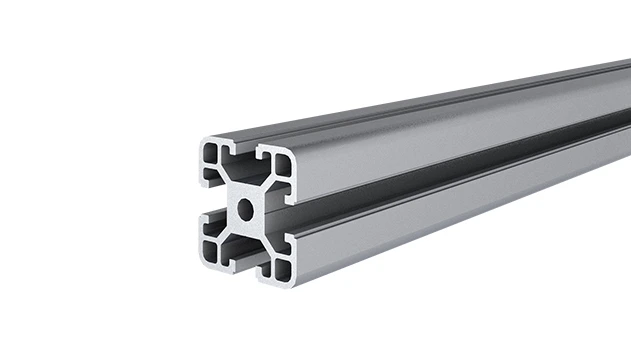
4040C is a 4.00x4.00 CM fractional 40 series square extrusion T-slot profile with four open T-slots, each side with 4.00cm face. The profile has align-a-grooves to assist in aligning connecting profiles.
In today's fast-paced manufacturing world, the ability to adapt is everything. Production lines that once stayed static for years now need to pivot overnight—whether to accommodate a new product design, scale up for seasonal demand, or streamline workflows to cut waste. At the heart of this flexibility lies a quiet hero: the infrastructure that holds it all together. Enter the 4040C EU standard aluminum profile—a humble yet powerful component that's redefining how factories build, modify, and optimize their production cells. Let's dive into why this unassuming piece of metal has become the go-to choice for manufacturers aiming to stay agile, efficient, and future-ready.
The Rise of Flexible Production Cells: Why Infrastructure Matters
Gone are the days of rigid, one-size-fits-all manufacturing setups. Modern factories face pressure from all sides: shorter product lifecycles, customization demands, and the need to reduce downtime between production runs. A "flexible production cell" isn't just a buzzword—it's a survival strategy. These cells are self-contained units where teams assemble, test, or package products, and they need to be as adaptable as the teams operating them. But here's the catch: flexibility doesn't happen by accident. It starts with the tools and structures that form the cell's backbone—workbenches, material racks, conveyors, and guides. If these structures are heavy, hard to modify, or require specialized tools to reconfigure, flexibility becomes just another empty promise.
Traditional materials like steel or wood fall short here. Steel is strong but bulky; reconfiguring a steel workbench might mean welding or drilling, which takes time and skilled labor. Wood, while cheap, lacks durability and can't handle heavy loads or repeated adjustments. What manufacturers needed was a material that balanced strength, lightness, and modularity. That's where aluminum profiles stepped in—and the 4040C EU standard quickly rose to the top of the pack.
Why Aluminum Profiles? The Case for Lightweight, Modular Strength
Aluminum has long been a favorite in manufacturing for its winning combo of properties: it's lightweight (about a third the weight of steel), naturally resistant to corrosion, and infinitely recyclable. But what truly makes aluminum profiles game-changers is their modularity . Unlike solid steel beams or wooden planks, aluminum profiles come with precision-engineered T-slots running along their length. These slots act as built-in connection points, allowing users to attach brackets, panels, wheels, or other components without drilling new holes or welding. It's like building with industrial-grade Legos—strong enough to support heavy machinery, yet flexible enough to take apart and rebuild in hours, not days.
But not all aluminum profiles are created equal. EU standard profiles, in particular, adhere to strict quality and dimensional standards, ensuring compatibility across brands and regions. This interoperability is crucial for manufacturers who might source components from multiple suppliers or expand operations globally. Among these EU standard profiles, the 4040C stands out for a simple reason: it strikes the perfect balance between size, strength, and versatility.

Spotlight on the 4040C: What Makes This Profile Special?
Let's start with the basics: the 4040C is a square aluminum profile with dimensions of 40mm x 40mm (hence the "4040" in its name). But numbers alone don't tell the story. What makes the 4040C a standout is how it's engineered to solve real-world manufacturing challenges.
1. Built to Last: Material Quality and Durability
The 4040C is typically made from 6063-T5 aluminum alloy, a grade prized for its excellent strength-to-weight ratio and weldability. This alloy undergoes an extrusion process—where molten aluminum is pushed through a die to form the profile's shape—resulting in a uniform, high-strength structure. Unlike cheaper profiles that might skimp on wall thickness, the 4040C often features a 2.0mm wall (though thickness can vary by supplier), giving it a load capacity of up to 500kg per linear meter when properly supported. That means it can handle heavy workbenches, loaded material racks, or even lightweight conveyors without bending or warping.
And let's not forget corrosion resistance. Aluminum forms a natural oxide layer that protects it from rust, making the 4040C ideal for environments where moisture or chemicals are present—think automotive workshops, food processing plants, or electronics assembly lines. For extra protection, many suppliers offer anodized finishes, which thicken that oxide layer and add a sleek, professional look.
2. T-Slot Design: The Key to Modularity
The real magic of the 4040C lies in its T-slots. These grooves, running along all four sides of the profile, are precision-cut to accept a wide range of aluminum profile accessories—connectors, brackets, end caps, and even custom components. Unlike some older profiles with narrow or irregular slots, the 4040C's T-slots follow EU standards, meaning accessories from different manufacturers (think brackets from one supplier, end caps from another) will fit seamlessly. This interoperability eliminates the frustration of "proprietary" systems that lock you into one brand.
Imagine needing to add a shelf to a workbench mid-production. With the 4040C, you don't need to drill new holes or call a welder. Just slide a T-slot nut into the groove, attach a bracket, and tighten a screw. Done. That's the modularity manufacturers crave—no downtime, no hassle, just quick, tool-free adjustments.
3. Balancing Size and Versatility
Why 40mm x 40mm? Because it's the sweet spot for most production cell needs. Smaller profiles (like 20mm x 20mm) are great for lightweight tasks but lack the strength for heavy-duty work. Larger profiles (like 80mm x 80mm) can handle more weight but are overkill for most workbenches or small conveyors, adding unnecessary bulk and cost. The 4040C hits that middle ground: strong enough to support assembly workbenches, material racks, and roller tracks, yet compact enough to keep production cells from feeling cluttered. It's the profile equivalent of a Swiss Army knife—versatile enough to handle 80% of manufacturing tasks without overcomplicating things.
Aluminum Profile Accessories: Turning a Profile into a System
A profile is only as good as the accessories that bring it to life. The 4040C's true power shines when paired with aluminum profile accessories—small, specialized components that transform a simple length of aluminum into a fully functional workstation, conveyor, or storage rack. Let's break down the most essential ones and how they enable flexibility:
Connectors: The Glue That Holds It All Together
Connectors are the unsung heroes of modular systems. The 4040C works with a range of connector types, from simple angle brackets for 90° joints to swivel connectors that let structures pivot. Take the 90° aluminum profile connector, for example: it slides into the T-slots of two perpendicular 4040C profiles, creating a sturdy corner joint in seconds. No welding, no drilling—just tighten a bolt, and you're done. For more complex setups, there are 135° connectors for angled frames or three-way connectors that split a single profile into two directions. The beauty? These connectors are reusable. Need to reconfigure your workbench? Just loosen the bolts, rearrange the profiles, and reattach—no waste, no extra cost.
Panels and Worktops: Adding Functionality
A bare aluminum frame isn't much use without a work surface. The 4040C pairs seamlessly with panels made from materials like plywood, MDF, or aluminum honeycomb (a lightweight, rigid option perfect for workbenches). Using panel brackets—another type of aluminum profile accessory—you can attach these panels to the frame at any height, creating adjustable workbenches that accommodate workers of different heights or tasks that require varying surface levels. For ESD (electrostatic discharge) sensitive environments, like electronics manufacturing, you can even add ESD-safe worktops, turning a basic frame into an ESD workstation with minimal effort.
Roller Tracks and Guides: Keeping Materials Flowing
In lean manufacturing, keeping materials moving smoothly is critical to reducing waste. The 4040C excels here, too, thanks to roller track accessories. By attaching roller track brackets to the T-slots, you can mount plastic or steel roller tracks directly to the profile, creating gravity-fed conveyors or material slides. For example, a 4040C frame with yellow plastic roller track guide rails becomes a simple, cost-effective way to move boxes or components from one workstation to the next—no motors, no complex wiring, just the power of gravity. And if you need to adjust the angle of the track? Loosen the brackets, tilt the frame, and retighten. It's that easy.
Supporting Lean Systems: How 4040C Aligns with Lean Manufacturing Principles
Lean manufacturing isn't just about cutting costs—it's about creating value by eliminating waste, empowering workers, and continuously improving processes. The 4040C plays a starring role in this by embodying lean principles in its design:
1. Eliminating Waste: No More "One and Done" Structures
Traditional steel or wooden structures are often "one and done." Build a workbench, and if you need to change its height or add a shelf later, you're better off building a new one. That's waste—of materials, labor, and time. The 4040C, with its modular design, turns waste into opportunity. A workbench frame can be disassembled and reassembled as a material rack next month, or a conveyor can be shortened to fit a new production layout. Because aluminum is 100% recyclable, even if a profile reaches the end of its life, it can be melted down and reused—no landfill waste, no guilt.
2. Empowering Workers: Quick Adjustments, No Expertise Needed
In a lean system, workers are the experts—they know best how to optimize their own workflows. But if adjusting a workbench requires a maintenance crew or a welder, that expertise goes untapped. The 4040C changes that. With simple hand tools (and sometimes no tools at all), operators can tweak their workstations on the fly: lower a shelf to reduce bending, add a bin for scrap materials, or reposition a roller track to shorten material handling time. This autonomy not only improves efficiency but also boosts morale—workers feel ownership over their space, leading to better engagement and innovation.
3. Continuous Improvement: Adapt or Die (But with 4040C, You Adapt)
Lean is about continuous improvement, and continuous improvement means change. The 4040C thrives on change. Let's say a production team identifies a bottleneck: parts are piling up at a workstation because the material rack is too far away. With 4040C, they can build a new, smaller material rack in an hour, position it closer, and test the new layout—all without halting production for days. If it works, great; if not, they disassemble it and try again. This "test, learn, adjust" cycle is the heartbeat of lean, and the 4040C makes it possible without the usual cost or downtime.
How 4040C Stacks Up: A Comparison with Other Profiles
To truly appreciate the 4040C, it helps to see how it compares to other common profiles. Let's take a look at a few popular options and why the 4040C often comes out on top for flexible production cells:
| Profile Type | Dimensions | Typical Load Capacity (kg/m) | Best For | Limitations |
|---|---|---|---|---|
| 4040C EU Standard | 40mm x 40mm | 300–500 | Workbenches, material racks, conveyors, small production cells | May be overkill for very lightweight tasks (e.g., small shelving) |
| 3030 EU Standard | 30mm x 30mm | 150–300 | Lightweight shelving, small carts, display stands | Not ideal for heavy workbenches or loaded conveyors |
| 4080 EU Standard | 40mm x 80mm | 600–800 | Heavy machinery frames, large assembly lines | Bulky, more expensive, overkill for most small to mid-sized cells |
| 2020 EU Standard | 20mm x 20mm | 50–150 | Prototyping, hobby projects, lightweight displays | Too weak for industrial production environments |
The 4040C's sweet spot is clear: it offers enough strength for industrial tasks without the bulk of larger profiles, and enough versatility to handle everything from workbenches to conveyors. For most flexible production cells, it's the Goldilocks profile—not too big, not too small, just right.
Real-World Impact: How Manufacturers Are Using 4040C Today
Let's ground this in real life. Consider a mid-sized electronics manufacturer that produces both smartphones and tablets. Their production lines need to switch between the two products weekly, which means reconfiguring workbenches, material racks, and testing stations. Before switching to 4040C, they used steel workbenches that took a full day to disassemble and rebuild. Now, with 4040C frames and aluminum profile accessories, their team can reconfigure a workstation in under two hours. The result? Less downtime, happier workers, and the ability to take on smaller, custom orders they previously had to turn down.
Or take a automotive parts supplier. They needed a way to move heavy engine components from the assembly line to quality control. Using 4040C profiles, they built a custom roller track conveyor with adjustable height (thanks to telescoping brackets) and integrated it with their existing lean system. The conveyor reduced material handling time by 30% and cut down on worker fatigue—all without investing in expensive automated systems.
These aren't isolated cases. From small contract manufacturers to large automotive plants, the 4040C is quietly becoming the backbone of flexible production. It's not flashy, but it delivers results—consistently, affordably, and without the headaches of traditional infrastructure.
Why Choose 4040C? The Bottom Line
At the end of the day, the 4040C EU standard aluminum profile isn't just a piece of metal. It's a tool for resilience. In a world where manufacturing demands are constantly shifting, it gives factories the freedom to adapt without starting from scratch. It's strong enough to handle the daily grind, flexible enough to grow with your business, and compatible enough to work with the accessories and systems you already use. And when paired with aluminum profile accessories, it becomes a blank canvas for innovation—turning ideas into functional, efficient production cells in hours, not weeks.
So, if you're building a new production cell, upgrading an existing one, or just looking to future-proof your factory, don't overlook the 4040C. It's the unsung hero that will help you stay agile, reduce waste, and keep up with whatever the manufacturing world throws your way. Because in the end, flexibility isn't just a nice-to-have—it's the key to staying competitive. And with the 4040C, you've got that key in hand.