- Company Articles
- Products and Technology
- Product knowledge
- 4040D EU Standard Aluminum Profile: Color Options & Customization

4040D EU Standard Aluminum Profile: Color Options & Customization
Related Product
4040D EU Standard Aluminum Profile
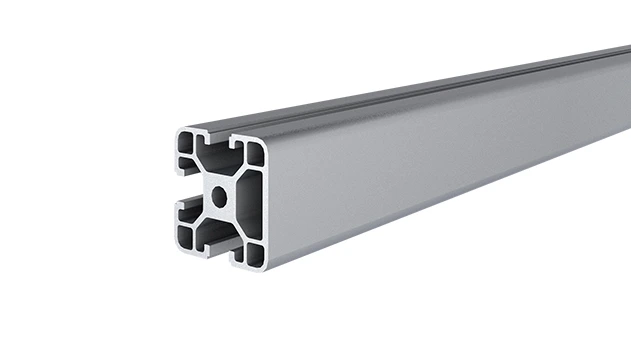
4040D is a 4.00x4.00 CM fractional 40 series square extrusion T-slot profile with two side open T-slots, two side with closed face, each side with 4.00cm face. The profile has align-a-grooves to assist in aligning connecting profiles.
Walk into any modern factory, workshop, or even a tech startup's prototyping lab, and you'll likely spot something but crucial: aluminum profiles. These sleek, modular beams are the unsung heroes behind efficient workbenches, organized material racks, and streamlined production lines. Among the countless profiles available, one stands out for its versatility and reliability: the 4040D EU Standard Aluminum Profile. Whether you're building a custom workbench for your garage or outfitting an entire manufacturing plant with lean systems, this profile has become a go-to choice for engineers, designers, and facility managers alike. But what makes it so special? Today, we're diving deep into its color options, customization possibilities, and why it's more than just a "beam"—it's a building block for innovation.
Getting to Know the 4040D EU Standard Aluminum Profile
Let's start with the basics. The "4040D" in its name isn't just a random code—it tells you exactly what you're getting. The first two numbers, "40," refer to the profile's width and height, both measuring 40mm. That square cross-section is intentional: it offers balanced strength in all directions, making it ideal for structures that need to bear weight evenly, like shelves or workbench frames. The "D" denotes its specific design within the EU standard lineup, which includes features like T-slots running along all four sides. These slots are the profile's secret superpower—they let you attach aluminum profile accessories (think brackets, hinges, or even tool holders) without welding or drilling permanent holes. It's like building with oversized Lego bricks, but for grown-ups who mean business.
So, how is this profile made? It all starts with aluminum extrusion—a process where raw aluminum billets are heated until malleable, then forced through a die to shape them into the 40x40mm cross-section with T-slots. This method ensures every 4040D profile is consistent, with smooth surfaces and precise dimensions that meet strict EU standards for quality and safety. And because it's aluminum, it's lightweight enough to move around (hello, easy installation!) but strong enough to handle heavy loads. Think of it as the Goldilocks of materials: not too flimsy, not too bulky—just right for most industrial and commercial needs.
Now, you might be wondering, "Why EU standard?" Great question. EU standards (often marked with CE) guarantee that the profile meets rigorous criteria for durability, chemical resistance, and even environmental impact. For businesses operating in Europe or exporting to EU markets, this compliance is non-negotiable. But even if you're outside the EU, choosing an EU-standard profile means you're getting a product built to last. No cutting corners, no cheap alloys—just reliable performance, day in and day out.
Color Options: More Than Just Silver
If you've only ever seen aluminum profiles in their natural silver hue, prepare to be surprised. Today's 4040D profiles come in a range of colors, and it's not just about aesthetics—color can boost safety, reinforce brand identity, or even improve workflow efficiency. Let's break down the options, from standard go-tos to custom shades that'll make your workspace stand out.
Standard Colors: The Classics
Most suppliers keep a few staple colors in stock, ready to ship when you need them. These are the workhorses—colors that work in almost any setting and require minimal lead time. Here's what you'll typically find:
- Silver Anodized: The "natural" look. Anodizing is an electrochemical process that forms a protective oxide layer on the aluminum's surface, giving it a matte, metallic finish. It's durable, corrosion-resistant, and has a subtle sheen that fits into any industrial or modern workspace. Think of it as the "neutral" option—versatile enough for everything from garage workbenches to hospital labs.
- Matte Black: Sleek and professional, matte black is a favorite for tech-focused environments or spaces where you want a modern, understated look. It hides fingerprints better than silver (a win for busy workshops!) and pairs well with bright accent colors if you want to highlight specific areas, like tool zones on a workbench.
- White: Clean, bright, and reflective—white profiles are perfect for spaces where light matters, like assembly lines or inspection stations. They can make a small workshop feel more open and are often used in healthcare or food processing settings, where hygiene and visibility are priorities.
- Gray: The middle ground between silver and black. Light gray adds warmth without being too stark, while dark gray leans industrial. It's a popular choice for lean manufacturing systems, where a neutral palette helps keep focus on the work itself, not the equipment.
Custom Colors: When You Need to Stand Out
Standard colors are great, but what if you want your workspace to reflect your brand? Or maybe you need high-visibility red for safety barriers, or your company's signature blue for a cohesive look? That's where custom color options come in. Most reputable suppliers offer two main processes for custom colors: powder coating and anodizing with dye.
Powder Coating:
This is the most common method for bright, bold, or brand-specific colors. Here's how it works: The aluminum profile is first cleaned to remove any oils or debris, then electrostatically charged. Powdered paint (in your chosen color) is sprayed onto the profile, and the whole thing is baked in an oven. The heat melts the powder, forming a hard, even coating that's resistant to chipping, scratching, and fading. The result? Vibrant colors that can match almost any Pantone shade—ideal for branding or color-coding work zones (e.g., green for "go" in lean systems, red for "stop" in safety areas).
Anodizing with Dye:
For a more metallic finish (think deep blues or rich golds), anodizing with dye is the way to go. Unlike powder coating, which adds a layer on top of the aluminum, anodizing creates a porous oxide layer
within
the metal. This layer can absorb dye, resulting in colors that have a subtle, iridescent quality. It's not as bold as powder coating, but it's incredibly durable—great for outdoor use or areas with heavy wear, like conveyor rails or material racks.
Of course, custom colors come with a catch: they usually require a minimum order quantity (MOQ) and a longer lead time. But if your project needs that extra "wow" factor or functional color coding, the investment is often worth it. Just be sure to work closely with your supplier to test color samples—lighting can change how a color looks, so you'll want to see the finished product in your actual workspace before committing.
Choosing the Right Color: It's Not Just About Looks
When picking a color for your 4040D profiles, ask yourself:
What's the profile going to be used for?
A workbench in a creative studio might benefit from a bold, inspiring color, while a profile in a warehouse's high-traffic area needs something that hides scuffs. Here are a few factors to consider:
- Function: Will it be part of a safety barrier? Go for high-visibility yellow or orange. A cleanroom? White or light gray to reflect light and show dirt easily.
- Environment: Outdoor use? Anodized colors hold up better to UV rays than powder coating. Humid areas? Look for corrosion-resistant finishes, regardless of color.
- Branding: If clients visit your facility, using your brand colors on profiles (like a workbench or display rack) can reinforce your identity without feeling salesy.
- Psychology: Colors affect mood! Blue is calming (great for detail-oriented tasks), green is refreshing (good for long shifts), and red can increase alertness (ideal for safety zones but avoid overusing it—it can feel stressful).
To help visualize, here's a quick table of common color options, their finishes, and typical applications:
| Color Name | Finish Type | Standard/Optional | Best For |
|---|---|---|---|
| Silver | Anodized | Standard | General workbenches, material racks, multi-purpose structures |
| Matte Black | Powder Coated | Standard | ESD workstations, tech assembly lines, modern workshops |
| White | Powder Coated | Standard | Cleanrooms, inspection stations, healthcare settings |
| Custom Blue (e.g., Pantone 2945C) | Powder Coated | Optional | Brand-aligned workspaces, promotional displays |
| High-Visibility Red | Powder Coated | Optional | Safety barriers, emergency stop zones |
| Gold Anodized | Anodized with Dye | Optional | Decorative accents, high-end retail displays |

Customization: Tailoring 4040D to Your Exact Needs
Colors are just the start—what really makes the 4040D profile shine is how easy it is to customize. Unlike fixed steel beams or one-size-fits-all shelving, this profile is designed to be cut, drilled, and modified to fit your unique space. Let's break down the most common customization options and how they can transform your project.
Length: No More "Close Enough"
Most suppliers sell 4040D profiles in standard lengths (usually 2m, 3m, or 6m), but let's face it—your workshop isn't "standard." Maybe you need a 1.2m section for a corner shelf, or a 4.5m beam for a long workbench. That's why custom cutting is a must. Reputable suppliers use CNC cutting machines to trim profiles to your exact measurements, with tolerances as tight as ±0.1mm. No more hacking away with a hacksaw and getting a wonky edge—precision cutting ensures your profile fits perfectly the first time, saving you hours of frustration during assembly.
Pro tip: When ordering custom lengths, always account for the "kerf"—the small amount of material removed by the saw blade. It's usually less than 1mm, but better to mention it to your supplier to avoid any surprises.
Machining: Holes, Notches, and Slots (Oh My!)
The 4040D's T-slots are versatile, but sometimes you need additional holes or notches for specific aluminum profile accessories. Maybe you want to mount a power strip under a workbench, or attach a custom bracket for a monitor arm. That's where machining comes in. Suppliers can drill precise holes (in any size or pattern), notch corners for tight fits, or even mill custom slots to accommodate unique hardware.
For example, let's say you're building a mobile workbench with casters. You'll need holes in the bottom of the profile to bolt the caster mounts securely. A good supplier can drill those holes exactly where you need them, ensuring the casters align perfectly and the bench rolls smoothly. No more guessing where to drill—just send them a drawing, and they'll handle the rest.
Surface Treatments: Smooth, Safe, and Ready to Use
Raw aluminum profiles come with sharp edges from the extrusion process—great for manufacturing, not so great for handling. That's why most suppliers offer surface treatments to make them safer and more user-friendly. Deburring removes sharp corners, leaving smooth edges that won't cut hands during assembly. Polishing can give the profile a mirror-like finish (popular for retail displays), while sandblasting creates a matte, textured surface that hides scratches better in high-traffic areas.
Accessories: The Finishing Touches
A profile is just a beam without the right accessories—and the 4040D plays well with almost all aluminum profile accessories on the market. From brackets and hinges to end caps and (casters), these add-ons turn a simple profile into a fully functional system. Here are a few must-know accessories for custom projects:
- Connectors: These are the glue that holds your structure together. 90° connectors for corners, T-joints for shelves, and swivel connectors for adjustable components (like tilting workbench tops). Look for aluminum or steel connectors—both are strong, but aluminum is lighter if weight is a concern.
- End Caps: Small but mighty, end caps snap into the T-slots to cover sharp edges, keep out dust, and give your project a polished look. They come in colors that match your profile, so you can keep everything cohesive.
- Tool Racks and Holders: Customize your workbench by adding holders for screwdrivers, wrenches, or even laptops. These slide into the T-slots, so you can rearrange them as your needs change—no drilling required.
- Casters: Turn a static shelf into a mobile trolley with locking casters. Perfect for moving materials around a workshop or rearranging your layout on the fly.
Why 4040D Stands Out: Strength, Compatibility, and Cost-Effectiveness
With so many aluminum profiles available, why has the 4040D become a favorite? Let's break it down:
Strength-to-Weight Ratio:
Aluminum is already lighter than steel, but the 4040D's design maximizes strength without adding bulk. Its square cross-section and internal ribs (depending on the "D" variant) mean it can support heavy loads—up to 100kg per linear meter in some configurations—while still being easy to lift and install. That's a game-changer for DIYers and large facilities alike.
EU Standard Compliance:
EU standards aren't just about quality—they're about safety. The 4040D meets strict regulations for material purity, structural integrity, and even environmental impact (aluminum is 100% recyclable, by the way). For businesses in Europe, this compliance is non-negotiable, but even global buyers benefit from the peace of mind that comes with a standardized, tested product.
Compatibility:
The 4040D's T-slots are standardized, meaning they work with aluminum profile accessories from almost any supplier. That means you're not locked into one brand—you can mix and match parts to get the best price or features. Need a specific hinge from Supplier A and casters from Supplier B? No problem—they'll all fit into those T-slots.
Long-Term Cost Savings:
Aluminum profiles might cost more upfront than wood or steel, but they pay off in the long run. They're resistant to rust and corrosion, so they last decades (even in humid or industrial environments). And because they're modular, you can disassemble and reconfigure them as your needs change—no need to buy new materials when you rearrange your workshop. It's a sustainable, cost-effective choice for businesses that plan to grow.
Choosing the Right Supplier: What to Look For in a Lean System Supplier
Custom colors, precise cuts, quality accessories—none of this matters if your supplier drops the ball. When shopping for 4040D profiles, look for a lean system supplier with these key traits:
- Customization Expertise: Ask about their cutting and machining capabilities. Do they use CNC machines? Can they handle small batch orders, or do they require huge MOQs? A good supplier will work with you, even if you only need a few custom-cut profiles.
- Quality Control: Request samples of their work—check for smooth cuts, even color finishes, and tight tolerances. Reputable suppliers will have no problem sending you a sample profile or photos of past projects.
- Technical Support: Customization can get complicated. Does the supplier have engineers or designers on staff who can help you optimize your design? Maybe you're not sure if powder coating or anodizing is better for your project—they should guide you, not just take your order.
- Lead Times: Custom colors and machining take time, but a reliable supplier will give you a clear timeline and stick to it. Avoid suppliers who vague about delivery dates—delays can derail your entire project.
Remember, the best supplier isn't just a seller—they're a partner. They'll listen to your needs, offer solutions you might not have considered, and ensure your 4040D profiles (and accessories) arrive ready to build with.
Applications in Action: How 4040D Transforms Workspaces
Let's put all this theory into practice with a few real-world examples of how the 4040D profile is used:
The Custom Workbench: A Workshop Essential
Imagine (oops, scratch that—
picture
) a small electronics repair shop. The owner needs a workbench that's sturdy enough for tools, has storage for parts, and can be adjusted to different heights for different technicians. With 4040D profiles, they can build exactly that:
- Frame: 4040D profiles cut to 1.5m length for the legs and 2m for the top frame, powder coated in the shop's brand color (a deep navy blue).
- Top: A plywood surface mounted to the frame using T-slot brackets, with a lip around the edge to prevent parts from rolling off.
- Accessories: Tool holders for screwdrivers and pliers, a small shelf for a soldering iron, and locking casters so the bench can roll to where it's needed.
- Adjustability: Using telescoping 4040D sections for the legs, the height can be adjusted from 75cm to 90cm—perfect for standing or sitting work.
The result? A workbench that's tailored to the shop's needs, looks professional, and can be modified later if they add new tools or hire more technicians.
Material Racks: Organizing Chaos in a Warehouse
A large manufacturing plant needs to store raw materials (like aluminum extrusion profiles!) and finished products. Using 4040D profiles, they can build multi-tiered racks that:
- Are tall enough to maximize vertical space (thanks to the profile's strength).
- Have adjustable shelves (using T-slots and shelf brackets) to fit different-sized boxes.
- Are color-coded: silver for raw materials, blue for work-in-progress, and black for finished goods—making it easy for workers to find what they need at a glance.
Lean Manufacturing Systems: Streamlining Production
Lean manufacturing is all about reducing waste and improving flow—and 4040D profiles are a cornerstone of that philosophy. For example, a car parts manufacturer might use them to build:
- Flow racks: Sloped racks with roller tracks (another aluminum profile accessory!) that let parts slide down to the assembly line, reducing the need for workers to reach or bend.
- Workstations: Modular stations where each step of the assembly process has its own tools and materials, all within arm's reach, thanks to 4040D frames with custom-mounted holders.
- Turnover trolleys: Mobile carts built with 4040D profiles and casters, used to move parts between stations—lightweight but strong enough to carry heavy components.
Conclusion: The Future of Custom Aluminum Profiles
The 4040D EU Standard Aluminum Profile isn't just a building material—it's a tool for creativity, efficiency, and growth. Its color options let you brand your workspace or boost safety; its customization possibilities mean you never have to settle for "close enough"; and its strength and compatibility make it a reliable choice for projects big and small. As manufacturing and workspace design continue to evolve, the demand for personalized, modular solutions will only grow—and the 4040D is leading the way.
So, whether you're a hobbyist building a workbench in your garage or a facility manager revamping an entire production line, remember: the right profile can transform your space. And with the 4040D, the only limit is your imagination (okay, maybe
now
I can use that word). Here's to building better, smarter, and more colorful workspaces—one 40mm beam at a time.