- Company Articles
- Products and Technology
- Product knowledge
- 4040D EU Standard Aluminum Profile: Compatibility with Lean Management Accessories

4040D EU Standard Aluminum Profile: Compatibility with Lean Management Accessories
Related Product
4040D EU Standard Aluminum Profile
4040D is a 4.00x4.00 CM fractional 40 series square extrusion T-slot profile with two side open T-slots, two side with closed face, each side with 4.00cm face. The profile has align-a-grooves to assist in aligning connecting profiles.
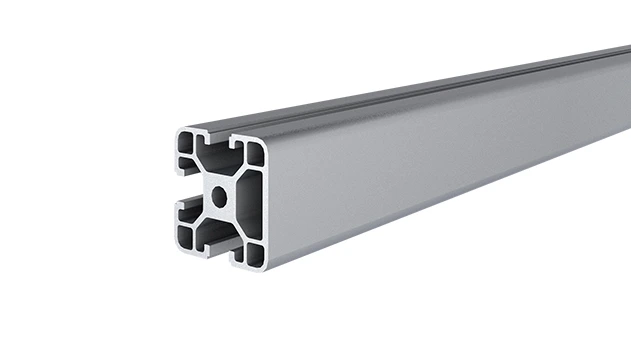
4040D EU Standard Aluminum Profile: The Backbone of Compatible Lean Management Accessories
In the world of manufacturing and industrial operations, lean management isn't just a buzzword—it's a mindset. It's about stripping away inefficiency, minimizing waste, and creating workflows that feel almost effortless in their precision. But here's the thing: you can't build a lean system on wishful thinking alone. It starts with the right tools, and at the heart of those tools lies something deceptively simple yet incredibly powerful: the aluminum extrusion profile . Today, we're zeroing in on one profile that's become a unsung hero for lean teams worldwide: the 4040D EU Standard Aluminum Profile. What makes it so special? Its compatibility with lean management accessories isn't just a feature—it's a game-changer for anyone serious about building flexible, efficient workspaces.
Whether you're setting up a new production line, revamping a workshop, or designing a custom workbench , the 4040D profile acts like a universal language for your tools. It speaks to connectors, brackets, casters, and panels, turning disjointed parts into a cohesive system that adapts as your needs change. In this article, we'll dive into why the 4040D profile has become a cornerstone of lean operations, how it pairs with essential accessories, and why it's more than just a piece of metal—it's a catalyst for smarter, leaner work.
What Exactly Is the 4040D EU Standard Aluminum Profile?
Let's start with the basics. The 4040D is part of the EU standard aluminum extrusion family, a group of profiles known for their precision, durability, and adherence to strict European manufacturing norms. The "4040" in its name gives away its most defining feature: it measures 40mm by 40mm in cross-section. That square shape isn't arbitrary—it's a sweet spot between strength and versatility, making it sturdy enough to support heavy loads but compact enough to fit into tight spaces.
But what about the "D"? Think of it as the profile's personality. While exact specs can vary by manufacturer, the "D" typically denotes a specific T-slot design. T-slots are those grooves running along the length of the profile, and they're the reason aluminum profiles are so adaptable. The 4040D's T-slots are engineered with precise dimensions (often around 8mm or 10mm in width) to accept a wide range of accessories without wiggle room. This attention to detail is why EU standard profiles like the 4040D are trusted in industries where even a millimeter of play can throw off an entire workflow.
Made from high-grade aluminum alloy (usually 6063-T5, a material prized for its strength-to-weight ratio), the 4040D is both lightweight and tough. It resists corrosion, stands up to daily wear and tear, and won't weigh down mobile setups like steel might. And because it's extruded—pulled through a die to create its shape—each 4040D profile is consistent, with smooth surfaces and uniform slots that guarantee a snug fit every time you add an accessory.

Why Compatibility Matters in Lean Management
Lean management thrives on flexibility. A workspace that works today might need to change tomorrow—maybe you're adding a new product line, scaling up production, or shifting to a different layout to reduce bottlenecks. In that world, "one-size-fits-all" equipment is the enemy. You need tools that can evolve, and that's where compatibility comes in.
Imagine this: You build a flow rack using a random mix of parts—some steel brackets, a few plastic connectors, a hodgepodge of rails. A month later, you need to add a shelf to hold larger components. But the brackets don't fit the new rails, the connectors crack under the weight, and suddenly you're stuck buying an entire new rack instead of just upgrading the old one. That's waste—time, money, and frustration—exactly what lean aims to eliminate.
The 4040D profile solves this by acting as a common foundation. Every accessory designed for EU standard T-slot profiles (think aluminum profile accessories like corner brackets, end caps, or caster mounts) is engineered to work with the 4040D's slots. It's like using Lego bricks: once you have the base plates (the profiles), you can mix and match the pieces (accessories) to build anything you need, then take it apart and rebuild when your needs change. No more forcing square pegs into round holes—just seamless, efficient customization.
Key Aluminum Profile Accessories That Play Well with 4040D
The 4040D's magic lies in the company it keeps. Let's break down some of the most essential accessories that turn this humble profile into a lean management powerhouse:
1. Connectors: The Glue That Holds It All Together
Connectors are the unsung heroes of any aluminum profile setup. For the 4040D, the most common types include 90° aluminum profile connectors (for right-angle joints), 135° connectors (for angled corners), and T-connectors (for branching off a main profile). These aren't just generic hardware—they're precision-machined to lock into the 4040D's T-slots, creating joints that are both strong and easy to adjust. Need to reposition a shelf? Loosen the connector's bolt, slide it to the new spot, and tighten—done. No drilling, no welding, no hassle.
2. End Caps and Rubber Seals: Finishing Touches with Purpose
At first glance, end caps might seem like a cosmetic addition, but in lean systems, every detail matters. The 4040D's aluminum profile end caps (specifically designed for 40x40mm profiles) cover the sharp edges of cut profiles, preventing snags on clothing or damage to materials. Pair them with T-slot rubber seal covers, and you're not just protecting the profile—you're sealing out dust, debris, and moisture that could gum up the slots over time. It's a small investment in longevity that pays off in fewer repairs and smoother operations.
3. Caster Wheels: Mobility Without Compromise
A lean workspace isn't just about organization—it's about bringing the work to the worker, not the other way around. That's where casters come in. Caster mounts designed for 4040D profiles bolt directly into the T-slots, turning a stationary workbench or rack into a mobile unit. Whether you need to move materials from station to station or reposition a workbench for a new layout, these casters lock securely when in place and roll smoothly when you need to move, all without weakening the profile's structure.
4. Panels and Shelves: Custom Storage, On Demand
From tool boards to parts bins, panels and shelves are essential for keeping workspaces clutter-free. 4040D profiles pair with panel mounts and shelf brackets that slide into the T-slots, letting you adjust heights and positions in minutes. Need a deeper shelf for bulkier items? Swap out the brackets. Want to add a pegboard for tools? Attach it directly to the profile using T-slot bolts. It's storage that adapts to what you're storing, not the other way around.
Real-World Applications: 4040D in Action
Talk is cheap—let's look at how the 4040D profile and its accessories come together in real lean environments. These examples show why it's not just a part of the system, but the backbone.
Case Study 1: The Adaptable Workbench
A electronics manufacturer needed a workbench for assembling circuit boards—something sturdy enough to hold tools, ESD-safe to protect sensitive components, and adjustable to fit workers of different heights. They turned to 4040D profiles for the frame. Using 90° connectors, they built a basic table structure, then added height-adjustable legs (via T-slot bolts that let them raise or lower the bench by loosening and repositioning the legs). For the top, they attached an ESD-safe aluminum honeycomb panel using shelf brackets, and added a tool rail along the back with hooks for screwdrivers and pliers—all slid into the 4040D's T-slots.
Six months later, they expanded their product line to include larger boards. Instead of buying a new bench, they added side extensions using additional 4040D profiles and parallel connectors, turning the single workbench into an L-shape. Total time to upgrade: 2 hours. Total cost: a fraction of a new bench. That's lean in action.
Case Study 2: The Dynamic Flow Rack
A automotive parts supplier struggled with slow material flow—parts were stored on static shelves, and workers wasted time walking back and forth to retrieve them. They wanted a flow rack that would let parts slide directly to the assembly line, reducing pick time. Using 4040D profiles as the frame, they installed roller tracks (another key accessory) at a slight angle, so gravity did the work of moving parts forward. They added dividers (using T-slot brackets) to separate different part sizes, and casters on the bottom to move the rack closer to the line when needed.
When demand spiked for a new part, they simply added more roller track sections to the rack—no tools required, just sliding the new tracks into the 4040D's slots and securing them with bolts. Material retrieval time dropped by 40%, and the team could reconfigure the rack in minutes instead of hours. That's the power of a compatible system.
How 4040D Stacks Up: A Quick Comparison
Not all aluminum profiles are created equal. Let's see how the 4040D compares to other common EU standard profiles, and why it's often the top choice for lean systems:
| Profile Type | Dimensions (mm) | Typical Load Capacity (per meter) | Common Accessories | Best For |
|---|---|---|---|---|
| 4040D | 40x40 | 150-200 kg | 90° connectors, caster mounts, roller tracks, panel brackets | Workbenches, flow racks, medium-duty shelving, mobile carts |
| 3030 | 30x30 | 80-120 kg | Smaller brackets, lightweight panels, mini casters | Light-duty shelves, display racks, small workstations |
| 4080 | 40x80 | 250-300 kg | Heavy-duty brackets, industrial casters, large panels | Heavy machinery frames, high-capacity storage, assembly lines |
The 4040D hits that perfect middle ground: it's strong enough for most lean applications but not overkill (unlike the 4080, which adds weight and cost for tasks that don't need it). Its 40x40mm size is easy to handle, and its compatibility with a wide range of accessories means you won't be limited when designing your workspace.
The Bottom Line: Why 4040D is a Lean Investment
At the end of the day, lean management is about making smart investments—choosing tools that pay dividends in efficiency, flexibility, and longevity. The 4040D EU Standard Aluminum Profile is exactly that kind of investment. Its compatibility with aluminum profile accessories turns it into a blank canvas for your workspace, letting you build, adapt, and rebuild without waste. Whether you're setting up a single workbench or an entire production line, it's the foundation that grows with your business.
So, if you're ready to stop fighting with incompatible tools and start building a workspace that works as hard as your team does, look no further than the 4040D. It's not just a profile—it's the key to unlocking a leaner, smarter, more efficient way of working. And in the world of lean management, that's not just an advantage—that's everything.