- Company Articles
- Products and Technology
- Product knowledge
- 4040E EU Standard Aluminum Profile Corrosion Resistance: Benefits for Industrial Environments

4040E EU Standard Aluminum Profile Corrosion Resistance: Benefits for Industrial Environments
Related Product
4040E EU Standard Aluminum Profile
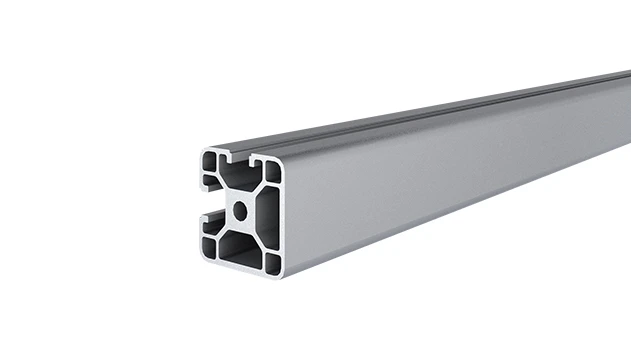
4040E is a 4.00x4.00 CM fractional 40 series square extrusion T-slot profile with two side open T-slots, two side with closed face, each side with 4.00cm face. The profile has align-a-grooves to assist in aligning connecting profiles.
Walk into any industrial facility—whether it's a bustling automotive plant, a precision electronics assembly line, or a food processing warehouse—and you'll quickly spot a common enemy: corrosion. It's the silent culprit that turns sturdy metal racks into rusted eyesores, weakens workbench frames, and forces managers to replace equipment far sooner than planned. For operations where reliability and efficiency are non-negotiable, letting corrosion go unchecked isn't just a maintenance headache; it's a threat to productivity, safety, and the bottom line. That's where the 4040E EU Standard Aluminum Profile comes in. More than just a piece of metal, it's a corrosion-resistant workhorse designed to thrive in the harshest industrial settings. In this article, we'll explore why its unique resistance to rust and degradation makes it a game-changer for businesses looking to build lean, durable, and low-maintenance workspaces.
The Cost of Corrosion: Why Industrial Environments Can't Afford to Ignore It
Before diving into the specifics of the 4040E aluminum profile, let's take a moment to understand why corrosion is such a critical issue in industrial settings. Imagine a manufacturing plant that relies on steel material racks to store heavy components. After a few years of exposure to humidity, cleaning chemicals, or even the occasional spill, those racks start to rust. At first, it's just surface discoloration—but soon, the rust eats through the metal, weakening joints and creating sharp, flaky edges. Workers now have to be extra careful when loading or unloading materials, slowing down workflows. Eventually, a shelf gives way, damaging expensive parts and halting production. The plant manager is forced to shut down the line, order new racks, and pay for emergency repairs—all while losing revenue by the minute.
This scenario isn't an exaggeration; it's a reality for countless facilities still using traditional steel or low-grade aluminum products. Corrosion doesn't just destroy equipment—it erodes profits. According to industry reports, the global cost of corrosion in manufacturing exceeds $2.5 trillion annually, with a significant portion tied to premature equipment replacement and unplanned downtime. For lean-focused operations, where every second and every dollar counts, this waste is unacceptable. The solution? Investing in materials engineered to resist corrosion from the start—like the 4040E EU Standard Aluminum Profile.
What Makes 4040E Aluminum Profile Different? The Science of Corrosion Resistance
At first glance, aluminum might seem like an unlikely hero in the fight against corrosion. After all, isn't aluminum a "soft" metal prone to bending or scratching? Not the 4040E. This profile is part of the aluminum extrusion profile family—a category known for its strength, versatility, and yes, impressive durability. What sets the 4040E apart is its unique composition and manufacturing process, which work together to create a material that laughs in the face of rust, moisture, and chemical exposure.
Let's start with the basics: aluminum, by nature, forms a thin, protective oxide layer when exposed to oxygen. This layer is invisible to the naked eye, but it's incredibly effective at preventing further oxidation (the chemical reaction that causes rust in iron and steel). However, not all aluminum profiles are created equal. The 4040E takes this natural protection a step further through careful alloying. It's formulated with magnesium and silicon, two elements that enhance both its structural integrity and corrosion resistance. This alloy, often referred to as 6063-T5, is heat-treated to strengthen the metal while maintaining its flexibility—a crucial balance for industrial applications where parts need to support heavy loads without cracking.
Real-World Resistance: Consider a food packaging plant where equipment is regularly sanitized with high-pressure hoses and caustic cleaning agents. A steel conveyor frame in this environment would start rusting within months, but a 4040E aluminum frame? It remains untouched. The oxide layer acts as a barrier, preventing the cleaning chemicals from penetrating the metal. Even if the surface gets scratched—say, from a dropped tool—the oxide layer quickly reforms, (self-healing) to protect the underlying material. That's the power of the 4040E's corrosion resistance in action.
Another key factor is the 4040E's compliance with EU standards. Unlike generic aluminum profiles, which may cut corners on material quality, the 4040E is manufactured to strict European specifications for corrosion resistance, dimensional accuracy, and mechanical performance. This means every piece you install is guaranteed to meet the same high standards, whether you're building a single workbench or outfitting an entire factory floor.

Beyond Rust: How 4040E's Corrosion Resistance Translates to Real-World Benefits
Corrosion resistance is more than just a technical feature—it's a gateway to a host of operational benefits that directly impact your business. Let's break down how the 4040E aluminum profile's ability to resist degradation transforms industrial environments for the better.
1. Longer Lifespan, Lower Replacement Costs
The most obvious advantage is longevity. Steel structures in damp or chemical-heavy environments typically last 5–7 years before needing replacement. The 4040E, by contrast, can easily serve 15–20 years with minimal maintenance. For a facility that relies on lean system principles—where waste reduction is paramount—this extended lifespan is a game-changer. Instead of budgeting for new racks or workbenches every few years, you can invest that money back into growth initiatives, employee training, or process improvements.
2. Reduced Downtime and Maintenance Headaches
Corroded equipment doesn't just fail eventually—it requires constant upkeep in the meantime. Steel racks might need regular painting to slow rust, while rusted joints may need lubrication or tightening. Each of these tasks takes workers away from their primary roles, eating into productivity. The 4040E, on the other hand, is virtually maintenance-free. A quick wipe with a damp cloth is all it takes to keep it looking and performing like new. No repainting, no rust removal, no emergency repairs. For busy facilities, this translates to fewer interruptions and a smoother, more efficient workflow.
3. Safer Workspaces for Employees
Corrosion isn't just a financial burden—it's a safety risk. Rusted metal can develop sharp edges that cut hands, or weakened structures that collapse under load. In sensitive industries like electronics manufacturing, where even tiny metal flakes can damage circuit boards, rust from steel components is a contamination hazard. The 4040E eliminates these risks. Its smooth, corrosion-free surface won't flake or chip, and its structural integrity remains consistent over time. This peace of mind is invaluable for managers tasked with keeping their teams safe.
4. Compatibility with Lean and Modular Systems
Modern industrial facilities thrive on flexibility. A lean system demands workspaces that can be reconfigured quickly to adapt to new production needs—whether that means adding a new assembly line, reorganizing a material storage area, or scaling up for seasonal demand. The 4040E aluminum profile excels here, thanks to its lightweight design and compatibility with aluminum profile accessories like connectors, brackets, and end caps. Unlike heavy steel frames that require welding or specialized tools to modify, 4040E structures can be disassembled, reconfigured, and reassembled in hours—all without worrying about compromising the material's integrity. Even after multiple reconfigurations, the corrosion resistance remains intact, ensuring your modular setup stays durable for years to come.
4040E vs. the Competition: How It Stacks Up Against Other Materials
To truly appreciate the 4040E's corrosion resistance, it helps to compare it to other common industrial materials. Let's take a look at how it measures up against stainless steel and traditional steel in key areas:
| Feature | 4040E EU Standard Aluminum Profile | Stainless Steel | Traditional Steel |
|---|---|---|---|
| Corrosion Resistance | Excellent—natural oxide layer + alloy protection; resistant to moisture, chemicals, and humidity. | Very good—resistant to rust but can corrode in highly acidic environments. | Poor—prone to rust without regular painting or coating. |
| Weight | Lightweight (≈2.7 g/cm³)—easy to handle and install. | Heavy (≈7.9 g/cm³)—requires more labor and equipment to move. | Heavy (≈7.8 g/cm³)—difficult to reconfigure. |
| Cost | Moderate upfront cost; lower long-term costs due to minimal maintenance. | High upfront cost—often 2–3x more expensive than aluminum. | Low upfront cost; high long-term costs from maintenance and replacement. |
| Installation & Flexibility | Easy to cut, drill, and assemble with standard tools; compatible with modular accessories. | Requires specialized tools (e.g., plasma cutters) and welding for modifications. | Requires welding or bolting; difficult to reconfigure without damaging the material. |
| Maintenance | Minimal—only occasional cleaning needed. | Low maintenance but may require polishing to maintain appearance. | High maintenance—needs regular painting, rust removal, and part replacements. |
As the table shows, the 4040E strikes a rare balance: it offers corrosion resistance that rivals stainless steel at a fraction of the cost, while being lighter and more flexible than both steel options. For most industrial applications, this makes it the ideal middle ground—durable enough to withstand harsh conditions, affordable enough to scale, and versatile enough to adapt to changing needs.
Real-World Applications: Where 4040E Shines Brightest
The 4040E aluminum profile isn't just a theoretical solution—it's proven itself in countless industrial settings. Let's explore a few industries where its corrosion resistance makes a tangible difference:
Electronics Manufacturing: Protecting Sensitive Components
In electronics plants, even the smallest speck of rust can ruin a circuit board or short out a delicate component. ESD (Electrostatic Discharge) workbenches and material racks must be both static-safe and corrosion-free. The 4040E's non-corrosive surface ensures no rust flakes or debris contaminate the production process, while its compatibility with ESD accessories (like conductive mats and grounding clips) makes it a staple in cleanroom environments.
Food and Beverage Processing: Withstanding Chemicals and Moisture
Food processing facilities are hostile environments for metal: high humidity, frequent washdowns with caustic sanitizers, and exposure to acidic or salty ingredients. The 4040E's resistance to these elements makes it perfect for conveyor systems, workbenches, and storage racks. Unlike steel, it won't react with food acids or cleaning agents, ensuring compliance with strict hygiene standards.
Automotive Assembly: Durability in High-Volume Environments
Automotive plants are fast-paced, with heavy equipment, constant movement, and exposure to lubricants, coolants, and degreasers. The 4040E's corrosion resistance ensures that assembly line workbenches, tool racks, and parts storage systems stay strong and reliable, even after years of exposure to these harsh substances. Its lightweight nature also makes it easier to reconfigure workstations as production lines evolve.
Pharmaceutical Production: Meeting Strict Regulatory Standards
Pharmaceutical facilities have zero tolerance for contamination. The 4040E's smooth, non-porous surface is easy to sanitize, and its corrosion resistance ensures it won't harbor bacteria or degrade when exposed to disinfectants. This makes it an ideal choice for cleanroom shelving, material handling carts, and processing equipment frames.
Accessorizing for Success: How Aluminum Profile Accessories Enhance 4040E's Performance
A profile is only as good as the accessories that bring it to life. The 4040E's corrosion resistance is further enhanced by a range of aluminum profile accessories designed to work seamlessly with it. From connectors that ensure secure, rust-free joints to end caps that protect exposed edges, these accessories are engineered to match the 4040E's durability and longevity.
Take, for example, the internal rotary aluminum joint. Made from the same corrosion-resistant aluminum alloy as the 4040E, it allows for smooth, adjustable connections between profiles—perfect for building angled workbenches or flexible material racks. Unlike steel connectors, which can seize up or rust over time, these aluminum joints maintain their functionality even in damp environments. Similarly, plastic roller track guide rails (available in yellow or grey) are designed to resist chemical exposure, ensuring that conveyor systems built with 4040E profiles continue to glide smoothly for years.
Even small details matter. Aluminum end caps, for instance, prevent moisture and debris from collecting inside the profile's T-slots, where corrosion could otherwise start. Meanwhile, adjustable leveling feet—made from corrosion-resistant materials—keep workbenches stable and level, even on uneven factory floors, without rusting or degrading.
Conclusion: Investing in Corrosion Resistance Pays Dividends
In the world of industrial manufacturing, every decision comes down to value: What will deliver the most bang for the buck over the long haul? When it comes to building durable, efficient workspaces, the 4040E EU Standard Aluminum Profile is more than just a material choice—it's an investment in reliability. Its unmatched corrosion resistance translates to longer equipment lifespans, lower maintenance costs, safer work environments, and the flexibility to adapt to changing needs. Whether you're constructing a single workbench or overhauling an entire production line, the 4040E stands out as a solution that doesn't just meet industrial demands—it exceeds them.
So, the next time you're evaluating materials for your facility, remember: corrosion isn't just a problem to manage—it's an opportunity to upgrade. Choose the 4040E, and build a workspace that's built to last.