- Company Articles
- Products and Technology
- Product knowledge
- 4040E EU Standard Aluminum Profile Customization: Tailoring to 3C Industry Needs

4040E EU Standard Aluminum Profile Customization: Tailoring to 3C Industry Needs
Related Product
4040E EU Standard Aluminum Profile
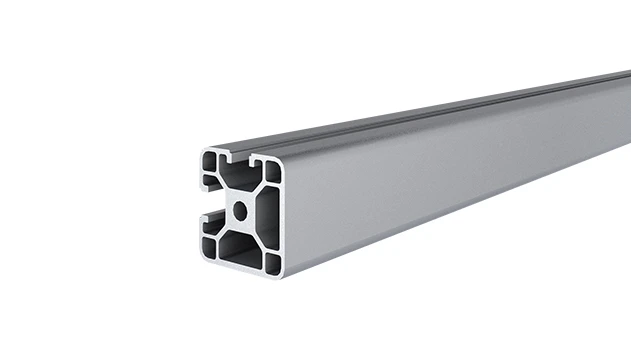
4040E is a 4.00x4.00 CM fractional 40 series square extrusion T-slot profile with two side open T-slots, two side with closed face, each side with 4.00cm face. The profile has align-a-grooves to assist in aligning connecting profiles.
In the fast-paced world of the 3C industry—where computers, communications, and consumer electronics evolve faster than ever—manufacturers face a relentless challenge: staying agile. New smartphone models, slimmer laptops, and smarter wearables hit the market every few months, each with unique components, assembly steps, and production demands. Rigid, one-size-fits-all manufacturing setups? They're quickly becoming relics of the past. What these companies need is a foundation that bends without breaking—one that adapts to new product lines, scales with demand, and reduces waste along the way. Enter the 4040E EU Standard Aluminum Profile: a modular, customizable building block that's quietly revolutionizing how 3C manufacturers design their workflows. Let's dive into how this unassuming profile, paired with the right aluminum profile accessories, is becoming the backbone of lean, flexible production in an industry that can't afford to stand still.
The 3C Industry's Hunger for Flexibility: Why Rigid Setups Fail
To understand why the 4040E profile matters, let's first unpack the unique pressures of 3C manufacturing. Unlike industries with long product cycles—think automotive or heavy machinery—3C thrives on speed. A smartphone manufacturer might roll out 2–3 new models annually, each requiring minor tweaks to assembly lines, workbench layouts, and material storage. Even small changes, like a shift in component size or a new testing step, can throw a wrench into a fixed production line.
Traditional setups, often built with welded steel or fixed plastic, are notoriously slow to adapt. Need to reconfigure a workbench for a new phone model? You're looking at days of welding, cutting, and repainting. Want to add a new shelf to a material rack for smaller components? That might mean buying an entirely new rack. The result? Downtime, wasted materials, and missed opportunities to capitalize on short product windows.
Then there's the issue of space. 3C factories are often packed, with floor space at a premium. Bulky, permanent structures eat into valuable real estate, limiting the ability to reorder workflows for better efficiency. And let's not forget ESD (Electrostatic Discharge) protection—critical when handling sensitive microchips and circuit boards. Many traditional materials (like untreated steel) don't offer built-in ESD resistance, forcing manufacturers to add costly aftermarket solutions.
In short, 3C manufacturers need more than just tools—they need a system. A lean system, to be precise: one that minimizes waste (time, materials, space), maximizes flow, and lets teams iterate quickly. And that's where the 4040E profile comes in.
Meet the 4040E EU Standard Aluminum Profile: More Than Just a Tube
At first glance, the 4040E profile looks simple: a 40mm x 40mm square tube with T-slots running along its length. But that simplicity is deceptive. This profile is the result of decades of engineering, designed to meet strict EU standards for strength, precision, and compatibility. Let's break down what makes it special.
Key Specs of the 4040E EU Standard Aluminum Profile
- Dimensions: 40mm width x 40mm height, with wall thicknesses ranging from 1.5mm to 3mm (customizable for heavier loads).
- Material: Made from 6063-T5 aluminum alloy—lightweight (about 1/3 the weight of steel), corrosion-resistant, and strong enough to support assembly tools, components, and even heavy machinery.
- T-Slots: Precisely extruded slots along all four sides, spaced at standard intervals (often 20mm or 40mm). These slots are the secret to its modularity: they let you attach accessories—connectors, shelves, tool holders—anywhere along the profile, no drilling required.
- EU Compliance: Meets European standards for tolerances, material quality, and safety, ensuring consistency across batches and compatibility with global aluminum profile accessories.
But what really sets the 4040E apart is its versatility. Unlike steel, which requires welding or heavy bolts to join, aluminum profiles connect using lightweight, reusable connectors. Want to build a workbench? Slide a 90° connector into the T-slot, tighten a screw, and you're done. Need to take it apart later? Loosen the screw, and the components are ready to be repurposed. This modularity is a game-changer for 3C manufacturers, where reconfiguration isn't just a nice-to-have—it's a daily necessity.

Customization: Tailoring the 4040E to Your Exact Needs
The 4040E profile isn't a "one-and-done" product. It's a starting point—and manufacturers can tweak nearly every aspect to fit their unique workflows. Let's explore the most common customization options and how they solve 3C-specific challenges.
1. Length: No More Cutting Waste
Standard aluminum profiles often come in fixed lengths (e.g., 2m, 3m), forcing manufacturers to cut them down to size—a process that wastes material and time. With 4040E customization, you order profiles cut to your exact required length. Building a 1.2m workbench? Get a 1.2m profile. Need a 2.7m material rack beam? Done. This precision reduces scrap by up to 20% in some 3C facilities, according to industry reports, and eliminates the need for on-site cutting tools.
2. Hole Patterns: Cable Management, Simplified
3C assembly lines are tangled with cables—power for tools, data for testing devices, air lines for pneumatic equipment. Drilling holes in profiles to route these cables is messy and imprecise. Custom 4040E profiles can be pre-drilled with holes in specific locations, sized for cable glands or clips. Some manufacturers even opt for slotted holes to adjust cable positions as workflows change. The result? Cleaner workbenches, fewer tripping hazards, and faster setup when reconfiguring stations.
3. Surface Treatments: ESD Protection & Beyond
In 3C manufacturing, static electricity is public enemy number one. A single electrostatic discharge can fry a $500 microchip, leading to costly defects. That's why many 4040E profiles are treated with ESD-safe coatings. Anodizing (a process that creates a protective oxide layer) not only boosts corrosion resistance but can also be modified to dissipate static charges. For even higher ESD protection, some manufacturers opt for powder coating with conductive additives, ensuring the profile meets strict industry standards (like ANSI/ESD S20.20).
But surface treatments aren't just about function—they're about aesthetics, too. Custom colors (think brand-matching blues or sleek blacks) help organize work zones, while matte finishes reduce glare on factory floors. For cleanroom environments (common in semiconductor manufacturing), profiles can be treated with antimicrobial coatings to prevent dust buildup.
4. Aluminum Profile Accessories: The Glue That Holds It All Together
A profile is only as good as the accessories that connect it. Aluminum profile accessories are the unsung heroes of 4040E customization, turning basic tubes into fully functional workstations, racks, and lines. Let's highlight a few must-haves for 3C manufacturers:
| Accessory | Function | 3C Application |
|---|---|---|
| 90° Connectors | Join two profiles at a right angle, no welding needed. | Building workbench frames or vertical material rack supports. |
| End Caps | Cover exposed profile ends, preventing sharp edges and dust buildup. | Safety in assembly areas where workers handle small components. |
| T-Slot Rubber Strips | Line T-slots to protect cables, reduce noise, and enhance grip for accessories. | Routing delicate data cables on testing workbenches. |
| Adjustable Feet | Level workbenches or racks on uneven factory floors. | Ensuring precision in component alignment during assembly. |
The beauty of these accessories? They're universal. A 90° connector that works with a 4040E profile today will work with a 4040E profile next year, even if you're building something entirely different. This interchangeability is key to reducing waste and keeping costs low in the long run.
Building a Lean System: How 4040E Supports Waste Reduction
Lean manufacturing isn't just a buzzword—it's a mindset centered on eliminating waste (time, materials, motion) and maximizing value. The 4040E profile, with its modularity and customization, is a natural fit for lean principles. Let's see how it brings lean to life in 3C factories.
1. Reducing Setup Time with Modular Workbenches
In 3C assembly, time is money. When a new product launches, every hour spent reconfiguring workbenches is an hour of lost production. Traditional steel workbenches might take a team of technicians a full day to modify. With 4040E profiles and aluminum profile accessories, that same reconfiguration takes hours . Need to add a shelf for new testing tools? Clip on a connector and a crossbeam. Relocate a power strip? Slide it along the T-slot to the new position. It's lean, it's fast, and it keeps production on track.
2. Minimizing Material Waste with Reusability
Lean systems hate waste—and traditional setups generate plenty of it. Welded steel structures, once obsolete, end up in scrap yards. The 4040E profile? It's designed to be reused. A workbench frame from last year's smartphone model can be disassembled, and its profiles repurposed into a material rack for this year's smartwatch components. Over time, this reusability cuts material costs by 30–40% for some 3C manufacturers, according to case studies.
3. Improving Flow with Custom Material Racks
In lean terms, "flow" means moving components from storage to assembly with minimal delay. Fixed material racks often force workers to walk extra steps or reach awkwardly, wasting motion. 4040E-based flow racks, however, are customizable to the exact height, depth, and shelf spacing needed for specific components. For example, a rack for small screws can have shallow, closely spaced shelves, while one for larger battery packs can have deeper, sturdier levels. The result? Workers spend less time searching for parts and more time assembling products.
Case Study: How a 3C Manufacturer Cut Lead Times by 25% with 4040E
Let's put this all into context with a real-world example. Consider "TechFlow," a mid-sized manufacturer producing fitness trackers. In 2023, TechFlow was struggling to keep up with demand for its new waterproof tracker model. Their existing production line relied on welded steel workbenches and fixed plastic material racks, which took 3–4 days to reconfigure for each new tracker variant. Lead times were creeping up, and scrap from cutting steel was eating into profits.
The Problem: Rigidity Was Killing Agility
TechFlow's biggest pain points? Their workbenches. Each new tracker model required different tool layouts—some needed extra space for waterproof testing equipment, others for sensor calibration tools. With steel workbenches, modifying layouts meant hiring contractors to cut, weld, and repaint. By the time the line was ready, the product launch window had shrunk. Worse, their material racks couldn't adjust to the smaller component sizes of the new tracker, leading to overcrowded shelves and frequent part mix-ups.
The Solution: 4040E Profiles + Custom Accessories
TechFlow partnered with a 4040E supplier to redesign their assembly line. Here's what they did:
- Custom Workbenches: They ordered 4040E profiles cut to 1.5m lengths (ideal for their factory layout), with pre-drilled holes for cable management. Anodized surface treatment ensured ESD protection for sensitive tracker components.
- Aluminum Profile Accessories: 90° connectors, adjustable feet, and T-slot rubber strips let workers reconfigure tool positions in minutes. End caps eliminated sharp edges, reducing worker injuries.
- Modular Material Racks: Using 4040E beams and flow rack accessories, they built racks with adjustable shelf heights. Smaller components (like sensors) went on upper shelves with dividers, while larger batteries sat on lower, sturdier levels.
The Results: Faster, Leaner, Better
Within three months, TechFlow saw dramatic improvements:
- Reconfiguration time for workbenches dropped from 4 days to 4 hours .
- Material waste from steel cutting fell by 35%.
- Worker motion waste decreased by 20%, as tools and parts were now within easy reach.
- Lead times for new tracker models shortened by 25%, helping TechFlow capture more market share.
"We used to dread product launches because of the line rework," said TechFlow's Production Manager. "Now? We look forward to them. The 4040E profiles let us pivot so quickly, we can test new ideas without derailing production. It's like having a production line that thinks on its feet."
The Future of 3C Manufacturing: Built on 4040E
The 3C industry isn't slowing down. If anything, product cycles will get shorter, and customization demands will grow. In this environment, flexibility isn't a competitive advantage—it's survival. The 4040E EU Standard Aluminum Profile, with its customization options, modular design, and compatibility with aluminum profile accessories, is more than just a tool. It's a strategic asset that lets manufacturers turn change from a threat into an opportunity.
Whether you're building workbenches that adapt to new tool layouts, material racks that grow with your component inventory, or assembly lines that reconfigure in hours, the 4040E profile delivers. It's lean, it's durable, and it's designed for the way 3C manufacturers work today—and tomorrow.
So, if you're still stuck with rigid, one-use setups, ask yourself: What could your team accomplish with a production line that bends as easily as your product roadmap? With the 4040E profile, the answer might just surprise you.