- Company Articles
- Products and Technology
- Product knowledge
- 4040E EU Standard Aluminum Profile for Custom Conveyors: Enhancing Material Flow in Factories

4040E EU Standard Aluminum Profile for Custom Conveyors: Enhancing Material Flow in Factories
Related Product
4040E EU Standard Aluminum Profile
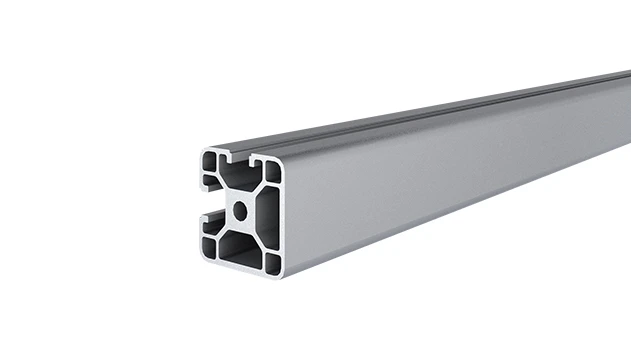
4040E is a 4.00x4.00 CM fractional 40 series square extrusion T-slot profile with two side open T-slots, two side with closed face, each side with 4.00cm face. The profile has align-a-grooves to assist in aligning connecting profiles.
Walk into any busy factory, and you'll quickly notice the lifeblood of production: material flow. It's the silent force that keeps assemblies moving, parts reaching workstations on time, and orders shipping out the door. But here's the thing—when material flow stumbles, everything stumbles. Maybe it's a conveyor that jams because it's too rigid to handle variable part sizes. Or a workbench that can't adjust when production lines reconfigure. Or perhaps it's the constant struggle of moving heavy components across the floor, leading to worker fatigue and delays. These aren't just minor inconveniences; they're bottlenecks that chip away at efficiency, increase costs, and turn smooth operations into a daily uphill battle.
The good news? There's a tool that's quietly revolutionizing how factories tackle these challenges: the 4040E EU Standard Aluminum Profile. If you're not familiar with it, think of it as the Swiss Army knife of industrial design—versatile, strong, and surprisingly adaptable. In this article, we're going to dive deep into how this unassuming aluminum extrusion is transforming custom conveyors, making material flow smoother, more flexible, and tailored to the unique needs of modern factories. Whether you're running a small electronics plant or a large automotive facility, understanding how the 4040E profile works could be the key to unlocking the next level of efficiency in your operations.
What is the 4040E EU Standard Aluminum Profile, Anyway?
Let's start with the basics. The 4040E is part of the EU standard aluminum extrusion profile family—a group of precision-engineered aluminum bars designed with a specific cross-section to balance strength, weight, and functionality. The "4040" in its name tells you the dimensions: it's 40 millimeters wide and 40 millimeters tall, forming a square tube. The "E" denotes its specific groove design, which follows European standards for compatibility with a wide range of accessories. But numbers and letters only tell part of the story; what really makes the 4040E stand out is its T-slot structure.
Imagine looking at the end of the profile and seeing a series of T-shaped grooves running along each side. These slots are like built-in channels that let you slide in nuts, brackets, or connectors without needing to drill holes or weld. That might sound simple, but in a factory setting, it's a game-changer. Suddenly, you're not stuck with fixed, one-size-fits-all equipment. You can build, modify, and rebuild structures on the fly—exactly what custom conveyors demand.
But why aluminum? Why not steel or plastic? Aluminum extrusion profiles like the 4040E offer a sweet spot that's hard to beat. Aluminum is lightweight, so even long sections of the profile are easy to handle during installation—no need for heavy machinery or extra workers. Yet, thanks to the extrusion process (where molten aluminum is pushed through a die to create the precise T-slot shape), it's surprisingly strong. The 4040E can support significant weight, whether it's holding up a conveyor frame or bearing the load of boxes sliding down a roller track. Plus, aluminum naturally resists corrosion, which is a big win in factories where moisture, oils, or chemicals might be present. Unlike steel, you won't have to worry about rust weakening the structure over time.
Why Conveyors Matter—And Why "Custom" is the Key Word
Conveyors are the backbone of material flow in most factories. They move raw materials from storage to production lines, transport partially assembled products between workstations, and carry finished goods to packaging or shipping areas. Without them, you're relying on manual labor (think workers pushing carts back and forth) or rigid, off-the-shelf systems that might not fit your space or workflow. Both options have their downsides: manual transport is slow and tiring, while generic conveyors often force you to adapt your processes to their limitations—like a square peg in a round hole.
That's where custom conveyors come in. A custom conveyor is built to fit your factory's unique layout, the size and weight of your products, and the specific steps in your production cycle. Need a conveyor that curves around a corner to save space? Or one that can handle both small components and large assemblies? Custom is the way to go. But here's the catch: building a custom conveyor used to mean hiring a fabricator, waiting weeks for welded steel frames, and spending a small fortune on modifications if your needs changed. That's where the 4040E profile steps in, turning custom conveyor building from a costly headache into a flexible, DIY-friendly process.

How 4040E Profiles Make Custom Conveyors a Reality
1. Modularity: Build It, Break It Down, Rebuild It
The T-slot design of the 4040E profile is what makes modularity possible. Let's say you need a roller conveyor to move plastic bins from the warehouse to the assembly line. With 4040E, you start by cutting the profiles to your desired length (no special tools needed—just a miter saw or hacksaw). Then, using aluminum profile accessories like T-slot nuts, bolts, and angle brackets, you attach vertical supports to form the conveyor frame. Add a crossbar here, a side rail there, and suddenly you've got a sturdy base. Then, slide in roller tracks (another accessory that fits right into the T-slots) and secure them with connectors. In a matter of hours, you've built a functional conveyor—no welding, no drilling, no waiting for a third-party fabricator.
But the real magic happens when your needs change. Maybe next month, you're introducing a new product line with larger bins that require a wider conveyor. Instead of scrapping the old one and buying a new system, you can simply loosen the bolts, add longer crossbars, and adjust the side rails. The 4040E profile's modularity means your conveyor grows and adapts with your business, saving you time and money in the long run.
2. Strength Without the Bulk
Factories deal with heavy stuff—think metal parts, loaded bins, or even fully assembled appliances. A conveyor that bends or sags under load is worse than no conveyor at all. But the 4040E profile is built to handle this. Thanks to its extrusion design, the aluminum maintains structural integrity even under pressure. For example, a standard 4040E profile with a 2mm wall thickness can support up to 150 kg per linear meter when properly mounted—more than enough for most factory conveyor applications. And because it's aluminum, that strength comes without the weight of steel. This makes installation easier (you can carry sections by hand) and reduces strain on floor supports, which is a big plus for older factories with weight restrictions.
3. Compatibility with a World of Accessories
A profile is only as good as the accessories that work with it, and the 4040E doesn't disappoint. The EU standard ensures it plays well with a huge range of aluminum profile accessories, from simple end caps that protect workers from sharp edges to complex corner brackets that let you build 90-degree turns in conveyors. Need to add a stop at the end of the conveyor to prevent bins from sliding off? There's a bracket for that. Want to mount a light above the conveyor to illuminate parts? Just slide a lamp holder into the T-slot. Even specialized components like roller track connectors (which link sections of roller track together) or caster wheels (for mobile conveyors) are designed to fit seamlessly with the 4040E's T-slots.
This compatibility means you're never limited by "what's possible." If you can imagine a conveyor feature, there's likely an accessory that lets you build it—without having to custom-machine parts or hire an engineer.
4040E vs. Other Materials: Why Aluminum Extrusion Wins for Conveyors
You might be thinking, "Why not just use steel for conveyors? It's been around forever." Or maybe, "Plastic is cheaper—could that work?" Let's break it down. Steel is undeniably strong, but it's heavy. A steel conveyor frame might require forklifts to move during installation and could damage floors over time. It's also prone to rust, which means extra maintenance (painting, coating) to keep it in shape. And if you need to modify it? Good luck—you'll need a welder and a cutting torch, which adds downtime and cost.
Plastic is lightweight and corrosion-resistant, but it lacks the rigidity needed for heavy loads. A plastic conveyor might flex under weight, leading to jams or uneven material flow. It's also less heat-resistant, which is a problem in factories with high-temperature processes. Plus, plastic doesn't have the T-slot design that makes the 4040E so modular—so customization is limited.
The 4040E aluminum extrusion profile, on the other hand, hits the sweet spot. It's lighter than steel but nearly as strong for conveyor applications. It resists corrosion like plastic but offers the rigidity needed for heavy loads. And its modular design blows both materials out of the water when it comes to adaptability. Let's put this into numbers with a quick comparison:
| Feature | 4040E Aluminum Profile | Steel Profile (40x40mm) | Plastic Profile (40x40mm) |
|---|---|---|---|
| Weight (per meter) | 1.8 kg | 10.2 kg | 0.9 kg |
| Max Load Capacity (per linear meter) | 150 kg | 300 kg (but overkill for most conveyors) | 40 kg |
| Corrosion Resistance | High (natural oxide layer) | Low (requires coating) | High |
| Modularity (ease of modification) | Excellent (T-slot accessories) | Poor (requires welding/drilling) | Limited (no standard T-slot system) |
| Installation Time (for a 5m conveyor) | 2-3 hours (DIY with basic tools) | 8-10 hours (needs welding equipment) | 3-4 hours (but limited to light use) |
As you can see, the 4040E profile offers the best balance of weight, strength, and flexibility—exactly what custom conveyors need to thrive in dynamic factory environments.
Real-World Impact: How a Small Electronics Factory Improved Flow with 4040E Conveyors
Let's take a look at a real example to see how this plays out. A mid-sized electronics manufacturer in Germany was struggling with material flow between their PCB assembly line and testing station. Their old system used a fixed steel conveyor that was too narrow for their new, larger circuit boards. Workers were manually lifting the boards off the conveyor and carrying them to the testing area—a process that took 15 minutes per batch and often led to minor scratches on the PCBs (costing them rework time).
They decided to switch to a custom conveyor built with 4040E profiles. Here's what happened: First, they measured the space and determined they needed a 6-meter conveyor with adjustable width (to handle both old and new PCB sizes). Using 4040E vertical supports and crossbars, they built the frame in a day. They added aluminum guide rails (another accessory) to keep the boards centered and installed roller tracks with plastic wheels to prevent scratching. The total cost? About €800 for materials—less than half the price of a custom steel conveyor.
The results? Batch transport time dropped from 15 minutes to 3 minutes. Scratches decreased by 90%, cutting rework costs by €2,000 per month. And when they added a new product line six months later, they simply adjusted the guide rails to fit the new board size—no new conveyor needed. "It was like upgrading from a flip phone to a smartphone," one production manager told me. "We didn't realize how much we were limiting ourselves until we had something that could keep up with our needs."
Beyond Conveyors: 4040E Profiles in Lean Systems
While we've focused on conveyors, the 4040E profile's versatility extends far beyond material transport. It's a cornerstone of lean system implementation in factories. Lean manufacturing is all about eliminating waste—whether that's wasted time, space, or effort—and the 4040E profile aligns perfectly with this philosophy. For example, workbenches built with 4040E can be adjusted to ergonomic heights, reducing worker fatigue. Turnover trolleys (used to move parts between stations) can be customized with shelves and dividers to organize components, cutting down on search time. Even material racks can be built to fit exact part sizes, maximizing storage space and minimizing clutter.
One of the most powerful aspects of using 4040E in lean systems is the ability to implement "5S" principles (Sort, Set in Order, Shine, Standardize, Sustain). With modular workstations and conveyors, everything has a place, and that place can be reconfigured as needed. When workers can easily adjust their tools and workspace to fit the task at hand, they're more likely to maintain organization and efficiency—key to sustaining lean improvements over time.
Installation Tips: Building Your First 4040E Conveyor
Ready to give 4040E a try? Building your first conveyor is easier than you might think, but a few tips can save you time and frustration:
- Start with a sketch: Measure the space where the conveyor will go and sketch out the dimensions. Note any obstacles (like pillars or doorways) and decide on the conveyor height (typically 75-90cm for easy loading/unloading).
- Invest in quality accessories: Cheap brackets or bolts can loosen over time, leading to wobbly conveyors. Stick with EU-standard aluminum profile accessories—they're designed to fit the 4040E's T-slots perfectly and will last longer.
- Use a level during assembly: Even a slight tilt can cause materials to slide to one side or jam. Check the frame with a spirit level as you build, adjusting the feet (another useful accessory!) to keep everything even.
- Test before full deployment: Once the conveyor is built, run a few test batches of materials through it. Check for jams, uneven rolling, or parts getting stuck. Tighten any loose connections and adjust the guide rails if needed.
- Label your T-slots: If you plan to reconfigure the conveyor later, label the T-slot positions with a marker (e.g., "Rail 1, Slot 3"). This makes it easier to replicate setups or troubleshoot issues down the line.
The Future of Material Flow: Why 4040E Profiles Are Here to Stay
As factories move toward smarter, more flexible production models (think Industry 4.0, small-batch manufacturing, and on-demand production), the need for adaptable tools will only grow. Fixed, one-size-fits-all equipment is becoming obsolete, and the 4040E EU Standard Aluminum Profile is perfectly positioned to meet this demand. Its modular design aligns with the "plug-and-play" ethos of modern manufacturing, where systems need to reconfigure quickly to keep up with changing orders and product designs.
Looking ahead, we'll likely see even more innovation around 4040E and similar profiles. For example, integrating sensors into the T-slots to monitor conveyor speed or detect jams in real time. Or combining 4040E frames with collaborative robots (cobots) to create fully automated material transport systems. The possibilities are endless—and they all start with a simple, versatile aluminum profile that's changing the way factories think about material flow.
Final Thoughts: Investing in Flow, Investing in Success
Material flow might not be the most glamorous part of manufacturing, but it's the foundation on which everything else is built. When parts move smoothly, workers stay productive, deadlines are met, and customers stay happy. The 4040E EU Standard Aluminum Profile isn't just a piece of metal—it's a tool that empowers factories to take control of their flow, adapt to change, and build systems that work for them, not against them.
Whether you're building a custom conveyor, a flexible workbench, or a lean material rack, the 4040E profile offers the strength, flexibility, and affordability that modern factories need. It's a small investment that pays off in big ways—fewer bottlenecks, less waste, and a production line that can keep up with whatever the future throws at it. So the next time you walk through your factory and spot a material flow problem, remember: the solution might just be a few aluminum profiles and a handful of accessories away.