- Company Articles
- Products and Technology
- Application Cases
- 4040E EU Standard Aluminum Profile for Flexible Workstations: Case Studies in 3C Industry

4040E EU Standard Aluminum Profile for Flexible Workstations: Case Studies in 3C Industry
Related Product
4040E EU Standard Aluminum Profile
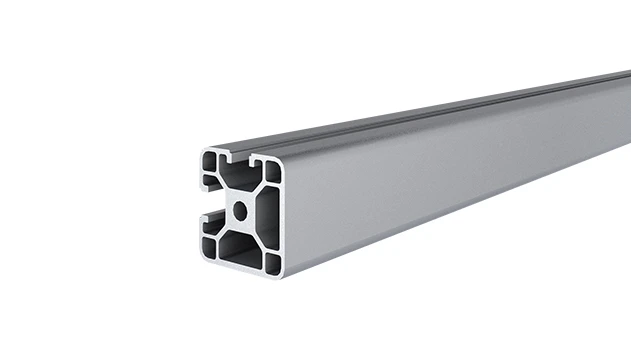
4040E is a 4.00x4.00 CM fractional 40 series square extrusion T-slot profile with two side open T-slots, two side with closed face, each side with 4.00cm face. The profile has align-a-grooves to assist in aligning connecting profiles.
The 3C Industry: Where Speed and Adaptability Define Success
Walk into any 3C (Computer, Communication, Consumer Electronics) manufacturing facility today, and you'll immediately sense the rhythm of innovation. Assembly lines hum with the precision of clockwork, workers maneuver tiny components no larger than a fingernail, and screens flash real-time data on production targets. But beneath this orchestrated chaos lies a critical challenge: the industry's relentless pace of change. Smartphones, laptops, wearables—new models launch every few months, each with unique components, assembly steps, and quality requirements. For manufacturers, this means one thing: rigidity is the enemy.
Traditional workstations, built with fixed steel frames and welded components, were once the backbone of manufacturing. But in the 3C sector, they've become a bottleneck. Reconfiguring a welded workstation to accommodate a new product model can take days—time that manufacturers can't afford to lose. Workers struggle with clunky, inflexible setups that slow down workflows, and maintenance teams spend hours repairing or replacing parts that weren't designed for frequent adjustments. The need for a better solution is clear: workstations that can adapt as quickly as the products they help build.
Enter the 4040E EU Standard Aluminum Profile: A Game-Changer for Modular Workstations
In the search for flexibility, one solution has risen to the top: the 4040E EU Standard Aluminum Profile. If you're unfamiliar with aluminum profiles, think of them as the building blocks of modern manufacturing—versatile, lightweight, and infinitely customizable. The 4040E, in particular, has become a staple in 3C facilities, and for good reason. Let's break down why this unassuming 40x40mm aluminum extrusion is transforming workstations across the industry.
First, the basics: the 4040E is an EU-standard aluminum profile, meaning it adheres to strict dimensional and quality guidelines that ensure compatibility across manufacturers. Its defining feature is the T-slot design—longitudinal grooves running along its length that allow accessories to slide in and lock into place. This might sound simple, but it's revolutionary. Unlike traditional steel frames, which require welding or drilling to modify, the 4040E lets you assemble, disassemble, and reconfigure workstations with basic hand tools (or even tool-free, in some cases).
But the profile itself is just the starting point. What truly makes the 4040E system powerful is its ecosystem of aluminum profile accessories. From corner brackets and end caps to adjustable feet and cable management clips, these small but mighty components turn a single length of aluminum into a fully functional workstation. Need to add a shelf for tools? Slide in a bracket. Want to raise the work surface height? Swap out the feet. Need to integrate an ESD (Electrostatic Discharge) mat to protect sensitive circuit boards? There's a clip for that. This modularity isn't just convenient—it's a lifeline for 3C manufacturers juggling multiple product lines.
Durability is another key advantage. Aluminum is naturally resistant to corrosion, a must in factory environments where moisture, oils, and cleaning agents are common. The 4040E's anodized finish adds an extra layer of protection, ensuring it can withstand the daily wear and tear of assembly work without rusting or warping. And despite being lightweight (aluminum is about one-third the weight of steel), it's surprisingly strong—capable of supporting heavy loads, from stacks of PCBs to industrial-grade tools. This combination of strength and lightness makes the 4040E easy to transport and reposition, a boon for facilities with limited floor space.

Why 4040E Stands Out in the 3C Industry
The 3C industry isn't just about speed—it's about precision, safety, and cost-efficiency. Let's dive into how the 4040E addresses these unique needs:
- Speed of Reconfiguration: In 3C manufacturing, product cycles are measured in months, not years. A smartphone plant might switch from assembling Model X to Model Y in a matter of weeks, requiring workstations to adapt to new component sizes and assembly sequences. With 4040E, reconfiguration takes hours, not days. Workers can adjust shelf heights, add tool rails, or even completely rebuild a workstation layout in a single shift, minimizing downtime.
- ESD Compatibility: Static electricity is the silent killer of electronic components. A single electrostatic discharge can fry a microchip, costing manufacturers thousands in scrap. The 4040E system pairs seamlessly with ESD workstation components—like conductive mats, grounding clips, and antistatic casters—to create a controlled environment. Aluminum itself is conductive, so when properly grounded, the entire workstation becomes part of the ESD protection system, reducing the risk of costly damage.
- Ergonomics: 3C assembly is repetitive work, and worker comfort directly impacts productivity and morale. The 4040E's adjustability lets facilities tailor workstations to individual operators. Need a standing desk for a worker with back issues? No problem. Want to angle the work surface to reduce neck strain? Just swap out the brackets. This focus on ergonomics isn't just a nice-to-have—it's a strategic choice that reduces absenteeism and improves long-term efficiency.
- Cost Savings Over Time: At first glance, aluminum profiles might seem pricier than basic steel frames. But consider the long-term costs. Traditional workstations are often one-and-done—once a product line ends, the workstation becomes obsolete and ends up in a landfill. The 4040E, by contrast, is reusable. When a product line retires, you can disassemble the workstation and repurpose the profiles and accessories for a new project. Over time, this reduces waste and lowers the total cost of ownership.
Real-World Impact: Case Studies in 3C Manufacturing
Numbers and features tell part of the story, but real change happens on the factory floor. Let's look at three case studies where the 4040E EU Standard Aluminum Profile transformed 3C workstations—and bottom-line results.
Case Study 1: A Major Smartphone Manufacturer Reduces Changeover Time by 75%
A leading global smartphone brand operates a production facility in Southeast Asia with over 500 assembly workstations. Prior to adopting the 4040E system, the plant relied on welded steel workstations. When launching a new flagship model, the team faced a major challenge: each workstation needed to be modified to accommodate a larger battery component and new camera module. The process involved hiring external welders, disassembling parts of the workstation, and repainting—all of which took 3–4 days per line. With 20 lines to reconfigure, the total downtime exceeded two weeks, delaying the product launch and costing the company millions in lost revenue.
In 2023, the plant switched to 4040E-based workstations. The transformation was immediate. For the next product launch, instead of bringing in welders, the internal maintenance team handled reconfiguration. Using aluminum profile accessories like adjustable shelf brackets and quick-release pins, they modified 50 workstations per day—completing all 20 lines in just 4 days. The changeover time dropped from 14 days to 4 days, a 75% reduction. Workers also reported improved ergonomics: the new workstations could be adjusted to individual heights, reducing complaints of back pain by 30%. The plant now estimates it saves over $2 million annually in downtime and maintenance costs.
Case Study 2: A Wearables Producer Builds a Scalable ESD Workstation Network
A mid-sized manufacturer of fitness trackers and smartwatches in Europe faced a different challenge: electrostatic discharge. Their products contain delicate sensors and microprocessors that are highly susceptible to static damage. Prior to using 4040E, they used wooden workbenches with ESD mats, but the mats often slipped or became disconnected from grounding points, leading to an average of 50 damaged units per month (a loss of ~€15,000). The wooden benches were also prone to warping, creating uneven work surfaces that made precise assembly difficult.
The solution? A fully integrated ESD workstation system built with 4040E profiles. The team replaced the wooden benches with 4040E frames, adding conductive aluminum profile accessories like grounded shelf brackets and ESD-safe casters. The ESD mats were secured to the work surface using specialized clips that doubled as grounding points, ensuring constant connectivity. The aluminum frame itself was grounded via the workstation's adjustable feet, creating a closed-loop ESD protection system.
The results were striking. Static-related damage dropped from 50 units per month to just 2, a 96% reduction. The 4040E's rigid, flat surface also improved assembly precision—workers reported fewer errors when aligning tiny components, reducing rework by 15%. Perhaps most importantly, the modular design let the company scale production quickly. When demand for their new smartwatch spiked, they added 10 new workstations in a single weekend by reusing profiles and accessories from a discontinued product line. "We used to see ESD damage as an unavoidable cost of doing business," said the plant manager. "Now, with 4040E, it's a problem of the past."
Case Study 3: A Laptop Manufacturer Optimizes Space with Custom 4040E Workstations
A laptop assembly plant in China faced a common issue in 3C manufacturing: limited floor space. With multiple product lines (consumer laptops, gaming laptops, 2-in-1 hybrids), the facility was struggling to fit all necessary workstations without creating cramped, inefficient layouts. Traditional steel workstations were bulky and fixed, leaving little room for material handling carts or worker movement. The plant's lean management team estimated that workers were spending 15% of their shift walking to retrieve tools or components, a classic example of "non-value-added" time in lean manufacturing.
The team turned to 4040E to design custom, space-saving workstations. Using 4040E profiles and aluminum profile accessories like vertical brackets and overhead tool rails, they built compact, multi-tiered workstations that maximized vertical space. Each workstation included a lower shelf for component bins, a middle work surface, and an upper rail for hanging tools—all within a footprint 30% smaller than the old steel workstations. To further optimize flow, they added roller tracks (another modular component compatible with 4040E) to connect workstations, allowing components to glide from one station to the next without manual carrying.
The impact was immediate. Floor space freed up by the smaller workstations allowed the plant to add two new assembly lines without expanding the facility. Worker movement time dropped by 40%, as tools and components were now within arm's reach. The roller tracks reduced the risk of component damage during transport, cutting scrap rates by 8%. "We used to think we needed a bigger building to grow," said the lean manager. "The 4040E system showed us we just needed to think differently about the space we had."
Traditional vs. 4040E Workstations: A Side-by-Side Comparison
| Feature | Traditional Steel Workstations | 4040E Aluminum Profile Workstations |
|---|---|---|
| Reconfiguration Time | 3–5 days (requires welding/drilling) | 2–4 hours (tool-free or basic tools) |
| ESD Compatibility | Limited (requires retrofitted mats/grounding) | Integrated (conductive materials, grounding accessories) |
| Durability | Prone to rust/corrosion; heavy (hard to move) | Corrosion-resistant; lightweight but strong |
| Ergonomics | Fixed height/surface; no adjustability | Fully adjustable (height, angle, accessories) |
| Cost Over 5 Years | Higher (replacement/retrofit costs) | Lower (reusable; minimal maintenance) |
| Space Efficiency | Bulky; fixed footprint | Compact; modular design maximizes vertical space |
The Future of 3C Manufacturing: Lean, Flexible, and Built on 4040E
As the 3C industry continues to evolve—with foldable phones, AR glasses, and IoT devices on the horizon—one thing is clear: flexibility will only grow more critical. Manufacturers can't afford to be tied to rigid, one-size-fits-all workstations. The 4040E EU Standard Aluminum Profile isn't just a tool for today's challenges; it's a foundation for tomorrow's innovation.
What's next for 4040E in 3C? We're already seeing exciting developments. Some suppliers are integrating smart sensors into aluminum profile accessories, allowing workstations to track usage, detect maintenance needs, or even connect to factory IoT systems for real-time productivity monitoring. Others are developing eco-friendly profiles made from recycled aluminum, aligning with the industry's push toward sustainability.
For manufacturers still on the fence, the message is simple: the cost of inaction is higher than the investment in change. Every day spent with rigid workstations is a day of missed opportunities—to launch products faster, reduce waste, or improve worker satisfaction. The 4040E system isn't just about building workstations; it's about building resilience in an industry where the only constant is change.
In the end, the 4040E story is about more than aluminum and T-slots. It's about empowering teams to adapt, innovate, and thrive in a fast-paced world. And in the 3C industry, that's the difference between leading the market and falling behind.