- Company Articles
- Products and Technology
- Product knowledge
- 4040E EU Standard Aluminum Profile for Lean Manufacturing: A Cost-Effective Investment

4040E EU Standard Aluminum Profile for Lean Manufacturing: A Cost-Effective Investment
Related Product
4040E EU Standard Aluminum Profile
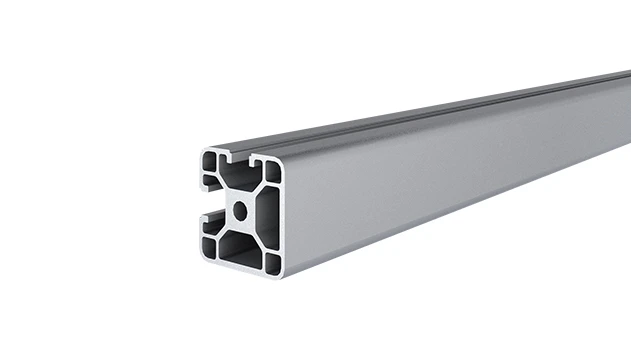
4040E is a 4.00x4.00 CM fractional 40 series square extrusion T-slot profile with two side open T-slots, two side with closed face, each side with 4.00cm face. The profile has align-a-grooves to assist in aligning connecting profiles.
In the fast-paced world of manufacturing, where efficiency and adaptability can make or break a business, the tools and infrastructure you choose matter more than ever. Lean manufacturing—with its focus on eliminating waste, streamlining processes, and continuous improvement—has become the gold standard for modern production facilities. But lean principles aren't just about workflows; they're about the physical systems that support those workflows. Enter the 4040E EU Standard Aluminum Profile: a humble yet powerful component that's quietly revolutionizing how factories build, adapt, and grow. In this article, we'll explore why this aluminum extrusion profile has become a cornerstone of lean systems, how it enhances everything from workbenches to flow racks, and why it's not just an expense, but a long-term investment in your operation's success.
Understanding Lean Manufacturing: More Than Just a Buzzword
Before diving into the specifics of the 4040E profile, let's ground ourselves in what lean manufacturing really means. At its core, lean is a philosophy born from the Toyota Production System (TPS), designed to minimize "muda" (waste) in all forms—whether that's wasted time, materials, space, or effort. The goal? To create more value for customers with fewer resources. Over the decades, lean has evolved beyond automotive plants to become a global framework, adopted by industries ranging from electronics to pharmaceuticals.
But here's the thing: lean isn't just about process maps and kaizen meetings. It's about the physical environment where work happens. A cluttered factory floor with rigid, inflexible equipment can turn even the best lean plans into a struggle. Imagine trying to implement a "pull system" (where production is driven by customer demand) if your material storage racks can't be reconfigured to match shifting order volumes. Or attempting to reduce setup time for a new product when your workbenches are bolted to the floor and can't be adjusted for different team members' heights. In short, lean systems need lean infrastructure—tools that are as adaptable, efficient, and waste-free as the processes they support.
This is where components like the 4040E EU Standard Aluminum Profile come into play. Unlike traditional building materials that lock you into fixed layouts, aluminum extrusion profiles are designed for flexibility. They're the building blocks of a factory that can grow, change, and optimize alongside your business. And among the many aluminum profiles on the market, the 4040E stands out for its balance of strength, versatility, and compliance with strict EU standards—making it a top choice for manufacturers who refuse to compromise on quality or adaptability.
What Is 4040E EU Standard Aluminum Profile? Breaking Down the Basics
Let's start with the name: "4040E" might sound like a random code, but every part tells a story. The "4040" refers to the profile's cross-sectional dimensions: 40mm in width and 40mm in height. This square shape is intentionally versatile, providing equal strength in all directions and making it easy to connect with other components. The "E" denotes a specific series within the manufacturer's lineup—often indicating design tweaks like T-slot placement, wall thickness, or compatibility with certain accessories. For EU-based manufacturers (or those exporting to Europe), the "EU Standard" label is critical: it means the profile meets rigorous safety, quality, and dimensional standards set by the European union, ensuring consistency and compliance across borders.
But what exactly is an aluminum extrusion profile? In simple terms, it's a length of aluminum that's been shaped by forcing heated aluminum billet through a die—a process similar to squeezing toothpaste out of a tube. This method creates profiles with precise, uniform cross-sections, making them ideal for modular construction. The 4040E, like most industrial aluminum profiles, features T-slots along its length—longitudinal grooves that allow accessories (think brackets, panels, or connectors) to be attached anywhere along the profile without welding or drilling. This is where the magic happens: T-slots turn a simple aluminum bar into a customizable building block.
Material quality is another key factor. The 4040E is typically made from 6063-T5 aluminum alloy, a popular choice for extrusions thanks to its excellent combination of strength, corrosion resistance, and machinability. T5 tempering (artificial aging) gives the profile added hardness without sacrificing ductility, making it strong enough to support heavy loads (up to several hundred kilograms, depending on the setup) while remaining lightweight. Compare that to steel, which might offer similar strength but at a much higher weight—adding unnecessary bulk to your equipment and making reconfiguration a back-breaking task.
Fun Fact: The T-slot design isn't just for convenience—it's a nod to lean principles itself. By allowing tools, shelves, or panels to be attached anywhere along the profile, T-slots eliminate the waste of "over-specifying" (e.g., drilling holes in fixed positions that might not suit future needs). It's adaptability built into the material.

The Lean Advantage: How 4040E Supports Your Lean Goals
So, how does a simple aluminum profile align with lean manufacturing principles? Let's break it down into three key lean pillars: waste reduction, flexibility, and continuous improvement.
1. Waste Reduction: Less Waste, More Value
Lean manufacturing identifies seven types of waste, and the 4040E helps combat at least five of them. First, "defects": EU-standard profiles are precision-engineered, so you won't waste time or materials on ill-fitting components. Second, "waiting": modular setups mean you can assemble or reconfigure equipment in hours, not days, reducing downtime. Third, "transportation": the lightweight nature of aluminum makes moving workbenches or flow racks easier, cutting down on the time and labor spent rearranging the factory floor. Fourth, "inventory": instead of stockpiling custom-built steel frames for every possible layout, you can keep a small inventory of 4040E profiles and aluminum profile accessories, assembling what you need when you need it. Finally, "overprocessing": with T-slots, there's no need for welding, painting, or drilling—saving steps and reducing errors.
2. Flexibility: Adapt to Change Without Starting Over
One of the biggest enemies of lean is rigidity. Markets change, customer demands shift, and new products are developed—your factory needs to keep up. Traditional equipment, like welded steel workbenches or fixed wooden shelves, locks you into a single layout. If you need to add a new assembly station or adjust the height of a flow rack, you're often forced to build something new from scratch. The 4040E, by contrast, is modular by design. Using aluminum profile accessories like internal rotatary aluminum joints, parallel aluminum joints, or T-slot nuts, you can disassemble and rebuild components in minutes. Need to shorten a workbench? Unbolt a section. Want to add a shelf to a flow rack? Slide a bracket into the T-slot and tighten a screw. This flexibility turns "permanent" infrastructure into "temporary by design"—exactly what lean demands.
3. Continuous Improvement (Kaizen): Grow Better, Not Just Bigger
Kaizen, or continuous improvement, is about making small, incremental changes to get better over time. But how do you experiment with new layouts or processes if your equipment can't change with you? The 4040E acts as a "blank canvas" for experimentation. For example, suppose your team suggests angling a flow rack to reduce picking time—with aluminum profiles, you can adjust the angle, test it for a week, and either keep it or revert if it doesn't work. No need for a custom order or a major investment. This ability to prototype quickly turns every team member into a potential innovator, fostering a culture of improvement that's at the heart of lean.
Beyond the Basics: Real-World Applications on the Factory Floor
Now that we understand the "why" behind the 4040E, let's look at the "how"—specifically, how this profile is used in everyday factory applications. From workbenches to flow racks, it's the backbone of some of the most critical systems in your operation.
Workbenches: Where Precision Meets Comfort
The workbench is the beating heart of any assembly line—a place where operators spend hours each day, so ergonomics and functionality are non-negotiable. 4040E profiles shine here. A typical 4040E workbench might include a frame built from 40mm x 40mm aluminum profiles, with an aluminum honeycomb panel top for durability and a clean surface. Using height-adjustable feet (another accessory), you can tailor the bench to each operator's height, reducing strain and fatigue. Add-ons like tool holders, LED light strips, or ESD (electrostatic discharge) mats (critical for electronics manufacturing) can be attached directly to the T-slots, keeping tools within arm's reach and the workspace organized.
What if you need a mobile workbench? Swap out the fixed feet for casters (yet another accessory), and suddenly your bench can roll to wherever it's needed—perfect for line-side support or temporary projects. And when the project ends? Remove the casters, add feet, and it's back to a stationary bench. No waste, no new purchases—just adaptability.
Flow Racks: Gravity-Fed Efficiency for Material Handling
Flow racks (or gravity racks) are a staple of lean material handling, using gravity to feed parts and components to the point of use. They ensure that the first part in is the first part out (FIFO), reduce picking errors, and cut down on the time workers spend walking to retrieve materials. The 4040E is ideal for building flow racks because it's strong enough to support heavy loads of parts while remaining lightweight enough to keep the overall structure manageable. Here's how it works: the frame is constructed from 4040E profiles, and roller tracks (often made from plastic or aluminum) are mounted to the frame at a slight angle. Parts slide down the rollers, ready for pickers to grab. Need to adjust the angle for heavier parts? Simply reposition the roller track brackets in the T-slots. Adding more levels? Bolt on another section of 4040E. It's a system that grows with your inventory needs.
Assembly Lines and Production Cells
Modern assembly lines are no longer linear, one-size-fits-all operations. They're often broken into "cells"—small, self-contained workstations focused on a specific task. The 4040E excels at building these cells, which need to be compact, efficient, and adaptable. For example, a cell might include a 4040E workbench, a flow rack for incoming parts, a small conveyor (supported by 4040E legs), and tool storage—all connected and customizable. If a new product requires a longer assembly process, you can extend the cell by adding more 4040E sections. If demand drops, you can shrink it to save space. This scalability ensures you're never using more floor space than necessary—a key lean principle.
Aluminum Profile Accessories: The "Secret Sauce" of Modularity
A profile is only as good as the accessories that bring it to life. The 4040E's true power lies in the ecosystem of aluminum profile accessories designed to work with it. These accessories turn basic aluminum bars into fully functional systems, and they're a big reason why the 4040E is so versatile. Let's highlight a few must-have accessories and how they enhance lean operations:
Internal Rotary Aluminum Joints
These joints allow two 4040E profiles to connect at adjustable angles—perfect for building frames, shelves, or workbench legs that need to bend. Unlike fixed-angle brackets, rotary joints let you fine-tune the angle (from 0° to 180°) and lock it in place with a screw. This is invaluable for customizing workbench heights or creating sloped surfaces (like the incline on a flow rack).
T-Slot Nuts and Bolts
The unsung heroes of T-slot systems, these small nuts slide into the profile's grooves and lock in place when a bolt is tightened. They allow you to attach accessories anywhere along the profile, not just at pre-drilled holes. No more measuring, marking, or drilling—just slide, tighten, and go.
End Caps and Covers
These plastic or aluminum caps fit over the ends of 4040E profiles, protecting workers from sharp edges and preventing dust, debris, or small parts from getting stuck inside the T-slots. They're a small detail, but they reduce the risk of injuries and keep your equipment looking professional—both win for lean (safety is a form of waste reduction, too).
Aluminum Honeycomb Panels
When used as workbench tops or shelf surfaces, these panels are lightweight, strong, and flat—ideal for precision work. They're also easy to clean, which is critical for maintaining a hygienic workspace (especially in industries like food processing or pharmaceuticals).
The beauty of these accessories is that they're standardized. Whether you buy them from the same supplier as your 4040E profiles or a third party, EU standards ensure compatibility. This means you're never locked into a single brand—another layer of flexibility that keeps costs competitive and options open.
4040E vs. Traditional Materials: Why Aluminum Wins for Lean
To truly appreciate the value of the 4040E, it helps to compare it to the materials it's replacing: steel, wood, and even lower-quality aluminum profiles. Let's break down the differences in a side-by-side comparison:
| Factor | 4040E Aluminum Profile | Steel (Welded) | Wood | Low-Quality Aluminum (Non-Standard) |
|---|---|---|---|---|
| Weight | Lightweight (≈2.7kg/m for 40x40mm) | Heavy (≈10kg/m for 40x40mm steel square tube) | Moderate (varies by wood type) | Similar to 4040E, but inconsistent |
| Strength | High (supports 100-500kg per shelf, depending on setup) | Very high, but overkill for most lean applications | Low to moderate (prone to warping under heavy loads) | Low (prone to bending or breaking) |
| Flexibility | High (modular, reconfigurable in minutes) | Low (welded joints require cutting/rewelding to modify) | Low (fixed; drilling new holes weakens structure) | Moderate, but poor accessory compatibility |
| Maintenance | Low (corrosion-resistant, no painting needed) | High (prone to rust; requires painting/coating) | High (prone to rot, warping, and termites) | High (inconsistent quality leads to early wear) |
| Cost (Lifetime) | Moderate upfront, low long-term (reusable, low maintenance) | Low upfront, high long-term (high maintenance, non-reusable) | Low upfront, very high long-term (needs frequent replacement) | Low upfront, high long-term (needs replacement due to poor durability) |
| Compliance | EU-standard (safe, consistent, traceable) | Varies (may not meet EU safety standards for sharp edges/welds) | Low (no safety standards for industrial use) | None (may contain harmful materials or poor tolerances) |
As the table shows, the 4040E strikes a rare balance: it's strong enough for industrial use, lightweight enough for easy reconfiguration, low-maintenance, and compliant with strict standards. Steel, while strong, is overkill for most lean applications and creates unnecessary waste in transportation, labor, and storage. Wood is cheap upfront but falls apart quickly in factory environments. And non-standard aluminum profiles? They might save you a few dollars today, but their inconsistency and poor accessory compatibility will cost you in downtime and replacements tomorrow.
Case Study: How One Manufacturer Cut Costs by 30% with 4040E
Challenge: A Small Electronics Manufacturer Struggles with Rigid Infrastructure
Company: TechFlow, a mid-sized electronics contract manufacturer (CEM) with 50 employees, producing circuit boards for automotive clients.
Problem: TechFlow's factory floor was filled with welded steel workbenches and fixed wooden shelves. When a major client requested a new product line with different assembly steps, the team found themselves unable to reconfigure their workspace without hiring welders to cut and rebuild the steel benches. Setup time for the new line took 3 weeks, during which production of existing products slowed. Additionally, the wooden shelves were warping under the weight of components, leading to frequent part shortages as items fell behind the shelves. Maintenance costs for repainting steel and replacing wood were eating into profits.
Solution: After researching lean manufacturing best practices, TechFlow invested in 4040E EU Standard Aluminum Profiles and aluminum profile accessories, replacing all steel workbenches and wooden shelves with modular setups.
Results:
- Setup Time: The new product line was up and running in 3 days instead of 3 weeks, thanks to the modular 4040E workbenches and flow racks. Reconfiguring involved unbolting sections and adding new ones—no welders needed.
- Maintenance Costs: Annual spending on repainting steel and replacing wood dropped by 75%. The aluminum profiles required no painting, and the corrosion-resistant material held up to the factory's humid environment.
- Space Savings: By designing compact, vertical flow racks with 4040E, TechFlow freed up 20% of their factory floor space, allowing them to add a second assembly line without expanding their facility.
- Error Reduction: The FIFO flow racks reduced picking errors by 40%, as parts were now easily visible and accessible.
- Total Cost Savings: Over 12 months, TechFlow calculated a 30% reduction in costs related to setup, maintenance, and waste—far exceeding the initial investment in the 4040E profiles.
Quote from Operations Manager, Maria Gomez: "We used to think of equipment as 'permanent.' The 4040E taught us to think of it as 'temporary by design.' Now, when a client's needs change, we don't panic—we adapt. It's not just about saving money; it's about staying competitive."
TechFlow's story isn't unique. Across industries, manufacturers are discovering that the 4040E isn't just a material upgrade—it's a strategic tool that aligns their physical infrastructure with their lean goals. By reducing waste, increasing flexibility, and lowering long-term costs, it's an investment that pays dividends for years.
Choosing the Right Supplier: Why Quality Matters
Not all 4040E profiles are created equal. To fully realize the benefits we've discussed, you need to source from a reputable lean pipe supplier (or, more specifically, an aluminum profile supplier) that specializes in EU-standard components. Here's what to look for:
1. Compliance with EU Standards
EU standards (like EN 755 for aluminum extrusions) ensure that profiles are dimensionally accurate, have consistent material properties, and meet safety requirements. A reputable supplier will provide certificates of compliance, so you know you're getting what you paid for. Avoid suppliers who can't verify their profiles meet EU standards—you'll likely end up with profiles that are too thin, have misaligned T-slots, or use subpar aluminum alloys.
2. Range of Accessories
The best suppliers offer a full lineup of aluminum profile accessories—from joints and brackets to panels and casters—designed to work seamlessly with their 4040E profiles. This ensures compatibility and reduces the risk of accessories not fitting (a common problem with mismatched components from different suppliers).
3. Technical Support
Even with modular components, designing a lean system can be overwhelming. Look for suppliers who offer technical support, including CAD drawings, layout advice, or even on-site consultations. They should understand lean principles and help you design setups that maximize efficiency.
4. Consistency and Reliability
You need to know that the 4040E profile you order today will be identical to the one you order next year. Inconsistent profiles can lead to wobbly workbenches or misaligned flow racks. Ask about the supplier's quality control processes—do they inspect each batch for dimensional accuracy?
Conclusion: The 4040E—More Than a Profile, It's a Lean Investment
In the world of lean manufacturing, every decision should be measured by one question: "Does this create more value with less waste?" The 4040E EU Standard Aluminum Profile passes that test with flying colors. It's a material that embodies lean principles—flexible, efficient, and built to adapt. Whether you're building workbenches, flow racks, or entire production cells, it transforms your factory floor from a static space into a dynamic, ever-improving ecosystem.
Yes, investing in 4040E profiles and aluminum profile accessories requires an upfront cost. But consider this: every hour saved on setup time, every dollar cut from maintenance budgets, and every square foot of space reclaimed is an investment in your company's ability to compete. In an era where customer demands change overnight and efficiency is the key to survival, the 4040E isn't just a purchase—it's a commitment to building a leaner, stronger, more adaptable operation.
So, if you're ready to stop fighting against rigid infrastructure and start working with it, consider the 4040E. It's not just aluminum. It's the foundation of your lean future.