- Company Articles
- Products and Technology
- Product knowledge
- 4040E EU Standard Aluminum Profile for Lean Material Handling: Trolleys & Carts Design

4040E EU Standard Aluminum Profile for Lean Material Handling: Trolleys & Carts Design
Related Product
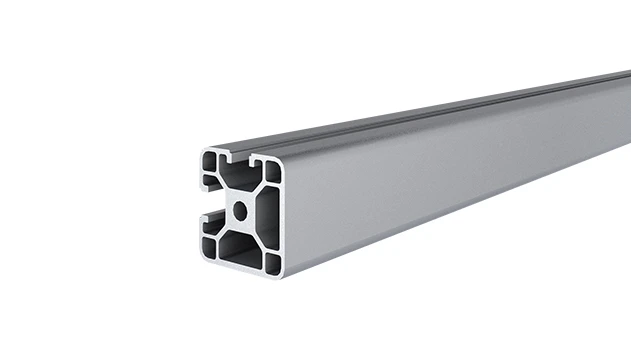
4040E EU Standard Aluminum Profile
4040E is a 4.00x4.00 CM fractional 40 series square extrusion T-slot profile with two side open T-slots, two side with closed face, each side with 4.00cm face. The profile has align-a-grooves to assist in aligning connecting profiles.
The Heartbeat of Lean Material Handling: Why Trolleys and Carts Matter
In the world of manufacturing, warehousing, and distribution, the phrase "time is money" isn't just a cliché—it's a daily reality. Every minute spent searching for tools, wrestling with unwieldy equipment, or waiting for materials to arrive at a workstation chips away at productivity. This is where lean material handling steps in: a philosophy centered on eliminating waste, streamlining workflows, and making every movement count. And at the core of this philosophy? The tools that keep materials flowing—trolleys and carts.
But not all trolleys are created equal. A flimsy cart that wobbles under load, a rigid structure that can't adapt to new tasks, or a design that requires constant repairs can quickly turn a "lean" process into a tangled mess. That's why forward-thinking operations are turning to a game-changing building block: the 4040E EU Standard Aluminum Profile . This unassuming yet versatile aluminum extrusion profile has become the backbone of modern material handling, offering the flexibility, strength, and modularity needed to design trolleys and carts that grow with your business.
What Makes 4040E EU Standard Aluminum Profile Stand Out?
Let's start with the basics: the 4040E is part of the EU standard aluminum extrusion profile family, named for its dimensions—40mm in width and 40mm in height. But its real power lies in the details. Made from high-grade 6063-T5 aluminum alloy, it balances lightweight portability with impressive strength, capable of supporting heavy loads without bending or warping. Its surface is typically anodized, giving it a smooth, corrosion-resistant finish that stands up to daily wear, spills, and even harsh factory environments.
The secret sauce, though, is its T-slot design. Running along all four sides of the profile, these slots act as universal connection points for a vast array of aluminum profile accessories —from angle brackets and hinges to handles and roller tracks. No welding, no drilling, no complicated tools. With a few simple fasteners, you can assemble, disassemble, or reconfigure a trolley in minutes, turning a single cart into a multi-purpose workhorse.
Think of it like building with advanced Lego bricks, but for grown-ups. Need to add a shelf? Slide in a bracket. Want to mount a tool holder? Tighten a T-bolt into the slot. Suddenly, "one-size-fits-all" becomes "one-profile-fits-any-task."

Designing Trolleys & Carts with 4040E: From Frames to Functionality
Designing a trolley with 4040E starts with the frame—the skeleton that defines its shape and strength. Most carts begin with a rectangular base, built by cutting 4040E profiles to length and joining them with 90° aluminum profile connectors or angle codes. These connectors slide into the T-slots and tighten with screws, creating a rigid joint that's strong enough to support hundreds of kilograms. For extra stability, diagonal braces (also made from 4040E) can be added, turning a simple frame into a structure that handles bumps and uneven floors with ease.
Next comes mobility: caster wheels . A trolley is only as good as its ability to move, and 4040E's versatility shines here. Swivel casters with brake locks are a popular choice—they let the cart spin 360° for tight corners, while the locks keep it steady during loading or when used as a temporary workstation. Heavy-duty casters with rubber wheels minimize noise and protect finished floors, making them ideal for office-adjacent warehouses or retail backrooms. Even specialized casters, like those designed for wet environments or rough concrete, can be mounted directly to the 4040E frame using caster installation bases—no custom drilling required.
But the real magic is in customization. Let's say you need a cart for assembling small electronics. Add a flat work surface using an aluminum honeycomb panel (lightweight, yet rigid) mounted on top of the 4040E frame. Attach a tool rail along one side, where you can clip screwdrivers, pliers, and tape dispensers using T-slot hooks. On the opposite side, mount a small shelf for bins of components. Need to move it to the next station? Unlock the casters and go. Later, if the assembly line changes, swap the honeycomb panel for a roller track, and suddenly it's a gravity-fed cart for moving PCBs down the line.
Common Trolley Designs Using 4040E Aluminum Profile
To better visualize how 4040E transforms into functional tools, let's look at some of the most popular trolley and cart designs used in lean operations today. The table below breaks down their key features, components, and ideal uses:
| Trolley Type | Purpose | Key Components | Typical Load Capacity | Best For |
|---|---|---|---|---|
| Hand Trolley A | Lightweight material transport | 4040E frame, 2 swivel casters + 2 fixed casters, foldable handle, plywood deck | 150–200 kg | Retail stockrooms, small warehouses, moving boxes or tools |
| Material Rack B (3 Row, 3 Floor) | Multi-level storage & transport | 4040E vertical posts & horizontal beams, 4 locking casters, steel mesh shelves | 300–500 kg (distributed load) | Manufacturing lines, storing components for assembly (e.g., automotive parts) |
| Workbench Trolley | Mobile workstation | 4040E frame, aluminum honeycomb worktop, under-shelf storage, tool rail, 4 swivel casters (2 locking) | 200–300 kg | Assembly lines, field service (e.g., repairing machinery on-site) |
| Roller Track Cart | Gravity-fed material flow | 4040E frame, plastic roller track guide rails (yellow/grey), 4 fixed casters, side guards | 100–150 kg | Assembly lines, where parts slide from one station to the next (e.g., electronics, packaging) |
What's striking about these designs is their adaptability. A Material Rack B, for example, can start with 3 shelves but easily expand to 5 by adding more 4040E crossbeams. A Roller Track Cart can switch from plastic to steel roller tracks if heavier parts need to be transported. This "build now, adapt later" approach is why 4040E is a favorite among businesses that want to future-proof their operations without overspending upfront.
Beyond the Basics: Enhancing Carts with 4040E Accessories
The 4040E profile is just the starting point—the real fun comes with accessories. These small, often overlooked components turn a basic cart into a custom solution tailored to your unique needs. Let's explore a few game-changers:
- Aluminum Profile End Caps: These plastic or rubber caps snap onto the ends of 4040E profiles, preventing dust buildup in T-slots and eliminating sharp edges that could snag gloves or damage products.
- T-Slot Rubber Seal Covers: For carts used in cleanrooms or environments with small parts (like electronics), these covers fill the T-slots, creating a smooth surface that won't trap screws, nuts, or debris.
- Roller Tracks: As mentioned earlier, roller tracks mount directly to 4040E frames, turning a static cart into a dynamic conveyor. Plastic roller track guide rails (available in yellow or grey) are perfect for lightweight items, while steel roller tracks handle heavier loads. They're ideal for "pick and place" operations, where items glide to the user instead of requiring manual lifting.
- Handles and Push Bars: Ergonomic handles, made from aluminum or nylon, bolt onto the 4040E frame, making carts easier to push and reducing strain on workers. Some handles even fold down when not in use, saving storage space.
- Tool Holders and Bins: From hooks for power cords to plastic bins for small parts, these accessories turn a cart into a mobile tool chest. They slide into T-slots, so you can rearrange them as tools or tasks change.
One of the most underrated benefits of these accessories is their availability. Since 4040E is an EU standard profile, accessories are widely produced by suppliers, meaning you won't get stuck waiting for custom parts. Need a new caster? A local distributor likely has one in stock. Want to add a shelf? Order a few brackets and have them by the end of the week. This accessibility keeps downtime to a minimum and ensures your carts evolve as fast as your business.
Real-World Impact: How 4040E Carts Transform Operations
It's one thing to talk about features and benefits, but seeing 4040E in action tells the real story. Take a mid-sized electronics manufacturer in Germany, for example. A few years ago, their assembly line relied on wooden carts that were heavy, prone to splintering, and impossible to reconfigure. When they switched to 4040E-based workbench trolleys, they immediately noticed a difference: setup time for new product lines dropped by 40%, since they could retool the carts in minutes instead of building new ones. Workers reported less fatigue from pushing lighter carts, and the aluminum frames were easier to clean, reducing the risk of dust damaging sensitive circuit boards.
Or consider a food distribution warehouse in France. They needed carts that could handle both bulk produce (heavy, but fragile) and packaged goods. With 4040E, they designed hybrid carts: a base with steel roller tracks for crates of vegetables and adjustable shelves for boxes of snacks. The carts' modularity meant they could add or remove shelves seasonally, adapting to spikes in demand for fruits in summer or holiday packages in winter. Best of all, when a caster wore out, they replaced it in 10 minutes—no need to take the entire cart offline for repairs.
These stories share a common thread: 4040E doesn't just improve carts—it improves how teams work. It turns frustration into efficiency, rigidity into adaptability, and waste into value. In short, it makes lean material handling not just a goal, but a daily reality.
Why 4040E is the Future of Lean Material Handling
As businesses face increasing pressure to do more with less—less time, less space, less budget—the need for flexible, durable material handling tools will only grow. 4040E EU Standard Aluminum Profile meets this need head-on. It's not just a profile; it's a platform for innovation. Whether you're a small workshop building your first cart or a multinational corporation redesigning a global supply chain, 4040E offers a level of versatility that traditional materials (wood, steel, or generic plastic) can't match.
So, if you're tired of carts that hold your team back, it might be time to take a closer look at 4040E. Start small: build a simple hand trolley and see how it transforms a daily task. Chances are, you'll quickly wonder how you ever worked without it. After all, in lean material handling, the right tools don't just carry materials—they carry your business forward.