- Company Articles
- Products and Technology
- Product knowledge
- 4040E EU Standard Aluminum Profile for Medical Storage Racks: Compliance & Organization

4040E EU Standard Aluminum Profile for Medical Storage Racks: Compliance & Organization
Related Product
4040E EU Standard Aluminum Profile
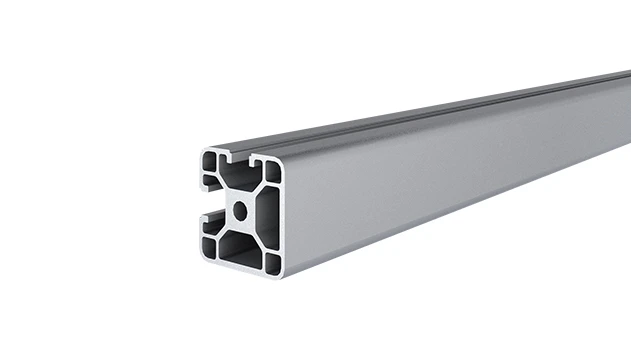
4040E is a 4.00x4.00 CM fractional 40 series square extrusion T-slot profile with two side open T-slots, two side with closed face, each side with 4.00cm face. The profile has align-a-grooves to assist in aligning connecting profiles.
In the fast-paced world of healthcare, every second counts. From life-saving medications to precision surgical tools, the way medical facilities store their supplies directly impacts patient safety, staff efficiency, and regulatory compliance. Yet, far too many healthcare settings struggle with disorganized storage—overcrowded shelves, mismatched containers, and rigid systems that can't adapt to evolving needs. This chaos doesn't just waste time; it increases the risk of errors, delays critical care, and puts facilities at odds with strict industry regulations. Enter the 4040E EU Standard Aluminum Profile: a game-changer in medical storage that blends compliance, durability, and adaptability into a single, sleek solution. Let's explore how this unassuming yet powerful material is redefining how healthcare facilities organize, store, and access their most vital resources.
Understanding the 4040E EU Standard Aluminum Profile
At first glance, the 4040E EU Standard Aluminum Profile might seem like just another piece of industrial material. But in reality, it's a meticulously engineered solution designed to meet the highest standards of quality and performance. Let's break it down: the "4040" refers to its dimensions—40mm in width and 40mm in height—making it a versatile, medium-sized profile that strikes the perfect balance between strength and flexibility. The "E" denotes its compliance with EU standards, a mark of approval that guarantees it meets rigorous criteria for material safety, structural integrity, and environmental responsibility.
But what truly sets aluminum apart, especially in medical settings, is its inherent properties. Unlike steel, which is heavy and prone to rust when exposed to frequent cleaning agents, aluminum is lightweight yet surprisingly strong—capable of supporting heavy loads without bending or warping. Its natural resistance to corrosion is a lifesaver in environments where disinfectants and sanitizers are used daily; unlike other metals, it won't degrade or harbor bacteria in cracks. And perhaps most importantly for healthcare, aluminum is non-porous and easy to clean. Its smooth, seamless surface leaves no crevices for dirt, germs, or moisture to hide, making it ideal for maintaining sterile conditions.
Compare this to plastic storage systems, which often lack the structural rigidity to support heavy medical equipment, or wood, which absorbs liquids and becomes a breeding ground for pathogens. The 4040E profile, with its aluminum core, checks all the boxes: it's strong enough to hold surgical instrument trays, lightweight enough to reconfigure without heavy machinery, and safe enough to withstand the harsh chemicals used in hospital sanitization protocols. It's no wonder that medical facilities across Europe are turning to this profile as the foundation for their storage infrastructure.
Compliance: Meeting the Strictest Medical Standards
Healthcare is an industry governed by rules—lots of them. From ISO 13485 (the gold standard for medical device quality management) to FDA guidelines and Good Manufacturing Practices (GMP), facilities must adhere to a maze of regulations to ensure patient safety and avoid costly penalties. When it comes to storage, compliance isn't optional; it's a matter of legal and ethical responsibility. The 4040E EU Standard Aluminum Profile is built with this reality in mind, designed to align seamlessly with the most stringent medical regulations.
Let's start with materials. The 4040E profile is crafted from high-grade aluminum that meets EU standards for medical use. This means it's free from harmful substances like lead or phthalates, and its composition is certified to not react with medications, chemicals, or biological materials—a critical feature when storing items like injectables or lab samples. Unlike some cheaper metals or plastics, it won't leach toxins or degrade when exposed to alcohol-based disinfectants or sterilizing agents, ensuring that stored supplies remain uncontaminated.
Then there's the issue of structural safety. Medical storage racks often hold heavy items: cases of IV fluids, bulk medication boxes, or metal instrument trays. The 4040E profile is engineered to handle these loads without compromising. Its uniform wall thickness and reinforced design meet EU load-bearing standards, preventing sagging or collapse even under sustained weight. This isn't just about durability; it's about preventing accidents. A rack that fails could damage expensive equipment, injure staff, or, worse, disrupt access to emergency supplies.
Perhaps most importantly, the 4040E profile simplifies compliance through its design. Its smooth, crevice-free surface is a nightmare for bacteria and a dream for cleaning staff. Unlike wire shelving or wooden racks, which trap dust and grime, aluminum's non-porous finish can be wiped down quickly with hospital-grade cleaners, reducing the risk of cross-contamination. For facilities audited under GMP or ISO 13485, this ease of cleaning translates to fewer compliance violations and a lower risk of failed inspections. It's not just a storage solution—it's a compliance partner.

Organizational Excellence: Modularity and Adaptability
Healthcare storage needs are rarely static. A hospital's emergency department might need to expand its medication stock during flu season, while a clinic might reconfigure its exam rooms to accommodate new diagnostic equipment. Rigid storage systems—think fixed wooden shelves or welded steel racks—can't keep up with these changes, forcing facilities to waste money on new furniture or make do with inefficient workarounds. The 4040E EU Standard Aluminum Profile solves this problem through modularity, putting the power of customization directly in the hands of healthcare staff.
At the heart of this adaptability is the profile's T-slot design. Running along its length are precision-cut grooves that allow for easy attachment of aluminum profile accessories—connectors, brackets, shelves, and dividers—without the need for welding or drilling. This means a storage rack built with 4040E can be reconfigured in minutes: add a shelf here, adjust a divider there, or even repurpose the entire structure as needs change. For example, a rack originally used for storing surgical gloves can be quickly modified with additional brackets to hold taller instrument cases. This flexibility eliminates the need for "one-size-fits-all" storage and lets facilities tailor their systems to their unique workflows.
To illustrate just how versatile this system can be, consider the range of aluminum profile accessories available. From 90° connectors that join profiles at right angles to end caps that smooth sharp edges (critical for preventing scratches on sterile packaging), these accessories turn the 4040E profile into a building block for endless configurations. Need a mobile cart for transporting medications between floors? Add casters. Want to separate different types of supplies? Snap on dividers. The possibilities are limited only by the facility's needs—and with new accessories constantly being developed, the system evolves alongside healthcare itself.
| Accessory Type | Function | Benefit in Medical Storage |
|---|---|---|
| 90° Aluminum Profile Connector | Joins two 4040E profiles at a right angle | Creates sturdy corners for rack frames, ensuring stability for vertical and horizontal shelves |
| Adjustable Shelf Bracket | Attaches to T-slots to support shelves at variable heights | Allows customization of shelf spacing to fit tall bottles, small vials, or bulky equipment |
| End Cap | Covers exposed ends of profiles | Eliminates sharp edges, preventing tears in sterile packaging and reducing injury risk |
| Divider Clip | Snaps into T-slots to separate shelf sections | Organizes small items like syringes or bandages, reducing time spent searching for supplies |
Beyond customization, the 4040E system promotes visual organization—a key factor in reducing errors. With its clean, uniform look, facilities can color-code shelves (using labeled dividers or colored accessories) to distinguish between medication types, expiration dates, or department-specific supplies. For example, red dividers might mark high-risk medications, while blue indicates surgical tools. This visual clarity helps staff quickly locate items, reducing the chance of grabbing the wrong supply—a mistake that could have life-threatening consequences.
Integrating with Workbenches: Streamlining Workflows
Storage doesn't exist in isolation. In medical settings, the area around storage racks is often a hub of activity: nurses preparing medication carts, technicians labeling samples, or surgeons gathering tools for procedures. A disjointed setup—where storage is far from workspaces or workbenches are too small—forces staff to waste time walking back and forth, disrupting workflows and increasing fatigue. The 4040E EU Standard Aluminum Profile solves this by seamlessly integrating storage racks with workbenches, creating a unified, efficient workspace.
Workbenches built with 4040E profiles are more than just tables; they're extensions of the storage system. Imagine a pharmacy where a 4040E workbench sits directly adjacent to a medication rack. The bench's height is adjustable (thanks to telescoping legs and height-lock brackets), ensuring ergonomic comfort for staff of all sizes. Its surface—often topped with a non-slip, chemical-resistant material—provides ample space for counting pills, mixing solutions, or labeling bottles. Below the bench, additional shelves or drawers (attached via T-slot accessories) can hold frequently used tools like pill counters or label printers. When supplies run low, staff simply reach to the adjacent rack—no steps required.
For laboratories, this integration is even more critical. A 4040E workbench paired with a sample storage rack ensures that technicians can process, store, and retrieve samples without leaving their station. The rack's adjustable shelves can hold temperature-controlled sample containers, while the bench's smooth surface is easy to disinfect between uses. In surgical prep areas, workbenches built with 4040E profiles can be customized with tool hooks (attached to T-slots) to hold scissors, forceps, or retractors, keeping them within arm's reach of the storage rack holding sterile instrument trays. This seamless flow reduces the time between preparing tools and using them, getting patients into surgery faster.
What makes this integration possible is the profile's consistency. Since both the storage racks and workbenches use the same 4040E system, accessories are interchangeable. A bracket that works on a rack can also attach to a bench, and shelves can be moved from one to the other as needs change. This uniformity simplifies maintenance, too—facilities only need to stock one set of replacement parts, reducing inventory costs and downtime.
Lean System Principles: Reducing Waste, Boosting Efficiency
Lean system principles—focused on eliminating waste and maximizing value—have long been a cornerstone of efficient manufacturing. In recent years, healthcare has embraced these principles to reduce costs, improve patient care, and streamline operations. The 4040E EU Standard Aluminum Profile aligns perfectly with lean thinking, offering a storage solution that minimizes waste in all its forms: time, space, and resources.
Let's start with time waste. In lean terms, "motion waste" refers to unnecessary movement—like walking across a room to grab a supply. With 4040E's modular design, storage racks can be placed exactly where staff need them, whether that's next to a workbench, inside a patient room, or near a medication cart docking station. This reduces steps, letting staff focus on care instead of commuting. For example, a nurse in a pediatric ward might have a small 4040E rack mounted near the nursing station, stocked with commonly used supplies like band-aids and thermometers. No more trekking to the central supply room for every minor need.
Space waste is another target of lean, and the 4040E system excels here, too. Traditional storage systems often force facilities to choose between overcrowding (storing too much in too little space) or underutilization (wasting square footage with empty shelves). The 4040E's adjustable shelves and compact design let facilities maximize vertical space—using height instead of floor area to store supplies. A 4040E rack might have 10 adjustable shelves instead of 5 fixed ones, doubling storage capacity without expanding the rack's footprint. This is especially valuable in small clinics or crowded hospital wings where space is at a premium.
Then there's resource waste. Rigid storage systems often become obsolete when needs change, leading to costly replacements. The 4040E profile, however, is built to adapt. When a department expands, facilities can add more profiles and accessories instead of buying a whole new rack. When a new type of equipment arrives, shelves can be repositioned in minutes. This longevity reduces the need for frequent replacements, cutting down on waste and saving money over time. It's lean in action: getting more value from fewer resources.
Case Study: A Community Hospital's Transformation
To see the 4040E system in action, look no further than Greenfield Community Hospital, a 150-bed facility in rural Europe that was struggling with outdated storage. Before upgrading, their pharmacy relied on metal wire shelving that sagged under heavy medication boxes, and their surgical prep area had fixed wooden workbenches that couldn't accommodate new, larger instrument trays. Staff reported spending up to 20 minutes per shift searching for supplies, and the hospital had failed two recent compliance audits due to "inadequate storage conditions."
After switching to 4040E EU Standard Aluminum Profile racks and workbenches, the results were dramatic. The pharmacy reconfigured its shelves with adjustable brackets, creating space for 30% more medication while keeping expiration dates visible. The surgical prep area now has a 4040E workbench with height-adjustable shelves and tool hooks, cutting prep time by 15 minutes per procedure. Most importantly, the hospital passed its next compliance audit with zero storage-related violations. As pharmacy manager Maria Lopez put it: "The 4040E system didn't just organize our supplies—it organized our workflow. We're faster, safer, and less stressed."
Conclusion: More Than Storage—A Foundation for Better Care
The 4040E EU Standard Aluminum Profile is more than a material; it's a tool for transforming healthcare. By combining compliance with adaptability, durability with efficiency, it addresses the core challenges of medical storage: keeping supplies safe, accessible, and organized. For facilities struggling with cluttered racks, non-compliant systems, or inefficient workflows, it offers a path forward—one where storage supports care instead of hindering it.
As healthcare continues to evolve, with new technologies, stricter regulations, and growing patient needs, the ability to adapt will be key. The 4040E system doesn't just meet today's standards; it grows with tomorrow's challenges. It's a investment in patient safety, staff well-being, and the future of healthcare—one 40mm profile at a time.