- Company Articles
- Products and Technology
- Product knowledge
- 4040E EU Standard Aluminum Profile for Modular Workstations: Flexibility in Medical Labs

4040E EU Standard Aluminum Profile for Modular Workstations: Flexibility in Medical Labs
Related Product
4040E EU Standard Aluminum Profile
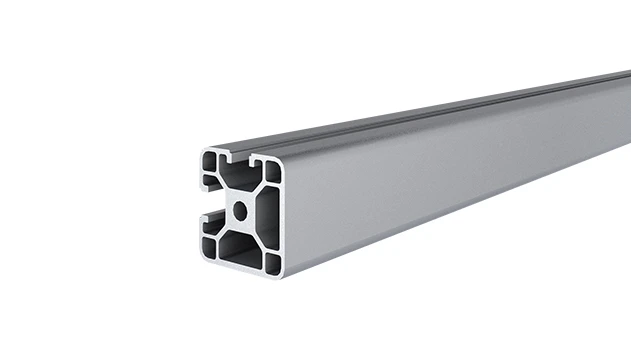
4040E is a 4.00x4.00 CM fractional 40 series square extrusion T-slot profile with two side open T-slots, two side with closed face, each side with 4.00cm face. The profile has align-a-grooves to assist in aligning connecting profiles.
The Dynamic World of Medical Labs: Why Rigidity Fails
Walk into any modern medical lab, and you'll feel the energy of discovery. Researchers huddle over microscopes, technicians rush to process time-sensitive samples, and new equipment arrives weekly to tackle emerging health challenges. But behind this bustle lies a hidden struggle: static workspaces that can't keep up. Traditional lab setups—built with fixed wooden benches, welded steel racks, or bulky cabinetry—were designed for stability, not adaptability. When a lab needs to reconfigure for a new study, add a specialized instrument, or expand a team, these rigid structures become obstacles rather than tools.
Consider a small diagnostic lab in Berlin that recently expanded its COVID-19 testing capacity. Their existing workstations, bolted to the floor, couldn't be rearranged to accommodate extra testing stations. The team spent weeks waiting for contractors to build new benches, losing precious time when every hour counted. Or a genetics lab in Paris that adopted a new gene-sequencing machine; the device's dimensions didn't fit their old steel rack, forcing them to either modify the rack (risking structural damage) or delay the project. These stories aren't outliers—they're the norm in labs stuck with inflexible infrastructure.
The solution? Modular workstations built on a foundation that adapts as quickly as the science itself. And at the heart of this modular revolution is a humble yet powerful component: the 4040E EU Standard Aluminum Profile. Far more than just a metal bar, this extrusion is the backbone of workspaces that grow, change, and evolve with your lab's needs. Let's dive into why it's become a game-changer for medical facilities worldwide.
What Is the 4040E EU Standard Aluminum Profile, Anyway?
At first glance, the 4040E might look like just another piece of metal. But its design is a masterclass in functional engineering. Let's break it down: "4040" refers to its dimensions—40mm in width and 40mm in height—making it compact enough for tight lab spaces but sturdy enough to support heavy equipment. The "E" denotes its compliance with EU standards, which means it meets strict regulations for quality, safety, and environmental sustainability. And "aluminum profile"? That points to its manufacturing process: aluminum extrusion , where raw aluminum is heated and pushed through a die to create its signature T-slot structure.
Those T-slots are where the magic happens. Running along all four sides of the profile, these grooves act like built-in tracks, allowing accessories to slide in, lock into place, and be repositioned in minutes. Unlike traditional workbenches that require drilling, welding, or specialized tools to modify, the 4040E lets you attach shelves, brackets, lights, or tool holders with nothing more than a hex key. It's like building with a high-tech Erector Set—only designed for the precision demands of a medical lab.
But why aluminum? Labs deal with harsh chemicals, frequent cleaning, and strict hygiene standards. Aluminum's natural resistance to corrosion and rust makes it ideal for these environments. It's also lightweight (about 1/3 the weight of steel), so even fully loaded workstations can be moved if needed, yet strong enough to support up to 150kg per linear meter—plenty for microscopes, centrifuges, or reagent racks. And because it's non-magnetic and non-sparking, it's safe for labs working with sensitive equipment or flammable materials.
EU standards add another layer of reassurance. The 4040E isn't just "aluminum shaped like a square"—it's tested for load-bearing capacity, chemical resistance, and even fire safety. This compliance ensures that whether you're in Germany, Spain, or Italy, your lab setup meets the same rigorous benchmarks, making cross-border collaborations or equipment standardization a breeze.

Aluminum Profile Accessories: The Building Blocks of Customization
A profile alone is just a starting point. What turns the 4040E into a fully functional workstation are the aluminum profile accessories that pair with it. Think of the profile as a canvas; the accessories are the paints, brushes, and tools that let you create exactly what you need. Let's explore some of the most indispensable ones for medical labs:
Connectors: These are the "glue" of modular setups. 90° aluminum profile connectors let you join two profiles at a right angle to build a corner workstation, while 135° connectors create gentle bends for curved layouts. There are even swivel connectors that allow sections to rotate—perfect for adjustable shelving or fold-down work surfaces. For labs that need to reconfigure often, quick-release connectors let you disassemble and rebuild setups in minutes without tools.
End Caps: Safety first. The 4040E's extrusion process leaves sharp edges at the ends, which could snag gloves or scratch equipment. End caps—like the 4040 aluminum profile end cap—snap on easily, covering these edges and adding a clean, professional finish. They're also available in ESD (electrostatic discharge) versions for labs handling sensitive electronics, preventing static buildup that could damage samples or equipment.
Adjustable Leveling Feet: Labs rarely have perfectly flat floors, especially in older buildings. Adjustable leveling feet screw into the base of 4040E profiles, letting you tweak each leg by fractions of a millimeter to ensure workstations are stable and level—critical for precision tasks like pipetting or microscopy. Some even come with rubberized bases to dampen vibrations, keeping sensitive instruments steady.
Shelving Brackets and Panels: Need extra storage for reagents or glassware? Slide shelf brackets into the T-slots, lock them in place, and attach aluminum honeycomb panels or stainless steel shelves. The brackets are height-adjustable, so you can customize shelf spacing to fit tall bottles or shallow sample trays. For labs with strict inventory control, add label holders or barcode scanners directly to the brackets—no drilling required.
Lighting and Power Integration: Task lighting is essential for detailed work, but traditional overhead lights can cast shadows. With T-slot-compatible LED light bars, you can mount lighting directly under shelves, pointing exactly where you need it. Similarly, power strips with T-slot mounts keep cords organized and off the floor, reducing tripping hazards and making it easy to add or remove outlets as equipment changes.
The beauty of these accessories is their interoperability. A connector from one supplier works with a shelf bracket from another, thanks to the EU standardization of the 4040E's T-slot dimensions. This means you're never locked into a single brand—you can mix and match to get exactly the setup your lab needs, now and in the future.
Building a Modular Workbench: From Concept to Lab Reality
Let's put this all together with a real-world example: building a modular workbench for a clinical chemistry lab. The lab needs a station for sample preparation, with space for a centrifuge, pipette rack, reagent cooler, and a laptop for data entry. Traditional options would involve a fixed bench with pre-drilled holes (limiting where equipment can go) or custom cabinetry (expensive and hard to modify). With the 4040E, the process is entirely different.
Step 1: Frame the Base Start with four 4040E profiles cut to the desired height (say, 90cm for ergonomic standing work). Attach adjustable leveling feet to the bottom and connect the profiles with 90° corner connectors to form a rectangle—this is the workstation's frame. Already, you've got a stable base that can be leveled on uneven floors.
Step 2: Add the Work Surface Top the frame with an aluminum honeycomb panel (lightweight but rigid) or a stainless steel sheet (easy to disinfect). The panel attaches to the frame using T-slot brackets, so if you later need a deeper surface, you can simply swap out the brackets for longer ones—no need to replace the entire frame.
Step 3: Mount Equipment The centrifuge needs to be secure, so use heavy-duty mounting brackets bolted into the T-slots. The pipette rack? A simple shelf bracket at eye level. The reagent cooler fits under the work surface, held in place by adjustable straps attached to the frame. Even the laptop gets a tiltable mount, so the screen can be adjusted to reduce glare.
Step 4: Add Extras Under-shelf LED lights illuminate the work surface, while a power strip with USB ports keeps the laptop and centrifuge plugged in. A small waste bin mounts to the side using a clamp-on bracket, and a whiteboard panel (for jotting down protocols) attaches to the back with magnetic strips—no screws, no holes.
Now, fast-forward six months. The lab gets a new automated pipetting system that's taller than the old manual rack. With the 4040E setup, they don't need a new bench—they just loosen the shelf bracket, slide it up 10cm, and lock it in place. The system fits, and the workstation is back in use within 15 minutes. Compare that to a traditional bench, where they'd have to drill new holes (risking damage) or buy a whole new unit.
Or imagine the lab expands to include a second technician. Instead of buying a new workstation, they add two more 4040E profiles and a second work surface, turning the single station into a double. The modular design grows with the team, not against it.
Lean System Principles: Reducing Waste, Boosting Efficiency
Medical labs thrive on efficiency. Every second saved in sample processing, every square centimeter of space optimized, and every dollar not wasted on unnecessary equipment directly impacts patient care. That's where lean system principles come in—and the 4040E is a natural fit for lean lab management.
Lean systems focus on eliminating waste: wasted time, wasted space, wasted resources. Traditional workstations are hotbeds of waste. Fixed layouts mean workers walk extra steps to retrieve tools. Custom-built cabinets leave dead space that can't be repurposed. And when protocols change, entire setups become obsolete, resulting in wasted materials and money.
The 4040E attacks these inefficiencies head-on. Let's take "motion waste"—the unnecessary movement of workers. A modular workstation can be arranged so that everything a technician needs (pipettes, reagents, waste bins) is within arm's reach. If a new protocol requires a different tool layout, the accessories can be rearranged in minutes to minimize movement. One study in a Dutch hospital lab found that reconfiguring workstations with 4040E reduced average walking time per sample by 23%, freeing up 4 hours of technician time per day.
"Space waste" is another target. Labs are often cramped, with equipment competing for floor space. The 4040E's vertical design lets you build upward, not outward. Wall-mounted racks, overhead shelves, and stackable modules make use of unused vertical space, leaving more room for movement or additional workstations. A small virology lab in Austria reported adding three new workstations without expanding their footprint by switching to vertical 4040E setups.
Then there's "inventory waste"—buying more equipment than needed because fixed setups can't adapt. With modular workstations, you can start small and scale as needed. A research lab starting a new project might begin with a basic 4040E frame and add shelves or attachments as the project grows. No more overbuying furniture "just in case"—you invest in exactly what you need, when you need it.
Perhaps the biggest lean win is "downtime waste." When a lab needs to reconfigure, traditional setups mean shutting down work while contractors build or modify benches. With the 4040E, reconfigurations happen during off-hours or even during shifts, with minimal disruption. A pathology lab in London recently switched from fixed to modular workstations and cut setup time for new projects from 2 weeks to 2 days—time that could be spent analyzing samples instead of waiting for construction.
Traditional vs. Modular: A Side-by-Side Comparison
Still on the fence? Let's put traditional lab setups and 4040E modular workstations head-to-head. The table below compares key factors labs care about most:
| Factor | Traditional Fixed Workstations | 4040E Modular Workstations |
|---|---|---|
| Initial Cost | Lower upfront (basic wooden/steel benches) | Higher upfront (quality aluminum and accessories) |
| Long-Term Cost | High (frequent replacements/modifications) | Low (adaptable; only replace accessories, not frames) |
| Setup Time | Weeks (requires contractors, drilling, welding) | Hours (assembled with basic tools by lab staff) |
| Adaptability | Low (fixed dimensions; hard to modify) | High (reconfigure in minutes with T-slot accessories) |
| Space Efficiency | Low (fixed footprint; no vertical expansion) | High (vertical storage; compact, stackable designs) |
| Maintenance | High (wood warps, steel rusts; hard to repair) | Low (aluminum resists corrosion; accessories replaceable) |
| Compliance | Variable (depends on materials; may not meet EU standards) | High (EU-standard aluminum; tested for lab environments) |
The data speaks for itself. While modular setups have a higher initial cost, they pay for themselves within 2–3 years through reduced downtime, lower replacement costs, and improved efficiency. For labs planning long-term, the 4040E isn't an expense—it's an investment.
Real Labs, Real Results: Case Studies
Numbers and tables tell part of the story, but hearing from labs that use the 4040E brings it to life. Let's look at three examples:
Case Study 1: A University Research Lab in Sweden This lab studies neurodegenerative diseases, with projects ranging from cell culture to protein analysis. Their old setup had fixed wooden benches that couldn't accommodate large imaging equipment or variable team sizes. After switching to 4040E modular workstations, they reported:
- 30% faster setup for new experiments (from 2 days to 4 hours)
- 25% more bench space by using vertical storage
- Reduced strain injuries among researchers (thanks to adjustable height workstations)
"We used to avoid taking on large collaborative projects because our lab couldn't handle the extra equipment," said Dr. Anna Lindstrom, the lab's principal investigator. "Now, we can reconfigure our workstations in a morning to fit 10 researchers instead of 5. The 4040E didn't just change our space—it changed what we could achieve."
Case Study 2: A Hospital Diagnostic Lab in Spain This lab processes over 500 patient samples daily, from blood tests to urine analyses. Their biggest challenge was adapting to seasonal spikes (like flu season) when sample volumes could double. With fixed workstations, they'd bring in temporary folding tables that were unstable and hard to clean. After installing 4040E modular stations:
- Sample processing time during peak periods dropped by 18%
- Cleaning time reduced by 40% (aluminum surfaces are easier to disinfect than wood)
- Zero reported accidents from unstable tables
"Flu season used to be chaos," said Maria Garcia, lab manager. "Now, we just add a few extra 4040E frames and work surfaces—they match our existing stations perfectly, so everything stays organized. Our techs no longer dread peak times."
Case Study 3: A Pharmaceutical Testing Lab in Germany This lab tests new drug compounds, requiring strict segregation of workflows to prevent cross-contamination. Traditional setups used separate rooms for each testing phase, wasting space and slowing down communication. With 4040E modular dividers and movable workstations, they created "zones" within a single open space:
- 50% reduction in cross-contamination incidents (thanks to customizable dividers)
- 20% faster communication between teams (no more walking between rooms)
- 35% less floor space used (no need for separate rooms)
"We thought we needed more square footage to expand," said Dr. Klaus Mueller, lab director. "Instead, we just needed a smarter way to use the space we had. The 4040E let us design a lab that works with our processes, not against them."
Maintenance and Longevity: Built to Last, Easy to Care For
Medical labs don't have time for high-maintenance equipment. The 4040E's design prioritizes durability and ease of care, ensuring it stays functional for years—even in demanding environments.
Aluminum's natural properties are a big part of this. Unlike steel, it doesn't rust when exposed to water or chemicals, so daily wipe-downs with disinfectants (like 70% ethanol or bleach solutions) won't damage it. Even harsh reagents or accidental spills are unlikely to stain or corrode the surface. For labs that use autoclaves or steam cleaning, anodized aluminum profiles (a common option for 4040E) offer extra protection against wear.
Accessories are equally low-maintenance. Most are made from durable plastics, stainless steel, or aluminum, so they stand up to frequent handling. If a bracket cracks or a connector wears out, replacement parts are readily available and affordable—no need to replace the entire workstation. Many suppliers even offer lifetime warranties on critical components like connectors or leveling feet.
Longevity is another plus. Aluminum extrusion profiles are known to last 15–20 years in industrial settings, and labs—with their controlled environments—can expect even longer lifespans. Compare that to wooden benches, which warp or rot after 5–7 years, or steel setups that rust if not regularly painted. The 4040E isn't just a purchase—it's a decades-long investment.
And when the time finally comes to upgrade, aluminum is 100% recyclable. Unlike wooden benches that end up in landfills or steel that requires energy-intensive recycling, aluminum can be melted down and reused with minimal environmental impact. For labs committed to sustainability (and many EU labs are, thanks to strict green regulations), this is a significant bonus.
Future-Proofing Your Lab: Why the 4040E Is More Than a Trend
Medical science isn't slowing down. New technologies like AI-driven diagnostics, point-of-care testing, and lab automation are reshaping what labs need from their workspaces. Fixed setups risk becoming obsolete as equipment shrinks, protocols evolve, and teams adopt new ways of working. The 4040E, however, is built to evolve.
Consider automation: As more labs adopt robotic sample handlers or automated pipetting systems, workstations need to integrate with these machines seamlessly. The 4040E's T-slots make it easy to mount robot arms, sensors, or conveyor belts (yes, even roller track systems for moving samples between stations). If a new robot is smaller than the old one, you can adjust the mounting brackets—no redesign required.
Or take telemedicine: Labs are increasingly collaborating with remote teams, requiring video conferencing setups or digital workflow tools. A 4040E workstation can easily accommodate monitors, cameras, and microphones, with cables hidden in T-slot channels to keep workspaces clutter-free. When technology updates, swap out the old monitor mount for a new one—no need to drill new holes.
Even regulatory changes are easier to navigate with modular setups. If the EU introduces new guidelines for lab ergonomics (like mandatory height-adjustable workstations), the 4040E can adapt with adjustable legs or electric height controls. For labs in highly regulated fields like oncology or genetics, this flexibility reduces compliance risks and avoids costly retrofits.
Perhaps the most compelling argument for future-proofing is simple: labs that invest in modularity today are better positioned to seize opportunities tomorrow. A lab with fixed workstations might hesitate to take on a groundbreaking project that requires new equipment. A lab with 4040E? They'll say, "Let's rearrange the benches and get started."
Conclusion: The 4040E—More Than a Profile, a Partner in Progress
Medical labs are where science meets care, where breakthroughs happen, and where every detail matters. The workstations that power these labs shouldn't be afterthoughts—they should be tools that empower researchers, streamline workflows, and adapt to the unexpected. The 4040E EU Standard Aluminum Profile does exactly that.
It's more than just aluminum and T-slots. It's a commitment to flexibility, efficiency, and progress. It's the difference between a lab that struggles to keep up and one that leads the way. It's the reason a researcher in Paris can reconfigure their workstation before lunch, a technician in Berlin can safely handle hazardous samples, and a lab manager in Madrid can scale operations without breaking the budget.
So, if you're building a new lab, renovating an old one, or simply tired of fighting against rigid workstations, consider the 4040E. It's not just a material choice—it's a decision to invest in your lab's future. And in the dynamic world of medical science, that future deserves nothing less than the best.