- Company Articles
- Products and Technology
- Product knowledge
- 4040E EU Standard Aluminum Profile for Trolleys: Lightweight & Durable Solutions

4040E EU Standard Aluminum Profile for Trolleys: Lightweight & Durable Solutions
Related Product
4040E EU Standard Aluminum Profile
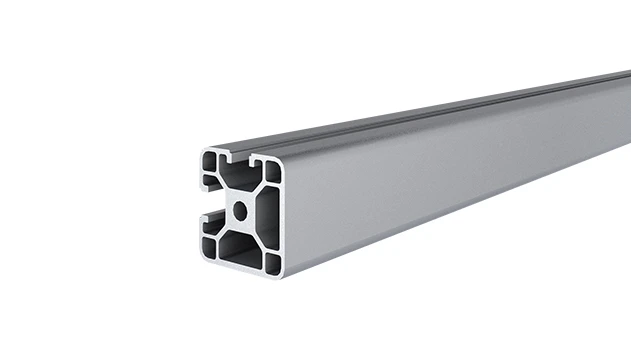
4040E is a 4.00x4.00 CM fractional 40 series square extrusion T-slot profile with two side open T-slots, two side with closed face, each side with 4.00cm face. The profile has align-a-grooves to assist in aligning connecting profiles.
Walk into any busy warehouse, manufacturing plant, or logistics hub, and you'll notice a silent workhorse keeping operations moving: the trolley. These unassuming tools carry everything from raw materials to finished products, making them the backbone of daily workflows. But not all trolleys are created equal. A flimsy frame might bend under heavy loads; a rust-prone surface could contaminate sensitive goods; a clunky design might slow down workers rushing to meet deadlines. That's where the 4040E EU Standard Aluminum Profile comes in—a material that's quietly revolutionizing how we build trolleys, workbenches, and material handling systems. Lightweight yet surprisingly tough, this aluminum extrusion profile isn't just a component; it's a solution tailored for the demands of modern workplaces.
Why Aluminum Extrusion Profiles Are Changing the Game for Material Handling
For decades, trolleys and racks were often built with steel or wood. Steel is strong, sure, but it's heavy—so heavy that maneuvering a fully loaded steel trolley across a factory floor can leave workers fatigued by lunchtime. Wood, on the other hand, might be lightweight, but it warps, splinters, and struggles with moisture. Then there's aluminum: a material that's been quietly winning over engineers and facility managers for years. Its secret? A unique blend of strength, lightness, and versatility that steel and wood just can't match.
Aluminum extrusion profiles, like the 4040E, take this a step further. Created by forcing heated aluminum through a die to create precise cross-sections, these profiles are designed with functionality in mind. The 4040E, in particular, is part of the EU standard lineup—a set of specifications that ensures consistency, quality, and compatibility across manufacturers. That means whether you're buying from a supplier in Germany or China, you can trust that your 4040E profiles will fit with aluminum profile accessories like joints, brackets, and end caps. No more guessing if a part will work—EU standards take the guesswork out of building.
Unpacking the 4040E: What Makes This Profile Stand Out?
Let's get up close with the 4040E. First, the basics: it's a square profile, measuring 40mm by 40mm—hence the "4040" in the name. The "E" denotes its specific design within the EU standard range, which includes variations in wall thickness, slot size, and weight. But what really sets it apart is how it balances two critical factors for trolleys: lightweight mobility and heavy-duty durability .
Most 4040E profiles are made from 6063-T5 aluminum alloy, a material prized for its excellent extrudability and mechanical properties. T5 tempering (artificial aging) gives it a tensile strength of around 180 MPa—strong enough to handle the bumps and heavy loads of daily warehouse use, but light enough that even a fully loaded trolley can be pushed by one person without straining. Compare that to a steel profile of the same size, which might weigh 3-4 times as much, and you start to see why aluminum is becoming the go-to choice.
Another standout feature is the T-slot design. Running along each side of the profile, these slots are like built-in channels for attaching accessories. Need to add a shelf? Slide in a bracket and tighten a bolt. Want to mount a handle or a caster wheel? No drilling or welding required—just use a T-slot nut and screw. This flexibility is a game-changer for anyone who needs to customize their trolleys on the fly, whether it's adding dividers for small parts or adjusting shelf heights for bulky items.
Surface treatment matters too. Most 4040E profiles come with an anodized finish—think of it as a protective layer baked into the aluminum. This finish resists scratches, corrosion, and even chemicals, making the profile ideal for environments where spills or moisture are common (like food processing or pharmaceutical facilities). Unlike painted steel, it won't chip or fade over time, so your trolleys will look professional and last longer.

Building Better Trolleys: 4040E in Turnover Trolley and Rack Systems
Now, let's talk about the star application: turnover trolley and rack systems. Turnover trolleys are the unsung heroes of material handling—they transport goods from production lines to storage, from warehouses to shipping, and everywhere in between. But to do this well, they need to be tough, easy to move, and adaptable. That's where 4040E shines.
Imagine a typical day in an automotive parts factory. Workers need to move bins of screws, washers, and small components from the storage room to the assembly line. A steel trolley might handle the weight, but pushing it down a long corridor would leave even the strongest worker winded. A wooden trolley? It might be lighter, but after a few months of dragging it over concrete floors, the wheels would loosen, and the frame would start to splinter. Enter a 4040E trolley: lightweight enough to glide smoothly, yet sturdy enough to hold 200kg of parts without flexing. The anodized finish means oil or grease spills wipe off easily, and the T-slots let workers add dividers to keep parts organized—no more jumbled bins or lost components.
But it's not just about the frame. The best trolleys are a team effort between the profile and its accessories, and 4040E plays well with others. Take caster wheels , for example. A good caster can make or break a trolley's mobility, and 4040E's T-slots make it easy to mount heavy-duty swivel casters with brakes. Whether you need soft rubber wheels for smooth warehouse floors or rugged polyurethane wheels for outdoor use, the T-slot system lets you swap them out in minutes. No need to drill new holes or weld brackets—just loosen a few bolts, replace the caster, and you're back to work.
Another essential accessory? aluminum profile end caps . These small, unassuming pieces snap onto the ends of the 4040E profile, covering the raw edges to prevent cuts and scrapes. They also keep dust and debris from getting inside the profile, which can jam T-slots over time. In busy environments where workers are constantly loading and unloading trolleys, these end caps are a small detail that makes a big difference in safety and maintenance.
Beyond Trolleys: 4040E in Workbenches and Material Racks
While trolleys are a primary use case, 4040E's versatility doesn't stop there. Walk through any well-organized workshop, and you'll likely find it hard at work in workbench frames too. Workbenches need to be stable enough to support tools, materials, and even heavy machinery, but they also need to be customizable—after all, no two workers have the same needs. 4040E checks both boxes.
Take a electronics assembly workbench, for example. The frame is built from 4040E profiles, with a plywood or aluminum honeycomb panel top. Using T-slot accessories, workers can add LED task lights above the bench, tool holders on the sides, and even small shelves for parts bins. If the workbench needs to be adjusted for a taller worker, it's as simple as loosening the bolts, raising the frame, and tightening them again. No need to buy a whole new workbench—just reconfigure the existing one. This adaptability is why 4040E is a favorite among small businesses and large factories alike; it grows with your needs, rather than limiting them.
Material racks are another area where 4040E excels. Whether you're storing boxes, pallets, or irregularly shaped items, a 4040E rack system offers the flexibility to adjust shelf heights, add dividers, or even expand the rack as your inventory grows. Unlike fixed steel racks, which require cutting and welding to modify, 4040E racks can be reconfigured with basic hand tools. Need to add a shelf for taller boxes? Slide out the existing brackets, move them up, and lock them in place. It's that easy.
How 4040E Stacks Up: A Comparison with Other Profiles
To truly appreciate 4040E's value, it helps to see how it compares to other common aluminum profiles. Below is a table breaking down key specs for 4040E and three popular alternatives: 4040A (a heavier EU standard profile), 3030 (a smaller 30x30mm profile), and 2020 (a compact 20x20mm profile). All data is based on typical industry specifications for 6063-T5 aluminum extrusion profiles.
| Profile Type | Dimensions (mm) | Weight (kg/m) | Max Load Capacity (per meter, vertical) | Best For |
|---|---|---|---|---|
| 4040E EU Standard | 40x40 | 1.8-2.2 | 800-1000 kg | Trolleys, workbenches, medium-duty racks |
| 4040A EU Standard | 40x40 | 2.8-3.2 | 1200-1500 kg | Heavy machinery frames, industrial shelving |
| 3030 EU Standard | 30x30 | 1.2-1.5 | 400-600 kg | Small trolleys, light-duty workbenches, displays |
| 2020 EU Standard | 20x20 | 0.6-0.8 | 150-250 kg | Prototyping, small shelves, hobby projects |
As the table shows, 4040E strikes a sweet spot between weight and strength. It's lighter than the 4040A (making it better for mobile applications like trolleys) but stronger than the 3030 and 2020 (making it suitable for heavier loads). For most material handling needs—trolleys, workbenches, and medium-duty racks—this balance is exactly what you want. You get the durability to handle daily use without the extra weight that slows down mobility.
Real-World Impact: How 4040E Transformed a Warehouse's Workflow
To put this in perspective, let's look at a real-world example. A mid-sized electronics manufacturer in Germany was struggling with inefficiencies in their warehouse. Their old steel trolleys were heavy and prone to rust, and their fixed wooden workbenches couldn't be adjusted for different tasks. Worker fatigue was high, and assembly line delays were common as materials took too long to reach the production floor.
After researching solutions, they decided to switch to 4040E-based systems. They replaced their steel trolleys with custom-built 4040E trolleys fitted with swivel casters and adjustable shelves. They also rebuilt their workbenches using 4040E frames, adding T-slot accessories like tool holders and LED lights. The results were dramatic: worker complaints about fatigue dropped by 60%, and the time it took to transport materials from storage to the assembly line decreased by 30%. Even better, when they introduced a new product line that required taller shelves, they were able to reconfigure their existing 4040E material racks in a single afternoon—no need to buy new equipment.
"We were skeptical at first," said the warehouse manager. "Steel has always been the standard, right? But once we tried the 4040E trolleys, there was no going back. They're light enough that even our newer employees can move them easily, but tough enough to handle our heaviest components. And being able to adjust the workbenches on the fly? That alone has saved us so much time and money."
Choosing the Right 4040E System: Tips for Success
Ready to make the switch to 4040E? Here are a few tips to ensure you get the most out of your investment:
- Start with your load requirements. While 4040E is strong, it's important to calculate the maximum weight your trolley or workbench will need to support. Most suppliers provide load capacity charts for their 4040E profiles, so use those as a guide. If you're unsure, err on the side of caution—adding extra support (like gussets or cross-braces) is easier than replacing a frame that's too weak.
- Invest in quality accessories. A 4040E frame is only as good as its accessories. Cheap casters will wear out quickly, and flimsy brackets can compromise stability. Look for reputable suppliers of aluminum profile accessories —they'll often offer warranties and technical support to help you choose the right parts.
- Plan for customization. One of 4040E's biggest strengths is its adaptability, so think ahead about how your needs might change. Do you anticipate needing taller shelves next year? Will you need to add wheels to a workbench later? Design your system with these possibilities in mind, and leave extra T-slots unused so you can add accessories later.
- Don't overlook surface finish. While most 4040E profiles come anodized, some suppliers offer additional finishes like powder coating for extra durability or color coding. If your environment is particularly harsh (e.g., high humidity or chemical exposure), ask about these options—they can extend the life of your system even further.
Conclusion: Why 4040E Is the Smart Choice for Modern Material Handling
In a world where efficiency and adaptability are more important than ever, the 4040E EU Standard Aluminum Profile stands out as a solution that delivers on both fronts. It's lightweight enough to make mobility effortless, strong enough to handle heavy loads, and versatile enough to adapt to changing needs. Whether you're building trolleys, workbenches, or material racks, it offers a level of customization and durability that traditional materials like steel and wood simply can't match.
From small workshops to large factories, 4040E is quietly transforming how we move, store, and work with materials. It's not just a profile—it's a tool that empowers workers to do their jobs better, faster, and safer. And in today's fast-paced world, that's not just an advantage; it's a necessity.
So if you're tired of heavy, rigid, and outdated material handling equipment, it might be time to give 4040E a closer look. Chances are, once you do, you'll wonder how you ever managed without it.