- Company Articles
- Products and Technology
- Product knowledge
- 4040E EU Standard Aluminum Profile for Workbench E: Customization Options & Accessories

4040E EU Standard Aluminum Profile for Workbench E: Customization Options & Accessories
Related Product
4040E EU Standard Aluminum Profile
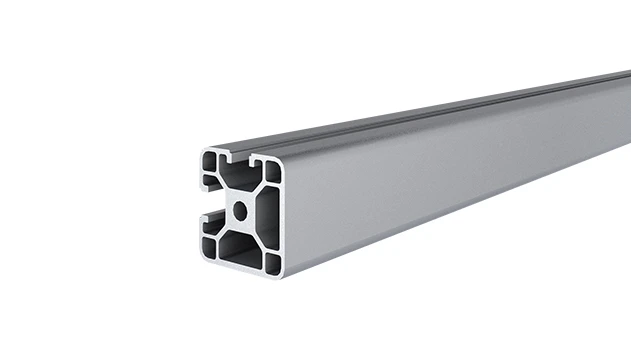
4040E is a 4.00x4.00 CM fractional 40 series square extrusion T-slot profile with two side open T-slots, two side with closed face, each side with 4.00cm face. The profile has align-a-grooves to assist in aligning connecting profiles.
Walk into any workshop, manufacturing floor, or even a dedicated home garage, and you'll notice one thing that ties them all together: the workbench. It's more than just a table—it's the command center where ideas take shape, products get assembled, and problems get solved. But not all workbenches are created equal. If you've ever struggled with a wobbly surface, limited space, or a "one-size-fits-nobody" design, you know the difference a well-built, customizable workbench can make. That's where the 4040E EU Standard Aluminum Profile comes in, especially when paired with Workbench E (Single Deck - Without Caster). This dynamic duo is changing the game for professionals and hobbyists alike, offering a level of flexibility and durability that's hard to beat. Let's dive into what makes this combination so special, how you can tailor it to your needs, and the accessories that take it from "good" to "perfect."
Understanding the 4040E EU Standard Aluminum Profile
First things first: What exactly is the 4040E EU Standard Aluminum Profile? At its core, it's a modular building block made from high-grade aluminum extrusion. The "4040" refers to its dimensions—40mm in width and 40mm in height—making it sturdy enough to handle heavy loads while remaining lightweight. The "E" in the name denotes a specific groove design, which is compatible with a wide range of aluminum profile accessories, from brackets to connectors. Think of it as the Lego of the industrial world: simple on its own, but infinitely versatile when combined with the right pieces.
Aluminum extrusion is a process where aluminum is pushed through a die to create a specific cross-sectional shape. For the 4040E profile, this results in a structure with T-slots running along its length. These slots are the secret to its adaptability—they allow you to attach accessories, shelves, or other components without welding or drilling. Just slide in a bolt, tighten it, and you're good to go. This not only saves time during setup but also means you can reconfigure your setup whenever your needs change. Need to add a shelf next month? No problem. Want to rearrange tools? Easy. It's a far cry from fixed wooden or steel workbenches that lock you into one layout forever.
Durability is another standout feature. Aluminum is naturally resistant to corrosion, so even in humid workshops or garages, you won't have to worry about rust eating away at your investment. It's also surprisingly strong for its weight. A single 4040E profile can support hundreds of pounds, making it ideal for heavy tools, machinery parts, or even small equipment. And because it's lightweight, you won't need a team of people to move or adjust it—though we'll talk about adding mobility later with caster wheels!
Workbench E (Single Deck - Without Caster): The Foundation of Versatility
Now, let's focus on Workbench E, specifically the Single Deck - Without Caster model. At first glance, it might seem basic: a flat work surface supported by a frame made from 4040E aluminum profiles. But that simplicity is intentional. By starting with a solid, no-frills base, it becomes a blank canvas for customization. The "single deck" means it has one main work surface (though you can add more layers later), and "without caster" is exactly what it sounds like—no wheels initially. But don't let that fool you; this workbench is designed to grow with you, whether you need to keep it stationary or make it mobile down the line.
Why choose Workbench E over other models? For starters, its modular frame. The 4040E profiles are connected using high-quality aluminum profile accessories like corner brackets and T-slot nuts, creating a structure that's both rigid and easy to modify. The work surface itself is typically made from a durable material like plywood, MDF, or even aluminum composite, depending on your needs. If you work with electronics, you might opt for an ESD (electrostatic discharge) surface to protect sensitive components—a customization we'll explore more later. For heavy-duty tasks, a thicker, hardwood top could be the way to go. The point is, the base model is just the starting line.
Many users love Workbench E for its balance of strength and adaptability. A local electronics repair shop owner I spoke with (let's call him Mark) put it best: "I started with the basic Workbench E because I needed something sturdy for soldering and testing circuit boards. But as my business grew, I added a second shelf above for storage, a tool rail on the side for my screwdrivers and pliers, and even a small LED light bar under the shelf. None of that would have been possible with my old wooden workbench—it would have cracked or warped under the weight. The 4040E frame just took it all in stride." That's the power of modular design: it grows with your workflow, not against it.

Customization Options: Making Workbench E Your Own
The real magic of Workbench E lies in how you can tailor it to your specific needs. Let's break down the most popular customization options, from small tweaks to major overhauls.
1. Length and Width Adjustments
The standard Workbench E comes in common sizes, but if your space is tight or you need something extra long, the 4040E aluminum profile makes it easy to adjust. Since the frame is built by connecting individual profiles, you can simply cut the profiles to your desired length (or order custom-cut lengths from your supplier) and reassemble the frame. Need a 6-foot workbench instead of the standard 4-foot? No problem. Have a corner space that calls for an L-shape? Just add another section using T-joint aluminum profile accessories. This flexibility is a game-changer for workshops with odd layouts or unique space constraints.
2. Height Customization
One size doesn't fit all when it comes to workbench height. If you're 6'5", a standard 36-inch workbench will leave you hunching over; if you're 5'2", it might be too tall. With Workbench E, you can adjust the height by changing the length of the 4040E profile legs. Most suppliers offer profiles in 1-meter, 2-meter, and 3-meter lengths, so you can cut them to your ideal height (common options range from 30 inches for seated work to 42 inches for standing tasks). For even more flexibility, some users add adjustable leveling feet (another great aluminum profile accessory) to fine-tune the height on uneven floors. These feet screw into the bottom of the legs, allowing you to raise or lower each corner by a few centimeters—perfect for garages with sloped floors or workshops in older buildings.
3. Surface Upgrades
The work surface is where the action happens, so upgrading it can make a big difference in comfort and functionality. The standard surface is often a solid, smooth material, but here are some popular upgrades:
- ESD Mats: If you work with electronics, static electricity can damage components. Adding an ESD mat to the surface (secured using T-slot nuts through the 4040E frame) grounds static charges, keeping your work safe.
- Rubber Padding: For tasks that involve heavy tools or delicate parts, a rubber pad can reduce noise, prevent slipping, and protect both the surface and your materials.
- Magnetic Strips: Attaching a magnetic strip to the side or front of the workbench (using aluminum profile accessories like adhesive mounts or T-slot brackets) keeps metal tools like screwdrivers and wrenches within arm's reach, no more digging through drawers.
- Drawer Units: While Workbench E starts as a single deck, you can add under-shelf drawer units using 4040E profiles and slide rails. This is a favorite among mechanics and woodworkers who need organized storage for small parts.
4. Adding Layers: Shelves, Racks, and Extensions
Vertical space is often underutilized in workshops, but Workbench E makes it easy to go up. By adding shelves or racks above the main deck, you can store tools, materials, or finished products without cluttering the work surface. Using 4040E profiles and aluminum profile accessories like angle brackets, you can mount shelves at any height. A hobbyist woodworker I know (Sarah) added two shelves above her Workbench E: "One for my power tools, one for my lumber scraps. Now everything's right there, and my work surface is free for cutting and sanding. It's like having a mini workshop in one corner of my garage."
For even more space, consider extending the workbench horizontally. Using lean pipe joints (yes, they work with 4040E profiles!), you can add side extensions or cantilevered shelves. Lean pipe joints are designed to connect pipes at various angles, making them perfect for creating custom extensions. For example, if you need extra space for a large project, you could add a 2-foot extension to one side using 4040E profiles and lean pipe joints, then remove it when the project is done. It's temporary, sturdy, and completely reversible.
Essential Accessories: The Tools That Make the Workbench
You could have the best 4040E aluminum profile frame and Workbench E base, but without the right accessories, you're missing out on half the potential. Let's explore the must-have aluminum profile accessories, plus a few wildcards, that will take your workbench to the next level.
| Accessory | Use | Compatibility |
|---|---|---|
| 4040 Aluminum Profile End Caps | Covers the ends of 4040E profiles to prevent sharp edges and debris buildup. | All 4040-series EU standard profiles |
| T-Slot Nuts & Bolts | Secures accessories (shelves, brackets, etc.) to the T-slots in 4040E profiles. | 4040E profiles with standard T-slot dimensions |
| Angle Brackets | Connects profiles at 90-degree angles (e.g., for shelves or frame corners). | 4040E profiles, works with T-slot nuts |
| Adjustable Leveling Feet | Fine-tunes workbench height and stabilizes on uneven floors. | Screws into the bottom of 4040E profile legs |
| Caster Wheels | Adds mobility to Workbench E; choose locking casters for stability when stationary. | Attaches to leg bottoms using mounting plates (aluminum profile accessories) |
| Tool Rail | Mounts to the side of the workbench for hanging tools (e.g., pliers, tape measures). | Attaches via T-slot nuts to 4040E frame |
| LED Light Bar | Provides under-shelf lighting for the work surface; energy-efficient and bright. | Mounts using brackets (aluminum profile accessories) under shelves |
Let's dive deeper into a few of these accessories, starting with caster wheels. While Workbench E comes without casters, adding them is a breeze with the right mounting plates (another aluminum profile accessory). Locking caster wheels are a popular choice because they let you move the workbench when needed (e.g., to clean the floor or rearrange the workshop) and lock it in place when you're working. A manufacturing plant foreman I interviewed (Carlos) told me, "We have five Workbench E setups on casters. When we need to reconfigure the assembly line for a new product, we just unlock the casters, roll them into place, and lock them down. It used to take half a day to move our old steel workbenches; now it takes 15 minutes." That's a huge time-saver, especially in fast-paced environments.
Aluminum profile end caps might seem like a small detail, but they're surprisingly important. Without them, the ends of the 4040E profiles are sharp and can catch on clothing or skin. They also prevent dust, dirt, and small tools from falling into the T-slots, which can jam the nuts and bolts over time. Most end caps are made from plastic or rubber and snap into place—no tools required. It's a simple upgrade that makes the workbench feel more polished and professional.
Lean pipe joints are another unsung hero. While they're traditionally used with lean pipes (hence the name), many are compatible with 4040E aluminum profiles, especially if you use adapters. These joints come in various angles (45°, 90°, 135°, etc.) and styles (fixed, rotating), making them perfect for creating custom structures. For example, you could use a 90° lean pipe joint to attach a vertical tool holder to the side of Workbench E, or a rotating joint to create a swing-out shelf that tucks away when not in use. The possibilities are endless, and they're a budget-friendly way to add versatility.
Real-World Scenario: Maria's Jewelry Studio
Maria runs a small jewelry studio from her home, where she designs and assembles custom necklaces and bracelets. She started with a basic Workbench E and 4040E frame but quickly realized she needed more organization. Using aluminum profile accessories, she added:
- A small shelf above the work surface for her bead containers, secured with angle brackets and T-slot nuts.
- A magnetic tool rail on the front edge for her tiny pliers and wire cutters.
- Adjustable leveling feet to compensate for her sloped studio floor.
- End caps on all the 4040E profiles to protect her delicate jewelry from snags.
"My workspace went from chaotic to calm overnight," she said. "I can find everything I need in seconds, and the workbench feels like it was made just for me."
Choosing the Right Accessories: A Few Tips
With so many accessories available, it can be overwhelming to decide what you need. Here's a simple framework to narrow it down:
- Start with the essentials: End caps, T-slot nuts/bolts, and angle brackets are non-negotiable for building and finishing the basic frame.
- Think about your workflow: Do you need tools within arm's reach? Add a tool rail. Do you work with large materials? Consider caster wheels for mobility.
- Plan for the future: Even if you don't need a second shelf now, buy extra T-slot nuts and brackets—you'll thank yourself later when you want to add one.
- Don't skimp on quality: Cheap aluminum profile accessories can bend or strip, weakening your entire setup. Invest in high-grade, EU-standard parts that will last.
Maintenance: Keeping Your Custom Workbench in Top Shape
A well-customized Workbench E is an investment, and like any investment, it needs a little care to last. Fortunately, maintaining a 4040E aluminum profile workbench is easy:
- Clean regularly: Wipe down the work surface and aluminum profiles with a damp cloth to remove dust and debris. For greasy or oily residues, use mild soap and water—avoid harsh chemicals that can damage the aluminum finish.
- Check connections: Every few months, tighten any loose T-slot nuts or bolts. Vibration from tools can loosen them over time, but a quick turn with a wrench will keep the frame sturdy.
- Lubricate moving parts: If you've added caster wheels or rotating lean pipe joints, lubricate the axles or joints with a light machine oil to keep them moving smoothly.
- replace worn accessories: If an end cap cracks or a caster wheel starts to wobble, replace it immediately. Most aluminum profile accessories are affordable, and replacing them prevents bigger issues down the line.
Final Thoughts: Why 4040E Aluminum Profile Workbench E is Worth It
At the end of the day, a workbench is more than just a piece of furniture—it's a tool that shapes how you work, create, and problem-solve. The 4040E EU Standard Aluminum Profile and Workbench E (Single Deck - Without Caster) stand out because they put you in control. Whether you're a small business owner, a hobbyist, or a DIY enthusiast, you get to design a workspace that fits your needs, not the other way around.
From the durable, corrosion-resistant 4040E profiles to the endless customization options and essential aluminum profile accessories like caster wheels and lean pipe joints, this setup grows with you. It's not just a workbench—it's a long-term partner in your projects, your business, and your creativity. So why settle for a generic, one-size-fits-nobody workbench when you can build one that's uniquely yours? The answer is simple: you shouldn't. Invest in the 4040E aluminum profile Workbench E, customize it to your heart's content, and watch how it transforms the way you work.