- Company Articles
- Products and Technology
- Product knowledge
- 4040E EU Standard Aluminum Profile in Lean Workbenches: Building Workbench E Efficiently

4040E EU Standard Aluminum Profile in Lean Workbenches: Building Workbench E Efficiently
Related Product
4040E EU Standard Aluminum Profile
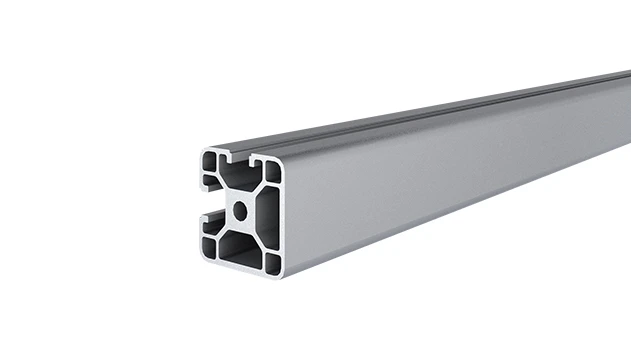
4040E is a 4.00x4.00 CM fractional 40 series square extrusion T-slot profile with two side open T-slots, two side with closed face, each side with 4.00cm face. The profile has align-a-grooves to assist in aligning connecting profiles.
Walk into any modern manufacturing facility, and you'll notice a quiet revolution happening on the shop floor. It's not just about the machines humming in the background or the teams collaborating seamlessly—it's about the lean systems that tie everything together. At the heart of these systems? Workbenches. Not just any workbenches, but ones designed to eliminate waste, boost productivity, and adapt to the ever-changing needs of production. Today, we're diving deep into one such workhorse: Workbench E (single deck-without caster), and the star material that makes it all possible—the 4040E EU Standard Aluminum Profile. Let's unpack how this combination isn't just building workbenches, but building a more efficient way of working.
Why Lean Workbenches Matter: More Than Just a Table
Before we get into the nuts and bolts of aluminum profiles and workbench designs, let's take a step back. What makes a workbench "lean"? In the world of manufacturing, lean isn't just a buzzword—it's a philosophy centered on maximizing value while minimizing waste. That means every tool, every inch of space, and yes, every workbench, needs to pull its weight. A poorly designed workbench can lead to wasted time (searching for tools), wasted motion (reaching across cluttered surfaces), and even wasted materials (due to instability or lack of organization). Lean workbenches fix that by being intentional —they're built to fit the task, the worker, and the flow of the production line.
Enter Workbench E. Designed as a single-deck, no-caster workbench, it's a staple in environments where stability and simplicity are key. Think assembly lines for small parts, quality control stations, or even packaging areas where a fixed, sturdy surface is non-negotiable. But here's the catch: even the best design can fall flat if built with the wrong materials. That's where the 4040E EU Standard Aluminum Profile comes in. It's not just a material choice—it's a strategic one.
Meet the 4040E EU Standard Aluminum Profile: The Backbone of Workbench E
Let's start with the basics: What is the 4040E EU Standard Aluminum Profile? In simple terms, it's a structural aluminum extrusion with a square cross-section, measuring 40mm by 40mm (hence the "4040" in the name). The "E" denotes its specific design within EU standard profiles—think of it as a blueprint that ensures consistency, compatibility, and quality across manufacturers. But numbers and letters only tell part of the story. What makes this profile a game-changer for Workbench E?
1. Strength Meets Lightweight: The Aluminum Advantage
Aluminum has long been a favorite in industrial settings, and for good reason. It's strong enough to support heavy tools and materials (we're talking up to 300kg of evenly distributed weight for the 4040E profile) but light enough that assembling a workbench doesn't require a team of lifters. Compare that to steel, which might offer similar strength but adds unnecessary bulk—making adjustments or reconfigurations a hassle. For Workbench E, which stays put without casters, that lightweight nature translates to easier installation and less strain on the floor, too.
2. Precision Engineering: EU Standards Mean Consistency
The "EU Standard" tag isn't just for show. 4040E profiles are manufactured to strict tolerances, ensuring that every piece—whether it's from a supplier in Germany, Poland, or China—fits together perfectly. That's crucial when building Workbench E, where stability is everything. Imagine trying to assemble a workbench with misaligned parts: wobbly legs, uneven surfaces, and a lifespan measured in months, not years. With 4040E, you skip the guesswork. Each groove, each hole, and each edge is designed to work with aluminum profile accessories seamlessly—no filed-down edges or forced connections required.
3. Corrosion Resistance: Built to Last in Tough Environments
Manufacturing floors can be harsh places. Oils, coolants, dust, and even humidity can take a toll on equipment over time. Steel rusts, wood warps, but aluminum? It's naturally resistant to corrosion, thanks to a thin oxide layer that forms on its surface. Most 4040E profiles take this a step further with anodized finishes—an electrochemical process that thickens that oxide layer, making the profile even more durable. For Workbench E, which is meant to be a long-term fixture, this means less maintenance, fewer replacements, and a surface that stays smooth and safe for years.

Building Workbench E: From Profile to Productivity
Now that we know why the 4040E profile is a standout, let's walk through how it comes together to build Workbench E. This isn't a complicated DIY project requiring specialized tools—thanks to the modular design of aluminum profiles and their accessories, assembling Workbench E is more like putting together a high-quality puzzle. Here's how it breaks down:
Step 1: Planning the Workbench E Blueprint
Workbench E is defined as a "single deck-without caster," which means it has a flat, solid surface (the deck) and no wheels—ideal for tasks that need a stable base. Standard dimensions typically range from 1200mm to 1800mm in length, 600mm to 800mm in depth, and 750mm to 850mm in height (ergonomically designed to keep workers comfortable during long shifts). But the beauty of using 4040E profiles is that these dimensions aren't set in stone. Need a narrower workbench for a tight corner? Shorten the rails. Prefer a higher surface for standing work? Lengthen the legs. The modularity lets you tailor Workbench E to your space, not the other way around.
Step 2: Gathering the Right Components
You can't build a house without bricks, and you can't build Workbench E without the right parts. Let's break down the core components, starting with the 4040E profiles and moving to the aluminum profile accessories that hold it all together:
| Component | Quantity | Purpose |
|---|---|---|
| 4040E EU Standard Aluminum Profile (Legs) | 4 pieces | Vertical supports; typically cut to height (e.g., 750mm) |
| 4040E EU Standard Aluminum Profile (Side Rails) | 2 pieces | Horizontal supports connecting the legs (length = workbench depth) |
| 4040E EU Standard Aluminum Profile (Front/Back Rails) | 2 pieces | Horizontal supports connecting the legs (length = workbench width) |
| 90° Aluminum Profile Connectors | 8 pieces | Join legs to rails at right angles; secured with hex bolts |
| Aluminum Profile End Caps | 4 pieces | Cover the bottom of legs to prevent dust, debris, and scratches on floors |
| Worktop (Single Deck) | 1 piece | Flat surface (options: aluminum honeycomb, plywood with laminate, or ESD-safe material for electronics) |
| Aluminum Profile Rubber Strip | 1 roll | Attaches to worktop edges to prevent chipping and protect workers from sharp corners |
Notice something missing? Casters. Workbench E intentionally skips them for stability, but if you ever need mobility down the line, the 4040E legs are pre-drilled to add casters later—another nod to lean flexibility.
Step 3: Assembly: Putting It All Together (No Welding Required!)
Here's where the magic of aluminum profiles shines: assembling Workbench E doesn't require a welding torch, a workshop full of tools, or a degree in engineering. Let's walk through the process step by step:
- Cut the profiles to size: Most suppliers will cut 4040E profiles to your specified lengths, but if you need to adjust, a standard miter saw with a metal-cutting blade works. Just be sure to deburr the edges afterward for safety.
- Attach the rails to the legs: Take the 90° aluminum profile connectors and slide them into the grooves of the 4040E legs. Align the side rails and front/back rails with the connectors, then secure them with hex bolts (a simple hex key is all you need). Tighten until the frame feels rigid—no wobbling allowed.
- Add cross-braces (optional but recommended): For extra stability, especially on longer workbenches, add a few 4040E cross-braces between the front and back rails. Use 45° aluminum profile connectors to angle them diagonally—this reinforces the frame against side-to-side movement.
- Install the worktop: Lay the single deck worktop (we'll talk more about materials later) on top of the rail frame. Secure it using screws or clamps that fit into the 4040E's T-slots (those grooves running along the profile length). This keeps the worktop from shifting during use.
- Finish with end caps and rubber strips: Pop the aluminum end caps onto the bottom of the legs to keep out dust, then apply the rubber strip along the worktop edges. Done! You've built Workbench E.
The whole process? For someone with basic DIY skills, it takes about 1–2 hours. Compare that to building a steel workbench, which might require welding, painting, and heavy lifting. That's time saved—time that can be spent on actual production.
Workbench E's Secret Sauce: How 4040E Profiles Elevate Lean Systems
We've talked about the "how" of building Workbench E, but let's circle back to the "why" in the context of lean systems . Lean isn't just about efficiency—it's about creating a workspace that adapts, grows, and eliminates waste at every turn. Here's how Workbench E, built with 4040E profiles, checks all those boxes:
1. Waste Reduction: No More "One-Size-Fits-None" Workbenches
Traditional workbenches are often built to fixed specs. If your production line changes—say, you start assembling larger parts—you're stuck with a workbench that's too small. That means buying a new one, which is a waste of money and resources. Workbench E, with its 4040E frame, avoids this. Need a wider surface? Swap out the front/back rails for longer 4040E profiles. Want to add shelves? Use T-slot nuts and brackets to attach them directly to the legs. It's a "build once, adapt forever" approach that aligns with lean's "reduce waste" mantra.
2. 5S-Ready: Sort, Set in Order, Shine, Standardize, Sustain
5S is the backbone of lean systems, and Workbench E is designed to make 5S a breeze:
- Sort: The flat, uncluttered deck of Workbench E makes it easy to separate essential tools from unnecessary ones—no more junk piling up in corners.
- Set in Order: The T-slots in 4040E profiles let you add tool holders, bins, or hooks exactly where you need them. Scissors? Mount a holder on the side rail. Screwdrivers? Add a magnetic strip under the deck. Everything has a place.
- Shine: Aluminum's smooth, non-porous surface is a cinch to clean. Wipe it down with a damp cloth, and it's ready for the next shift—no stubborn stains or hidden crevices for grime to hide.
- Standardize: Since 4040E profiles are EU-standard, every Workbench E you build will be identical. That means workers can move between stations without relearning where tools are placed—consistency = efficiency.
- Sustain: When your workbench is easy to keep organized and clean, the 5S habits stick. Teams take pride in their space, and that pride translates to better work.
3. Durability That Reduces Downtime
Imagine this: A heavy tool slips off a workbench and dents the surface. With a wooden workbench, that's a permanent eyesore (and a potential splinter hazard). With a steel workbench, it might scratch or rust. But 4040E aluminum profiles? They're tough. The anodized finish resists dents and scratches, and the material itself won't warp or rot. That means Workbench E stays in service longer, reducing the need for repairs or replacements. Less downtime = more production—simple as that.
Workbench E in Action: Real-World Wins
Let's ground this in reality with a quick case study. A mid-sized electronics manufacturer in Hungary was struggling with their assembly line workbenches. They were using old wooden tables that wobbled, had uneven surfaces, and couldn't be customized for their specific circuit board assembly tasks. Workers were spending extra time adjusting parts, searching for tools, and even dealing with minor injuries from splinters. The team decided to switch to Workbench E, built with 4040E EU Standard Aluminum Profiles.
Three months later, the results spoke for themselves: Tool retrieval time dropped by 30% (thanks to T-slot-mounted holders), assembly errors decreased by 15% (due to the stable, level surface), and worker satisfaction scores went up—no more complaints about uncomfortable work heights or wobbly tables. The manufacturer estimates that the initial investment in Workbench E will pay for itself in under a year, just through time and waste savings.
That's the power of pairing the right design (Workbench E) with the right material (4040E aluminum profile). It's not just about building a workbench—it's about building a better workflow.
Choosing the Right Worktop: The Final Piece of the Puzzle
We've focused a lot on the 4040E frame, but the worktop is just as critical. Workbench E's single deck needs to be durable, easy to clean, and suited to your task. Here are the top options, and how they pair with 4040E profiles:
Aluminum Honeycomb Panels: Lightweight and Strong
Aluminum honeycomb panels are a popular choice for Workbench E. They consist of a thin aluminum skin bonded to a honeycomb core, making them lightweight but surprisingly strong (they can handle up to 200kg per square meter). They're also non-conductive, making them a solid pick for electronics assembly. Best of all, they attach easily to 4040E profiles using T-slot screws—no special adhesives needed.
ESD-Safe Laminate: Protecting Sensitive Electronics
If you're working with sensitive components (like circuit boards or semiconductors), ESD (Electrostatic Discharge) protection is a must. ESD-safe laminate worktops are coated with a material that dissipates static electricity, preventing damage to parts. These laminates can be glued or screwed to the 4040E frame, and they're easy to wipe clean—perfect for cleanroom environments.
Plywood with Melamine: Budget-Friendly and Reliable
For less demanding tasks (like packaging or general assembly), plywood with a melamine coating is a cost-effective option. Melamine is scratch-resistant and easy to clean, and the plywood core adds rigidity. Just be sure to seal the edges to prevent moisture damage—a quick application of aluminum profile rubber strip does the trick.
Conclusion: Building Efficiency, One Profile at a Time
Workbench E (single deck-without caster) and the 4040E EU Standard Aluminum Profile are more than just a workbench and a piece of metal—they're a testament to how intentional design and smart material choices can transform a production line. By focusing on flexibility, durability, and lean principles, this combination doesn't just build workbenches; it builds a foundation for efficiency.
Whether you're setting up a new facility, upgrading an existing line, or just looking to eliminate waste in your workflow, remember this: The right tools matter. And when it comes to lean workbenches, Workbench E, built with 4040E profiles and the right aluminum profile accessories , is more than a tool—it's a partner in productivity.
So, what are you waiting for? It's time to build Workbench E, and build a better way to work.