- Company Articles
- Products and Technology
- Product knowledge
- 4040E EU Standard Aluminum Profile Surface Treatment: Anodizing vs. Powder Coating Options

4040E EU Standard Aluminum Profile Surface Treatment: Anodizing vs. Powder Coating Options
Related Product
4040E EU Standard Aluminum Profile
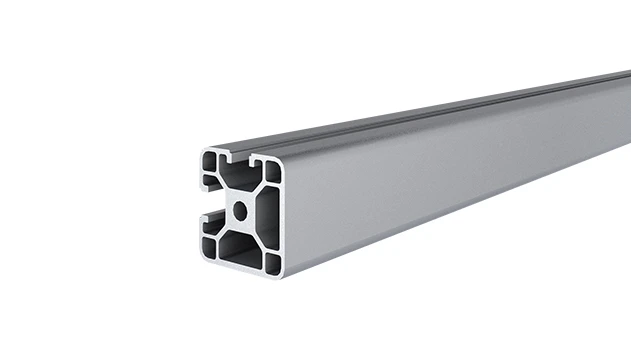
4040E is a 4.00x4.00 CM fractional 40 series square extrusion T-slot profile with two side open T-slots, two side with closed face, each side with 4.00cm face. The profile has align-a-grooves to assist in aligning connecting profiles.
In the world of manufacturing and industrial design, the choice of materials can make or break efficiency, durability, and even workplace morale. Among the unsung heroes of this space is the aluminum extrusion profile —a versatile, lightweight, and robust solution that forms the backbone of everything from assembly lines to storage systems. Today, we're zooming in on a specific star of this category: the 4040E EU Standard Aluminum Profile. But what truly elevates its performance isn't just its standardized dimensions or structural integrity—it's the surface treatment that protects it, enhances its look, and tailors it to specific needs. In this deep dive, we'll explore two of the most popular surface treatment options: anodizing and powder coating. By the end, you'll understand how each process works, their unique benefits, and which one might be the perfect fit for your next project, whether you're building a lean pipe workbench , a heavy-duty material rack, or something entirely custom.
Understanding the 4040E EU Standard Aluminum Profile
Before we jump into surface treatments, let's get to know the 4040E profile itself. As part of the EU standard aluminum extrusion family, this profile is engineered for consistency, reliability, and compatibility across European manufacturing systems. The "4040" refers to its cross-sectional dimensions: 40mm by 40mm—a sweet spot that balances strength and versatility. The "E" denotes a specific groove design (often with T-slots) that allows for easy integration with aluminum profile accessories like brackets, joints, and panels, making it a favorite for modular setups.
What sets the 4040E apart? Its adherence to EU standards means strict quality control over material composition (typically 6063 aluminum alloy, known for excellent extrudability and corrosion resistance), dimensional accuracy, and mechanical properties. Whether you're constructing a workbench, a conveyor frame, or a shelving unit, this profile provides a stable, lightweight base that can handle moderate to heavy loads without bending or warping. But even the sturdiest aluminum needs protection from the elements, daily wear and tear, and the demands of industrial environments. That's where surface treatments come in.
Why Surface Treatment Matters: More Than Just A Pretty Finish
At first glance, surface treatment might seem like a cosmetic choice—and while aesthetics do play a role, its impact goes far deeper. Aluminum, by nature, forms a thin oxide layer when exposed to air, which offers some corrosion resistance. But in harsh environments—think factories with chemical exposure, humid warehouses, or outdoor applications—this natural layer isn't enough. Surface treatments like anodizing and powder coating act as armor, extending the profile's lifespan and maintaining its functionality over time.
Beyond protection, surface treatments also influence grip (critical for handles or workbench surfaces), color coding (useful for organizing workflows), and even hygiene (important in cleanrooms or food processing facilities). For example, a lean pipe workbench in an electronics assembly line might require an electrostatic discharge (ESD)-safe finish, while a material rack in a automotive plant might need a scratch-resistant coating to withstand heavy tooling. The 4040E profile, with its smooth extrusion and T-slot design, is the perfect canvas for these treatments—but choosing between anodizing and powder coating depends on your project's unique demands.

Anodizing: The Electrochemical Armor
How It Works: Growing a Protective Layer from Within
Anodizing isn't just a coating—it's a transformation. This electrochemical process involves submerging the aluminum profile in an acid electrolyte bath (usually sulfuric acid) and passing an electric current through it. The result? The aluminum's surface atoms react with oxygen, forming a thick, porous layer of aluminum oxide (Al₂O₃) that's integrated directly into the metal. Unlike paint or plating, which sit on top, anodized layers are part of the profile itself—meaning they won't chip, peel, or flake off easily.
The process can be controlled to adjust the thickness of the oxide layer, typically ranging from 5 to 25 microns for standard applications. Thicker layers (up to 100 microns) are possible for specialized uses, though they're less common for 4040E profiles. After anodizing, the porous surface can be sealed with hot water or a chemical sealant, which closes the pores and enhances corrosion resistance. Some processes also dye the oxide layer during sealing, offering a range of earthy tones like black, silver, gold, or bronze.
The Benefits of Anodized 4040E Profiles
1. Unbeatable Corrosion Resistance: In humid or coastal environments, where salt air can eat away at untreated aluminum, anodized 4040E profiles shine. The sealed oxide layer acts as a barrier, preventing moisture and chemicals from reaching the base metal. This makes them ideal for outdoor applications or facilities with high humidity, like food processing plants.
2. Superior Wear Resistance: The aluminum oxide layer is harder than the base aluminum (comparable to sapphire in hardness), making anodized surfaces highly resistant to scratches, dents, and abrasion. For a lean pipe workbench that sees daily use—tools being dragged across it, parts being assembled—it's a game-changer, ensuring the surface stays smooth and functional for years.
3. Natural Aesthetics: Anodized finishes have a subtle, metallic sheen that highlights the aluminum's natural texture. Unlike painted surfaces, they don't fade easily under UV light, so profiles used in bright, sunlit areas (like factory windowsills or outdoor workstations) retain their look longer. The color options are more limited than powder coating, but they offer a timeless, industrial elegance.
4. Eco-Friendly and Low Maintenance: Anodizing uses no volatile organic compounds (VOCs) and produces minimal waste, making it a greener option than some coating methods. Plus, maintenance is a breeze—simply wipe with a damp cloth to remove dirt; no need for repainting or touch-ups.
When to Choose Anodizing
Anodizing is the go-to choice when durability and longevity are non-negotiable. Think applications where the profile will face heavy wear, chemical exposure, or outdoor elements. Examples include marine equipment, medical device frames, cleanroom workbenches, or material rack B (3 row and 3 floor) units used to store corrosive materials. It's also preferred when a natural, metallic finish aligns with the design aesthetic, or when color consistency across batches is critical (anodized colors are more uniform than some powder coating options).
Powder Coating: The Colorful Shield
How It Works: A Fusion of Powder and Heat
If anodizing is about growing a protective layer, powder coating is about wrapping the profile in a durable, decorative shell. The process starts with applying a dry powder (typically a blend of resin, pigment, and additives) to the aluminum surface using an electrostatic gun. The powder particles, charged with static electricity, adhere to the grounded profile like a magnet, creating an even, consistent coat. The profile is then baked in an oven at 160–200°C, melting the powder into a smooth, hard film that bonds permanently to the surface.
Powder coating offers endless customization: colors range from bold primaries to subtle pastels, and finishes can be glossy, matte, textured, or even metallic. Unlike anodizing, which tints the oxide layer, powder coating covers the profile with a solid color, making it easier to match brand hues or create high-contrast color schemes for workflow organization.
The Benefits of Powder-Coated 4040E Profiles
1. Unlimited Color and Finish Options: This is powder coating's biggest selling point. Need a bright red profile to mark danger zones on a factory floor? A soft blue for a lab workbench? A textured finish to improve grip on handles? Powder coating delivers. It's also great for color coding—imagine a lean pipe workbench with yellow rails for "in-progress" zones and green rails for "completed" areas, streamlining workflow at a glance.
2. Impact and Chip Resistance: While anodizing is harder, powder coating is more flexible, making it resistant to impacts and chipping. This is especially useful for profiles in high-traffic areas—think trolley frames, tool racks, or conveyor systems where accidental bumps are common. The coating acts as a shock absorber, protecting the aluminum underneath from dents.
3. Cost-Effective for Large Batches: Once the powder is mixed and the electrostatic gun is set up, powder coating large quantities of 4040E profiles is faster and more affordable than anodizing. This makes it ideal for manufacturers producing standardized products like shelving units or workbenches in bulk.
4. Hides Surface Imperfections: Aluminum extrusions can sometimes have minor surface blemishes from the manufacturing process. Powder coating, with its thicker film (typically 50–150 microns), does an excellent job of masking these imperfections, resulting in a smooth, flawless finish.
When to Choose Powder Coating
Powder coating shines when aesthetics, color customization, or impact resistance are priorities. It's perfect for indoor applications like office furniture, retail displays, or lean pipe workbench setups where visual appeal matters as much as functionality. It's also a top choice for projects with tight color specifications, such as branding-focused environments or safety-critical areas where color-coding reduces errors. For example, a warehouse using powder-coated 4040E profiles in orange for fire safety equipment racks or purple for ESD-sensitive zones can improve workflow clarity and compliance.
Anodizing vs. Powder Coating: A Side-by-Side Comparison
Still on the fence? Let's break down the key differences between anodizing and powder coating for 4040E profiles. The table below compares critical factors to help you decide:
| Factor | Anodizing | Powder Coating |
|---|---|---|
| Process | Electrochemical reaction grows an oxide layer integrated into the aluminum. | Dry powder is electrostatically applied, then baked to form a bonded film on the surface. |
| Coating Thickness | 5–25 microns (thinner, but integrated into the metal). | 50–150 microns (thicker, sits on top of the metal). |
| Durability | Excellent corrosion and wear resistance; hard but brittle. | Good impact and chip resistance; flexible but less scratch-resistant. |
| Color Options | Limited (metallic tones: silver, black, gold, bronze). | Unlimited (solids, metallics, textures, custom hues). |
| UV Resistance | Excellent—colors don't fade easily outdoors. | Good, but some colors may fade over time in direct sunlight. |
| Cost | Higher per unit (slower process, specialized equipment). | Lower per unit for large batches (faster application, scalable). |
| Environmental Impact | Eco-friendly (no VOCs, minimal waste). | Low VOCs, but powder waste can be higher if not recycled. |
| Best For | Outdoor use, chemical exposure, heavy wear (e.g., marine, medical, cleanrooms). | Indoor use, color customization, impact-prone areas (e.g., retail, offices, warehouses). |
Real-World Applications: Putting It All Together
To see how these treatments perform in action, let's look at two common uses for 4040E profiles: lean pipe workbench construction and material rack B (3 row and 3 floor) units. These examples highlight how anodizing and powder coating solve different challenges.
Case Study 1: Lean Pipe Workbench in an Electronics Factory
An electronics manufacturer needs a workbench for assembling circuit boards—an environment where ESD protection, cleanliness, and durability are critical. The workbench frame uses 4040E profiles, and the surface must resist scratches from tools, prevent static buildup, and withstand daily cleaning with isopropyl alcohol (a common solvent in electronics manufacturing).
Why Anodizing Works Here: Anodized 4040E profiles offer the chemical resistance needed to stand up to alcohol cleaning. The hard oxide layer prevents scratches from screwdrivers or circuit boards, and the natural metallic finish (often clear or black anodized) is ESD-compatible when paired with the right accessories. Plus, the workbench is used indoors with controlled lighting, so UV fading isn't a concern. Anodizing ensures the frame stays functional and professional-looking for years, even with constant use.
Case Study 2: Material Rack B in a Automotive Warehouse
A automotive parts warehouse needs a heavy-duty rack to store metal components, including gears and brackets. The rack must support 50kg per shelf, resist dents from dropped parts, and be color-coded to distinguish between "raw" and "finished" components. The 4040E profile is chosen for its strength-to-weight ratio, and the rack design is material rack B (3 row and 3 floor) to maximize vertical storage.
Why Powder Coating Works Here: Powder coating in bright red (for raw parts) and green (for finished parts) makes inventory management a breeze. The thick, flexible coating absorbs impacts from dropped gears, preventing dents and scratches on the 4040E frame. Since the rack is indoors and away from direct sunlight, color fading isn't an issue, and the cost-effectiveness of powder coating for large batches (the warehouse needs 20 racks) keeps the project within budget. The result is a durable, organized storage system that improves workflow efficiency.
Conclusion: Choosing the Right Treatment for Your 4040E Profile
The 4040E EU Standard Aluminum Profile is a versatile workhorse, but its true potential is unlocked by the right surface treatment. Anodizing and powder coating each offer unique advantages: anodizing excels in durability, corrosion resistance, and natural aesthetics, while powder coating leads in color customization, impact resistance, and cost-effectiveness for large batches.
When making your choice, ask yourself: Where will the profile be used? What environmental factors will it face? Does color matter? What's my budget? For outdoor or harsh environments, anodizing is the safe bet. For indoor projects with a focus on design or color-coding, powder coating is the way to go. And remember, the 4040E profile's compatibility with aluminum profile accessories —like joints, brackets, and panels—means you can further tailor your setup, whether you're building a lean pipe workbench , a material rack, or something entirely custom.
At the end of the day, both treatments transform the 4040E from a simple extrusion into a solution that's built to last, perform, and even inspire. So whether you're a manufacturer, a DIY enthusiast, or a facility manager, choosing between anodizing and powder coating isn't just about protecting metal—it's about investing in a tool that will elevate your workflow, enhance safety, and stand the test of time.