- Company Articles
- Products and Technology
- Product knowledge
- 4040E EU Standard Aluminum Profile Weight-to-Strength Ratio: A Key Advantage

4040E EU Standard Aluminum Profile Weight-to-Strength Ratio: A Key Advantage
Related Product
4040E EU Standard Aluminum Profile
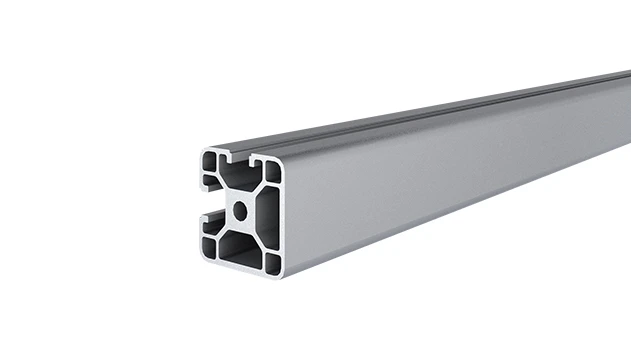
4040E is a 4.00x4.00 CM fractional 40 series square extrusion T-slot profile with two side open T-slots, two side with closed face, each side with 4.00cm face. The profile has align-a-grooves to assist in aligning connecting profiles.
Walk into any busy factory or workshop today, and you'll notice a quiet revolution happening on the production floor. Gone are the days of clunky, immovable workstations and rigid material handling systems that slow down operations. Instead, teams are leaning into flexibility—reconfiguring workbenches in minutes, adjusting roller tracks to match new workflows, and building lean systems that adapt as quickly as market demands change. At the heart of this transformation? The 4040E EU standard aluminum extrusion profile —a material that's redefining what's possible in industrial design, thanks in large part to its exceptional weight-to-strength ratio.
If you've ever struggled with a workbench that was either too flimsy to hold tools or so heavy it took three people to move, you know why this matters. The 4040E profile isn't just another piece of metal; it's a problem-solver. It's strong enough to support heavy machinery, light enough for a single worker to reposition, and versatile enough to pair with everything from aluminum profile accessories to custom roller tracks. Let's dive into why its weight-to-strength ratio is the unsung hero of modern manufacturing—and how it can transform your operations, too.
What Is Weight-to-Strength Ratio, and Why Should You Care?
First things first: Let's demystify the term. Weight-to-strength ratio is exactly what it sounds like: a measure of how much strength a material offers relative to its weight. Think of it as a "strength efficiency" score. A higher ratio means you get more strength per kilogram—so you don't have to sacrifice portability for durability, or vice versa.
In manufacturing, this ratio is make-or-break. Imagine assembling a lean system for a electronics production line. You need workbenches that can hold sensitive equipment without wobbling, but you also need to rearrange those workbenches when you switch from making smartphones to tablets. If your benches are made of steel, they might be strong, but moving them requires forklifts and downtime. If they're made of plastic, they're light but bend under the weight of tools. Enter the 4040E aluminum extrusion profile: it hits that sweet spot where strength and weight balance perfectly.
But why does this ratio matter beyond just "being strong and light"? For starters, it cuts labor costs. Lighter materials mean fewer workers are needed to install or reconfigure systems. It also boosts safety: heavy equipment is a leading cause of workplace injuries, so reducing weight without losing strength lowers risk. And in an era where sustainability is key, aluminum's ratio reduces energy use—less weight means less fuel or electricity needed to move components around the factory floor.
The 4040E EU Standard Aluminum Extrusion Profile: A Closer Look
Before we dive into its impressive ratio, let's get to know the 4040E itself. Part of the EU standard aluminum profile family, it's named for its dimensions: 40mm by 40mm, with a precision-engineered cross-section designed for maximum versatility. Unlike generic aluminum pipes, this is an extrusion—a process where aluminum is pushed through a die to create a consistent, complex shape. This isn't just about looks; extrusion lets engineers design profiles with internal ribs and hollow sections that strengthen the material without adding unnecessary weight.
The 4040E is typically made from 6063 aluminum alloy, a blend known for its excellent strength-to-weight properties and corrosion resistance. It's treated with anodizing, which forms a protective oxide layer on the surface—meaning it stands up to moisture, chemicals, and daily wear without rusting or degrading. This durability is crucial for environments like automotive plants or food processing facilities, where equipment is exposed to everything from oil spills to frequent cleaning.
But what really sets the 4040E apart is its design for modularity. Its T-slot structure—those grooves running along its length—lets you snap on aluminum profile accessories like brackets, end caps, and connectors in seconds. Need to add a shelf to a workbench? Slide in a bracket. Want to attach a roller track to move parts between stations? Bolt on a connector. This flexibility is why it's become the backbone of lean systems worldwide—no welding, no drilling, just quick, tool-free adjustments.

The Science Behind the Ratio: Why 4040E Outperforms the Rest
So, how does the 4040E achieve such a standout weight-to-strength ratio? It's a mix of material science and smart engineering. Let's break it down:
Aluminum's Inherent Advantages
Aluminum is naturally lightweight—about one-third the density of steel. But when alloyed with elements like magnesium and silicon (as in 6063), it gains impressive strength. The 4040E can handle tensile strengths of up to 210 MPa (that's megapascals, a unit of pressure—for context, that's strong enough to support a small car without bending). Compare that to steel, which might hit 300 MPa but weighs three times as much, and you start to see the gap.
Extrusion: Strength Without the Bulk
The extrusion process is another secret weapon. When aluminum is extruded, it's forced through a die that shapes it into the 40x40mm profile with internal reinforcing ribs. These ribs distribute weight evenly, so the profile resists bending or twisting under load. Unlike a solid steel bar, which wastes material by being thick everywhere, the 4040E is "engineered for efficiency"—strong where it needs to be, lightweight where it doesn't.
Precision Engineering for Real-World Use
EU standards ensure consistency, so every 4040E profile you buy has the same wall thickness, rib placement, and strength. This predictability matters when building lean systems: you don't have to guess if a section will hold 50kg or 100kg—it's tested and certified. And because it's standardized, you can mix and match with other EU-standard aluminum profile accessories, from hinges to corner brackets, without compatibility headaches.
By the Numbers: How 4040E Stacks Up Against Other Materials
Talk is cheap—let's look at the data. The table below compares the 4040E aluminum extrusion profile to common alternatives like steel, wood, and plastic. Pay special attention to the "Weight-to-Strength Ratio" column—that's where the 4040E truly shines:
| Material | Weight (kg/m) | Tensile Strength (MPa) | Weight-to-Strength Ratio (MPa/kg per meter) | Key Limitation |
|---|---|---|---|---|
| 4040E Aluminum Extrusion Profile | 1.2 | 210 | 175 | None—balances strength, weight, and cost |
| Mild Steel Profile (40x40mm) | 4.5 | 300 | 67 | Heavy; requires tools/machinery to move |
| Solid Wood Beam (40x40mm) | 0.8 | 50 | 62.5 | Weak to moisture; prone to warping |
| Plastic Profile (40x40mm) | 0.6 | 30 | 50 | Deforms under heat; low load capacity |
The numbers speak for themselves: The 4040E has a weight-to-strength ratio nearly three times higher than steel and significantly more than wood or plastic. That means a workbench built with 4040E can hold the same weight as a steel one but weigh 70% less. Or, put another way: You could build a lean system with half the material and still get the same strength—saving on costs and reducing your carbon footprint.
Real-World Applications: Where 4040E Makes a Difference
Enough theory—let's talk about how this plays out on the factory floor. The 4040E isn't just a "good material"; it's a tool that solves real problems. Here are three areas where its weight-to-strength ratio transforms operations:
1. Lean Systems: Flexibility Without Compromise
Lean manufacturing is all about eliminating waste—whether that's time, space, or labor. A lean system built with 4040E profiles lets you do just that. For example, a automotive parts supplier in Germany recently switched from steel to 4040E for their assembly stations. Previously, reconfiguring a line to produce a new part took 8 hours (and a forklift). Now, two workers can disassemble and rebuild the entire system in 2 hours—no heavy machinery needed. The secret? The 4040E's light weight makes adjustments easy, while its strength ensures the stations stay stable during production.
2. Workbenches: Sturdy Yet Movable
A workbench is the heart of any workshop, but traditional ones are a trade-off: heavy steel benches are stable but immovable; lightweight plastic ones feel flimsy. 4040E changes that. Take a electronics repair shop, for instance. Their techs need benches that hold 50kg of tools, soldering irons, and circuit boards. With 4040E, they built benches with a honeycomb top (for weight savings) and added lockable casters. Now, techs can roll their entire workstation to a new area in seconds, then lock it in place—no more carrying tools back and forth. And because the profile is strong, there's zero wobble when using precision tools.
3. Roller Tracks: Smooth Material Flow, Minimal Effort
Roller tracks are the arteries of a factory, moving parts from station to station. But if the track itself is heavy, it sags over time, slowing material flow. 4040E-based roller tracks solve this. A beverage bottling plant in Italy replaced their steel roller tracks with 4040E and aluminum guide rails. The new tracks weigh 60% less, so they don't sag, and bottles glide more smoothly—reducing jams by 40%. Plus, when they needed to add a new branch to the track, workers cut the 4040E profile on-site with a simple saw and attached new rollers using aluminum profile accessories—no welding required.
The Role of Aluminum Profile Accessories: Making 4040E Even Better
The 4040E profile is powerful on its own, but it truly shines when paired with the right aluminum profile accessories. These small, often-overlooked components turn a basic extrusion into a fully functional system. Let's look at a few must-haves:
- Connectors and Joints: From 90° brackets to swivel joints, these let you build angles and corners without drilling. A 4040E workbench, for example, can be assembled with just a hex key and a few T-slot connectors.
- End Caps and Covers: These protect workers from sharp edges and keep dust out of T-slots, ensuring accessories slide smoothly even after years of use.
- Leveling Feet: Critical for uneven floors. Adjustable feet screw into the bottom of 4040E profiles, keeping workbenches stable and roller tracks level—no more wobbly stations.
- Panel Holders: Attach plywood, acrylic, or metal sheets to 4040E frames to create shelves, machine guards, or tool boards. It's like building with industrial Legos.
The best part? All these accessories are designed to work seamlessly with 4040E's T-slot system. No custom machining, no mismatched parts—just plug-and-play flexibility. It's why manufacturers call 4040E the "Swiss Army knife" of industrial design.
Why This Matters for Your Bottom Line
At the end of the day, the 4040E's weight-to-strength ratio isn't just a technical feature—it's a financial one. Here's how it impacts your business:
Lower Labor Costs: Lighter materials mean fewer workers are needed for installation and reconfiguration. A study by the European Aluminum Association found that factories using aluminum profiles reduced labor costs for system setup by 35% compared to steel.
Less Downtime: Reconfiguring a lean system with 4040E takes hours, not days. That means you can pivot to new products faster, meeting tight deadlines and keeping customers happy.
Long-Term Durability: Aluminum's corrosion resistance means 4040E profiles last longer than steel (which rusts) or wood (which warps). A 4040E workbench can easily last 10+ years with minimal maintenance—saving on replacement costs.
Sustainability Wins: Aluminum is 100% recyclable, and recycling it uses 95% less energy than producing new aluminum. For companies aiming for net-zero goals, switching to 4040E is an easy win for their sustainability reports.
Final Thoughts: The 4040E Profile—More Than a Material, a Mindset
The 4040E EU standard aluminum extrusion profile isn't just changing how factories are built; it's changing how manufacturers think. It's a shift from "build it once and leave it" to "build it to evolve." It's about empowering workers to adapt quickly, reducing waste, and creating systems that grow with your business.
Whether you're setting up a new lean system, upgrading your workbenches, or revamping your roller tracks, the 4040E's weight-to-strength ratio is the key to unlocking flexibility, efficiency, and cost savings. It's strong enough to trust, light enough to move, and versatile enough to handle whatever your business throws at it.
So, the next time you look at your factory floor, ask: Is your current setup holding you back? Or could the 4040E profile—and its game-changing ratio—be the upgrade you've been waiting for?