- Company Articles
- Products and Technology
- Product knowledge
- 4040F EU Standard Aluminum Profile: A Cost-Effective Alternative to Stainless Steel in Manufacturing

4040F EU Standard Aluminum Profile: A Cost-Effective Alternative to Stainless Steel in Manufacturing
Related Product
4040F EU Standard Aluminum Profile
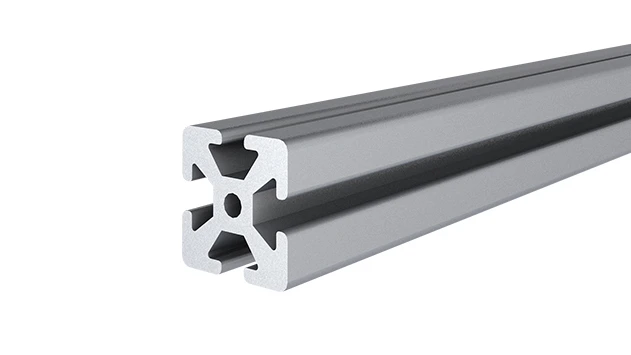
4040F is a 4.00x4.00 CM fractional 40 series square extrusion T-slot profile with four side open T-slots, each side with 4.00cm face. The profile has align-a-grooves to assist in aligning connecting profiles.
Let's face it—manufacturing today isn't just about building products. It's about building efficiently . Every dollar saved on materials, every minute cut from assembly time, and every square foot optimized in your facility adds up to bigger profits and a stronger competitive edge. For years, stainless steel has been the go-to material for everything from workbenches to conveyor systems. It's tough, it's durable, and it looks professional. But here's the thing: is it really the best option for every job? More and more manufacturers are saying no. Instead, they're turning to a quieter hero of the industry: the 4040F EU Standard Aluminum Profile. In this article, we'll dive into why this aluminum extrusion profile is quickly becoming the smarter choice for lean systems, flow racks, and beyond—without sacrificing quality or performance.
What Even Is a 4040F EU Standard Aluminum Profile, Anyway?
Before we pit it against stainless steel, let's get clear on what we're talking about. The 4040F is part of the aluminum extrusion profile family—a type of aluminum shaped through a process called extrusion (think: squeezing toothpaste through a tube, but with molten aluminum and way more precision). The "4040" refers to its dimensions: 40mm by 40mm, a common size for structural framing. The "F" is likely a specific variant or grade, often tied to EU manufacturing standards, which means it meets strict criteria for consistency, strength, and safety. But why does that matter? Because when you're building something like a workbench or a flow rack, you need parts that fit together perfectly every time. EU standards ensure that whether you buy a 4040F profile from Germany, Poland, or China (as long as it's certified), it will work with the same aluminum profile accessories—no guesswork, no mismatched parts.
What makes this aluminum extrusion profile stand out is its versatility. Unlike stainless steel, which often requires custom cutting, welding, or machining to fit a specific design, 4040F profiles come with pre-engineered T-slots along their length. These slots are like built-in highways for bolts, brackets, and connectors, making it easy to attach accessories without drilling or welding. Need to add a shelf to your workbench? Slide a bracket into the T-slot and tighten a screw. Want to adjust the height of a flow rack? Loosen a few fasteners, reposition the profile, and you're done. It's modularity at its finest—and that modularity is where the cost savings start to pile up.
Stainless Steel: The Old Reliable That's Starting to Show Its Age
Don't get me wrong—stainless steel has earned its reputation. It's resistant to rust, it can handle heavy loads, and it looks sleek in a factory setting. For applications like food processing (where hygiene is non-negotiable) or marine environments (where saltwater corrosion is a constant threat), it's still the top choice. But in most general manufacturing settings? It's often overkill—and that overkill comes with a price tag.
Let's start with cost. Stainless steel is expensive. We're talking 2-3 times the price of aluminum per kilogram, and that's before you factor in fabrication. Welding stainless steel requires specialized equipment and skilled labor, which adds hours (and dollars) to your project timeline. Cutting it? You'll need high-powered tools that wear down faster than they do with aluminum. Even transporting stainless steel is a hassle—it's heavy. A 10-meter section of 40x40mm stainless steel weighs around 10kg; the same length of 4040F aluminum? Closer to 3kg. That might not sound like much, but multiply that by hundreds of meters across your facility, and suddenly you're paying more for shipping, more for installation (since you need extra workers to lift it), and more for the structural support to hold it all up.
Then there's flexibility—or lack thereof. Once you weld a stainless steel frame together, it's permanent. If your production line changes next month (and let's be real, when doesn't it?), you can't just take it apart and rebuild it. You'll have to cut it up, buy new materials, and start over. That's not lean manufacturing—that's waste. And in an era where agility is key, waste is the last thing you need.

4040F Aluminum vs. Stainless Steel: Let's Crunch the Numbers
Words are one thing, but numbers tell the real story. Let's compare 4040F aluminum extrusion profile head-to-head with 304 stainless steel (the most common grade for manufacturing) across the metrics that matter most to your bottom line.
Table 1: Comparative Analysis of Key Metrics for 4040F Aluminum Profile vs. 304 Stainless Steel (40x40mm)
| Attribute | 4040F Aluminum Profile | 304 Stainless Steel Profile |
|---|---|---|
| Cost per Meter (Approx.) | $15–$25 | $40–$60 |
| Weight per Meter | 2.8–3.2 kg | 9.5–10.5 kg |
| Tensile Strength | 180–220 MPa (6063-T5 grade) | 500–550 MPa |
| Corrosion Resistance | High (with anodization); suitable for indoor/moderate outdoor use | Very high (resistant to saltwater, chemicals); ideal for harsh environments |
| Thermal Conductivity | 160–180 W/(m·K) (dissipates heat well) | 16–17 W/(m·K) (poor heat dissipation) |
| Installation Time (per 10m Section) | 1–2 hours (modular assembly with bolts/connectors) | 4–6 hours (requires welding, cutting, finishing) |
Let's unpack this. Yes, stainless steel has higher tensile strength—but in most manufacturing applications (think: workbenches, flow racks, or light-duty conveyor systems), you don't need 500 MPa. The 4040F's 180–220 MPa is more than enough to support tools, parts, and even small machinery. And while stainless steel wins on corrosion resistance, 4040F aluminum can be anodized (a process that adds a protective oxide layer) to handle moisture, oils, and workshop chemicals—more than enough for a typical factory floor. The real eye-openers? Cost, weight, and installation time. At $15–$25 per meter, 4040F is less than half the cost of stainless steel. It's a third the weight, which slashes shipping and labor costs. And installation? You could build a basic flow rack in a morning with aluminum; stainless steel would take all day.
Beyond the Price Tag: The Hidden Benefits of 4040F in Lean Systems
Lean manufacturing isn't just a buzzword—it's a mindset. It's about eliminating waste, optimizing flow, and empowering your team to adapt quickly. The 4040F aluminum profile was practically designed for lean systems. Here's how:
1. Modularity = Less Waste
Remember those T-slots we mentioned earlier? They mean you can reconfigure your setup on the fly. Let's say you're running a production line for small electronics, and next quarter you switch to larger components. With a stainless steel workbench, you'd need to order a whole new bench. With 4040F, you can adjust the height, add extensions, or swap out the top—all using the same base frame and aluminum profile accessories. No scrap metal, no wasted materials, no waiting for custom parts. That's lean in action.
2. Lightweight = Faster Workflow
Heavy equipment slows things down. A stainless steel flow rack might require a forklift to move; a 4040F rack? Two people can carry it. That means you can rearrange your facility layout overnight to accommodate a new order, instead of waiting days for equipment. It also reduces strain on your team—no more back injuries from lifting heavy steel components. Happier workers, faster setup times, better morale—all wins.
3. Accessories Galore: Build Exactly What You Need
The magic of 4040F isn't just the profile itself—it's the ecosystem of aluminum profile accessories that go with it. Need to add casters to a workbench so it can roll between stations? There's a bracket for that. Want to create a gravity-fed flow rack for parts? Just snap in some roller track placon mounts and a few swivel roller balls. Even specialized items like ESD (electrostatic discharge) workbench tops can be attached directly to the T-slots, making it easy to comply with safety standards for electronics manufacturing. And because these accessories are standardized, you can mix and match from different suppliers without compatibility issues. It's like building with Legos for adults—endless possibilities, zero frustration.
Real-World Wins: Manufacturers Who Switched (and Never Looked Back)
Don't just take my word for it. Let's look at a real example. A mid-sized automotive parts manufacturer in Hungary recently decided to revamp their assembly line. They'd been using stainless steel workbenches and flow racks for years, but rising material costs and frequent line changes were eating into profits. Their solution? They replaced 80% of their stainless steel framing with 4040F aluminum extrusion profiles and aluminum profile accessories. The results? They cut material costs by 45%, reduced assembly time for new workstations by 60%, and reported a 25% increase in line efficiency because workers could adjust their setups themselves, without waiting for maintenance. Oh, and they saved on shipping too—their quarterly material delivery costs dropped by $12,000 just from the reduced weight.
Another example: a medical device company in Germany needed a cleanroom-compatible flow rack system. Stainless steel was their first thought, but they were worried about cost. Instead, they opted for anodized 4040F aluminum profiles with plastic roller track guide rails (grey, to match their cleanroom aesthetic). The aluminum was easy to sanitize, lightweight enough to move during deep cleans, and 30% cheaper than stainless steel. Plus, when they needed to add a new shelf for larger components, they just bought a few extra brackets and profiles—no custom fabrication required.
But Wait—Is Aluminum "Strong Enough" for My Facility?
This is the most common pushback I hear: "Aluminum feels flimsy compared to steel." It's true—if you compare a single profile by hand, aluminum is lighter and less rigid. But here's the secret: 4040F aluminum profiles are designed to work together. When you build a frame with cross-bracing, corner brackets, and proper supports, the system becomes surprisingly strong. A well-built 4040F workbench can easily hold 200kg or more—plenty for power tools, assembly jigs, and piles of parts. And because aluminum is more flexible than steel, it actually absorbs vibrations better, which is a plus for precision work (think: electronics assembly where steady hands matter).
If you're still worried, start small. replace one stainless steel workbench with a 4040F model and test it out. Chances are, you'll be shocked by how well it holds up. And if you do need extra strength? You can always upgrade to thicker-walled aluminum profiles or add reinforcement brackets—still cheaper and easier than switching back to steel.
Why EU Standards Matter (Even If You're Not in Europe)
You might be thinking, "I'm based in the U.S./Asia/South America—why should I care about EU standards?" Simple: consistency. EU standards for aluminum extrusion profiles (like DIN 6060, which covers most structural aluminum) set strict tolerances for dimensions, straightness, and material quality. That means when you buy a 4040F profile, you know the 40mm width is actually 40mm (not 39.8 or 40.2), and the T-slots are spaced exactly 20mm apart. This consistency makes it easy to source aluminum profile accessories from anywhere in the world, ensuring your supply chain isn't tied to one region. It also means better quality control—no more dealing with warped or weak profiles that break under stress.
The Verdict: 4040F Aluminum Profile Isn't Just Cheaper—it's Smarter
At the end of the day, manufacturing is about making smart choices. Stainless steel has its place, but for most facilities, the 4040F EU Standard Aluminum Profile offers a better balance of cost, performance, and flexibility. It's cheaper upfront, lighter to ship and install, easier to reconfigure, and supported by a massive ecosystem of aluminum profile accessories. Whether you're building workbenches, flow racks, or entire lean systems, it lets you do more with less—without cutting corners on quality.
So, if you're tired of overpaying for stainless steel, or if your current setup feels stuck in the past, give 4040F a try. Start with a small project—a single workbench or a simple flow rack. See how easy it is to assemble, how much lighter it is, and how much money you save. We're willing to bet that once you go aluminum, you'll never look back.
After all, in manufacturing, the best innovations aren't always the flashiest—sometimes, they're the ones that quietly make everything else work better. And that's exactly what the 4040F EU Standard Aluminum Profile does. It's not just a material—it's a tool for building a more efficient, more agile, and more profitable facility. And in today's competitive market, that's the kind of edge that matters most.