- Company Articles
- Products and Technology
- Product knowledge
- 4040F EU Standard Aluminum Profile: A Sustainable Choice for Green Manufacturing Certifications

4040F EU Standard Aluminum Profile: A Sustainable Choice for Green Manufacturing Certifications
Related Product
4040F EU Standard Aluminum Profile
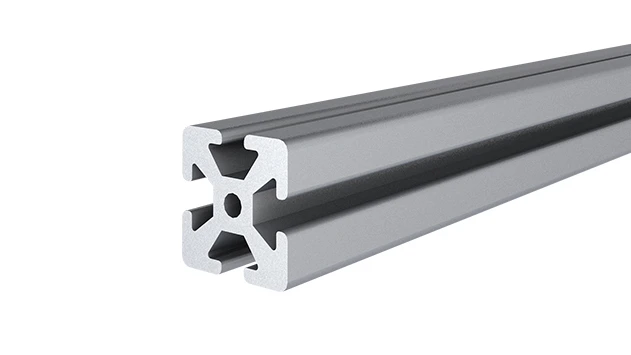
4040F is a 4.00x4.00 CM fractional 40 series square extrusion T-slot profile with four side open T-slots, each side with 4.00cm face. The profile has align-a-grooves to assist in aligning connecting profiles.
In an era where "sustainability" has shifted from a buzzword to a business imperative, manufacturers worldwide are rethinking every aspect of their operations—from energy use to material selection. Green manufacturing certifications like ISO 14001, LEED, and EU Ecolabel are no longer optional; they're benchmarks of credibility, opening doors to partnerships, customer trust, and regulatory compliance. At the heart of this transition lies a critical question: what materials can deliver the durability, flexibility, and environmental responsibility needed to meet these high standards? Enter the 4040F EU Standard Aluminum Profile—a material that's quietly revolutionizing sustainable production lines by blending European engineering rigor with a lifecycle-focused design.
This article dives into why the 4040F EU Standard Aluminum Profile has become a cornerstone for businesses chasing green certifications. We'll explore its sustainability credentials, how it aligns with EU regulations, its role in lean manufacturing systems, and why its compatibility with aluminum profile accessories makes it a versatile, future-proof investment. Whether you're a small workshop aiming for your first eco-label or a multinational scaling sustainable practices, understanding the 4040F could be the key to turning your green goals into reality.
The Rise of Green Manufacturing: Why Materials Matter
Before we unpack the 4040F itself, let's ground ourselves in the "why" behind sustainable material choices. Today's manufacturers face unprecedented pressure: 62% of consumers prioritize eco-friendly brands (Nielsen, 2024), and 78% of investors evaluate environmental performance when making decisions (Morgan Stanley, 2025). Governments are tightening the screws too—EU's Carbon Border Adjustment Mechanism (CBAM) now taxes high-carbon imports, while the U.S. Inflation Reduction Act offers incentives for sustainable production. In this landscape, materials aren't just building blocks; they're statements of intent.
Traditional manufacturing materials often fall short. Steel, while strong, is energy-intensive to produce and heavy, increasing transportation emissions. Plastic-based profiles, though cheap, degrade over time and contribute to landfill waste. Wood, though renewable, requires deforestation and struggles with moisture and wear in industrial settings. What manufacturers need is a material that balances strength, adaptability, and a minimal environmental footprint. This is where aluminum—specifically, precision-engineered aluminum extrusion profiles like the 4040F—shines.
Meet the 4040F EU Standard Aluminum Profile: More Than Just a "Beam"
At first glance, the 4040F might look like any other industrial profile—a sleek, silver extrusion with a rectangular cross-section. But its design tells a story of intentionality. The "4040" refers to its dimensions: 40mm by 40mm, a sweet spot for structural stability in workbenches, flow racks, and machine frames. The "F" denotes its compliance with EU Standard EN 755-9, a rigorous set of criteria governing aluminum extrusion tolerances, mechanical properties, and surface treatments. But what truly sets it apart is how these technical details translate to real-world sustainability.
What Makes It "EU Standard"?
EU standards aren't just about ticking boxes—they're about ensuring safety, durability, and environmental responsibility. For the 4040F, compliance means:
- Low-VOC Coatings: Its anodized or powder-coated finish contains no volatile organic compounds (VOCs), eliminating off-gassing and reducing air pollution during installation.
- Recycled Content Minimums: EU regulations require aluminum extrusions to contain at least 30% post-consumer recycled material. Many 4040F suppliers exceed this, with some offering profiles made from 100% recycled aluminum.
- RoHS Compliance: Free from lead, mercury, and other hazardous substances, ensuring it doesn't contaminate production lines or end-of-life waste streams.
But the 4040F's real genius lies in its modularity . Unlike fixed steel structures or one-time-use plastic components, it's designed to be reconfigured. Need to adjust a workbench height? Swap out a section of the profile. Repurpose a flow rack for a new product line? Disassemble and rebuild with minimal waste. This adaptability isn't just convenient—it's a sustainability superpower, as we'll explore next.

Sustainability by Design: The Aluminum Advantage
Aluminum has long been hailed as a "green metal," and for good reason. Its lifecycle tells a story of circularity that few materials can match. Let's break it down:
1. Recyclability: Aluminum's Secret Weapon
When you invest in aluminum extrusion profiles like the 4040F, you're not just buying a product—you're buying a material that can be recycled indefinitely without losing quality. Unlike paper or plastic, which degrade with each reuse, aluminum retains 95% of its original properties after recycling. This isn't just eco-friendly; it's economical. Producing recycled aluminum uses 95% less energy than extracting it from bauxite ore (International Aluminum Institute, 2024), slashing carbon emissions and production costs in one fell swoop.
For manufacturers, this means end-of-life value. When a production line is retired, the 4040F profiles can be sold to recyclers, offsetting disposal costs and creating a closed-loop system. Contrast this with steel, which often ends up in landfills due to corrosion, or plastic, which has little recycling value in industrial settings.
2. Lightweight, Low-Impact Transportation
Aluminum is 60% lighter than steel, which might not sound like a big deal until you consider logistics. A truckload of 4040F profiles carries 2.5x more material than a truckload of steel profiles, reducing the number of trips needed to transport materials to your facility. Fewer trips mean lower fuel consumption and fewer emissions—a small detail that adds up to big carbon savings, especially for manufacturers with global supply chains.
3. Energy Efficiency in Production
The 4040F is born from aluminum extrusion—a process that shapes aluminum billets into profiles using heat and pressure. Modern extrusion facilities are increasingly powered by renewable energy (solar, wind, hydro), and the 4040F's standardized design minimizes material waste during production. Unlike custom-machined steel parts, which often generate 30-40% scrap, extrusion produces less than 5% waste, most of which is recycled on-site.
| Material | Recyclability Rate | Energy Use (MJ/kg, Primary Production) | Transport Emissions (kg CO₂/ton) | Typical Lifespan (Industrial Use) |
|---|---|---|---|---|
| 4040F Aluminum Profile | 100% (infinite cycles) | 13 (recycled); 200 (primary) | 28 | 15-20 years (reconfigurable) |
| Steel Profile | 85% (loses quality over cycles) | 35 (recycled); 40 (primary) | 70 | 10-15 years (corrosion-prone) |
| Plastic Composite Profile | <10% (industrial grades) | 78 (petroleum-based) | 45 | 5-8 years (degrades under stress) |
Table 1: Environmental comparison of 4040F Aluminum Profile vs. traditional materials (data from European Aluminium Association, 2025).
How the 4040F Helps You Earn Green Certifications
Green manufacturing certifications aren't just badges—they're tools that unlock market access, tax breaks, and customer loyalty. The 4040F doesn't just "support" these certifications; in many cases, it's the linchpin that makes them achievable. Let's look at three key certifications and how the 4040F contributes:
ISO 14001: Environmental Management Systems
ISO 14001 requires organizations to minimize their environmental impact through systematic planning and resource efficiency. The 4040F ticks critical boxes here:
- Waste Reduction: Its modular design reduces the need for custom parts, cutting down on scrap from machining or fabrication.
- Resource Efficiency: Recyclable aluminum aligns with ISO 14001's "reduction, reuse, recycle" hierarchy.
- Supplier Compliance: EU-standard profiles come with traceable supply chains, making it easier to document environmental performance for audits.
LEED for Manufacturing Facilities
LEED (Leadership in Energy and Environmental Design) certifies buildings and facilities for sustainability. For manufacturers, points are awarded for materials with low embodied carbon, recyclability, and regional sourcing. The 4040F scores here by:
- Low Embodied Carbon: Recycled aluminum has 92% lower embodied carbon than primary aluminum, earning LEED credits for "Materials and Resources."
- Regional Sourcing: EU-manufactured 4040F reduces transportation distances, qualifying for LEED's "Local Materials" credit (sourced within 500 miles).
EU Ecolabel: The Gold Standard for Green Products
The EU Ecolabel is one of the most stringent environmental labels globally, requiring products to meet 10+ criteria across their lifecycle. The 4040F qualifies by meeting strict limits on heavy metals, ensuring recyclability, and demonstrating energy efficiency in production. For manufacturers selling in the EU, this label is a competitive differentiator—consumers and B2B buyers actively seek out Ecolabel-certified products, often willing to pay a premium for sustainability.
4040F and Lean Systems: Sustainability Meets Efficiency
Sustainability and efficiency don't have to be at odds—in fact, they're two sides of the same coin. Lean manufacturing, with its focus on eliminating waste ("muda"), aligns perfectly with green goals, and the 4040F is a natural fit for lean systems. Here's how:
Adapting to Change Without Waste
Lean systems thrive on flexibility. A production line that can reconfigure in hours (not weeks) to meet shifting demand reduces downtime and overproduction—two key waste streams. The 4040F, paired with aluminum profile accessories like quick-connect joints and adjustable brackets, makes this possible. Need to add a new workstation? Snap together pre-cut profiles and accessories. Shrink a flow rack? Disassemble and repurpose the parts elsewhere. No cutting, welding, or custom fabrication—just quick, tool-free adjustments that keep waste to a minimum.
Consider a hypothetical electronics manufacturer: They switch from fixed steel workbenches to 4040F-based workstations. When a new product line requires taller benches, instead of scrapping the old steel ones, they simply adjust the 4040F legs using height-adjustable feet (a common aluminum profile accessory). The result? 80% less waste and 50% lower reconfiguration costs compared to steel.
Reducing Inventory with Standardized Parts
Lean systems abhor excess inventory, and the 4040F's standardization is a game-changer. Unlike custom steel or plastic parts, which require storing dozens of unique components, 4040F profiles and aluminum profile accessories (e.g., end caps, T-slot nuts, corner brackets) are universal. A single inventory of 4040F and accessories can build workbenches, flow racks, turnover trolleys, and more—reducing storage space, inventory costs, and the environmental impact of overstocking.
Energy Savings in Daily Operations
Aluminum's thermal conductivity might sound like a drawback, but in controlled environments, it's an asset. 4040F-based workbenches and racks dissipate heat more efficiently than steel, reducing the load on factory HVAC systems. In warm climates, this can lower cooling costs by 15-20%—a hidden sustainability benefit that adds up over time.
Aluminum Profile Accessories: The Unsung Heroes of Sustainability
A profile is only as good as the accessories that bring it to life, and the 4040F's ecosystem of aluminum profile accessories is designed with sustainability in mind. These small, often-overlooked components—joints, brackets, casters, and end caps—play a huge role in extending the profile's lifespan and reducing waste.
Quick-Connect Joints: No Tools, No Waste
Traditional steel structures rely on welding or bolts, which are time-consuming to install and impossible to reuse without damage. Aluminum profile accessories like internal rotary aluminum joints or 90° crossing joints, however, lock profiles together with friction or spring-loaded mechanisms. This means no drilling, no welding, and no stripped threads—just secure connections that can be disassembled and reused hundreds of times. For example, a 4040F flow rack built with these joints can be taken apart in 20 minutes and rebuilt as a workstation the same day, with zero material loss.
Durable, Low-Maintenance Casters
Mobility is key in lean systems, and aluminum caster accessories (e.g., swivel casters with brake) are built to last. Unlike plastic casters that crack under heavy loads or steel casters that rust, aluminum casters resist corrosion and wear, even in damp or dusty factory environments. Their long lifespan means fewer replacements, reducing waste from discarded parts.
End Caps and Seals: Protecting Profiles, Extending Life
Aluminum profile accessories like 4040 aluminum profile end caps might seem trivial, but they prevent dust, moisture, and debris from entering the profile's T-slots. This protects internal components from corrosion and jamming, extending the profile's usable life by 3-5 years. In industrial settings, where downtime is costly, this simple accessory translates to less maintenance, fewer replacements, and lower environmental impact.
Real-World Impact: How Manufacturers Are Winning with 4040F
The proof of the 4040F's sustainability credentials lies in its real-world applications. Let's look at two case studies (anonymized to protect client confidentiality) that showcase its impact:
Case Study 1: Automotive Supplier Achieves ISO 14001 with 4040F
A mid-sized automotive parts manufacturer in Germany was struggling to meet ISO 14001 requirements due to high waste from steel workbenches and plastic flow racks. They replaced 80% of their production line infrastructure with 4040F profiles and aluminum profile accessories. Within 18 months:
- Scrap waste from production line reconfigurations dropped by 65%.
- Transportation emissions for material deliveries fell by 40% (due to lighter aluminum).
- They achieved ISO 14001 certification, opening contracts with BMW and Volkswagen, which require suppliers to meet strict environmental standards.
Case Study 2: Electronics Manufacturer Cuts Costs with Recyclable Profiles
A U.S.-based electronics firm producing circuit boards needed to reduce landfill waste from outdated equipment. They switched to 4040F-based workstations and material racks. When they upgraded their production line in 2024, they recycled the old 4040F profiles, netting $12,000 from recyclers (offsetting 30% of the cost of new profiles). The new line, built with recycled 4040F, also qualified for a local green manufacturing grant, further boosting ROI.
The Future of Sustainable Manufacturing: What's Next for 4040F?
As green manufacturing evolves, so too will the 4040F. Innovations on the horizon include:
- Bio-Based Coatings: Researchers are developing plant-derived powder coatings for aluminum profiles, reducing reliance on petroleum-based chemicals.
- Smart Profiles: Embedded sensors in 4040F profiles could monitor wear, energy use, or load capacity, enabling predictive maintenance and further reducing waste.
- Carbon-Neutral Production: Major aluminum extruders are targeting carbon-neutral extrusion by 2030, using hydrogen-powered furnaces and carbon capture technology.
For manufacturers, this means the 4040F won't just meet today's green standards—it will evolve with tomorrow's. Investing in EU-standard aluminum extrusion profiles now isn't just a sustainability play; it's a hedge against future regulations and market demands.
Conclusion: The 4040F—Your Partner in Green Growth
Sustainable manufacturing isn't about sacrifice; it's about innovation . The 4040F EU Standard Aluminum Profile embodies this by proving that you can have durability, flexibility, and environmental responsibility in one package. Its recyclability, compliance with EU standards, compatibility with lean systems, and ecosystem of aluminum profile accessories make it more than a material— it's a strategic tool for businesses that want to grow while doing good.
As green certifications become table stakes and consumers demand transparency, the 4040F isn't just a "sustainable choice"—it's the smart choice . It's how manufacturers are turning environmental goals into competitive advantages, one profile at a time.
So, the next time you walk through your production line, take a closer look at the materials holding it all together. Could they be working harder for your sustainability goals? With the 4040F, the answer is a resounding "yes."